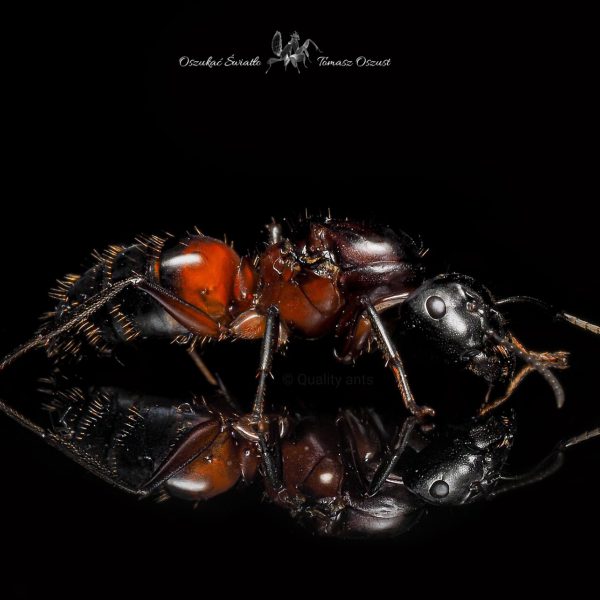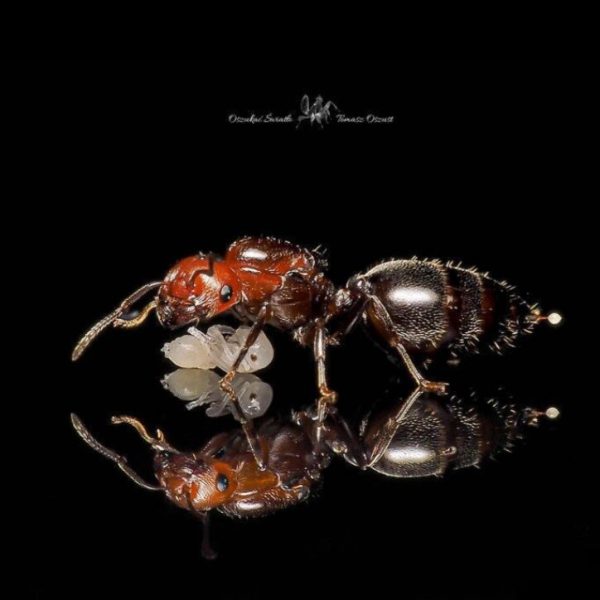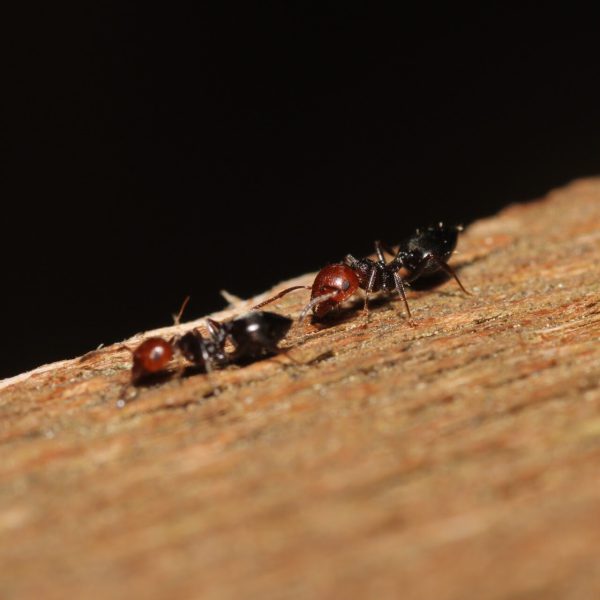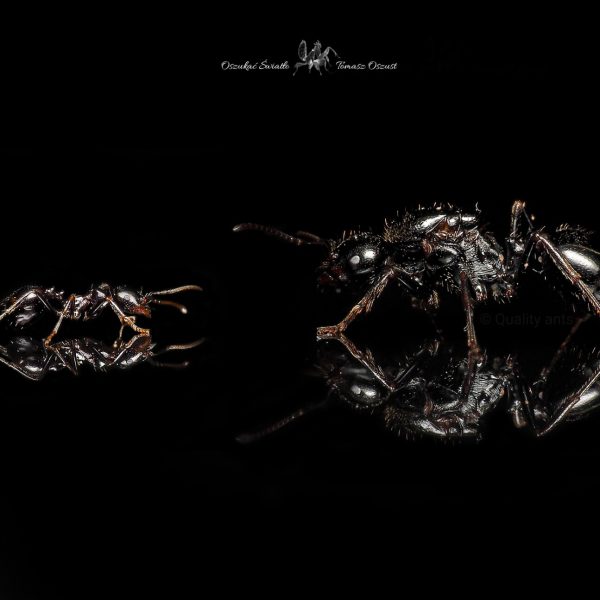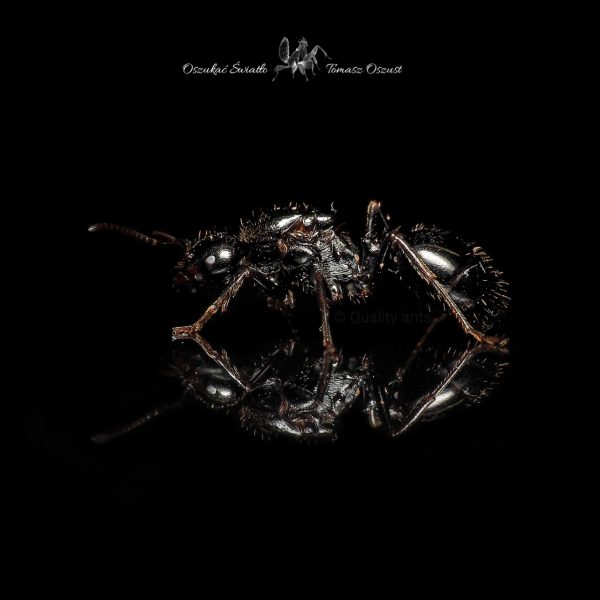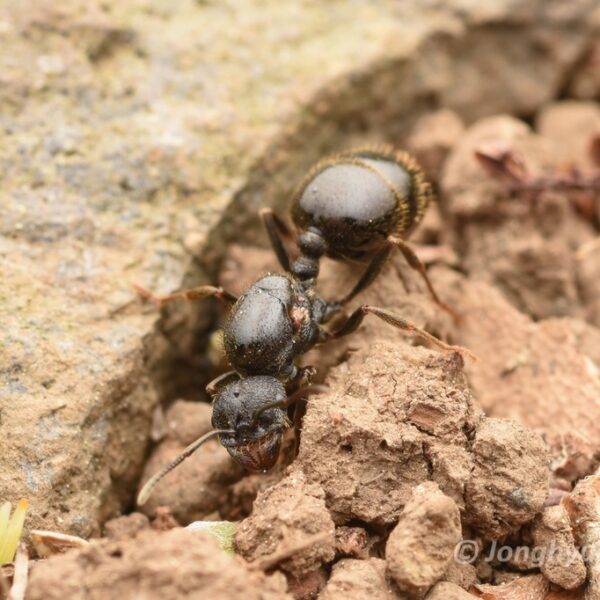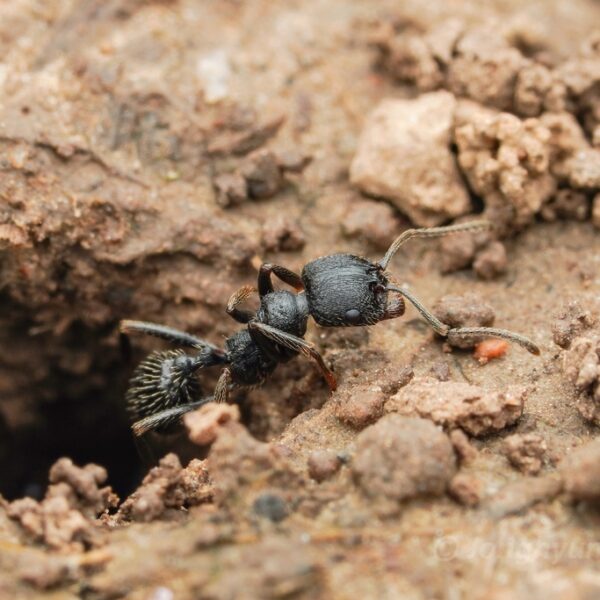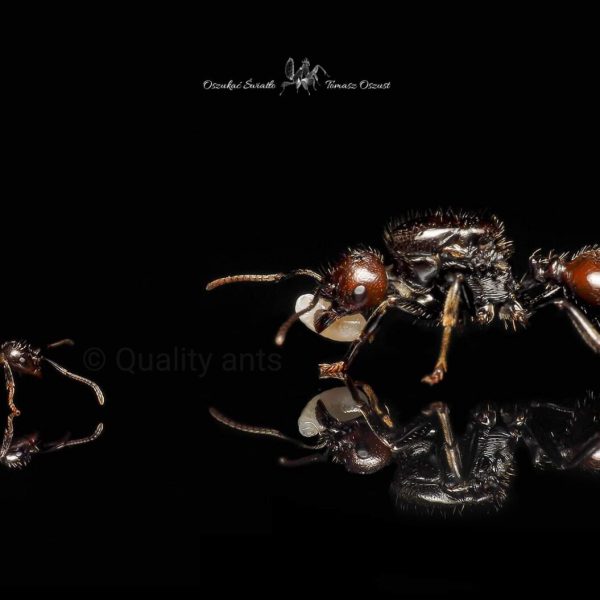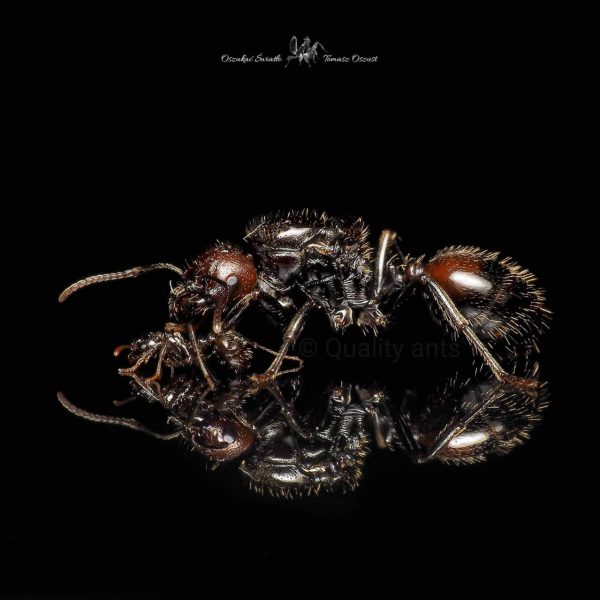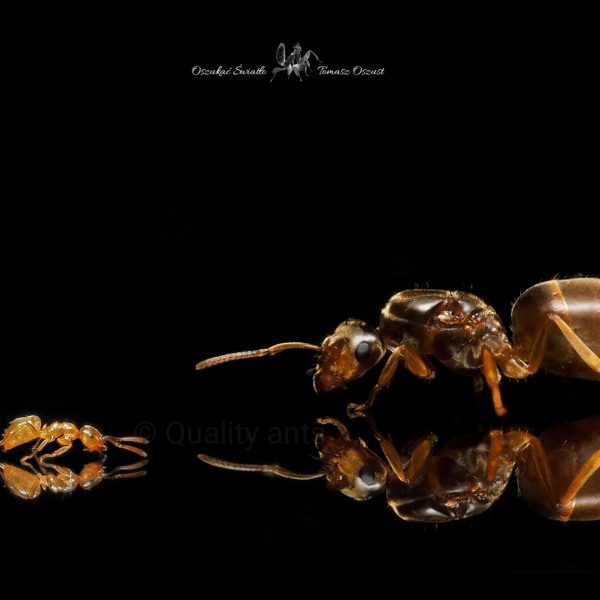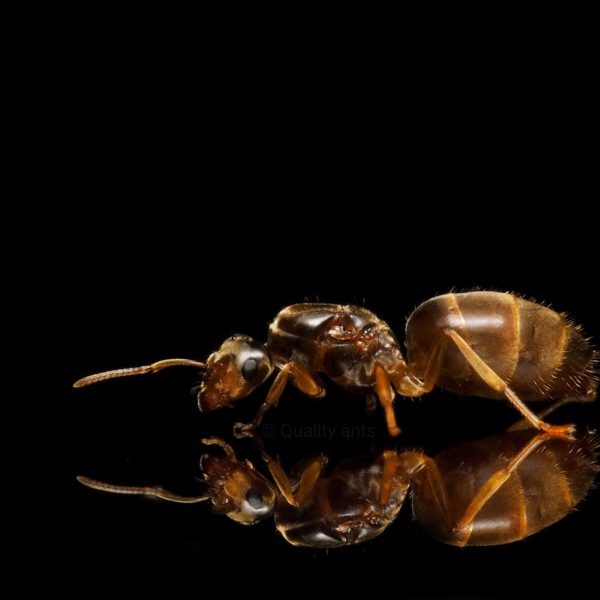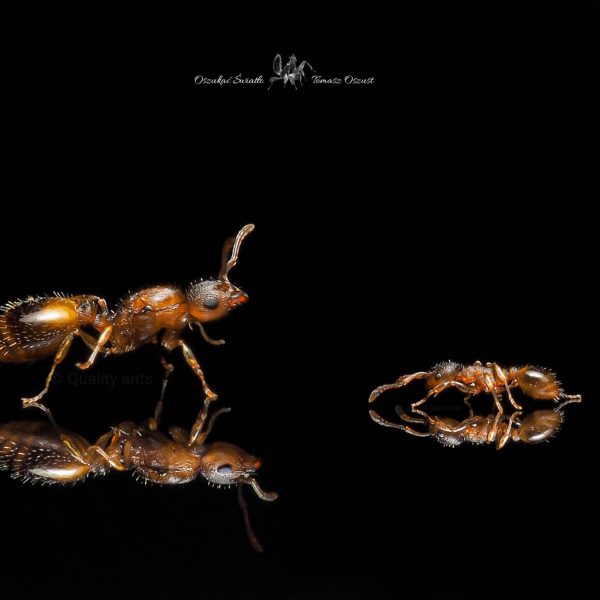

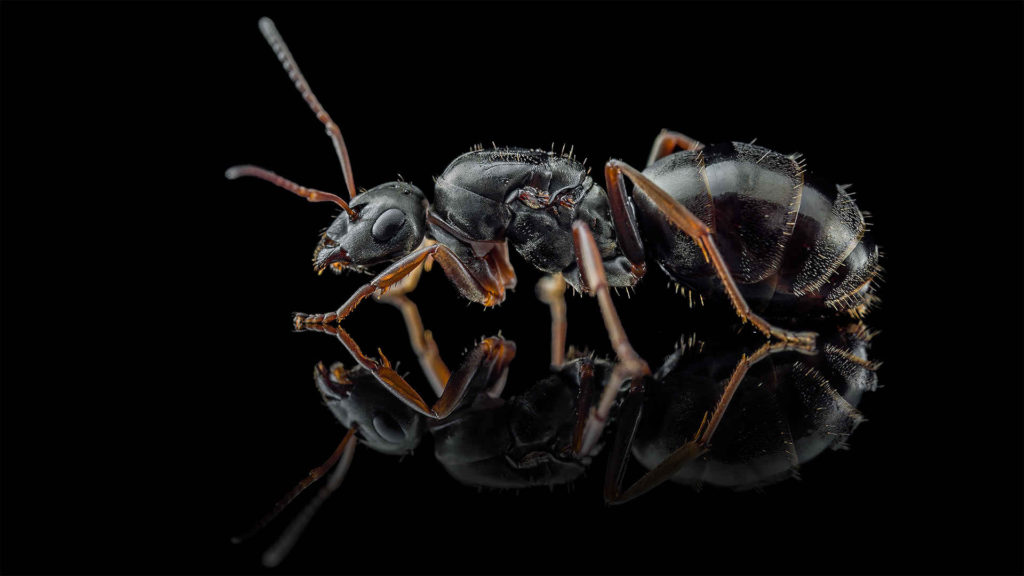
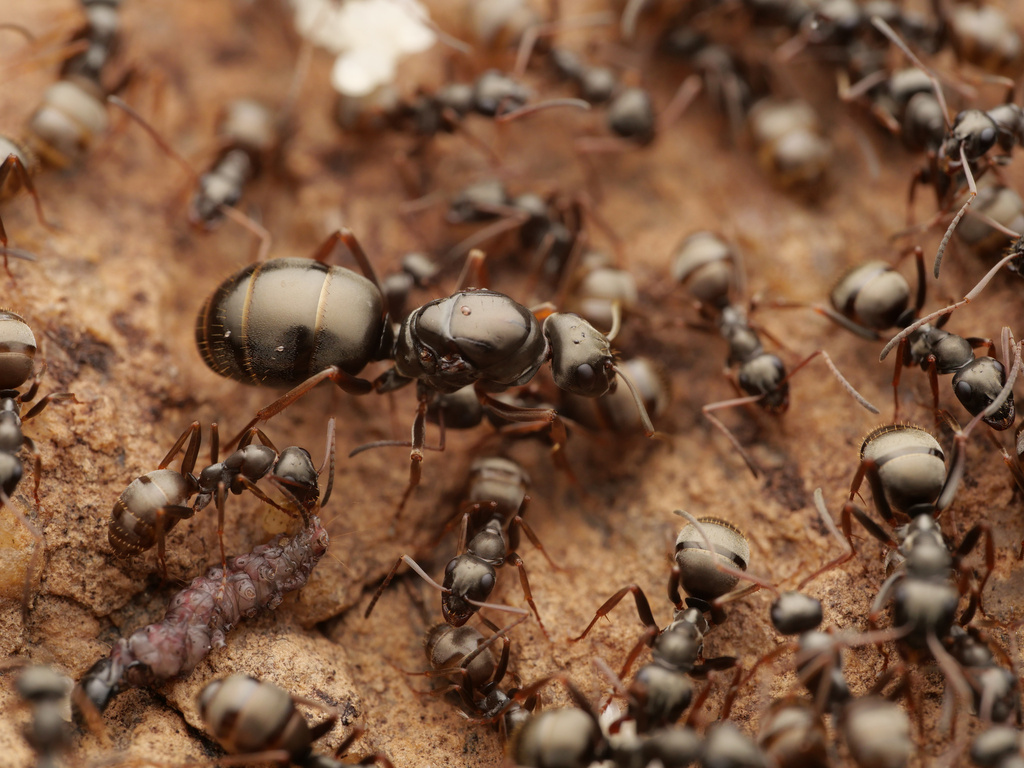

Formica fusca – Grey-black running ant
Formica fusca is a fast and very active ant species found in large parts of Europe, including the Netherlands and Belgium. This species is known for its excellent hunting and foraging behavior, high activity, and strong adaptability. In the wild, colonies often live in open forests, grasslands, under stones, or in the soil.
Worker ants of Formica fusca are particularly fast and alert. As soon as food is offered, the ants react almost immediately and multiple workers are quickly mobilized. This makes this species very interesting to observe in a formicarium.
Formica fusca is also known as a pioneer species that adapts well to various conditions. The colony grows at an average rate and can eventually develop into a large, active colony. Due to their simple care and robust nature, they are very suitable for beginners, but also enjoyable for experienced ant keepers.
Specifications
Scientific name: Formica fusca
Dutch name: Grey-black wood ant
Distribution area: Europe, parts of Asia and North America
Color of the ant: Dark brown to black with light silvery hairs
Difficulty level: 1 / 5
Queen size: 8 – 11 mm Worker size: 4 – 7 mm
Soldier size: Not available
Temperature: 20 – 27°C
Optimal temperature: 23 – 25°C
Winter dormancy: Yes, from approximately November through March at around 5 – 10°C
Growth rate: Average to fast
Maximum age of queen: approximately 10 – 15 years
Maximum age of workers: 1.5 – 2 years
Grow to a number of workers: +- 5,000 – 10,000+ workers
Subfamily: Formicinae
Foundation: Claustral (queen starts independently without food)
Colony formation: Monogyne (1 queen per nest)
Power supply
Formica fusca is an omnivorous ant species with a strong preference for protein-rich food.
Diet: insects such as dubia cockroaches, mealworms, redrunners, buffalo worms, and small crickets.
Sugars: such as honeydew, sugar water, Byformica sunburst ant nectar and beetle jelly.
For the healthy development of the brood, it is important to offer protein regularly.
Care
This species prefers a slightly damp to moderately damp nest with good ventilation. In the wild, they often nest in soil, under stones, or in rotting wood.
Formica fusca is a very active species that makes extensive use of the arena. Due to their speed and foraging behavior, they are great fun to observe daily.
From how many workers to a nest: +- 30 workers
Recommended nest type:
Ytong nest, plaster nest, 3D nest, acrylic nest, wooden nest
✅ Why choose Formica fusca
• Very active and fast ant species
• Strong foraging and hunting behavior
• Suitable for beginners
• Native European species
• Beautiful and natural colony development