Polyrhachis armata – Gepantserde stekelmier
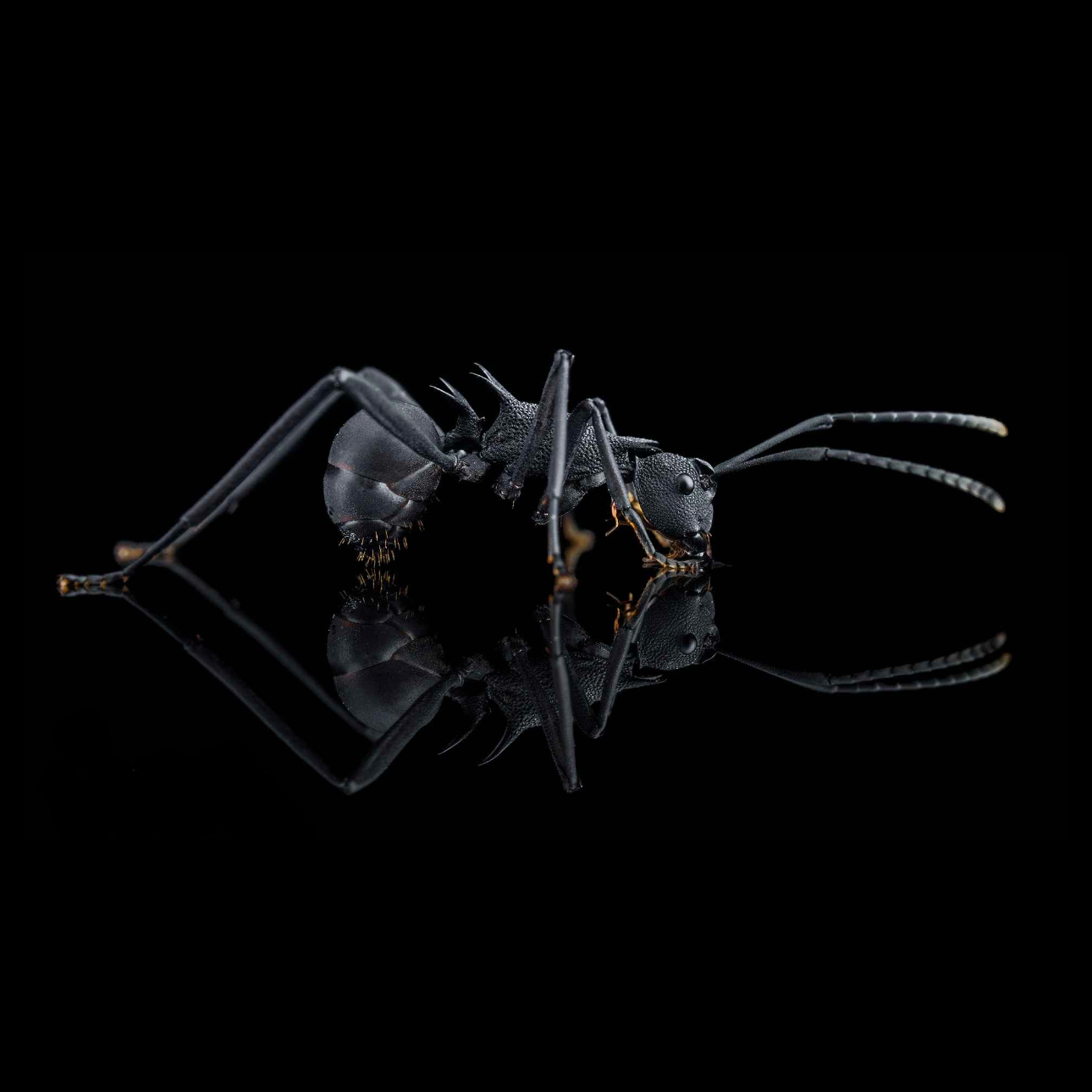
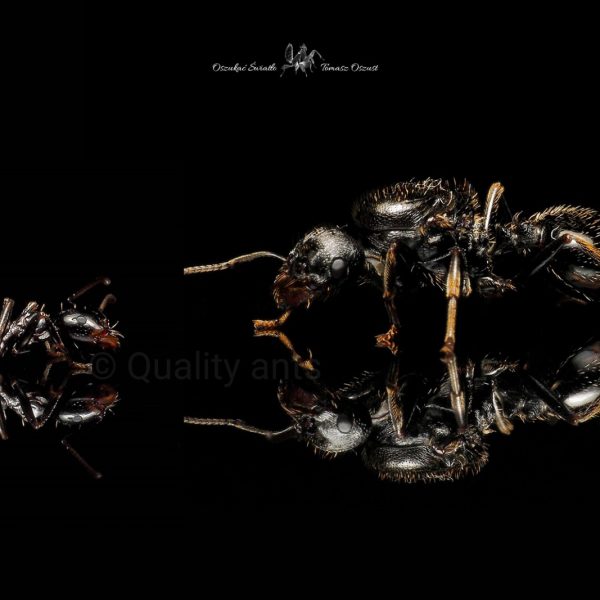
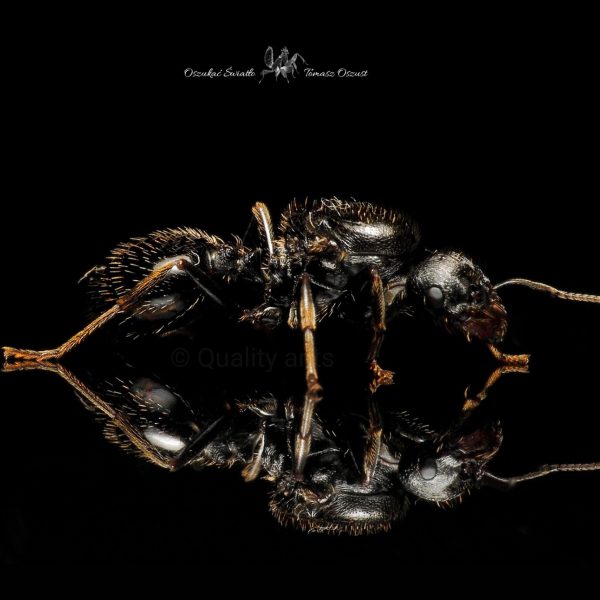
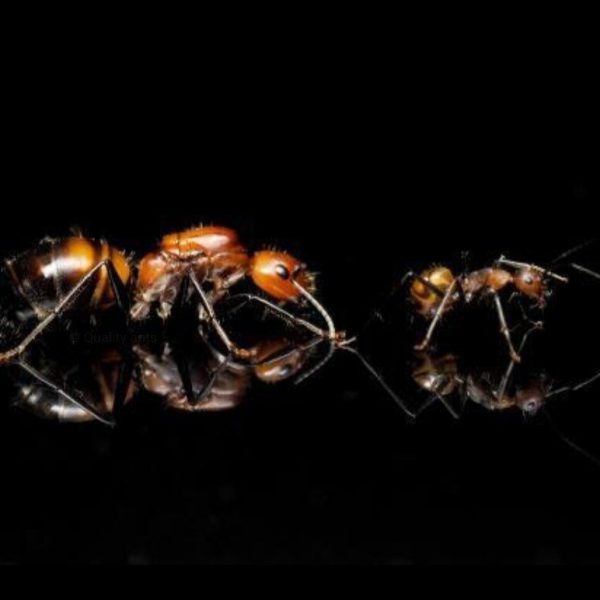
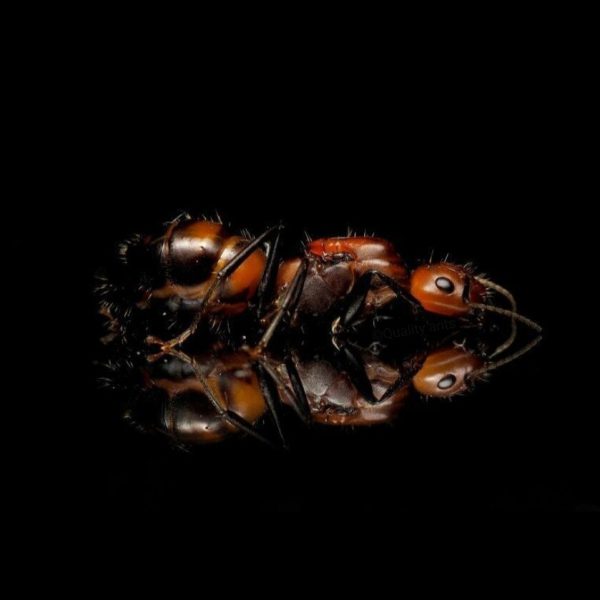
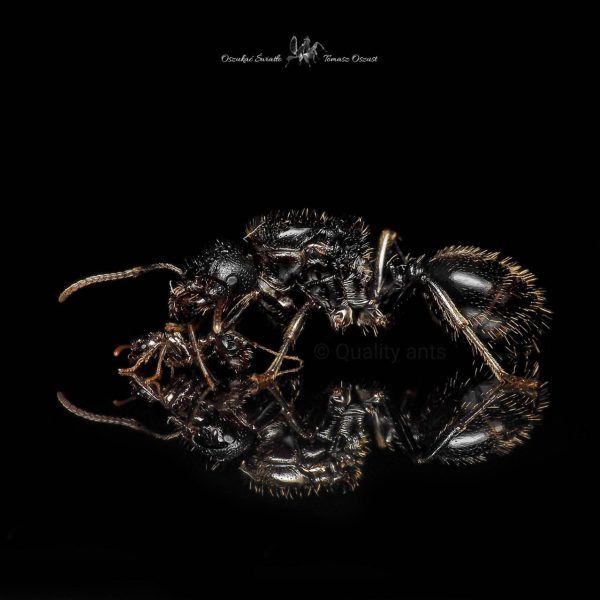
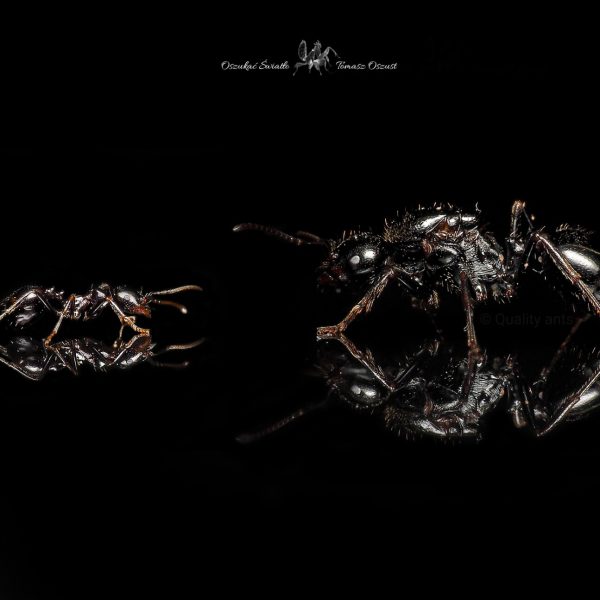
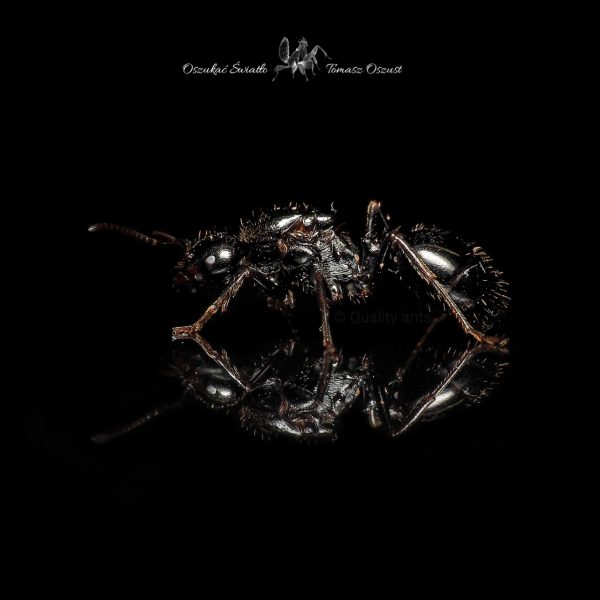
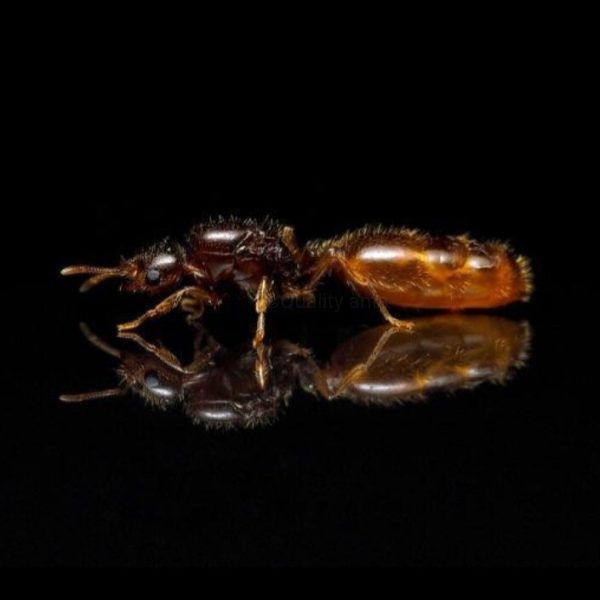
Polyrhachis armata is een opvallende tropische mierensoort die direct herkenbaar is aan haar robuuste lichaamsbouw en karakteristieke stekels. Zoals bij veel soorten binnen het geslacht Polyrhachis geven de stekels de werksters een bijzonder en bijna gepantserd uiterlijk. In combinatie met hun relatief grote formaat maakt dit Polyrhachis armata een indrukwekkende soort om in een formicarium te observeren.
De soort komt voor in delen van Zuidoost-Azië en leeft in warme, tropische omstandigheden. Werksters zijn actieve voedselzoekers en verlaten regelmatig het nest om op zoek te gaan naar zoete voedselbronnen en insecten. Zodra voedsel wordt gevonden, neemt de activiteit rond de voedselbron duidelijk toe.
Polyrhachis armata behoort tot de Formicinae. Hierdoor beschikt de soort niet over een functionele angel zoals veel Myrmicinae, maar kan zij zich op andere manieren verdedigen. Het opvallende uiterlijk, de lichaamsstekels en het actieve foerageergedrag maken deze soort vooral interessant voor liefhebbers die een bijzondere tropische Polyrhachis willen houden.
Omdat het een tropische soort betreft, is geen koude winterrust nodig. Bij voldoende warmte kan de kolonie het gehele jaar actief blijven.
Specificaties
Wetenschappelijke naam: Polyrhachis armata
Nederlandse benaming: Gepantserde stekelmier
Verspreidingsgebied: Zuidoost-Azië
Kleur van de mier: Donkerbruin tot zwart, afhankelijk van individu en lichtinval
Moeilijkheidsgraad: 3 / 5
Afmeting koningin: ongeveer 11 – 14 mm
Afmeting werkster: ongeveer 7 – 10 mm
Afmeting soldaat: Niet aanwezig
Temperatuur: ongeveer 24 – 30°C
Optimale temperatuur: ongeveer 26 – 28°C
Winterrust: Geen winterrust noodzakelijk
Groeisnelheid: Gemiddeld
Maximale leeftijd koningin: meerdere jaren onder goede omstandigheden
Maximale leeftijd werksters: ongeveer 1 – 2 jaar, afhankelijk van omstandigheden
Uitgroeien tot aantal werksters: enkele honderden tot mogelijk meer dan 1.000 werksters onder goede omstandigheden
Onderfamilie: Formicinae
Stichting: Claustral; de koningin kan de eerste generatie werksters vanuit haar eigen reserves grootbrengen
Kolonievorming: Voornamelijk monogyn, met één koningin per kolonie
Voeding
Polyrhachis armata is een omnivore mierensoort die zowel koolhydraten als dierlijke eiwitten nodig heeft.
Voeding: insecten zoals redrunners, krekels, meelwormen, buffalowormen, dubia’s en fruitvliegen.
Suikers: bijvoorbeeld Byformica Sunburst Ant Nectar, suikerwater, honingwater en andere geschikte nectarvoeding.
Suikerrijke voeding vormt een belangrijke energiebron voor de actieve werksters. Eiwitrijke insecten zijn vooral belangrijk wanneer larven aanwezig zijn en de kolonie groeit.
Bij een grotere kolonie kan de hoeveelheid aangeboden insecten geleidelijk worden verhoogd. Verwijder niet opgegeten voedselresten tijdig om schimmel en mijten te voorkomen.
Vers drinkwater moet altijd beschikbaar zijn.
Verzorging
Polyrhachis armata heeft vanwege haar tropische oorsprong behoefte aan een warme omgeving. Een gedeelte van het verblijf kan worden verwarmd, zodat de mieren zelf tussen warmere en koelere zones kunnen kiezen.
Het nest kan licht tot matig vochtig worden gehouden. Zorg voor een vochtgradiënt en voorkom dat het volledige nest voortdurend nat is. Goede ventilatie is belangrijk, vooral wanneer de luchtvochtigheid hoger wordt gehouden.
Polyrhachis-soorten kunnen uitstekend klimmen. Een betrouwbare ontsnappingsbeveiliging rond de arena is daarom belangrijk.
Vanaf hoeveel werksters naar een nest: ongeveer 20 – 30 werksters
Aanbevolen nest type: Polyrhachis formicarium, 3D nest, kurk- of houtnest, Ytong nest of een natuurlijk ingericht tropisch formicarium
Een verblijf met voldoende klimoppervlak, takken en een ruime arena maakt het mogelijk om het natuurlijke foerageergedrag goed te observeren.
✅ Waarom kiezen voor Polyrhachis armata
• Opvallende tropische Polyrhachis-soort
• Karakteristieke lichaamsstekels
• Robuust en bijna gepantserd uiterlijk
• Relatief grote en goed zichtbare werksters
• Actief foerageergedrag
• Geen koude winterrust nodig
• Interessant voor liefhebbers van tropische mierensoorten
• Bijzondere verschijning in een natuurlijk formicarium

Beoordelingen
Er zijn nog geen beoordelingen.