

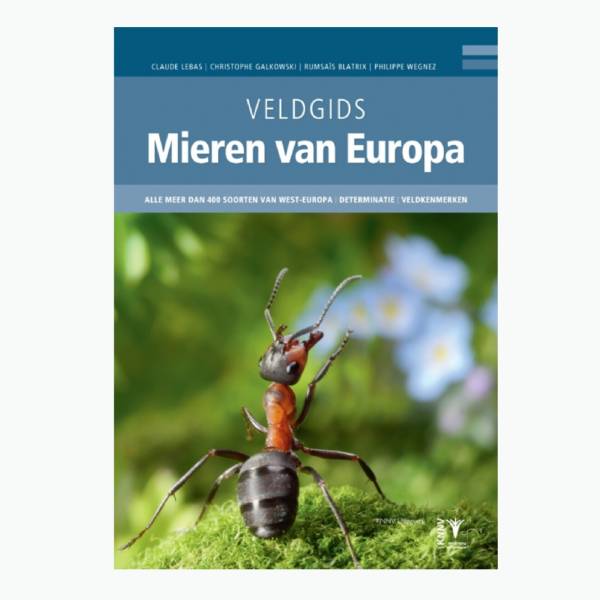
Veldgids Mieren van Europa – Meer dan 400 soorten
De Veldgids Mieren van Europa is een uitgebreide en rijk geïllustreerde gids voor iedereen die meer wil leren over Europese mieren. Of je nu mieren houdt, in de natuur op zoek gaat naar verschillende soorten of een onbekende mier wilt determineren: deze veldgids biedt een enorme hoeveelheid praktische en biologische informatie.
In het boek worden meer dan 400 mierensoorten uit West-Europa behandeld. Per soort vind je informatie over onder andere herkenning, verspreiding, leefgebied, biologie en soorten waarmee de mier gemakkelijk kan worden verward.
Dankzij de combinatie van uitgebreide soortinformatie, determinatiesleutels, verspreidingsinformatie en bijna 600 foto’s is deze veldgids een waardevol naslagwerk voor zowel beginnende mierenliefhebbers als ervaren hobbyisten.
Meer dan 400 soorten mieren
Europa kent een enorme diversiteit aan mierensoorten. In deze veldgids worden meer dan 400 soorten uit West-Europa beschreven.
Bij de verschillende soorten wordt aandacht besteed aan kenmerken die kunnen helpen bij het herkennen en determineren van de mier. Daarnaast wordt informatie gegeven over onder andere:
- herkenning en taxonomie;
- verspreiding;
- leefgebied en vindplaatsen;
- biologie en gedrag;
- mogelijke verwarring met andere mierensoorten.
Hierdoor is het boek niet alleen geschikt om een gevonden mier op naam te proberen te brengen, maar ook om meer te leren over de leefwijze van verschillende Europese soorten.
Twee determinatiesleutels
Een belangrijk onderdeel van de Veldgids Mieren van Europa zijn de twee identificatiesleutels.
De eerste is gericht op determinatie in het veld. Daarnaast bevat het boek een uitgebreidere morfologische identificatiesleutel voor werksters, waarbij lichamelijke kenmerken worden gebruikt om soorten van elkaar te onderscheiden.
Dit maakt de gids bijzonder interessant voor mierenliefhebbers die verder willen gaan dan alleen het herkennen van de bekendste soorten.
Bijna 600 foto’s
De veldgids bevat bijna 600 foto’s van mieren. De dieren worden zowel in detail als in hun natuurlijke leefomgeving weergegeven.
De vele close-upfoto’s maken het gemakkelijker om kenmerken van verschillende soorten met elkaar te vergelijken. In combinatie met de beschrijvingen en determinatiesleutels vormt het beeldmateriaal een belangrijk hulpmiddel bij het herkennen van mieren.
Daarnaast bevat de gids verspreidingskaarten en informatie over zwermvluchten, waardoor je meer inzicht krijgt in waar en wanneer bepaalde soorten kunnen worden aangetroffen.
Veel meer dan alleen soortherkenning
De Veldgids Mieren van Europa gaat verder dan alleen het determineren van soorten. In de uitgebreide inleiding wordt dieper ingegaan op het fascinerende leven van mieren.
Onderwerpen zoals morfologie, ontwikkelingsstadia, sociale structuur, voortplanting, polymorfisme, communicatie, voedselvoorziening en parasitisme komen aan bod. Ook interacties tussen mieren en andere geleedpotigen en planten worden behandeld.
Hierdoor krijg je een veel completer beeld van hoe een mierenkolonie functioneert en hoe verschillende soorten zich hebben aangepast aan hun leefomgeving.
Interessant voor mierenhouders
Ook wanneer je voornamelijk mieren als hobby houdt, is deze veldgids een interessant naslagwerk. Je leert meer over de natuurlijke leefomgeving, verspreiding en biologie van Europese mierensoorten.
Die achtergrondkennis maakt het niet alleen gemakkelijker om soorten te herkennen, maar helpt ook om het natuurlijke gedrag van de mieren die je houdt beter te begrijpen.
Voor liefhebbers die zelf koninginnen zoeken tijdens de bruidsvluchten is de informatie over verspreiding en zwermvluchten eveneens bijzonder interessant.
Geschikt voor beginners én ervaren liefhebbers
Je hoeft geen bioloog te zijn om plezier te hebben van deze veldgids. De vele foto’s en toegankelijke soortbeschrijvingen maken het boek interessant voor beginners, terwijl de determinatiesleutels en uitgebreidere biologische informatie juist veel verdieping bieden voor ervaren mierenhouders en natuurliefhebbers.
Hierdoor is de Veldgids Mieren van Europa een boek dat je niet snel ontgroeit en dat jarenlang als naslagwerk gebruikt kan worden.
Specificaties
- Titel: Veldgids Mieren van Europa
- Auteurs: Claude Lebas, Christophe Galkowski, Rumsaïs Blatrix & Philippe Wegnez
- Aantal behandelde soorten: meer dan 400 soorten uit West-Europa
- Aantal foto’s: bijna 600
- Aantal pagina’s: 416
- Taal: Engels
- Uitvoering: paperback
- Formaat: ca. 13,5 × 19,1 cm
- Onderwerpen: determinatie, herkenning, verspreiding, habitat, biologie en gedrag
- Inclusief: determinatiesleutels, verspreidingskaarten en informatie over zwermvluchten
De Veldgids Mieren van Europa is daarmee een uitgebreid naslagwerk voor iedereen die Europese mieren wil herkennen, determineren en beter begrijpen.
Beoordelingen
Er zijn nog geen beoordelingen.