
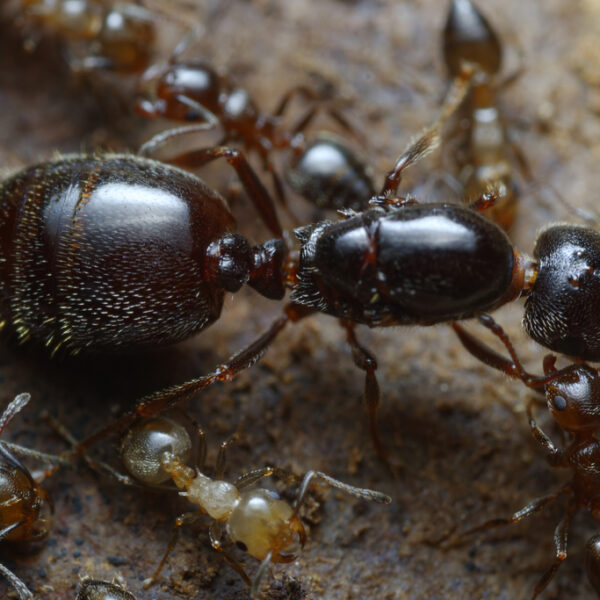
Monomorium subopacum – Mediterrane dwergmier
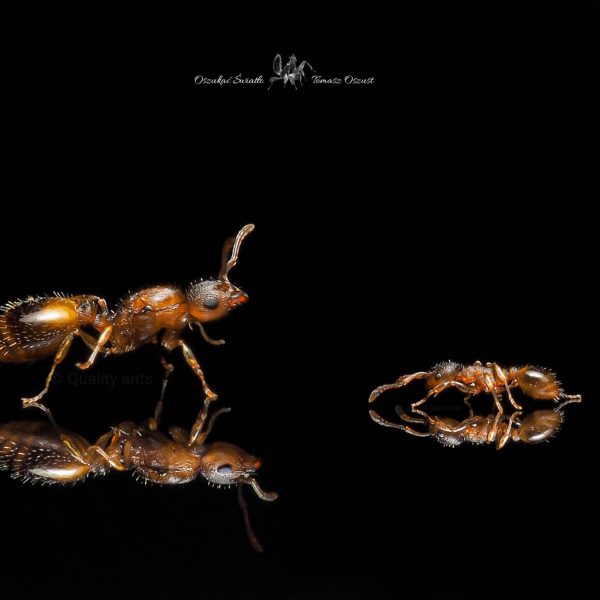
Monomorium subopacum is een zeer kleine, actieve mierensoort die van nature voorkomt rond het Middellandse Zeegebied, Noord-Afrika, delen van het Midden-Oosten en Atlantische eilanden zoals Madeira. De soort leeft voornamelijk in warme, droge en zonnige gebieden en kan zowel in natuurlijke leefgebieden als in de omgeving van menselijke bebouwing worden aangetroffen.
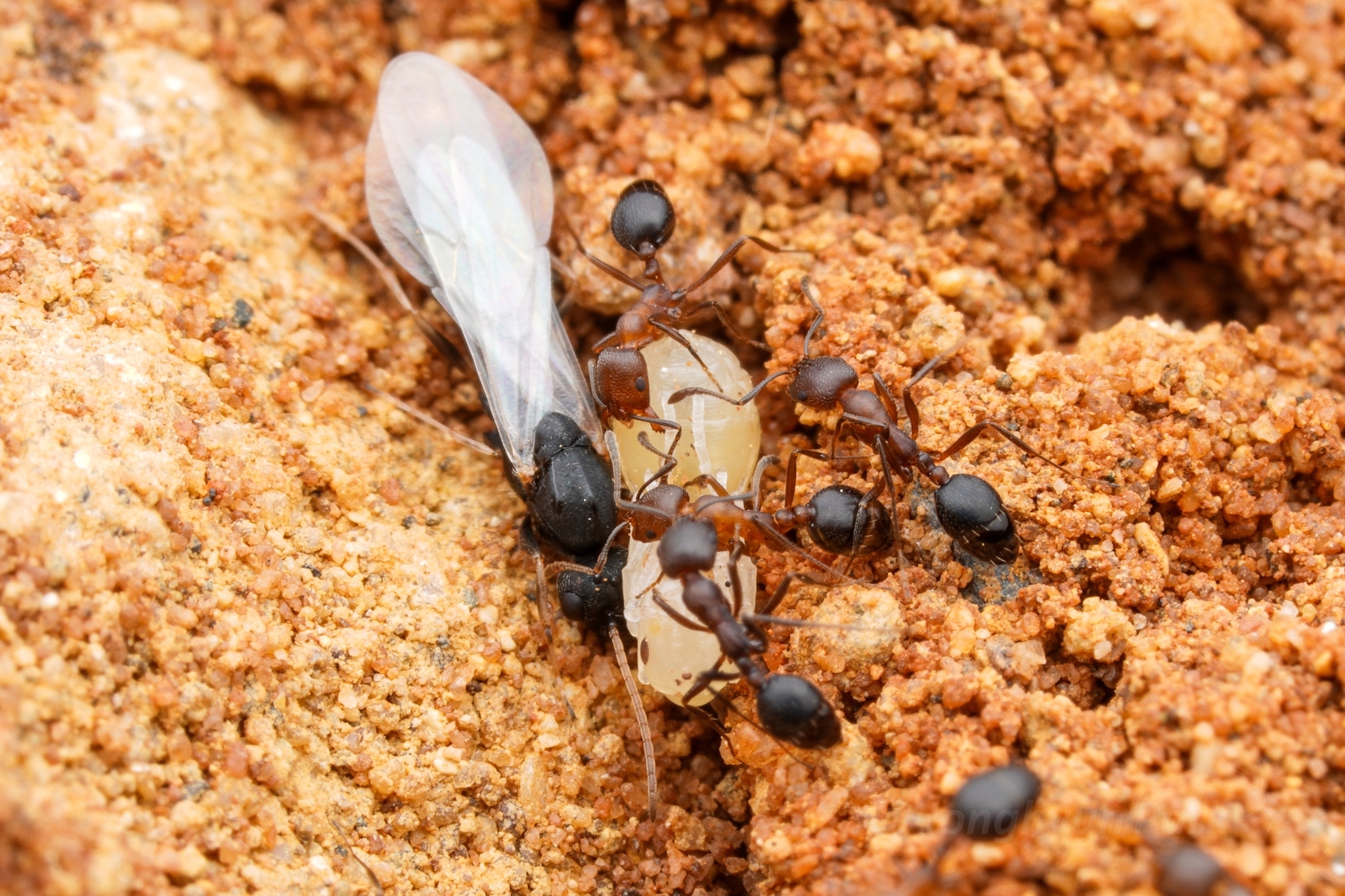
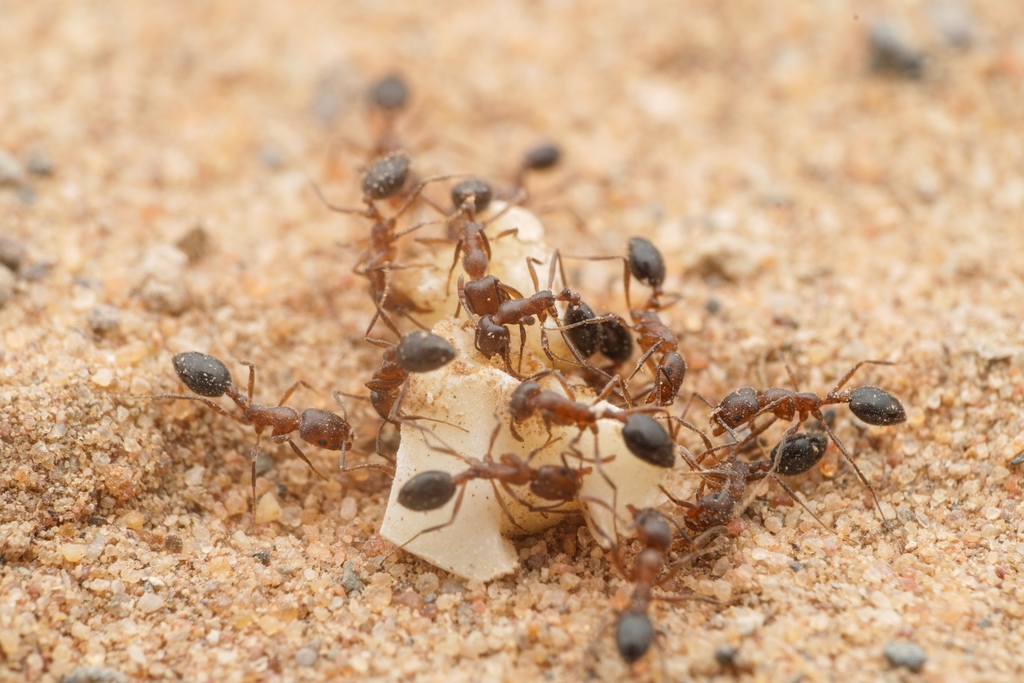
Ondanks hun kleine formaat kunnen kolonies van Monomorium subopacum bijzonder actief worden. Werksters foerageren veel en kunnen snel andere werksters naar een gevonden voedselbron rekruteren. Vooral bij insecten en andere eiwitrijke voedselbronnen kunnen in korte tijd grote aantallen werksters verschijnen.
Een bijzonder kenmerk van Monomorium subopacum is de kolonievorming. De soort is polygyn, waardoor meerdere koninginnen binnen dezelfde kolonie kunnen leven en eieren leggen. Hierdoor kan een goed gevestigde kolonie snel groeien en uiteindelijk uit zeer grote aantallen werksters bestaan.
Door de combinatie van zeer kleine werksters, meerdere koninginnen en snelle koloniegroei is een uitstekende ontsnappingsbeveiliging noodzakelijk. Deze soort is daarom vooral geschikt voor houders die ervaring hebben met kleine, snelgroeiende mierensoorten.
Specificaties
Wetenschappelijke naam: Monomorium subopacum
Nederlandse benaming: Mediterrane dwergmier
Verspreidingsgebied: Middellandse Zeegebied, Zuid-Europa, Noord-Afrika, delen van het Midden-Oosten en Atlantische eilanden
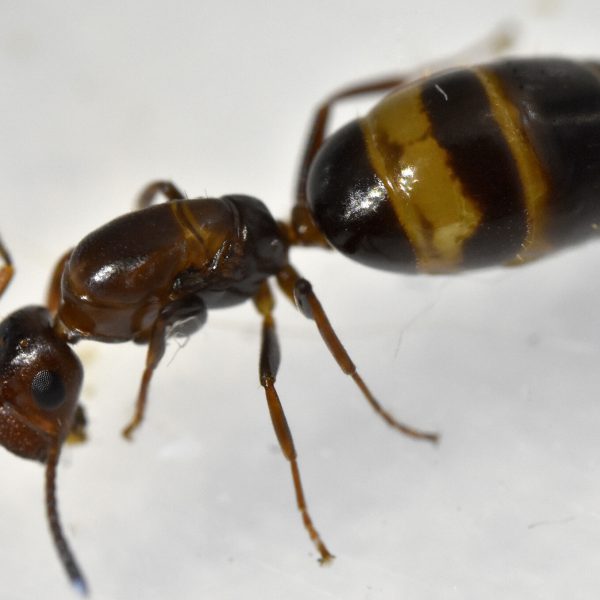
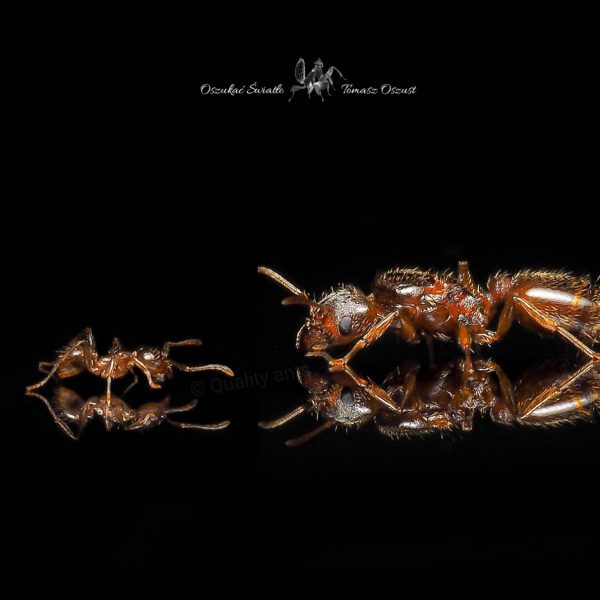
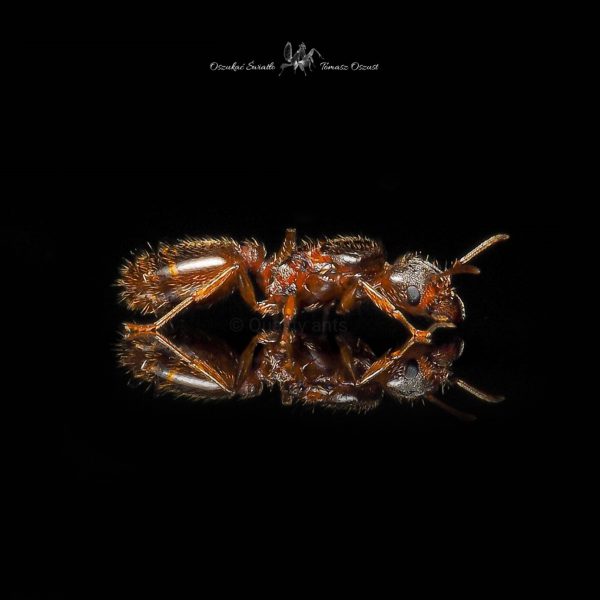
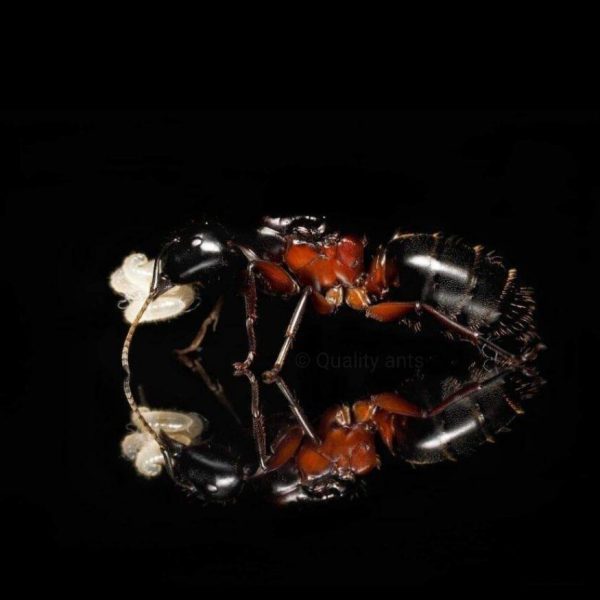
Kleur van de mier: Bruin tot roodbruin met een donkerbruin tot zwart achterlijf; koninginnen zijn doorgaans donkerder
Moeilijkheidsgraad: 3 / 5
Afmeting koningin: ongeveer 4 – 5 mm
Afmeting werkster: ongeveer 2 – 2,5 mm
Afmeting soldaat: Niet aanwezig
Temperatuur: ongeveer 22 – 30°C
Optimale temperatuur: ongeveer 25 – 28°C
Winterrust: Geen echte winterrust noodzakelijk
Groeisnelheid: Snel, vooral bij kolonies met meerdere koninginnen
Maximale leeftijd koningin: meerdere jaren onder goede omstandigheden
Maximale leeftijd werksters: afhankelijk van temperatuur, voeding en omstandigheden
Uitgroeien tot aantal werksters: duizenden werksters; koloniegrootte is sterk afhankelijk van het aantal koninginnen en beschikbare ruimte
Onderfamilie: Myrmicinae
Stichting: Nieuwe koninginnen kunnen zelfstandig een kolonie stichten; bij gevestigde kolonies kan uitbreiding ook plaatsvinden vanuit kolonies met meerdere koninginnen
Kolonievorming: Polygyn, meerdere koninginnen kunnen samen in één kolonie leven
Voeding
Monomorium subopacum is een omnivore mierensoort die zowel koolhydraten als dierlijke eiwitten nodig heeft.
Voeding: kleine insecten zoals fruitvliegen, kleine redrunners, kleine krekels, buffalowormen en kleine stukjes meelworm of dubia.
Suikers: bijvoorbeeld Byformica Sunburst Ant Nectar, suikerwater, honingwater en andere geschikte nectarvoeding.
Door het kleine formaat van de werksters is het verstandig om grotere voedseldieren in kleine stukken aan te bieden. Naarmate de kolonie groeit kan de hoeveelheid eiwitrijk voedsel aanzienlijk worden verhoogd.
Vers drinkwater moet altijd beschikbaar zijn.
Verzorging
Monomorium subopacum is aangepast aan relatief warme en droge omstandigheden. In de natuur worden nesten onder stenen, tussen rotsachtig materiaal en in droge bodembedekking aangetroffen. Het nest hoeft daarom niet volledig vochtig te worden gehouden.
Een kleine vochtige zone of betrouwbare waterbron is voldoende, terwijl andere delen van het nest droger mogen blijven. Een duidelijke vochtgradiënt geeft de kolonie de mogelijkheid zelf de meest geschikte plek voor het broed te kiezen.
Vanaf hoeveel werksters naar een nest: ongeveer 30 – 50 werksters; vanwege hun zeer kleine formaat kan een jonge kolonie lange tijd compact worden gehouden.
Aanbevolen nest type: fijn afgewerkt 3D nest, Ytong nest, gipsnest of volledig afgesloten acryl nest.
Vanwege de werkstergrootte van slechts enkele millimeters is zeer goede ontsnappingsbeveiliging essentieel. Controleer ventilatieopeningen, slangverbindingen, deksels en andere aansluitingen zorgvuldig op kleine kieren. Bij een polygyne kolonie kan de populatie snel toenemen, waardoor voldoende uitbreidingsmogelijkheden belangrijk zijn.
✅ Waarom kiezen voor Monomorium subopacum
• Zeer kleine en actieve mierensoort
• Polygyn: meerdere koninginnen per kolonie mogelijk
• Snelle koloniegroei onder goede omstandigheden
• Sterke reactie op voedsel
• Interessant rekruterings- en foerageergedrag
• Geen koude winterrust noodzakelijk
• Kan uitgroeien tot een zeer grote kolonie
• Interessant voor liefhebbers van kleine, dynamische mierensoorten


Beoordelingen
Er zijn nog geen beoordelingen.