

Crematogaster sordidula – Mediterrane acrobaatmier
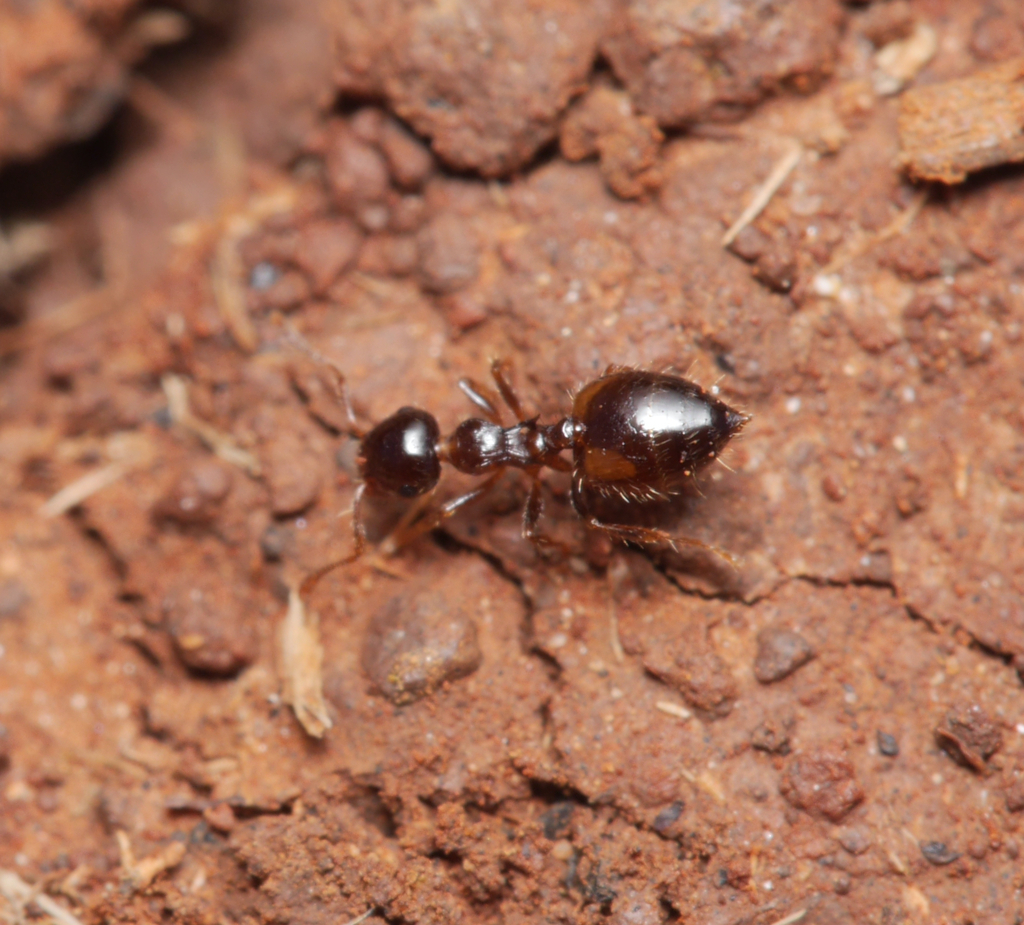
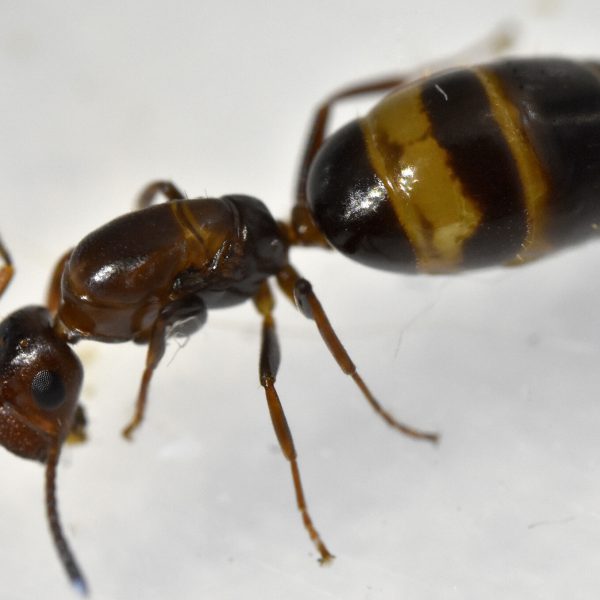
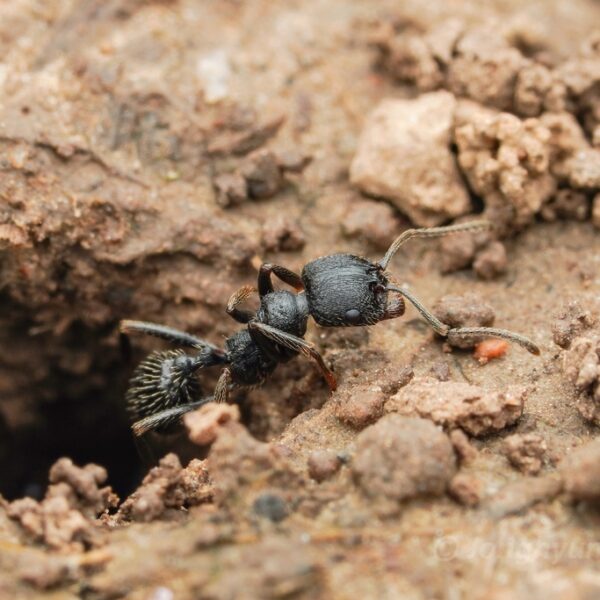
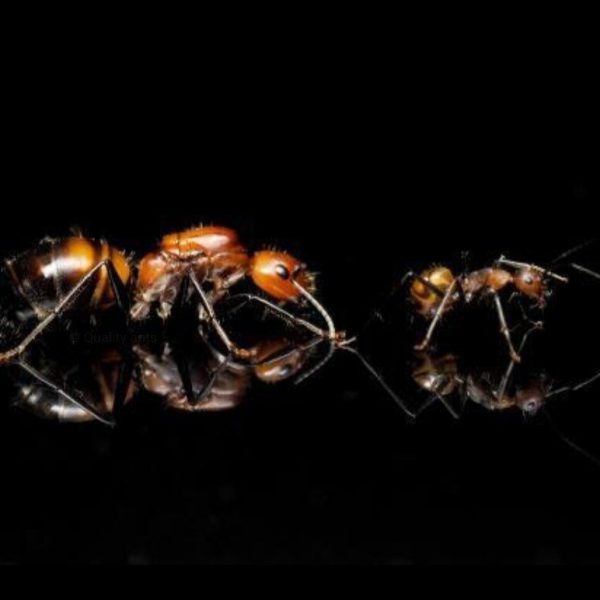
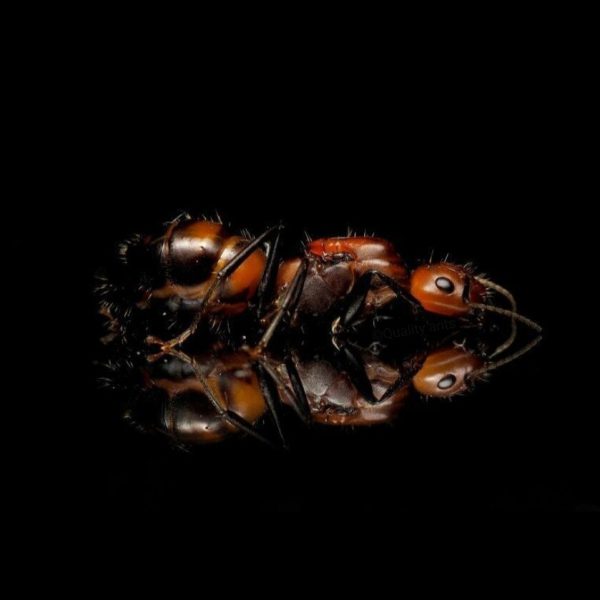
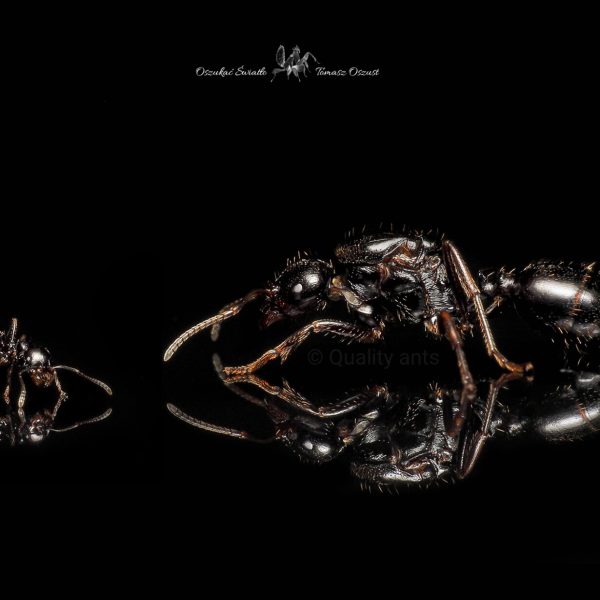
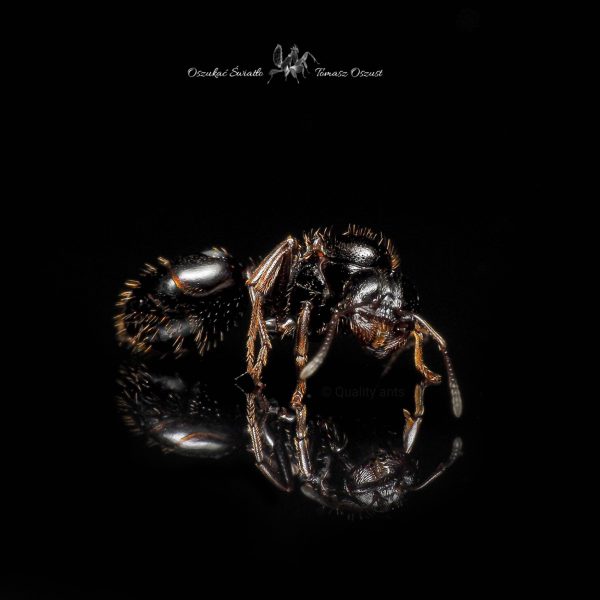
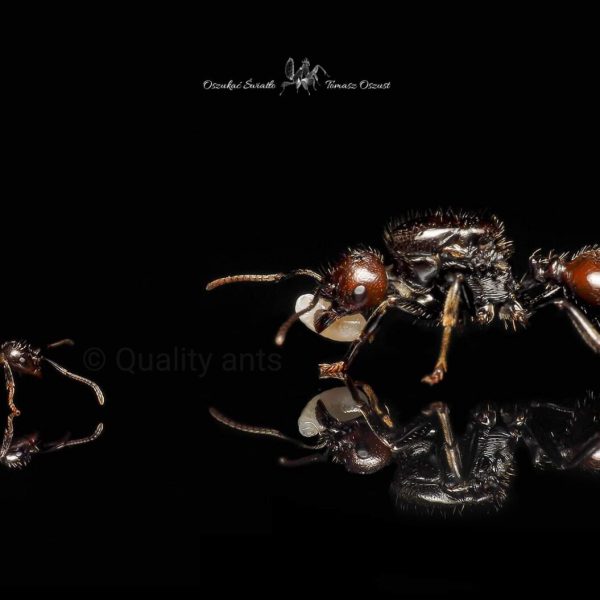
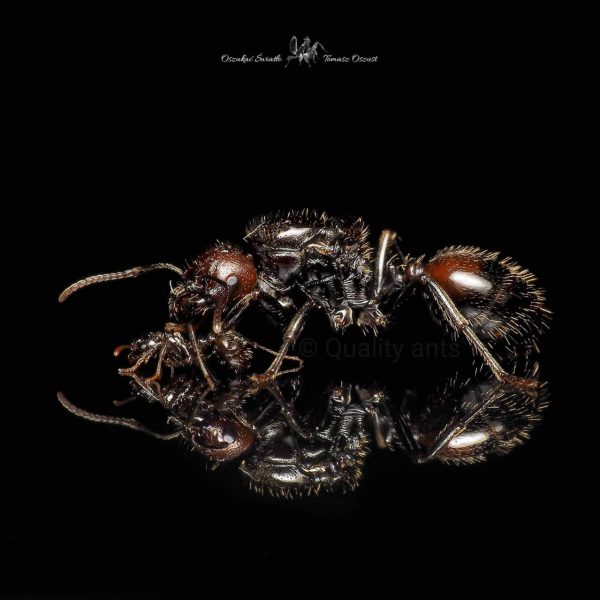
Crematogaster sordidula is een kleine en actieve mierensoort die voorkomt in het Middellandse Zeegebied. Zoals andere Crematogaster-soorten heeft deze mier een opvallend hartvormig achterlijf dat bij verstoring omhoog kan worden gebracht. Dit karakteristieke gedrag heeft het geslacht de naam acrobaatmieren gegeven.
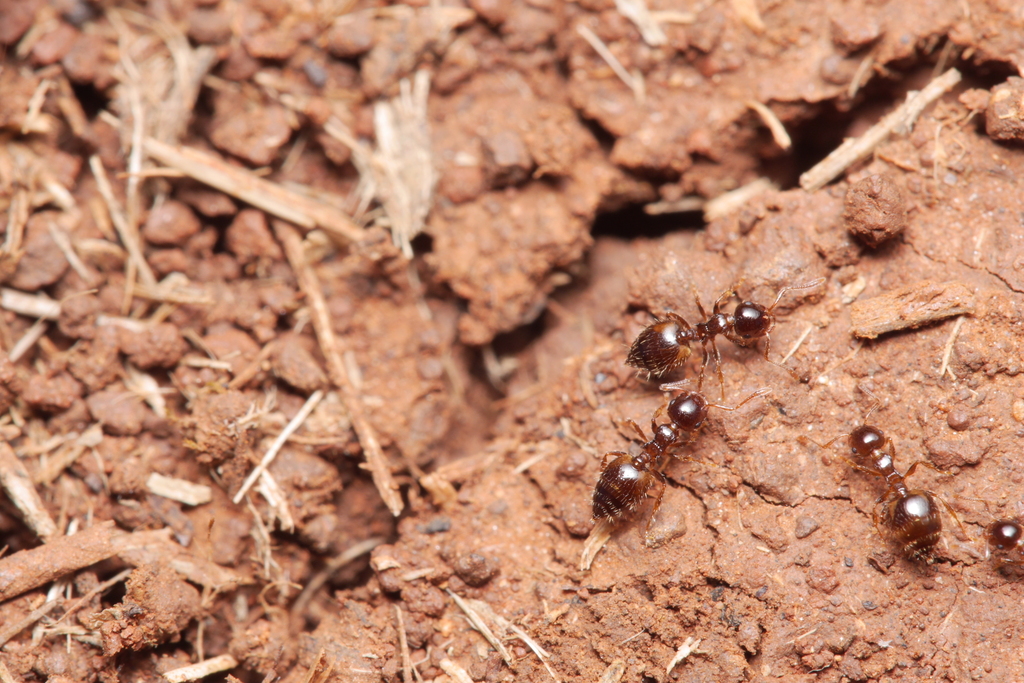
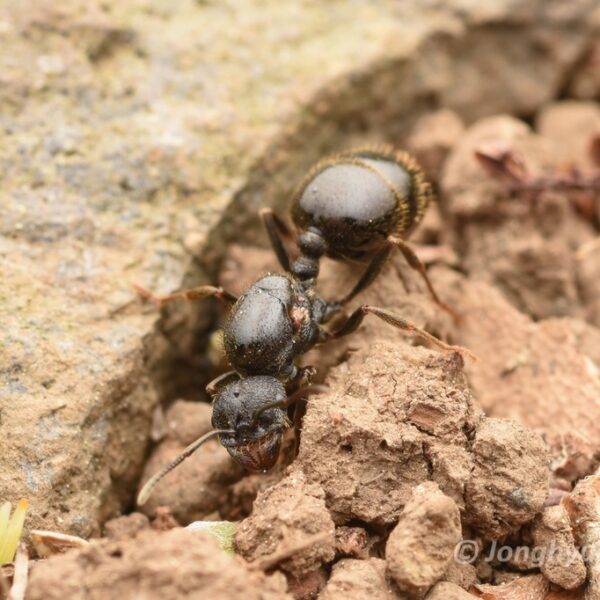
In de natuur wordt Crematogaster sordidula vooral aangetroffen in warme en relatief droge leefgebieden. De soort nestelt voornamelijk in de bodem en onder stenen. Dit onderscheidt haar van verschillende bekendere Crematogaster-soorten die juist sterk met bomen en dood hout geassocieerd zijn. Werksters verlaten het nest om kleine voedselbronnen, insecten en zoete vloeistoffen te verzamelen.
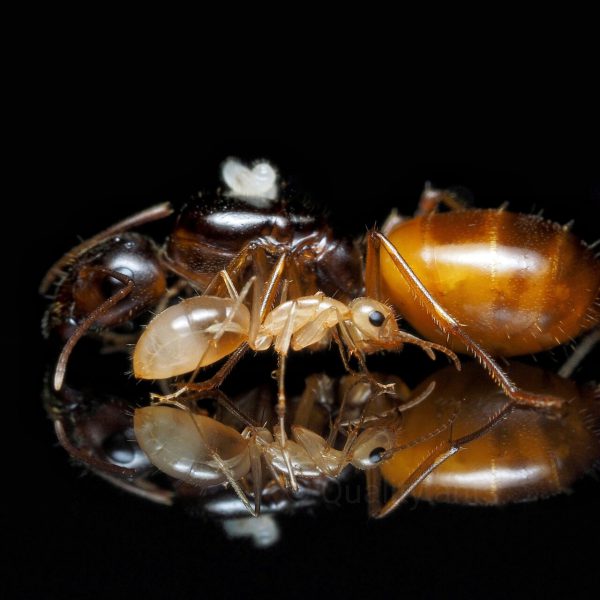
Ondanks het kleine formaat kunnen de werksters behoorlijk actief zijn. Wanneer een geschikte voedselbron wordt gevonden, kunnen andere werksters worden gerekruteerd en ontstaat er snel meer activiteit rond het voedsel. Het contrast tussen de kleine werksters en het typische omhooggerichte achterlijf maakt het gedrag interessant om in een formicarium te observeren.
Crematogaster sordidula is vooral geschikt voor houders die een relatief kleine Mediterrane mierensoort zoeken. Door het kleine formaat van de werksters moet extra aandacht worden besteed aan een goed afgesloten formicarium en betrouwbare ontsnappingsbeveiliging.
Specificaties
Wetenschappelijke naam: Crematogaster sordidula
Nederlandse benaming: Mediterrane acrobaatmier
Verspreidingsgebied: Middellandse Zeegebied, waaronder delen van Zuid-Europa en Noord-Afrika
Kleur van de mier: Bruin tot donkerbruin
Moeilijkheidsgraad: 2 / 5
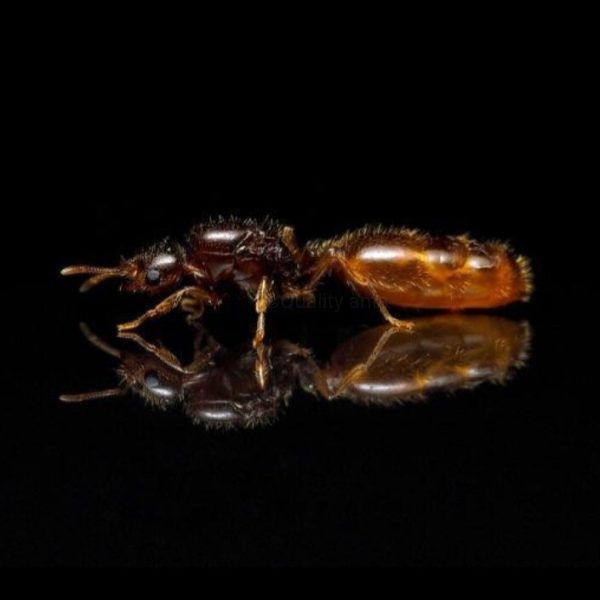
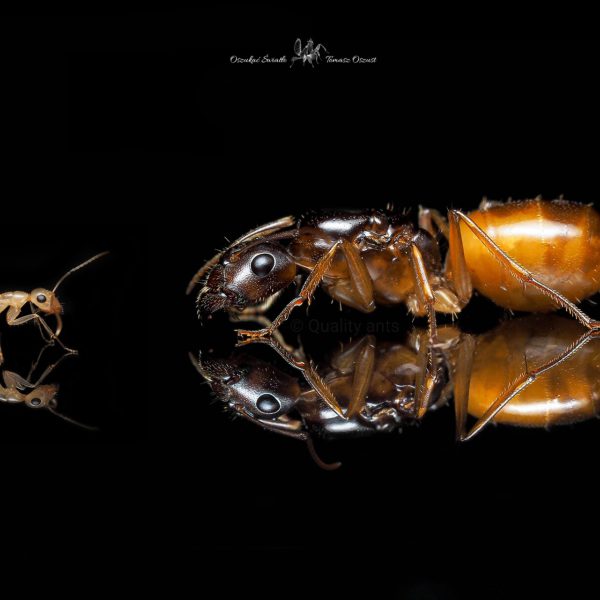
Afmeting koningin: ongeveer 5 – 7 mm
Afmeting werkster: ongeveer 2 – 3,5 mm
Afmeting soldaat: Niet aanwezig
Temperatuur: ongeveer 20 – 28°C
Optimale temperatuur: ongeveer 24 – 26°C
Winterrust: Ja, bij Europese populaties kan ongeveer november t/m februari een koelere rustperiode worden aangehouden rond 10 – 15°C
Groeisnelheid: Gemiddeld
Maximale leeftijd koningin: meerdere jaren onder goede omstandigheden
Maximale leeftijd werksters: afhankelijk van temperatuur, voeding en omstandigheden
Uitgroeien tot aantal werksters: enkele honderden tot mogelijk enkele duizenden werksters
Onderfamilie: Myrmicinae
Stichting: Claustral; de koningin kan de eerste generatie werksters vanuit haar eigen reserves grootbrengen
Kolonievorming: Doorgaans monogyn, met één koningin per kolonie
Voeding
Crematogaster sordidula is een omnivore mierensoort die zowel suikerrijke voeding als dierlijke eiwitten nodig heeft.
Voeding: kleine insecten zoals fruitvliegen, kleine redrunners, kleine krekels, buffalowormen en kleine stukjes meelworm of dubia.
Suikers: bijvoorbeeld Byformica Sunburst Ant Nectar, suikerwater, honingwater en andere geschikte nectarvoeding.
Suikerrijke voeding vormt een belangrijke energiebron voor de werksters. Eiwitrijke insecten zijn vooral belangrijk wanneer larven aanwezig zijn en de kolonie nieuw broed moet grootbrengen.
Vers drinkwater moet altijd beschikbaar zijn.
Verzorging
Crematogaster sordidula kan het beste worden gehouden in een overwegend droog tot licht vochtig nest. Zorg voor een kleine vochtige zone zodat de kolonie zelf een geschikte plek voor het broed kan kiezen. Het volledige nest voortdurend zeer nat houden is niet nodig.
Door het kleine formaat van de werksters is goede ontsnappingsbeveiliging essentieel. Controleer vooral de ventilatie, slangverbindingen, dekselranden en andere aansluitingen op kleine openingen.
Vanaf hoeveel werksters naar een nest: ongeveer 20 – 30 werksters
Aanbevolen nest type: klein 3D nest, Ytong nest, gipsnest of goed afgesloten acryl nest
Een jonge kolonie kan het beste compact worden gehouden. Naarmate de kolonie groeit kan de arena en het beschikbare nestoppervlak geleidelijk worden uitgebreid.
✅ Waarom kiezen voor Crematogaster sordidula
• Kleine en interessante Mediterrane mierensoort
• Karakteristiek hartvormig achterlijf
• Kan het achterlijf opvallend omhoog richten
• Actief foerageergedrag
• Goed observeerbare voedselrespons
• Kolonie blijft relatief compact
• Interessant voor liefhebbers van Crematogaster
• Bijzondere bodembewonende acrobaatmier
Beoordelingen
Er zijn nog geen beoordelingen.