

Camponotus aethiops – Mediterrane zwarte reuzenmier
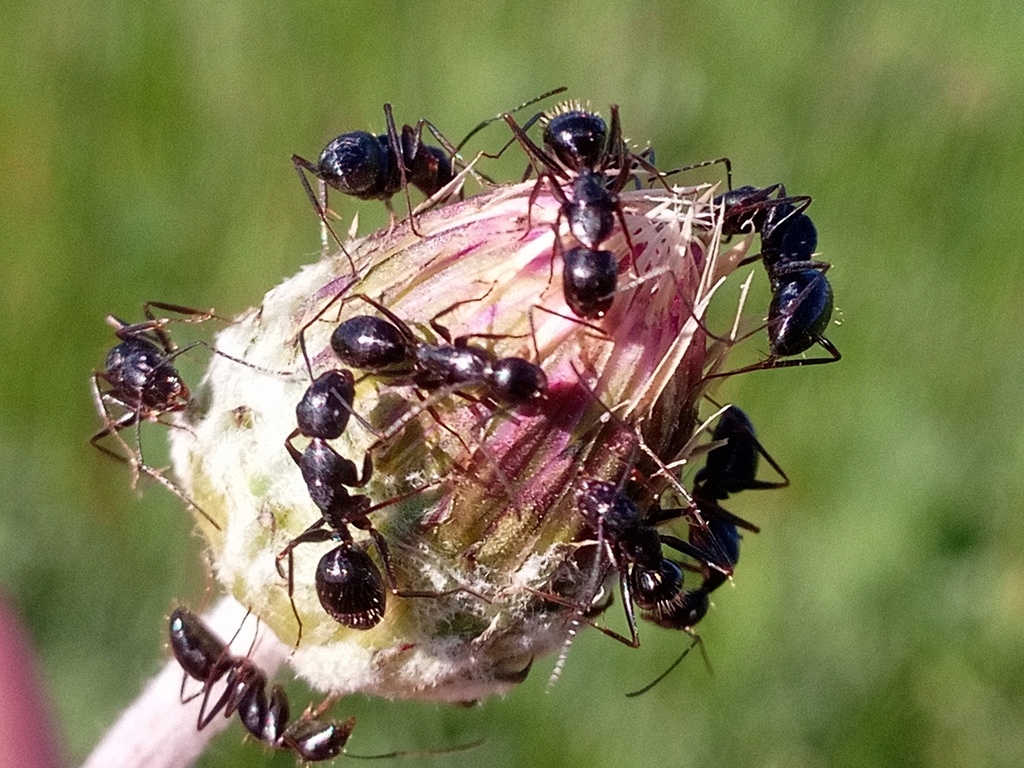
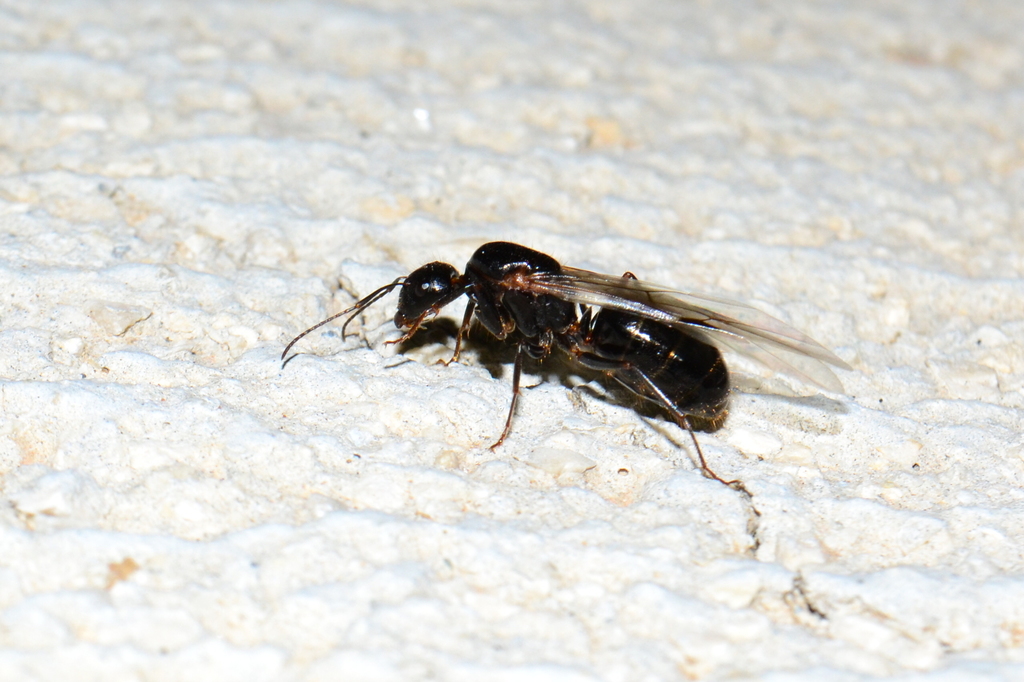
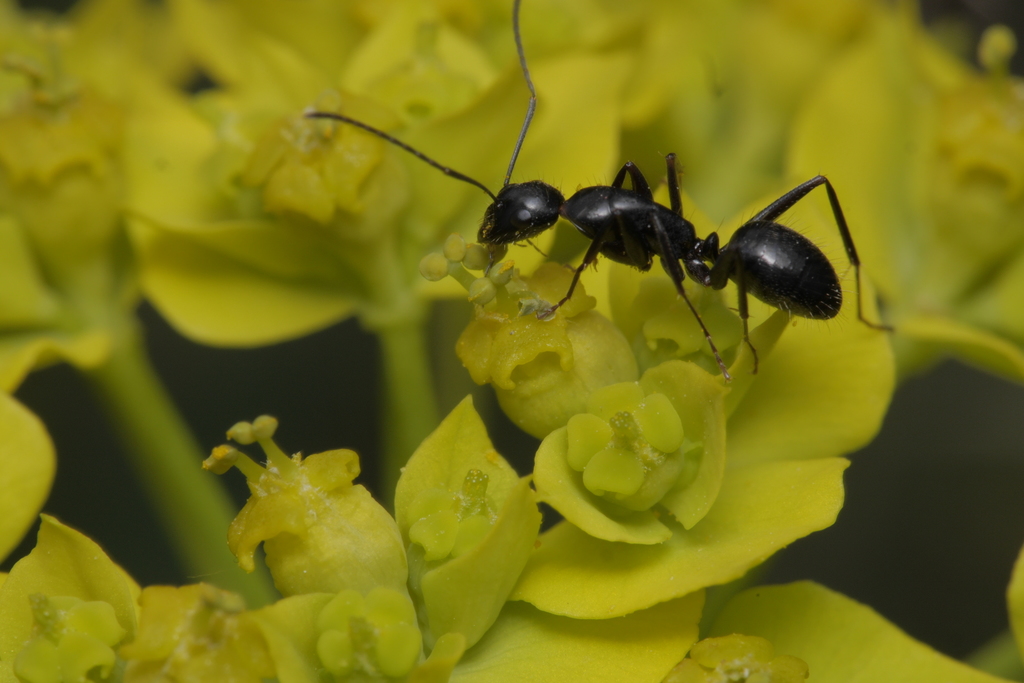
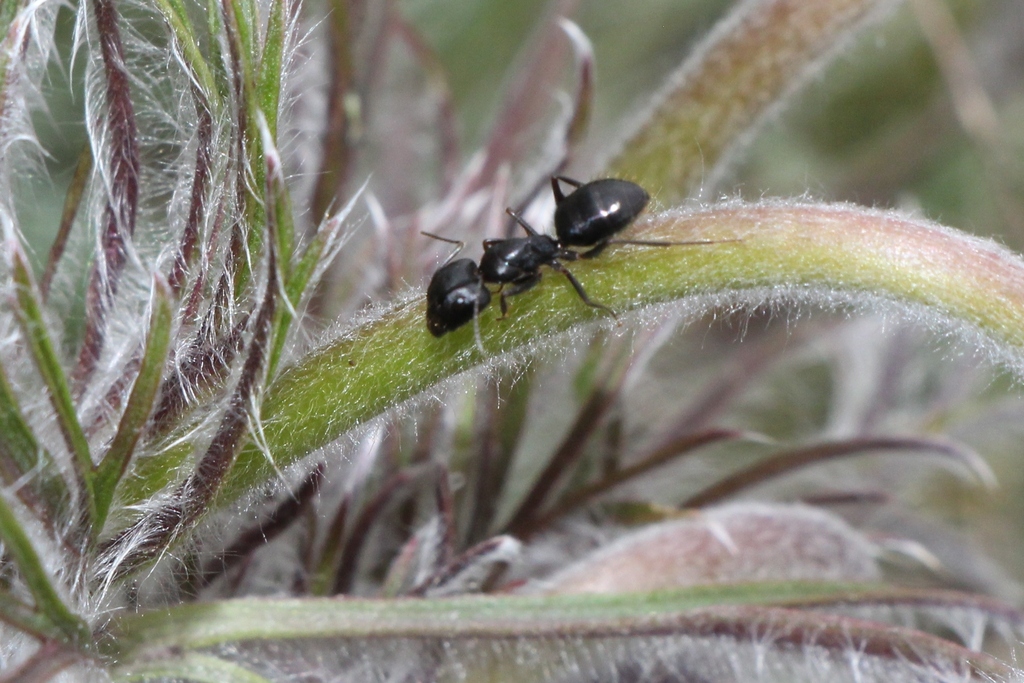
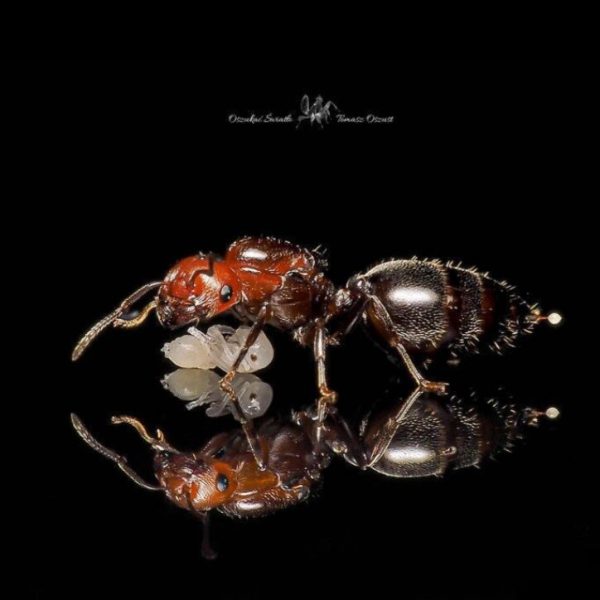
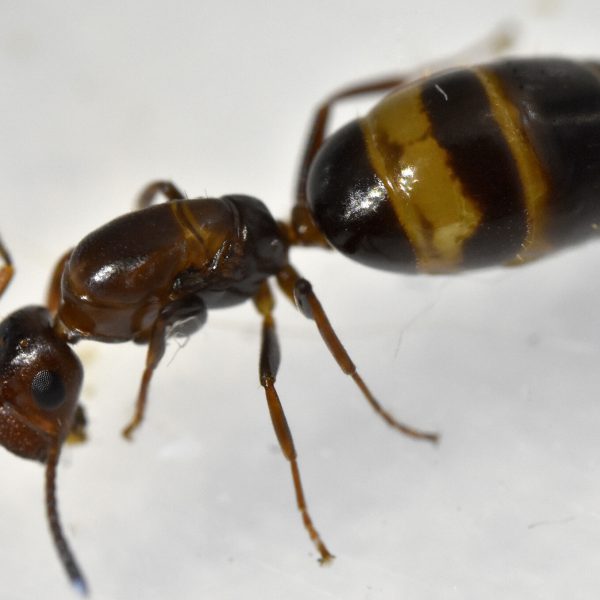
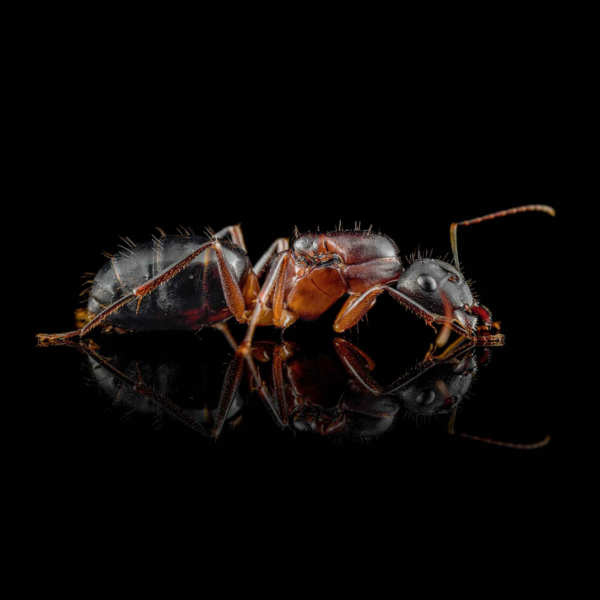
Camponotus aethiops is een indrukwekkende, volledig donkergekleurde Camponotus-soort uit het Middellandse Zeegebied en aangrenzende delen van Europa en Azië. De soort valt op door haar zwarte tot roodzwarte lichaam, grote koningin en duidelijke verschillen tussen kleine werksters en grote majors. Door het formaat van de mieren en hun rustige, doelgerichte gedrag is deze soort uitstekend te observeren in een formicarium.
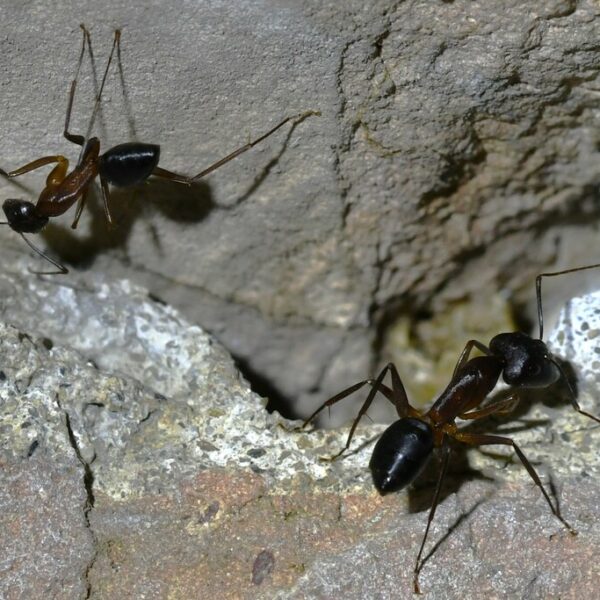
In de natuur wordt Camponotus aethiops vooral aangetroffen in warme en relatief droge gebieden. Kolonies nestelen voornamelijk in de bodem, vaak onder stenen en op zonnige plaatsen. De werksters foerageren actief naar zoete voedselbronnen en insecten en kunnen bij grotere kolonies steeds vaker in de arena worden waargenomen.
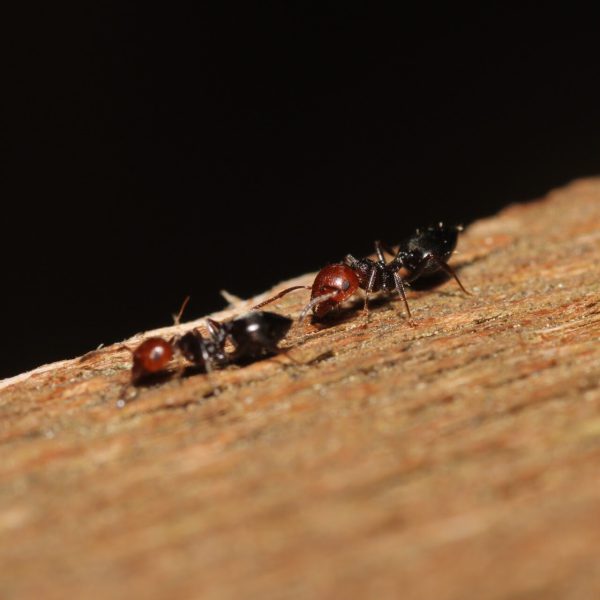
Zoals bij veel Camponotus-soorten groeit een jonge kolonie aanvankelijk relatief langzaam. Naarmate er meer werksters komen, neemt de ontwikkeling toe en verschijnen er grotere werksters en uiteindelijk indrukwekkende majors met bredere koppen. Hierdoor verandert het uiterlijk van de kolonie duidelijk tijdens de groei.
Door haar grote formaat, donkere uiterlijk en relatief overzichtelijke ontwikkeling is Camponotus aethiops interessant voor zowel beginnende houders die zich goed hebben ingelezen als meer ervaren mierenhouders.
Specificaties
Wetenschappelijke naam: Camponotus aethiops
Nederlandse benaming: Mediterrane zwarte reuzenmier
Verspreidingsgebied: Zuid- en Zuidoost-Europa, het Middellandse Zeegebied en aangrenzende delen van West-Azië
Kleur van de mier: Zwart tot roodzwart
Moeilijkheidsgraad: 2 / 5
Afmeting koningin: ongeveer 13 – 16 mm
Afmeting werkster: ongeveer 5 – 10 mm
Afmeting soldaat / major: ongeveer 10 – 13 mm, met een duidelijk bredere kop
Temperatuur: ongeveer 20 – 28°C
Optimale temperatuur: ongeveer 24 – 26°C
Winterrust: Ja, ongeveer november t/m februari/maart rond 10 – 15°C
Groeisnelheid: Langzaam tot gemiddeld
Maximale leeftijd koningin: ongeveer 15 – 20 jaar onder goede omstandigheden
Maximale leeftijd werksters: ongeveer 1 – 3 jaar
Uitgroeien tot aantal werksters: enkele duizenden werksters
Onderfamilie: Formicinae
Stichting: Claustral; de koningin kan de eerste generatie werksters zelfstandig grootbrengen zonder tijdens de stichting gevoerd te worden
Kolonievorming: Monogyne, normaal één koningin per kolonie
Voeding
Camponotus aethiops is een omnivore mierensoort die zowel suikerrijke voeding als dierlijke eiwitten nodig heeft.
Voeding: insecten zoals redrunners, krekels, meelwormen, buffalowormen, dubia’s en fruitvliegen.
Suikers: bijvoorbeeld Byformica Sunburst Ant Nectar, suikerwater, honingwater, honingdauw en andere geschikte nectarvoeding.
Suikers vormen een belangrijke energiebron voor de werksters. Eiwitrijke insecten zijn vooral belangrijk voor de ontwikkeling van larven en daarmee voor de groei van de kolonie.
Vers drinkwater moet altijd beschikbaar zijn.
Verzorging
Camponotus aethiops houdt van een overwegend droog tot licht vochtig nest met een vochtige zone voor het broed. Een duidelijke vochtgradiënt is ideaal, zodat de kolonie zelf kan bepalen waar het broed wordt geplaatst.
De soort houdt van warmte, maar het volledige nest hoeft niet verwarmd te worden. Verwarm bij voorkeur slechts een gedeelte van het nest, zodat de mieren zelf tussen warmere en koelere zones kunnen kiezen.
Vanaf hoeveel werksters naar een nest: ongeveer 20 – 30 werksters
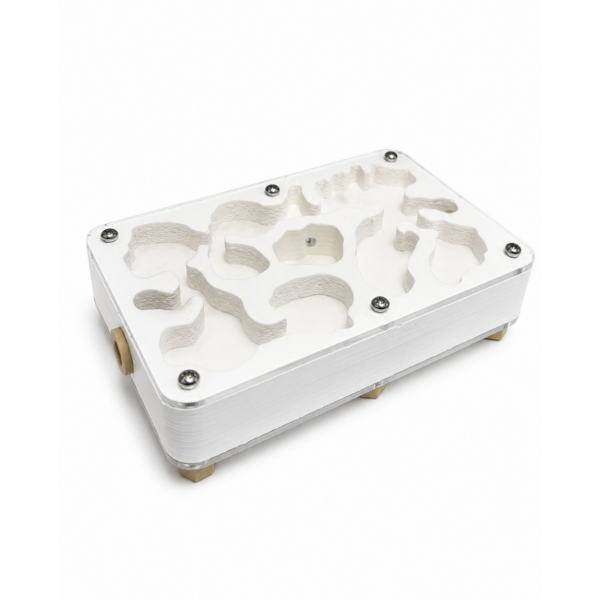
Aanbevolen nest type: Ytong nest, 3D nest, gipsnest of acryl nest
Omdat Camponotus aethiops relatief grote werksters heeft, zijn ze gemakkelijk te observeren. Naarmate de kolonie groeit worden de verschillen tussen minors, media en majors steeds duidelijker zichtbaar.
✅ Waarom kiezen voor Camponotus aethiops
• Grote en goed zichtbare mierensoort
• Mooie diepzwarte tot roodzwarte kleur
• Duidelijke minors, media en majors
• Indrukwekkende majors met brede koppen
• Rustig en interessant foerageergedrag
• Kolonie blijft lange tijd goed overzichtelijk
• Geschikt voor beginners met enige voorbereiding en gevorderden
• Interessante Mediterrane Camponotus-soort


Beoordelingen
Er zijn nog geen beoordelingen.