Zand formicarium
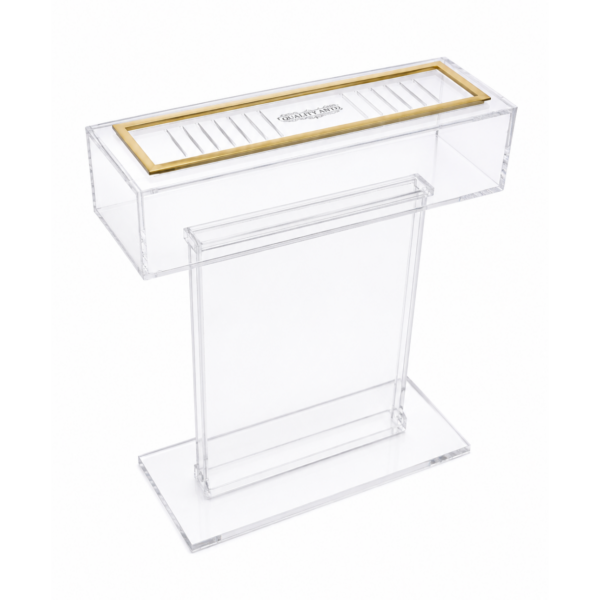
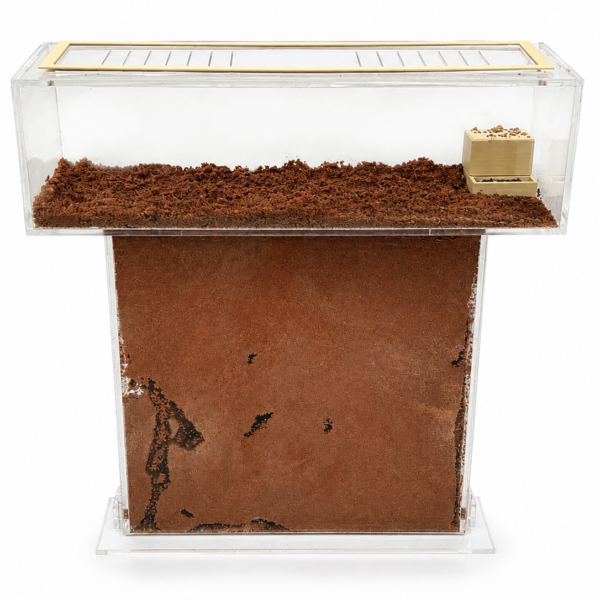
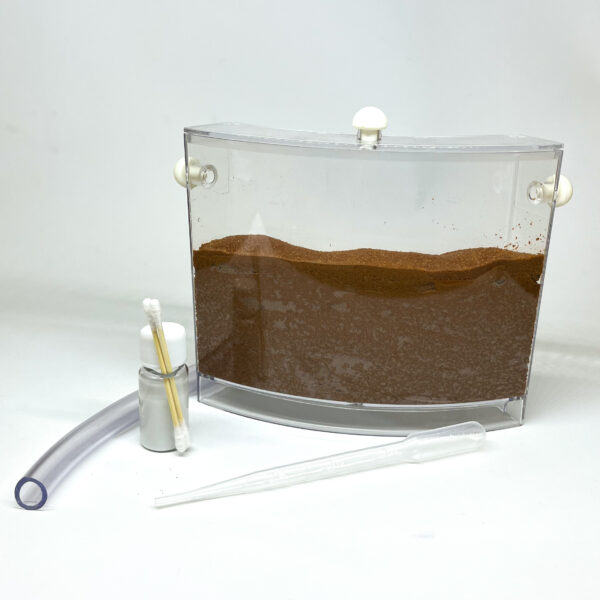
Zand formicarium incl. 400 gram zand/leem
Oorspronkelijke prijs was: €39,99.€29,99Huidige prijs is: €29,99.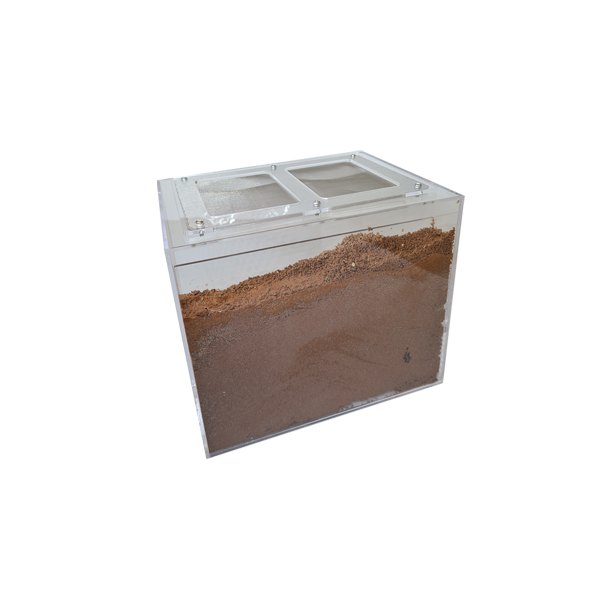
Zand formicarium kopen voor mieren
Ben je op zoek naar een natuurlijk zand formicarium waarin jouw mierenkolonie zelf gangen en kamers kan graven? Dan ben je bij Quality Ants aan het juiste adres. Een zand formicarium bootst de natuurlijke leefomgeving van gravende mierensoorten na en biedt een unieke mogelijkheid om het volledige graafgedrag van een mierenkolonie van dichtbij te observeren. In tegenstelling tot traditionele mierennesten bepalen de mieren hier zelf hoe hun ondergrondse nest eruit komt te zien.
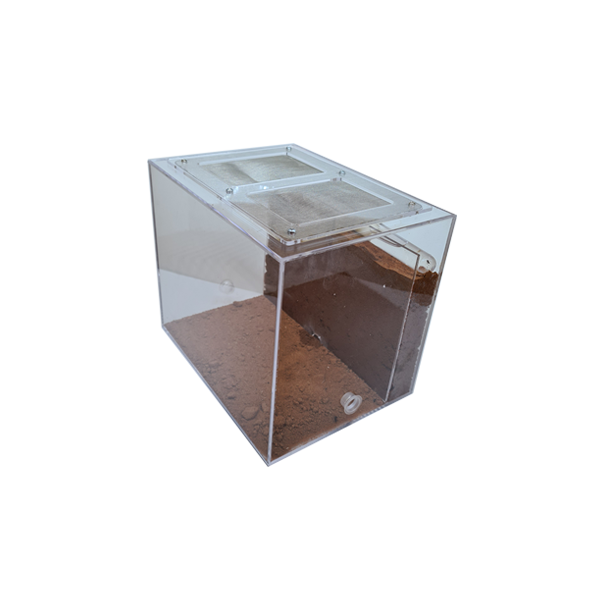
Bij Quality Ants vind je hoogwaardige zand formicaria in verschillende afmetingen. Onze modellen combineren een nest en buitenwereld in één compacte behuizing, waardoor jouw kolonie alles heeft wat nodig is om veilig te leven, voedsel te verzamelen en een volledig eigen ondergronds gangenstelsel aan te leggen. Dankzij de transparante plexiglas wanden kun je iedere ontwikkeling uitstekend volgen. [oai_citation:1‡Quality Ants](https://qualityants.nl/product/zand-formicarium/?utm_source=chatgpt.com)
Wat is een zand formicarium?
Een zand formicarium is een mierennest dat gevuld wordt met een speciaal zand-leemmengsel waarin mieren zelf hun gangen en kamers uitgraven. Hierdoor ontstaat een volledig natuurlijk nest dat zich voortdurend aanpast aan de behoeften van de kolonie. Geen enkel nest ziet er hetzelfde uit, omdat iedere kolonie haar eigen unieke gangenstelsel bouwt.
Dit maakt een zand formicarium één van de meest natuurlijke manieren om een mierenkolonie te houden. Je ziet niet alleen hoe de kolonie groeit, maar ook hoe werksters gezamenlijk nieuwe kamers uitgraven, oude gangen afsluiten en het nest voortdurend aanpassen.
Waarom kiezen voor een zand formicarium?
Een zand formicarium kopen betekent kiezen voor natuurlijk gedrag. Veel mierensoorten leven in de natuur in zand-, klei- of leembodems. In een zand formicarium kunnen zij dit gedrag volledig blijven uitvoeren. Het graven van tunnels, het aanleggen van broedkamers en het aanpassen van de neststructuur behoren allemaal tot het dagelijkse leven van de kolonie.
Daarnaast vormen nest en buitenwereld één geheel. Hierdoor ontstaat een overzichtelijk systeem waarin de werksters gemakkelijk voedsel verzamelen, afval afvoeren en het nest uitbreiden zonder dat extra onderdelen direct nodig zijn. [oai_citation:2‡Quality Ants](https://qualityants.nl/product/zand-formicarium/?utm_source=chatgpt.com)
Een natuurlijk graafgedrag van dichtbij observeren
Het grootste voordeel van een zand mierennest is dat je het natuurlijke graafgedrag van mieren kunt volgen. Zodra de kolonie verhuist naar het formicarium beginnen de eerste werksters vrijwel direct met het uitgraven van tunnels en kamers. Naarmate de kolonie groeit wordt ook het gangenstelsel steeds uitgebreider.
Dankzij de transparante voorzijde zie je precies hoe de werksters samenwerken, zand verplaatsen en nieuwe broedkamers creëren. Hierdoor behoort een zand formicarium tot de meest interessante nesttypen voor liefhebbers die natuurlijk mierengedrag willen observeren.
Voor welke mierensoorten is een zand formicarium geschikt?
Een zand formicarium voor mieren is bijzonder geschikt voor gravende soorten. Denk hierbij aan veel soorten uit de geslachten Messor, Pheidole, Lasius, Tetramorium en diverse andere bodemlevende mierensoorten. Deze soorten graven van nature uitgebreide gangenstelsels en voelen zich snel thuis in een zand-leemmengsel.
Voor mierensoorten die van nature voornamelijk in hout of boomholtes leven, zoals veel Camponotus-soorten, is een zand formicarium doorgaans minder geschikt. Kies daarom altijd een nest dat aansluit bij de natuurlijke leefwijze van de soort. [oai_citation:3‡Quality Ants](https://qualityants.nl/product/zand-formicarium/?utm_source=chatgpt.com)
Waarom een zand formicarium kopen bij Quality Ants?
Onze QA’s zand formicaria zijn ontworpen om zowel gebruiksvriendelijk als natuurlijk te zijn. Ieder formicarium wordt geleverd met een kwalitatief zand-leemmengsel, beschikt over een eenvoudig bevochtigingssysteem en kan worden uitgebreid met extra onderdelen wanneer jouw kolonie groeit. Daarnaast zorgen de transparante wanden ervoor dat je alle werkzaamheden binnen het nest uitstekend kunt volgen.
Of je nu een beginnende mierenhouder bent of al jarenlang ervaring hebt, een zand formicarium van Quality Ants biedt jouw mierenkolonie een natuurlijke leefomgeving waarin zij jarenlang gezond kan groeien.
Waarom kiezen voor een zand formicarium?
Een zand formicarium biedt mieren de mogelijkheid om hun natuurlijke gedrag volledig uit te voeren. In tegenstelling tot voorgevormde mierennesten bepalen de werksters zelf waar gangen, kamers en voedselopslagplaatsen worden aangelegd. Hierdoor ontstaat een uniek ondergronds netwerk dat voortdurend verandert naarmate de kolonie groeit.
Voor veel mierenliefhebbers is juist dit natuurlijke graafgedrag één van de mooiste onderdelen van de hobby. Iedere kolonie bouwt namelijk haar eigen nest en past dit voortdurend aan wanneer de omstandigheden veranderen of de kolonie groter wordt.
Een levende mierenstad onder het zand
Zodra een kolonie verhuist naar een zand nest voor mieren, beginnen de eerste werksters vaak direct met graven. Kleine tunnels worden verbonden met broedkamers, opslagruimtes en rustplaatsen voor de koningin. Naarmate de kolonie groeit ontstaan steeds uitgebreidere gangenstelsels die volledig door de mieren zelf zijn ontworpen.
Dankzij de transparante voorzijde van het formicarium kun je deze ontwikkeling van begin tot eind volgen. Je ziet hoe zandkorrels worden verplaatst, hoe kamers worden vergroot en hoe de werksters voortdurend samenwerken om het nest optimaal in te richten.
Optimale luchtvochtigheid
Een gezonde mierenkolonie heeft behoefte aan een stabiele luchtvochtigheid. Daarom zijn de QA’s zand formicaria voorzien van een eenvoudig bevochtigingssysteem waarmee een gedeelte van het zand vochtig kan worden gehouden. Hierdoor ontstaat een natuurlijke vochtgradiënt waarin de werksters zelf bepalen waar de koningin en het broed worden ondergebracht.
Dit bootst de natuurlijke omstandigheden uitstekend na. In de natuur kiezen mieren immers ook verschillende dieptes binnen het nest om de ideale temperatuur en luchtvochtigheid voor het broed te creëren.
Nest en buitenwereld in één systeem
Een groot voordeel van een zand formicarium kopen is dat nest en buitenwereld vaak gecombineerd zijn in één compacte behuizing. Hierdoor kunnen de werksters eenvoudig voedsel verzamelen, afval afvoeren en tegelijkertijd het ondergrondse nest verder uitbreiden.
Voor beginnende mierenhouders maakt dit de verzorging overzichtelijk, terwijl ervaren liefhebbers profiteren van een compleet systeem dat eenvoudig kan worden uitgebreid wanneer de kolonie groeit.
Geschikt voor gravende mierensoorten
Een zand mierennest is ideaal voor soorten die van nature uitgebreide gangenstelsels in de bodem aanleggen. Vooral Messor, Lasius, Tetramorium, Pheidole, Aphaenogaster en diverse andere bodembewonende mierensoorten voelen zich uitstekend thuis in een zand-leemmengsel.
Doordat de mieren hun eigen nest bouwen, ontstaat een veel natuurlijker leefomgeving dan in voorgevormde nestkamers. Dit stimuleert natuurlijk gedrag en zorgt ervoor dat de kolonie zich veilig voelt.
Eenvoudig uit te breiden
Naarmate jouw mierenkolonie groeit, groeit ook de behoefte aan extra leefruimte. Daarom zijn de QA’s zand formicaria eenvoudig uit te breiden met extra buitenwerelden, verbindingsslangen of aanvullende nestmodules. Hierdoor hoeft de kolonie niet volledig te verhuizen en kan het bestaande gangenstelsel behouden blijven.
Dankzij deze modulaire opbouw vormt een zand formicarium een duurzame investering die jarenlang met jouw kolonie kan meegroeien.
Voor welke mierensoorten is een zand formicarium geschikt?
Een zand formicarium is ideaal voor mierensoorten die in de natuur hun nesten onder de grond aanleggen. Deze soorten graven uitgebreide gangenstelsels en broedkamers in zand, leem of losse aarde. Door deze natuurlijke leefomgeving na te bootsen kunnen de mieren ook in gevangenschap hun instinctieve gedrag blijven vertonen.
Vooral soorten uit de geslachten Messor, Lasius, Tetramorium, Pheidole, Aphaenogaster, Manica en diverse Formica-soorten voelen zich uitstekend thuis in een zand formicarium. De werksters kunnen zelf bepalen waar zij tunnels, voedselkamers en broedkamers aanleggen.
Waarom natuurlijk graafgedrag zo belangrijk is
Graven is voor veel mierensoorten veel meer dan alleen het maken van een nest. Tijdens het graven reguleren werksters de temperatuur, luchtvochtigheid en veiligheid van de kolonie. Wanneer de omstandigheden veranderen, worden bestaande gangen aangepast of volledig opnieuw uitgegraven.
In een zand nest voor mieren blijft dit natuurlijke gedrag volledig behouden. Hierdoor zie je hoe de kolonie zich voortdurend aanpast aan haar eigen behoeften. Dit maakt een zand formicarium één van de meest natuurlijke en interessante nesttypen binnen de mierenhobby.
Volledig uniek gangenstelsel
Geen enkele mierenkolonie bouwt hetzelfde nest. Iedere kolonie maakt haar eigen keuzes bij het aanleggen van tunnels, opslagkamers en broedkamers. Hierdoor ontstaat een volledig uniek gangenstelsel dat met de groei van de kolonie steeds uitgebreider wordt.
Via de transparante voorzijde kun je deze ontwikkeling van dichtbij volgen. Je ziet hoe werksters gezamenlijk zandkorrels verplaatsen, nieuwe kamers uitgraven en bestaande gangen aanpassen. Hierdoor verandert het uiterlijk van het nest voortdurend.
Waarom kiezen voor een QA’s zand formicarium?
Onze QA’s zand formicaria zijn speciaal ontwikkeld om natuurlijk mierengedrag optimaal te ondersteunen. De combinatie van hoogwaardige materialen, een stabiel bevochtigingssysteem en een slim ontwerp zorgt ervoor dat jouw mierenkolonie jarenlang veilig kan groeien.
- Hoogwaardige transparante behuizing.
- Speciaal zand-leemmengsel voor optimale stevigheid.
- Eenvoudig bevochtigingssysteem.
- Natuurlijk graafgedrag blijft volledig behouden.
- Nest en buitenwereld gecombineerd.
- Uitbreidbaar met extra modules.
- Geschikt voor veel Europese en tropische mierensoorten.
- Professionele afwerking voor jarenlang gebruik.
Een formicarium dat meegroeit
Een jonge kolonie heeft weinig ruimte nodig, terwijl grotere kolonies steeds meer gangen en nestkamers aanleggen. Daarom zijn de QA’s zand formicaria eenvoudig uit te breiden met extra modules of buitenwerelden. Hierdoor kan jouw formicarium meegroeien zonder dat de kolonie haar bestaande nest hoeft te verlaten.
Dit vermindert stress en zorgt ervoor dat de natuurlijke ontwikkeling van de kolonie zo min mogelijk wordt verstoord.
Een unieke ervaring voor iedere mierenliefhebber
Een zand formicarium kopen betekent kiezen voor één van de meest natuurlijke manieren om een mierenkolonie te houden. Je observeert niet alleen de groei van de kolonie, maar ook hoe de werksters gezamenlijk een compleet ondergronds gangenstelsel ontwerpen en onderhouden.
Juist deze combinatie van natuurlijk gedrag, uitstekende observatiemogelijkheden en een professionele afwerking maakt een QA’s zand formicarium tot een uitstekende keuze voor zowel beginnende als ervaren mierenhouders.
Veelgemaakte fouten bij het gebruik van een zand formicarium
Een zand formicarium biedt een zeer natuurlijke leefomgeving, maar een goede inrichting en verzorging zijn belangrijk voor een gezonde ontwikkeling van de kolonie. Een veelgemaakte fout is het zand te droog houden. Wanneer het zand volledig uitdroogt, verliezen de gangen hun stevigheid en kunnen deze gedeeltelijk instorten. Hierdoor moeten de werksters onnodig veel energie besteden aan herstelwerkzaamheden.
Het tegenovergestelde komt echter ook regelmatig voor. Wanneer het complete zandpakket voortdurend nat blijft, ontstaat er te weinig verschil tussen vochtige en droge delen van het nest. Veel mierensoorten kiezen in de natuur zelf waar zij hun broed onderbrengen. Een natuurlijke vochtgradiënt is daarom belangrijk voor een gezonde ontwikkeling van de kolonie.
Ook wordt een jonge kolonie soms direct in een te groot zand formicarium geplaatst. Kleine kolonies voelen zich veiliger in een compact nest. Naarmate het aantal werksters groeit, kan het formicarium eenvoudig worden uitgebreid.
Hoe bevochtig je een zand formicarium?
Een zand nest voor mieren hoeft niet volledig nat te zijn. Voeg regelmatig kleine hoeveelheden water toe aan het bevochtigingspunt of één zijde van het zandgedeelte. Het vocht verspreidt zich vervolgens geleidelijk door het zand-leemmengsel waardoor een natuurlijke vochtgradiënt ontstaat.
Hoe vaak je moet bevochtigen hangt af van de temperatuur, de luchtvochtigheid in de ruimte en de mierensoort. Controleer regelmatig het zand en voorkom zowel volledige uitdroging als overmatige verzadiging.
Waarom kiezen zoveel mierenliefhebbers voor een zand formicarium?
Een zand mierennest laat gedrag zien dat in veel andere nesttypes nauwelijks zichtbaar is. Werksters bouwen voortdurend nieuwe gangen, sluiten oude tunnels af en vergroten bestaande broedkamers wanneer de kolonie groeit. Hierdoor verandert het nest vrijwel dagelijks.
Juist dit natuurlijke bouwgedrag maakt een zand formicarium bijzonder populair. Geen twee kolonies bouwen hetzelfde nest, waardoor ieder formicarium een uniek ondergronds landschap wordt.
Combineer jouw zand formicarium met de juiste accessoires
Een goed formicarium vormt de basis van een gezonde mierenkolonie. Door jouw zand formicarium te combineren met een kwalitatieve drinkvoorziening, hoogwaardige mierennectar, geschikte voederinsecten en betrouwbare ontsnappingspreventie creëer je een complete leefomgeving waarin de kolonie optimaal kan groeien.
Daarnaast kunnen onze QA’s zand formicaria eenvoudig worden gekoppeld aan extra buitenwerelden of aanvullende nestmodules. Hierdoor groeit het systeem probleemloos mee wanneer jouw kolonie groter wordt.
Waarom kiezen voor een QA’s zand formicarium?
Onze QA’s zand formicaria zijn ontwikkeld vanuit jarenlange ervaring met het houden van zowel Europese als tropische mierensoorten. Bij ieder ontwerp staan natuurlijk gedrag, gebruiksgemak en duurzaamheid centraal.
- Hoogwaardige transparante plexiglas constructie.
- Speciaal zand-leemmengsel voor stevige tunnels.
- Geïntegreerd bevochtigingssysteem.
- Natuurlijk graafgedrag blijft volledig behouden.
- Nest en buitenwereld in één systeem.
- Eenvoudig uit te breiden.
- Geschikt voor veel gravende mierensoorten.
- Professionele kwaliteit voor jarenlang gebruik.
Een natuurlijke leefomgeving voor iedere mierenkolonie
Wil je jouw mieren zoveel mogelijk natuurlijk gedrag laten vertonen? Dan is een zand formicarium kopen één van de beste keuzes. Werksters kunnen hun eigen nest ontwerpen, tunnels uitbreiden en het complete gangenstelsel aanpassen aan de behoeften van de kolonie.
Met een QA’s zand formicarium van Quality Ants kies je voor een duurzaam, professioneel en natuurlijk mierennest waarin jouw kolonie jarenlang gezond kan groeien en waarin je iedere dag nieuw gedrag kunt observeren.
Waarom een zand formicarium de meest natuurlijke keuze is
Een zand formicarium biedt mieren de mogelijkheid om zich te gedragen zoals zij dat ook in de natuur doen. In plaats van gebruik te maken van vooraf gevormde nestkamers, bouwen de werksters zelf een uitgebreid netwerk van tunnels, broedkamers en opslagruimtes. Hierdoor ontstaat een levend nest dat zich voortdurend aanpast aan de behoeften van de kolonie.
Deze natuurlijke manier van nestbouwen maakt een zand formicarium uniek. Iedere kolonie creëert een eigen gangenstelsel, waardoor geen enkel nest hetzelfde is. Voor mierenliefhebbers is dit één van de mooiste manieren om de ontwikkeling van een kolonie van dichtbij te volgen.
Een formicarium dat met jouw kolonie meegroeit
Een jonge kolonie heeft slechts beperkte ruimte nodig, maar naarmate het aantal werksters toeneemt groeit ook de behoefte aan extra nestoppervlak. Daarom zijn de QA’s zand formicaria ontworpen om eenvoudig uitgebreid te kunnen worden met extra buitenwerelden of aanvullende nestmodules.
Hierdoor blijft de bestaande neststructuur behouden en hoeft de kolonie niet volledig te verhuizen. Dat vermindert stress en zorgt ervoor dat de natuurlijke ontwikkeling van de mieren zo min mogelijk wordt verstoord.
Hoe kies je het juiste zand formicarium?
Bij het kiezen van een zand formicarium voor mieren is het belangrijk om rekening te houden met de mierensoort en de grootte van de kolonie. Kleine kolonies voelen zich veiliger in een compact formicarium, terwijl grotere kolonies profiteren van extra graafruimte en een ruimere buitenwereld.
Ook de natuurlijke leefwijze van de soort speelt een belangrijke rol. Bodembewonende soorten zoals Messor, Lasius, Tetramorium en veel Pheidole-soorten ontwikkelen zich uitstekend in een zand-leemmengsel waarin zij hun eigen nest kunnen bouwen.
Veelgestelde vragen over zand formicaria
Hoe vaak moet ik een zand formicarium bevochtigen?
Dit is afhankelijk van de mierensoort, de temperatuur en de luchtvochtigheid in de ruimte. Controleer regelmatig of een deel van het zand nog licht vochtig is en voeg indien nodig kleine hoeveelheden water toe. Voorkom dat het volledige nest nat wordt.
Kunnen mieren ontsnappen uit een zand formicarium?
Bij correct gebruik en een goede ontsnappingspreventie is de kans op ontsnappen zeer klein. Zorg ervoor dat de deksel goed gesloten is en breng indien nodig een geschikte ontsnappingsbarrière aan langs de bovenrand van de buitenwereld.
Kan iedere mierensoort in een zand formicarium worden gehouden?
Een zand formicarium is vooral geschikt voor gravende mierensoorten. Voor boom- of houtbewonende soorten, zoals veel Camponotus-soorten, zijn houtnesten, Ytong-nesten of 3D-nesten vaak een betere keuze.
Hoe lang gaat een zand formicarium mee?
Dankzij de stevige plexiglas constructie en de duurzame materialen gaat een kwalitatief zand formicarium vele jaren mee. Door het zand-leemmengsel indien nodig te vernieuwen en het formicarium schoon te houden blijft het systeem langdurig in uitstekende conditie.
Waarom een zand formicarium kopen bij Quality Ants?
Bij Quality Ants ontwikkelen wij onze zand formicaria vanuit jarenlange ervaring met het houden en kweken van mieren. Hierdoor profiteer je van een doordacht ontwerp, hoogwaardige materialen, een eenvoudig bevochtigingssysteem en een natuurlijke leefomgeving waarin jouw mieren optimaal kunnen groeien.
Bestel jouw zand formicarium eenvoudig online
Wil je jouw mierenkolonie een zo natuurlijk mogelijke leefomgeving bieden? Dan is een zand formicarium kopen de perfecte keuze. Bij Quality Ants vind je professionele zand formicaria in verschillende afmetingen, geschikt voor zowel beginnende als ervaren mierenhouders.
Combineer jouw zand formicarium met hoogwaardige mierennectar, voederinsecten, drinkvoorzieningen en andere accessoires uit ons assortiment om een complete leefomgeving te creëren waarin jouw kolonie jarenlang gezond kan groeien.
Bestel vandaag nog jouw QA’s zand formicarium bij Quality Ants en ontdek hoe fascinerend het is om een mierenkolonie volledig haar eigen ondergrondse wereld te zien bouwen. Dankzij de natuurlijke graafmogelijkheden, het slimme ontwerp en de professionele afwerking behoort een QA’s zand formicarium tot de mooiste en meest natuurlijke huisvestingen voor mieren.