
Mierenvoeding kopen – De complete gids voor gezonde en actieve mierenkolonies
Goede voeding vormt de basis van iedere gezonde mierenkolonie. Of je nu een beginnende mierenhouder bent of al jarenlang exotische mierensoorten verzorgt, de juiste voeding heeft een enorme invloed op de gezondheid, groei en ontwikkeling van je kolonie.
Werksters hebben dagelijks energie nodig om voedsel te verzamelen, het broed te verzorgen en het nest te onderhouden. Larven hebben juist behoefte aan eiwitten om uit te groeien tot sterke werksters, soldaten of nieuwe koninginnen. Daarnaast hebben sommige soorten, zoals Messor barbarus, een gevarieerd aanbod van zaden nodig.
In deze uitgebreide gids ontdek je welke voeding jouw mieren nodig hebben, hoe vaak je moet voeren en waarom hoogwaardige producten zoals Nectra een uitstekende keuze zijn als dagelijkse koolhydraatbron.
Waarom is goede mierenvoeding zo belangrijk?
Net als ieder ander dier hebben mieren behoefte aan een uitgebalanceerd dieet. Onjuiste of onvoldoende voeding kan leiden tot een tragere ontwikkeling van het broed, minder actieve werksters en een langzamere groei van de kolonie.
Een gezond voedingspatroon zorgt voor:
- Een actieve en energieke kolonie.
- Snellere ontwikkeling van larven en poppen.
- Sterke werksters en soldaten.
- Een gezonde koningin.
- Optimale koloniegroei.
- Een langere levensduur van de kolonie.
Door kwalitatieve voeding te geven, creëer je de beste omstandigheden voor jarenlang succesvol mieren houden.
Wat eten mieren?
De meeste mierensoorten zijn alleseters, maar hun voedingsbehoefte verschilt per soort. In de natuur verzamelen mieren nectar, honingdauw, insecten, zaden, vruchten en andere organische voedingsbronnen.
In gevangenschap bestaat een compleet voedingspatroon meestal uit vier onderdelen:
- Koolhydraten als belangrijkste energiebron.
- Eiwitten voor de ontwikkeling van het broed.
- Vers drinkwater.
- Zaden voor zaadetende soorten zoals Messor.
Door deze voedingsstoffen op de juiste manier aan te bieden, blijft jouw kolonie gezond en actief.
Koolhydraten – De belangrijkste energiebron
Volwassen werksters gebruiken koolhydraten als brandstof voor vrijwel al hun dagelijkse activiteiten. Zonder voldoende suikers zullen werksters minder actief worden en kan de ontwikkeling van de kolonie vertragen.
Geschikte koolhydraatbronnen zijn:
- Mierennectar.
- Suikerwater.
- Honingwater.
- Speciale vloeibare mierenvoeding.
Voor de meeste mierensoorten is het aan te raden om altijd een koolhydraatbron beschikbaar te hebben, zodat de werksters op ieder moment energie kunnen opnemen.
Waarom kiezen voor Nectra?
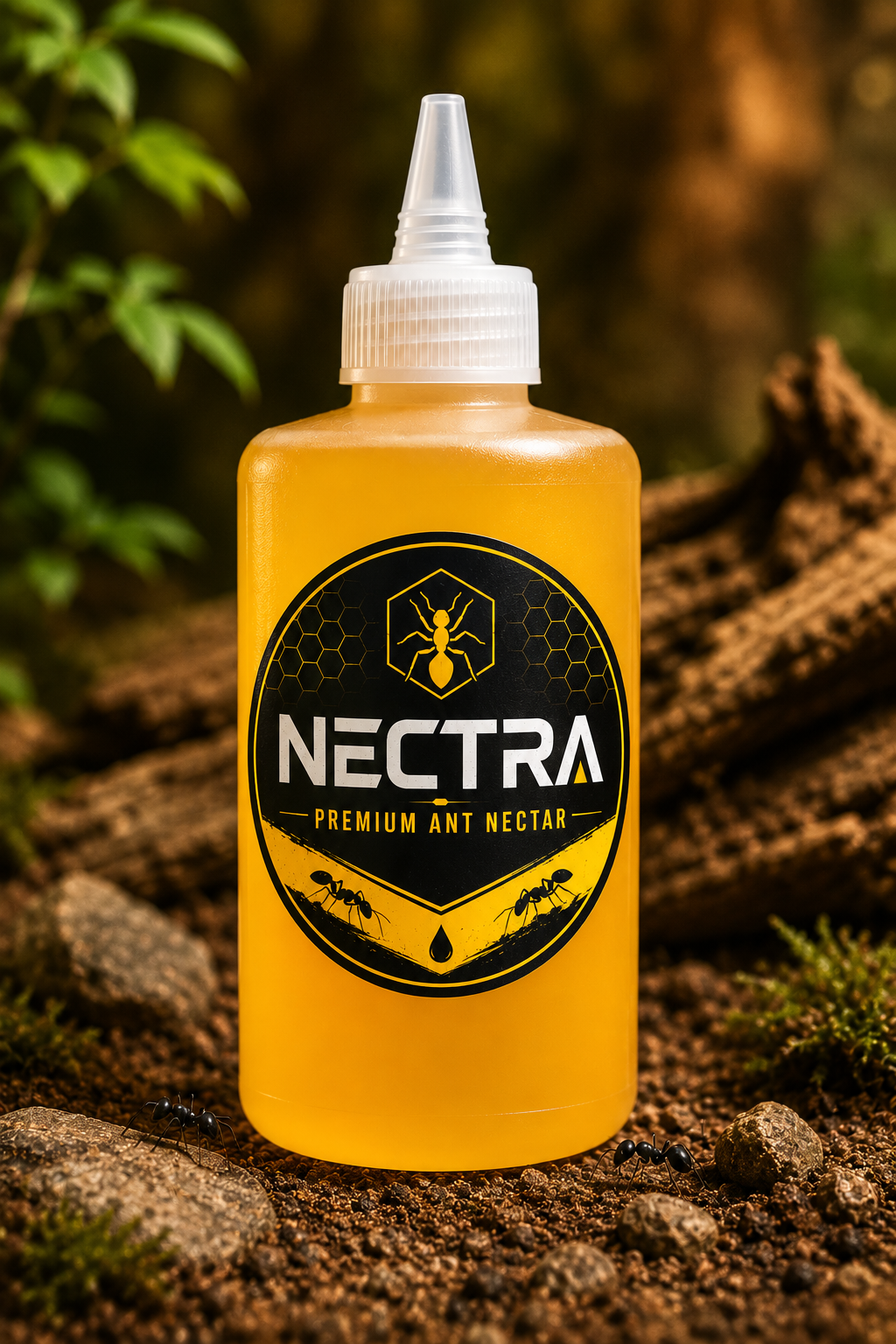
Nectra is een hoogwaardige, gebruiksklare mierennectar die speciaal is ontwikkeld als dagelijkse koolhydraatbron voor mierenkolonies.
In tegenstelling tot zelfgemaakt suikerwater hoef je Nectra niet te mengen of te bereiden. Hierdoor is het eenvoudig in gebruik en altijd direct klaar om aan je kolonie te voeren.
Voordelen van Nectra
- Direct klaar voor gebruik.
- Lang houdbaar bij correcte opslag.
- Geschikt voor vrijwel alle mierensoorten.
- Ideaal voor gebruik in een liquid feeder.
- Eenvoudig en schoon te doseren.
- Geen geknoei met suiker of honing.
- Perfect voor zowel beginners als ervaren mierenhouders.
Door Nectra regelmatig aan te bieden, beschikken jouw werksters altijd over een betrouwbare energiebron die eenvoudig en hygiënisch te gebruiken is.
Eiwitten – Onmisbaar voor gezond broed
Waar koolhydraten voornamelijk dienen als energiebron voor volwassen werksters, zijn eiwitten essentieel voor de ontwikkeling van larven. Zonder voldoende eiwitten kunnen larven zich niet ontwikkelen tot gezonde werksters, soldaten of gevleugelde mieren.
Hoe groter de hoeveelheid broed, hoe groter de behoefte aan eiwitrijk voedsel. Vooral snelgroeiende kolonies hebben regelmatig een goede eiwitbron nodig.
Geschikte eiwitbronnen zijn onder andere:
- Dubia kakkerlakken.
- Red Runner kakkerlakken.
- Krekels.
- Meelwormen.
- Fruitvliegen.
- Huisvliegen.
- Sprinkhanen.
Voederinsecten bevatten belangrijke voedingsstoffen die bijdragen aan een gezonde ontwikkeling van het broed en een sterke kolonie.
Zaden voor Messor-soorten
Niet iedere mierensoort eet zaden, maar soorten uit het geslacht Messor zijn echte zaadverzamelaars. Zij slaan zaden op in het nest en verwerken deze tot het bekende mierenbrood, dat als belangrijke voedselbron dient.
Geschikte zaden zijn onder andere:
- Kanariezaad.
- Gierst.
- Graszaden.
- Paardenbloemzaden.
- Verschillende wilde kruidenzaden.
Een gevarieerde zadenmix stimuleert natuurlijk foerageergedrag en draagt bij aan een gezonde ontwikkeling van de kolonie.
Vers drinkwater
Naast voeding hebben mieren altijd toegang nodig tot schoon drinkwater. Water speelt een belangrijke rol bij de verzorging van het broed en helpt de kolonie gezond te houden.
Geschikte drinkvoorzieningen zijn:
- Waterreservoirs.
- Reageerbuizen met water.
- Liquid feeders.
- Kleine drinkbakjes met watten.
Controleer regelmatig of er voldoende schoon water beschikbaar is, vooral tijdens warme periodes.
Hoe vaak moet je mieren voeren?
Hoe vaak je moet voeren hangt af van de soort, de grootte van de kolonie en de hoeveelheid broed.
Als algemene richtlijn geldt:
- Laat koolhydraten zoveel mogelijk beschikbaar zijn.
- Geef meerdere keren per week eiwitrijk voedsel wanneer er broed aanwezig is.
- Bied Messor-soorten altijd voldoende zaden aan.
Verwijder resten van voederinsecten na één tot twee dagen om schimmelvorming en ongewenste insecten te voorkomen.
Veelgemaakte fouten bij het voeren
Veel beginnende mierenhouders maken onbewust fouten bij het voeren van hun kolonie.
- Te veel voedsel tegelijk aanbieden.
- Voederinsecten te lang laten liggen.
- Alleen suiker geven zonder eiwitten.
- Geen vers drinkwater aanbieden.
- Te veel honing of suikerwater morsen in het nest.
Een schoon formicarium en een uitgebalanceerd voedingsschema zorgen ervoor dat je kolonie gezond blijft.
Waarom mierenvoeding kopen bij Quality Ants?
Bij Quality Ants vind je alles wat je nodig hebt om jouw mierenkolonie optimaal te verzorgen. Van hoogwaardige voederinsecten en zadenmixen tot professionele accessoires en de gebruiksklare mierennectar Nectra.
Onze producten zijn zorgvuldig geselecteerd en geschikt voor zowel beginnende als ervaren mierenhouders.
- Hoogwaardige kwaliteit.
- Geschikt voor tientallen mierensoorten.
- Professioneel getest.
- Snelle verzending.
- Uitstekende klantenservice.
Conclusie
Een gezonde mierenkolonie begint met de juiste voeding. Door een goede balans tussen koolhydraten, eiwitten, vers drinkwater en – indien nodig – zaden aan te bieden, geef je jouw kolonie de beste basis voor een gezonde groei.
Met producten zoals Nectra maak je het voeren eenvoudiger, schoner en betrouwbaarder. In combinatie met kwalitatieve voederinsecten en een goed ingericht formicarium zorg je ervoor dat jouw mieren zich optimaal kunnen ontwikkelen.
Veelgestelde vragen (FAQ)
Wat is de beste voeding voor mieren?
De meeste mierensoorten hebben behoefte aan koolhydraten, eiwitten en vers drinkwater. Zaadetende soorten zoals Messor hebben daarnaast een gevarieerde zadenmix nodig.
Hoe vaak moet ik mijn mieren voeren?
Koolhydraten mogen vrijwel altijd beschikbaar zijn. Eiwitten geef je meerdere keren per week, afhankelijk van de hoeveelheid broed.
Is Nectra geschikt voor alle mierensoorten?
Nectra is geschikt als koolhydraatbron voor vrijwel alle mierensoorten. Voor een compleet dieet is het belangrijk daarnaast ook eiwitten en, indien nodig, zaden aan te bieden.
Hebben mieren altijd water nodig?
Ja. Zorg ervoor dat jouw kolonie altijd toegang heeft tot schoon drinkwater.
Waarom is eiwitrijk voedsel belangrijk?
Eiwitten zijn noodzakelijk voor de ontwikkeling van larven en zorgen ervoor dat nieuwe werksters en soldaten gezond kunnen opgroeien.
Voeding per mierensoort
Niet iedere mierensoort heeft precies dezelfde voedingsbehoefte. Hoewel vrijwel alle soorten koolhydraten en eiwitten nodig hebben, verschilt de verhouding per soort. Door de voeding af te stemmen op jouw mierensoort stimuleer je een gezonde ontwikkeling van de kolonie.
Messor barbarus
Messor barbarus is een zaadetende mierensoort. Het grootste deel van hun voeding bestaat uit een gevarieerde zadenmix, die door de werksters wordt verzameld en verwerkt tot het bekende mierenbrood.
Naast zaden hebben ook Messor-kolonies behoefte aan:
- Nectra als dagelijkse koolhydraatbron.
- Voederinsecten tijdens de groei van het broed.
- Altijd vers drinkwater.
Een combinatie van kwalitatieve zaden, eiwitten en Nectra zorgt voor een optimale ontwikkeling van de kolonie.
Camponotus-soorten
Camponotus-soorten behoren tot de grootste mieren die in gevangenschap worden gehouden. Door hun relatief grote lichaam hebben de werksters veel energie nodig.
Een gezond voedingsschema bestaat uit:
- Nectra als vaste koolhydraatbron.
- Regelmatig voederinsecten.
- Vers drinkwater.
Kolonies met veel larven hebben aanzienlijk meer eiwitten nodig dan kolonies zonder broed.
Lasius niger
Lasius niger behoort tot de populairste mierensoorten voor beginners. Deze soort accepteert vrijwel alle gangbare vormen van mierenvoeding.
Geschikt voedsel bestaat uit:
- Nectra.
- Kleine voederinsecten.
- Suikerhoudende vloeistoffen.
- Vers drinkwater.
Een kleine hoeveelheid voeding is meestal voldoende. Overvoeren is niet nodig.
Pheidole-soorten
Pheidole-soorten staan bekend om hun soldaten en snelle groei. Door deze snelle ontwikkeling is de behoefte aan eiwitten vaak groter dan bij veel andere soorten.
Voor een gezonde groei wordt aanbevolen:
- Dagelijks een koolhydraatbron zoals Nectra.
- Meerdere keren per week voederinsecten.
- Voldoende vers drinkwater.
Vooral tijdens periodes met veel broed zal de voedselconsumptie sterk toenemen.
Tetramorium-soorten
Tetramorium-kolonies groeien vaak snel en zijn zeer actief tijdens het foerageren. Een constante energiebron is daarom belangrijk.
Combineer:
- Nectra.
- Voederinsecten.
- Vers water.
Verwijder voedselresten regelmatig om schimmelvorming te voorkomen.
Formica-soorten
Formica-soorten verzamelen in de natuur onder andere honingdauw en insecten. Ook in gevangenschap hebben zij behoefte aan een goede balans tussen koolhydraten en eiwitten.
Nectra vormt hierbij een uitstekende dagelijkse energiebron, aangevuld met voederinsecten wanneer er broed aanwezig is.
Harpegnathos venator
Harpegnathos venator is een actieve jachtmier die relatief veel dierlijk voedsel consumeert.
Een goed voedingsschema bestaat uit:
- Regelmatig levende of verse voederinsecten.
- Nectra als aanvullende energiebron.
- Altijd schoon drinkwater.
Oecophylla smaragdina
Oecophylla smaragdina is een zeer actieve boommier die dagelijks veel energie verbruikt.
Voor een gezonde kolonie is het belangrijk om voortdurend een koolhydraatbron zoals Nectra beschikbaar te houden en daarnaast regelmatig eiwitrijk voedsel aan te bieden.
Waarom kiezen steeds meer mierenhouders voor Nectra?
Steeds meer mierenhouders stappen over op een gebruiksklare mierennectar. Dit bespaart tijd en voorkomt fouten bij het mengen van suikerwater of honingwater.
Nectra biedt verschillende voordelen:
- Altijd dezelfde betrouwbare samenstelling.
- Gebruiksklaar.
- Geschikt voor vrijwel alle mierensoorten.
- Ideaal voor dagelijks gebruik.
- Eenvoudig te gebruiken in Liquid Feeders.
- Lang houdbaar bij correcte opslag.
Hierdoor is Nectra een uitstekende keuze voor zowel beginnende als ervaren mierenhouders die hun kolonie op een eenvoudige en betrouwbare manier willen voorzien van een hoogwaardige koolhydraatbron.
Voedingsschema voor mierenkolonies
Hoeveel voeding een mierenkolonie nodig heeft, hangt af van de soort, de temperatuur, de hoeveelheid broed en het aantal werksters. Een jonge kolonie heeft vanzelfsprekend minder voedsel nodig dan een kolonie met honderden werksters.
Onderstaand voedingsschema dient als algemene richtlijn. Observeer altijd het gedrag van jouw kolonie en pas de hoeveelheid voeding hierop aan.
Koningin zonder werksters
Bij claustrale mierensoorten heeft een koningin tijdens de stichting meestal geen extra voeding nodig. Zij leeft van haar eigen vet- en spierreserves totdat de eerste werksters zijn geboren.
Niet-claustrale soorten vormen hierop een uitzondering en moeten tijdens de stichting wel gevoerd worden.
Zorg altijd voor:
- Een rustige omgeving.
- Voldoende water in de reageerbuis.
- Zo min mogelijk verstoring.
Kolonie met 1 tot 10 werksters
Kleine kolonies eten slechts kleine hoeveelheden voedsel. Geef liever meerdere kleine porties dan één grote hoeveelheid.
Aanbevolen voedingsschema:
- Nectra: 2 tot 3 keer per week een kleine druppel.
- Voederinsect: 1 tot 2 keer per week.
- Vers drinkwater: altijd beschikbaar.
Kolonie met 10 tot 50 werksters
Wanneer de eerste larven zich ontwikkelen neemt de voedselbehoefte snel toe.
Aanbevolen voedingsschema:
- Nectra: vrijwel continu beschikbaar.
- Voederinsecten: 2 tot 3 keer per week.
- Zaden (voor Messor): altijd beschikbaar.
- Vers drinkwater.
Kolonie met 50 tot 100 werksters
Vanaf ongeveer vijftig werksters wordt de groei vaak zichtbaar sneller. Vooral wanneer veel larven aanwezig zijn zal de vraag naar eiwitten toenemen.
Aanbevolen voedingsschema:
- Nectra: continu beschikbaar.
- Voederinsecten: 3 tot 4 keer per week.
- Voldoende zaden voor zaadetende soorten.
- Dagelijks controleren op vers drinkwater.
Kolonies met meer dan 100 werksters
Grotere kolonies kunnen verrassend veel voedsel verwerken. Het is verstandig om de hoeveelheid voeding geleidelijk op te bouwen en goed te observeren hoeveel daadwerkelijk wordt gegeten.
Een gezonde grote kolonie profiteert van:
- Dagelijks toegang tot Nectra.
- Meerdere voederinsecten per week.
- Altijd schoon drinkwater.
- Een ruime voorraad zaden bij Messor-soorten.
Hoe bied je Nectra het beste aan?
Nectra is ontwikkeld om het voeren van mieren zo eenvoudig mogelijk te maken. Omdat het product direct klaar is voor gebruik, hoef je niets meer te mengen of te verdunnen.
Je kunt Nectra aanbieden in:
- Een Liquid Feeder.
- Een klein voerbakje.
- Een voedingsplateau.
Plaats de voeding altijd in de arena en niet direct in het nest. Hierdoor blijft het nest schoner en verklein je de kans op vervuiling.
Hoe voorkom je schimmel bij voeding?
Schimmel ontstaat meestal doordat voedselresten te lang blijven liggen of doordat de luchtvochtigheid te hoog is.
Enkele eenvoudige tips:
- Verwijder voederinsecten binnen 24 tot 48 uur.
- Ververs vloeibare voeding regelmatig.
- Maak voerbakjes schoon.
- Zorg voor voldoende ventilatie.
- Voer liever kleine hoeveelheden dan te veel tegelijk.
Een schoon formicarium vermindert niet alleen de kans op schimmel, maar ook op mijten en andere ongewenste organismen.
Waarom kiezen voor hoogwaardige mierenvoeding?
Voeding van goede kwaliteit draagt direct bij aan de gezondheid van jouw mierenkolonie. Werksters blijven actiever, larven ontwikkelen zich sneller en de koningin blijft in optimale conditie.
Door te kiezen voor kwalitatieve producten zoals Nectra en verse voederinsecten geef je jouw kolonie de beste basis voor een gezonde en langdurige ontwikkeling.
Veelgestelde vragen over mierenvoeding
Wat is de beste voeding voor mieren?
De beste voeding bestaat uit een combinatie van koolhydraten, eiwitten en vers drinkwater. Zaadetende soorten zoals Messor barbarus hebben daarnaast een gevarieerde zadenmix nodig. Een evenwichtig voedingspatroon zorgt voor gezonde werksters, een sterke koningin en een optimale ontwikkeling van het broed.
Is Nectra geschikt voor alle mierensoorten?
Ja. Nectra is geschikt als dagelijkse koolhydraatbron voor vrijwel alle mierensoorten. Het is echter belangrijk om daarnaast ook voldoende eiwitten aan te bieden wanneer de kolonie larven heeft. Zaadetende soorten hebben bovendien behoefte aan een geschikte zadenmix.
Hoe vaak moet ik Nectra geven?
Voor de meeste kolonies mag Nectra vrijwel altijd beschikbaar zijn. Controleer regelmatig of de voeding nog schoon is en vervang deze indien nodig. Grotere kolonies zullen meer nectar verbruiken dan kleine kolonies.
Kan ik zelf suikerwater maken?
Dat kan, maar zelfgemaakt suikerwater kan sneller bederven en de verhouding tussen water en suiker is niet altijd optimaal. Een gebruiksklaar product zoals Nectra is eenvoudig te doseren en direct klaar voor gebruik.
Waarom eten mijn mieren niet?
Er zijn verschillende oorzaken mogelijk. De kolonie kan zich in een rustperiode bevinden, voldoende voedsel hebben opgeslagen of gestrest zijn door een verhuizing. Controleer daarnaast of de temperatuur, luchtvochtigheid en het aangeboden voedsel geschikt zijn voor de betreffende soort.
Kunnen mieren fruit eten?
Sommige mierensoorten drinken graag zoete sappen uit fruit, maar fruit bederft snel en kan fruitvliegjes of schimmel aantrekken. Een hoogwaardige mierennectar zoals Nectra is daarom vaak een hygiënischer en betrouwbaarder alternatief.
Mogen mieren honing eten?
Ja, veel mierensoorten accepteren honing. Gebruik echter kleine hoeveelheden, omdat honing kleverig is en snel vervuiling kan veroorzaken. Een speciaal ontwikkelde mierennectar is vaak gemakkelijker en schoner in gebruik.
Welke voederinsecten zijn het meest geschikt?
Dubia kakkerlakken, Red Runner kakkerlakken, meelwormen, krekels, fruitvliegen en huisvliegen behoren tot de meest gebruikte voederinsecten. Kies altijd insecten van goede kwaliteit en verwijder resten tijdig.
Hebben mieren altijd eiwitten nodig?
Volwassen werksters eten voornamelijk koolhydraten. Eiwitten zijn vooral belangrijk wanneer de kolonie larven heeft. Tijdens perioden zonder broed is de behoefte aan eiwitten aanzienlijk kleiner.
Moet ik mijn mieren iedere dag voeren?
Dat hangt af van de grootte van de kolonie. Kleine kolonies hebben minder voedsel nodig dan grote kolonies. Koolhydraten mogen vaak continu beschikbaar zijn, terwijl eiwitten meerdere keren per week worden aangeboden.
Tips voor een gezonde mierenkolonie
Naast goede voeding zijn ook de leefomstandigheden van groot belang. Door onderstaande tips toe te passen vergroot je de kans op een gezonde en snelgroeiende kolonie.
- Zorg altijd voor vers drinkwater.
- Voer liever kleine hoeveelheden dan te veel tegelijk.
- Verwijder voedselresten op tijd.
- Controleer regelmatig de luchtvochtigheid.
- Houd de juiste temperatuur aan voor jouw mierensoort.
- Gebruik kwalitatieve voeding.
- Voorkom onnodige verstoring van het nest.
- Maak de arena regelmatig schoon.
Waarom kiezen voor Quality Ants?
Bij Quality Ants vind je alles wat je nodig hebt om jouw mierenkolonie optimaal te verzorgen. Van complete startersets en professionele formicaria tot hoogwaardige voederinsecten, zadenmixen, accessoires en de gebruiksklare mierennectar Nectra.
Onze producten worden zorgvuldig geselecteerd en zijn geschikt voor zowel beginnende als ervaren mierenhouders. Daarnaast helpen wij je graag met deskundig advies, zodat jouw kolonie zich optimaal kan ontwikkelen.
- Groot assortiment mierenvoeding.
- Professionele kwaliteit.
- Geschikt voor tientallen mierensoorten.
- Snelle verzending.
- Persoonlijk advies.
- Alles voor de complete verzorging van jouw mierenkolonie.
Conclusie
Het kopen van goede mierenvoeding is één van de belangrijkste investeringen die je kunt doen voor een gezonde en actieve mierenkolonie. Door een uitgebalanceerd dieet met koolhydraten, eiwitten, vers drinkwater en – waar nodig – zaden aan te bieden, geef je jouw kolonie de beste basis voor een sterke groei.
Nectra biedt een eenvoudige, schone en betrouwbare manier om jouw mieren dagelijks van hoogwaardige koolhydraten te voorzien. In combinatie met verse voederinsecten en een goed ingericht formicarium creëer je de ideale omstandigheden voor jarenlang plezier van jouw mierenkolonie.
Ben je op zoek naar hoogwaardige mierenvoeding, voederinsecten of een complete starterset? Bekijk dan het uitgebreide assortiment van Quality Ants en geef jouw mieren de verzorging die ze verdienen.