Buy Pheidole noda
Are you looking for an active tropical ant species with an impressive caste system? Then Pheidole noda an excellent choice. This special Asian ant species is known for the clear distinction between small workers (minor workers) and large soldiers (major workers). The soldiers, in particular, with their enormous heads and powerful jaws, make Pheidole noda a striking presence within the ant hobby. Thanks to rapid development, active foraging, and fascinating division of labor, this species is one of the most popular tropical Pheidole species.
At Quality Ants, you can buy a healthy Pheidole noda colony. Every colony is carefully inspected before shipment and consists of a healthy queen, vital brood, and active workers. As soon as the first soldiers appear, the colony takes on its characteristic appearance, and the social behavior becomes even more interesting to observe.
Why buy Pheidole noda?
Pheidole noda is distinguished by the presence of two distinct worker castes. The small workers care for the brood, gather food, and maintain the nest, while the large soldiers are responsible for defending the colony and processing larger food sources. This natural division of labor ensures particularly efficient cooperation.
Anyone wishing to purchase a Pheidole nodachooses an ant species where continuous activity is visible. Workers respond quickly to food and communicate effectively via scent trails, establishing long foraging routes between the nest and the outside world within a short time.
Origin of Pheidole noda
Pheidole noda is native to large parts of East and Southeast Asia. The species lives primarily in warm forests, grasslands, and other areas where sufficient food is available. Nests are usually constructed in the soil, under stones, between tree roots, or in rotting wood. Due to this habitat, Pheidole noda is excellently adapted to warm temperatures and a moderately humid environment.
In a well-designed formicarium, the workers display much natural behavior. They constantly dig new tunnels, gather food, and collectively care for the brood. As the colony grows, more and more soldiers are produced, making the difference between the two worker hives clearly visible.
An active ant with impressive soldiers
A healthy Pheidole noda colony grows relatively quickly under optimal conditions. The first soldiers usually appear as soon as the colony has reached a certain size. Thanks to their enormous heads and powerful jaws, these majors are instantly recognizable and constitute one of the greatest attractions of this species.
It is precisely the combination of rapid colony growth, an active lifestyle, and the impressive soldiers that makes Pheidole noda particularly suitable for enthusiasts who want to observe a lot of natural behavior on a daily basis.
Why buy Pheidole noda from Quality Ants?
At Quality Ants, you receive only healthy Pheidole noda colonies that are carefully checked before shipment. In addition, we are happy to assist you with expert advice on temperature, nutrition, humidity, and the optimal setup of your formicarium.
In addition to healthy colonies, at Quality Ants you will also find professional ant nests, complete starter kits, high-quality ant nectar, feeder insects, and all accessories. This way, you give your Pheidole noda the best conditions from day one to grow healthily for years to come.
caring for Pheidole noda
When you decide to buy a Pheidole noda colony, it is important to create a warm and stable living environment. This tropical ant species feels most comfortable at a constant temperature, in a slightly damp nest, and with a varied diet. Under optimal conditions, the queen remains active laying eggs, and the colony steadily grows into an impressive society with both minor and major workers.
The ideal temperature for Pheidole noda
Pheidole noda develops best at temperatures between 24°C and 28°C. Within this temperature range, eggs, larvae, and pupae develop rapidly, and the worker bees remain very active. A heating cable or heating mat under approximately one-third of the nest creates a natural temperature gradient, allowing the worker bees to choose where to place the brood.
By heating part of the nest and keeping part cooler, a natural situation is created that aligns with the behavior of the colony.
Humidity
Pheidole noda requires a slightly to moderately moist nest environment. Keep one section of the nest moist and leave the remaining chambers drier. This allows the worker bees to constantly move the eggs, larvae, and pupae to the conditions that are most suitable at that moment.
Good ventilation is important to prevent mold formation and condensation. Stable humidity contributes to the healthy development of the brood.
Nutrition of Pheidole noda
A healthy Pheidole noda colony requires both carbohydrates and proteins. High-quality ant nectar forms the main energy source for the adult worker ants. In addition, forage insects such as fruit flies, buffalo worms, mealworms, cockroaches, and small crickets are indispensable for the healthy development of the larvae.
Especially when the colony has a large brood, the need for protein-rich food increases sharply. By regularly feeding a varied diet, both the small workers and the large soldiers develop optimally.
Winter rest
Pheidole noda does not require a winter dormancy. Because this species originates from tropical regions, the colony remains active all year round at a constant temperature. The queen can continue to produce new eggs for long periods when living conditions are favorable.
The ideal formicarium
If you want to buy a Pheidole noda, choose a well-sealed formicarium with sufficient nesting space and a spacious outside area. Gypsum nests, acrylic nests, and sand-loam nests are all suitable, as long as the humidity can be properly regulated.
Young colonies feel safest in a compact nest. As the colony grows, the formicarium can easily be expanded with additional nest modules.
An active species with impressive soldiers
Pheidole noda is one of the most active tropical ant species. Workers are almost constantly engaged in foraging, caring for the brood, and expanding the nest. As soon as the first soldiers appear, the behavior of the colony also changes. The large majors help process larger food sources and contribute to the defense of the nest.
Anyone who buys a Pheidole noda colonychooses a tropical ant species that offers years of viewing pleasure thanks to its active lifestyle, rapid development, and impressive soldiers.
The behavior of Pheidole noda
Anyone purchasing a Pheidole noda colonyis choosing an ant species with an exceptional division of labor and high activity. The workers spend virtually the entire day gathering food, caring for the brood, and expanding the nest. As soon as food is offered, the small workers react lightning-fast, and within minutes a clear foraging route is established between the nest and the food source.
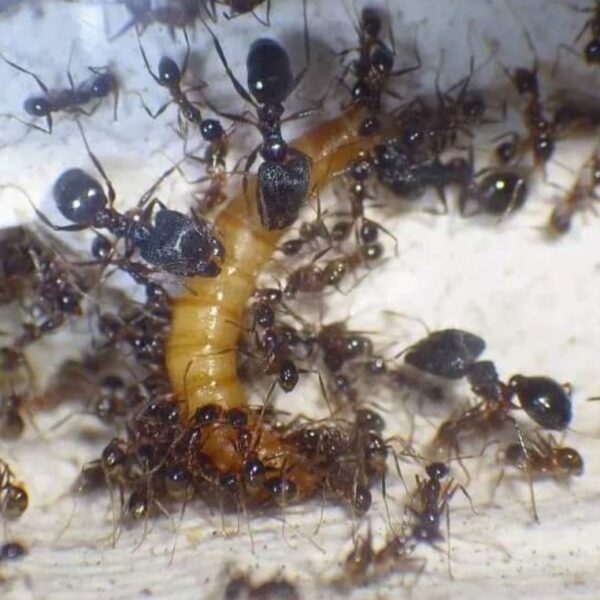
What makes Pheidole noda special is the clear distinction between the two worker castes. The small workers, also called minors, perform the majority of the daily tasks. The large soldiers, or majors, possess a strikingly large head with powerful jaws and play an important role in the defense of the colony and the processing of larger food sources.
A natural division of tasks
Within a healthy Pheidole noda colony, every ant has its own function. The minors care for the queen, clean the nest, care for eggs, larvae, and pupae, and actively search for food. The majors support the colony when larger prey need to be processed or when the nest needs to be defended.
This clear division of labor ensures that the colony functions particularly efficiently. As the colony grows, the number of soldiers also increases, making the difference between the two worker castes increasingly striking.
Colony growth of Pheidole noda
After purchasing a Pheidole noda colony, the colony develops relatively quickly under warm conditions. The queen lays new eggs regularly, and the workers care for the brood intensively. When the colony becomes sufficiently large, more and more soldiers appear, contributing to the further development of the colony.
Due to the combination of high activity and rapid expansion, Pheidole noda is one of the most interesting tropical ant species for enthusiasts who enjoy observing a dynamic colony.
Foraging behavior
Pheidole noda is an opportunistic omnivore. In the wild, the worker ants collect small insects, seeds, sweet plant sap, and other available food sources. In a formicarium, they readily accept high-quality ant nectar and various feeder insects such as fruit flies, mealworms, buffalo worms, cockroaches, and small crickets.
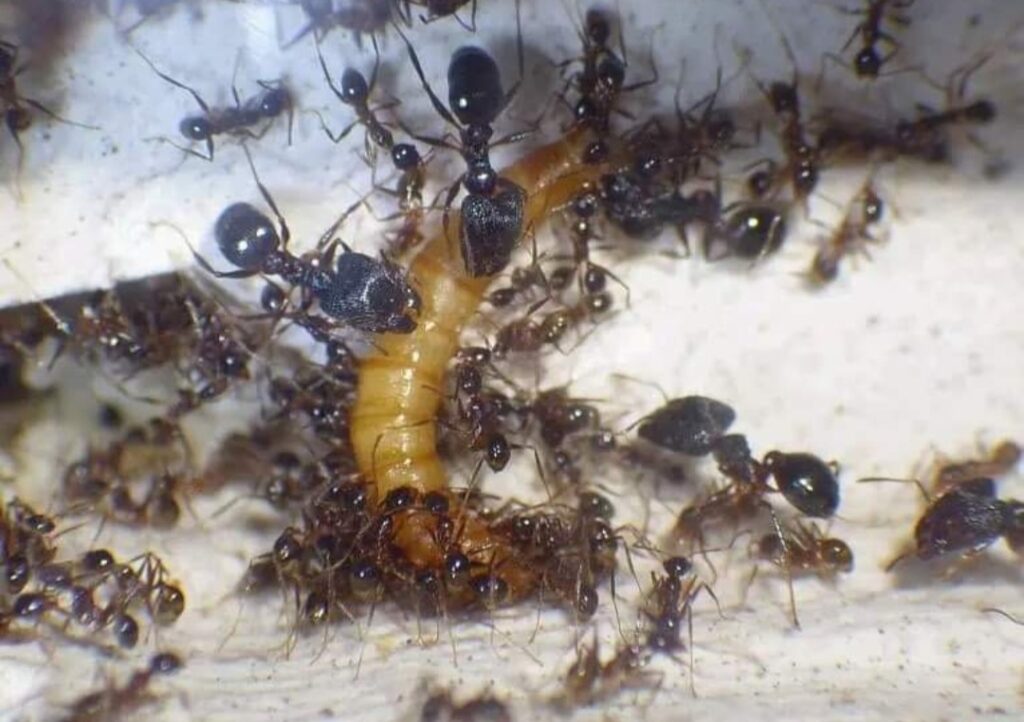
When a larger food source is presented, minors and majors work closely together. While the small workers transport the food, the soldiers use their powerful jaws to help break open and reduce larger prey.
Life expectancy
A healthy Pheidole noda queen can live for several years under optimal conditions. Throughout her life, she continues to produce new workers, causing the colony to gradually expand. The workers are constantly replaced by new generations, keeping the colony active and healthy.
Why buy Pheidole noda?
Anyone who buys a Pheidole nodais choosing a tropical ant species with a fascinating social system. The combination of small workers, impressive soldiers, rapid colony growth, and active foraging ensures that there is something new to discover every day.
With proper care, Pheidole noda grows into a strong and lively colony in which the cooperation between minors and majors is clearly visible. It is precisely this unique division of labor that makes Pheidole noda one of the most popular Asian Pheidole species within the ant hobby.
Common mistakes when keeping Pheidole noda
Although Pheidole noda is a strong and active tropical ant species, a few common care mistakes can slow down colony development. The most common mistake is keeping the temperature too low. Because this species originates from warm parts of Asia, eggs, larvae, and pupae develop best at temperatures between 24°C and 28°C. At lower temperatures, activity decreases and the colony grows significantly more slowly.
A completely dry nest can also cause problems. Although Pheidole noda does not require extremely humid conditions, larvae develop better when part of the nest is kept slightly damp. By providing a moisture gradient, the worker bees can move the brood themselves to the most suitable nest chamber.
In addition, the amount of food a growing Pheidole colony needs is often underestimated. Especially when many soldiers are produced, the need for protein-rich food increases sharply.
Practical care tips
Heat only a portion of the nest
When you buy a Pheidole noda colony, place a heating cable or heating mat under approximately one-third of the nest. This creates a natural temperature gradient, allowing the worker bees to determine the location of the queen and brood themselves.
Feed protein-rich insects regularly
Fruit flies, buffalo worms, mealworms, small cockroaches, and crickets constitute excellent food sources for Pheidole noda. Especially during periods when many larvae are present, sufficient protein is essential for the development of healthy minors and majors.
Gradually expand the nest
Young colonies feel safer in a compact nest. Therefore, only connect additional nest modules when the current nest is largely filled with workers and brood. This reduces stress on the colony and ensures more stable growth.
Prevent escapes
Pheidole noda consists of small, fast worker bees that can easily escape through small openings. Therefore, regularly check the connections of the formicarium and use a reliable escape barrier along the top edge of the outside world.
Why Pheidole noda is so popular
Pheidole noda is one of the most popular tropical Pheidole species thanks to its impressive soldiers, high activity, and rapid cooperation between minors and majors. In particular, the clear difference between the two worker castes makes this species especially interesting for long-term observation.
As the colony grows, more and more soldiers with their large heads and powerful jaws appear. This changes not only the appearance of the colony but also their behavior during food gathering and processing.
Frequently asked questions about Pheidole noda
Is Pheidole noda suitable for beginners?
Yes. Pheidole noda is suitable for beginners who already have some basic knowledge of tropical ant species. Care is relatively simple when temperature, humidity, and nutrition are properly regulated.
How big does a Pheidole noda colony get?
Under optimal conditions, a mature colony can consist of thousands of worker bees. The final colony size depends on the age of the queen, the available space, and the quality of care.
How often should I feed Pheidole noda?
Ant nectar can be available almost continuously. Feeder insects can be offered several times a week, depending on the amount of brood and the size of the colony.
Does Pheidole noda need winter dormancy?
No. Pheidole noda is a tropical ant species and does not hibernate. At a constant temperature, the colony remains active all year round.
Why buy Pheidole noda from Quality Ants?
At Quality Ants, you receive only healthy Pheidole noda colonies that are carefully checked before shipment. In addition, we are happy to assist you with expert advice on nutrition, temperature, humidity, and the optimal setup of your formicarium.
Buy Pheidole noda at Quality Ants
Do you want a tropical ant species with impressive soldiers, rapid colony growth, and fascinating social behavior? Then buying Pheidole noda an excellent choice. At Quality Ants, you will find healthy colonies, professional ant nests, complete starter kits, high-quality ant nectar, feeder insects, and all the accessories needed to care for your colony optimally.
Thanks to the unique cooperation between minors and majors, the active lifestyle, and the impressive soldiers, Pheidole noda is one of the most beautiful Asian ant species for every ant enthusiast.
The life cycle of Pheidole noda
A Pheidole noda colony begins with a fertilized queen who searches for a suitable nest site after the nuptial flight. In the first phase, she independently cares for her eggs, larvae, and pupae until the first workers appear. As soon as this first generation hatches, the workers take over all daily tasks. From that moment on, the queen can focus entirely on laying new eggs, allowing the colony to continue to develop.
With sufficient warmth, stable humidity, and a varied diet, the colony grows throughout the year. Because Pheidole noda does not require winter dormancy, development can continue almost continuously. As the colony grows, more and more majors appear, making the division of labor within the colony increasingly visible.
A tropical ant with an impressive division of labor
Anyone who buys a Pheidole noda colonyis choosing an ant species where cooperation is central. The small workers care for the brood, maintain the nest, and gather food, while the soldiers, with their powerful jaws, process larger food sources and protect the colony. This cooperation makes Pheidole noda one of the most fascinating ant species to observe long-term.
Especially when the colony consists of hundreds of workers, the division of labor becomes increasingly impressive. The soldiers are then regularly visible processing larger insects and play an important role in defending the nest.
Why choose Pheidole noda?
Pheidole noda combines rapid colony growth with a clear division between minors and majors. The active workers, impressive soldiers, and continuous foraging ensure that there is something new to see every day. This makes this species highly suitable for enthusiasts who wish to maintain a dynamic and active ant colony.
With proper care, Pheidole noda grows into a large, healthy colony that continues to exhibit fascinating behavior for years. The combination of high activity and a unique caste structure makes this species an absolute must for every ant enthusiast.
Additional frequently asked questions
How big does a Pheidole noda queen get?
The queen reaches an average length of approximately 10 to 12 millimeters and is clearly larger than both the minor and major workers.
How big do the workers and soldiers get?
The minor workers average 3 to 5 millimeters in length. The major workers (soldiers) reach an average of 6 to 8 millimeters and are distinguished primarily by their very large heads and powerful jaws.
How long does a Pheidole noda colony live?
Under optimal conditions, a healthy colony can persist for many years. The queen continues to produce new worker bees throughout her life, causing the colony to gradually continue expanding.
Can Pheidole noda be kept together with other ant species?
No. Just like all other ant species, Pheidole noda must always be kept separately. Different species in one formicarium will almost always fight each other.
Why buy Pheidole noda from Quality Ants?
At Quality Ants, you receive only healthy Pheidole noda colonies that are carefully inspected before shipment. Additionally, we are happy to assist you with expert advice on nutrition, temperature, humidity, and the optimal care of your ant colony.
Order your Pheidole noda easily online
Do you want a tropical ant species with impressive soldiers, an active lifestyle, and a fascinating division of labor? Then buying Pheidole noda an excellent choice. At Quality Ants, you will find healthy colonies, professional ant nests, complete starter kits, high-quality ant nectar, feeder insects, and all the accessories needed to care for your colony optimally.
Order your Pheidole noda from Quality Ants today and discover why this special Asian ant species is so beloved among ant enthusiasts. Thanks to the impressive majors, the active minors, and the rapid colony growth, Pheidole noda offers years of fascinating viewing pleasure.