Pheidole indica – actieve mierensoort met opvallende majors
Wil je Pheidole indica kopen en zoek je een actieve mierensoort met een bijzonder verschil tussen kleine werksters en grote majors? Pheidole indica is een interessante soort uit het geslacht Pheidole. Dit geslacht staat bekend om kolonies waarin verschillende typen werksters voorkomen. Vooral de majors vallen direct op door hun opvallend grote kop en krachtige kaken.
Een Pheidole indica kolonie biedt veel interessant gedrag om te observeren. De kleine werksters verzorgen het broed, zoeken naar voedsel en onderhouden het nest, terwijl de grotere majors onder andere kunnen helpen bij het verwerken van voedsel en de verdediging van de kolonie. Naarmate de kolonie groeit, wordt het verschil tussen de kleine werksters en majors steeds duidelijker zichtbaar.
Wanneer je Pheidole indica wilt kopen, is een goede voorbereiding belangrijk. De werksters zijn klein en actief, waardoor een veilig afgesloten mierennest en betrouwbare uitbraakpreventie belangrijke aandachtspunten zijn. Daarnaast heeft de kolonie geschikte temperaturen, voldoende vocht, schoon drinkwater, koolhydraten en dierlijke eiwitten nodig.
Waarom Pheidole indica kopen?
Pheidole indica kopen is vooral interessant voor mierenhouders die graag veel activiteit en duidelijk zichtbaar kasteverschil binnen één kolonie willen zien. Waar sommige mierensoorten werksters hebben die vrijwel allemaal hetzelfde formaat hebben, is het verschil bij Pheidole veel opvallender.
De kleine werksters kunnen in grote aantallen actief worden, terwijl de majors door hun brede kop onmiddellijk herkenbaar zijn. Vooral tijdens het voeren kan dit interessante situaties opleveren waarbij verschillende werksters gezamenlijk een voedselbron onderzoeken en verwerken.
Uiterlijk van Pheidole indica
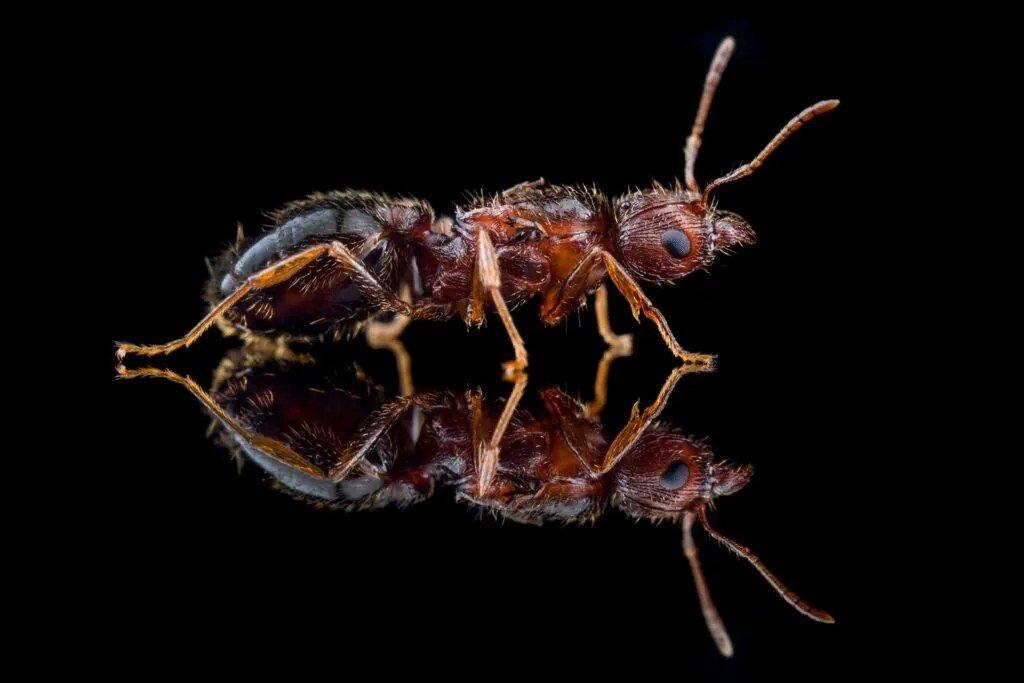
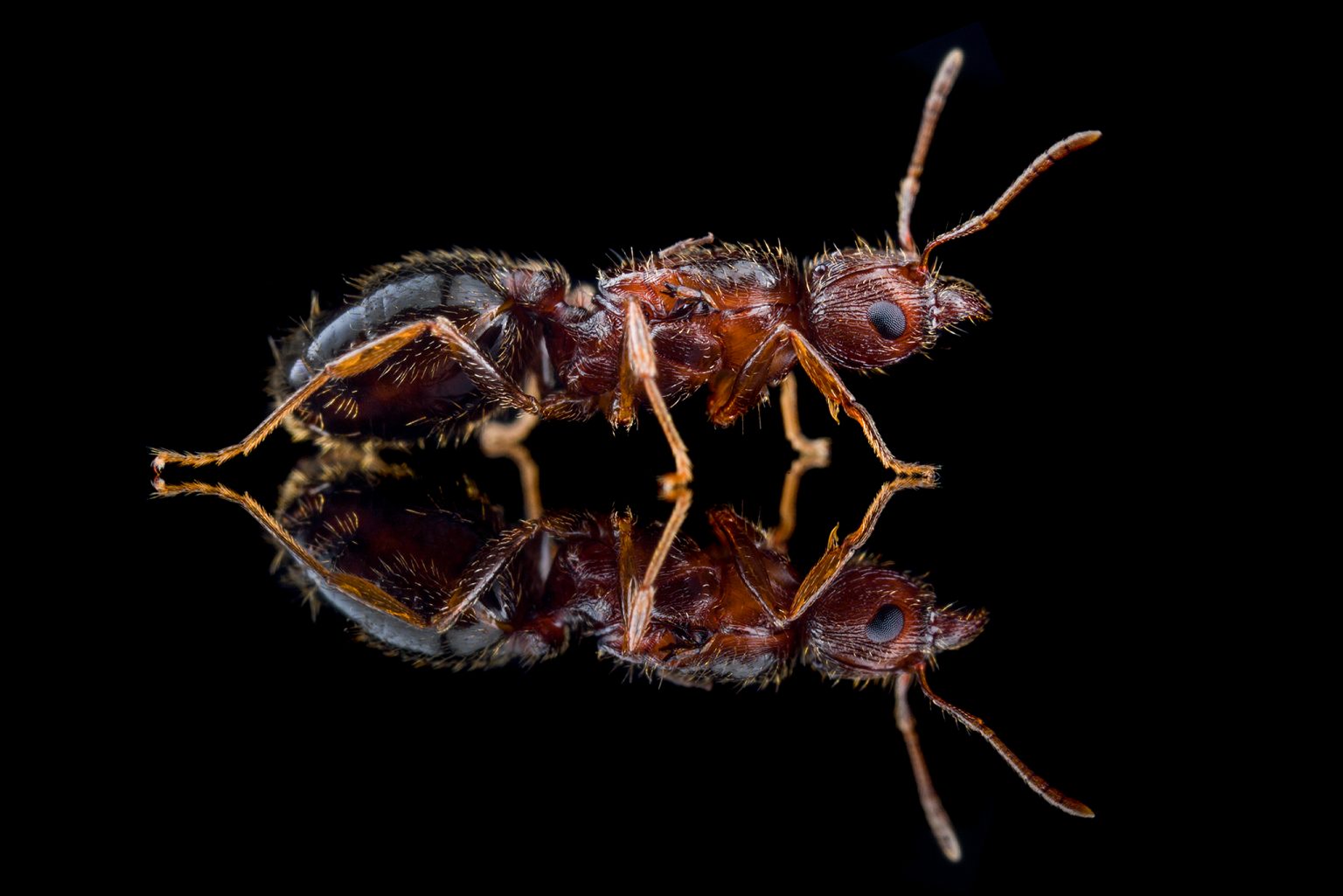
Pheidole indica heeft de karakteristieke lichaamsbouw die veel soorten uit het geslacht Pheidole zo herkenbaar maakt. Binnen een ontwikkelde kolonie zijn vooral de verschillen tussen de kleine werksters en de majors opvallend.
De normale werksters zijn klein en relatief slank gebouwd. De majors zijn groter en robuuster en hebben in verhouding tot hun lichaam een bijzonder grote kop. Hierdoor lijken de majors naast de kleinste werksters bijna een compleet ander type mier.
Pheidole indica werksters
De kleine werksters vormen een belangrijk en meestal groot gedeelte van de kolonie. Ze voeren verschillende dagelijkse werkzaamheden uit, waaronder het verzorgen van het broed, verzamelen van voedsel, onderhouden van het nest en onderzoeken van de buitenwereld.
Door hun geringe formaat kunnen de werksters door zeer kleine openingen komen. Bij het kiezen van een formicarium moet daarom niet worden gekeken naar de grootte van de koningin of majors, maar vooral naar de kleinste werksters.
Pheidole indica majors
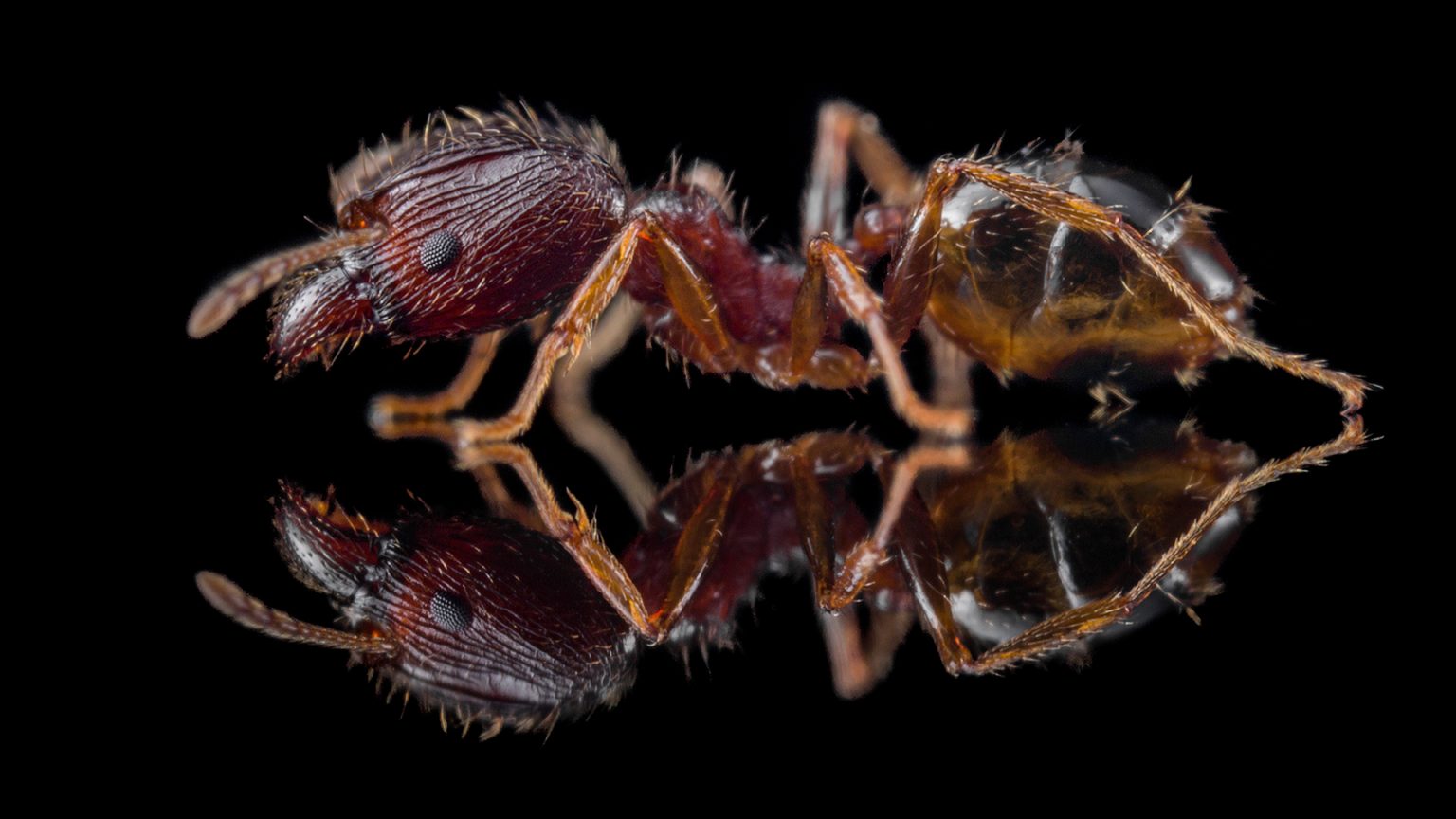
De Pheidole indica majors behoren tot de opvallendste eigenschappen van deze soort. Ze hebben een duidelijk grotere kop dan de normale werksters en beschikken over krachtige kaken.
Bij een jonge kolonie hoeven nog niet direct majors aanwezig te zijn. Naarmate een kolonie zich verder ontwikkelt kunnen grotere werksters verschijnen. Hierdoor wordt het typische uiterlijk van een Pheidole-kolonie steeds duidelijker.
Heeft Pheidole indica soldaten?
De majors worden binnen de mierenhobby regelmatig soldaten genoemd. Dat komt vooral door hun opvallend grote kop, krachtige kaken en robuuste uiterlijk.
Majors kunnen een rol spelen bij de verdediging en het verwerken van grotere of stevigere voedselbronnen. Ze zijn echter onderdeel van de werksterkaste en kunnen afhankelijk van de situatie verschillende taken uitvoeren.
Waarom hebben Pheidole indica majors een grote kop?
De grote kop van een major biedt ruimte aan krachtige spieren die de kaken aansturen. Hierdoor kunnen majors aanzienlijk krachtiger gebouwd zijn dan de kleine werksters.
Dit verschil is vooral goed zichtbaar tijdens het voeren. Wanneer zowel kleine werksters als majors rondom dezelfde voedselbron aanwezig zijn, wordt het bijzondere polymorfe karakter van de kolonie direct duidelijk.
Pheidole indica koningin
De Pheidole indica koningin is het reproductieve centrum van de kolonie. Zij produceert de eieren waaruit nieuwe werksters en, wanneer de kolonie zich verder ontwikkelt, majors kunnen ontstaan.
In een gevestigde kolonie bevindt de koningin zich voornamelijk in het beschermde gedeelte van het nest. De werksters verzorgen haar en het aanwezige broed en brengen voedsel het nest binnen.
Pheidole indica koningin kopen
Een Pheidole indica koningin kopen kan interessant zijn wanneer je de ontwikkeling van een kolonie vanaf een vroeg stadium wilt meemaken. Je kunt dan volgen hoe een kleine startkolonie zich geleidelijk ontwikkelt en steeds meer werksters krijgt.
Houd er rekening mee dat een zeer jonge kolonie in het begin minder activiteit laat zien. Wie vooral veel foerageergedrag en majors wil observeren, kan beter kijken naar een Pheidole indica kolonie waarbij al meerdere werksters aanwezig zijn.
Pheidole indica kolonie kopen
Een Pheidole indica kolonie kopen met bestaande werksters heeft als voordeel dat de eerste ontwikkeling al heeft plaatsgevonden. De werksters kunnen direct voedsel verzamelen, de koningin verzorgen en het aanwezige broed onderhouden.
Bij het kiezen van een kolonie kun je daarom letten op de aangegeven koloniegrootte. Een kleine startkolonie is interessant wanneer je de groei zelf wilt volgen, terwijl een grotere kolonie doorgaans direct meer zichtbaar gedrag laat zien.
Hoe snel groeit Pheidole indica?
Onder geschikte omstandigheden kan Pheidole indica zich relatief vlot ontwikkelen. Temperatuur, voeding, hoeveelheid broed en de grootte van de bestaande kolonie hebben allemaal invloed op de uiteindelijke groeisnelheid.
Een jonge kolonie heeft slechts een beperkt aantal werksters om voedsel te verzamelen en broed te verzorgen. Naarmate meer werksters verschijnen kan de kolonie grotere hoeveelheden voedsel verwerken en meer broed onderhouden.
Hoe groot kan een Pheidole indica kolonie worden?
Een goed ontwikkelde Pheidole indica kolonie kan uiteindelijk uit een groot aantal werksters bestaan. Daardoor kan een kolonie die aanvankelijk in een compacte opstelling wordt gehouden later aanzienlijk meer ruimte nodig hebben.
Het is echter niet verstandig om een kleine startkolonie direct in een enorm mierennest te plaatsen. Begin liever compact en breid de huisvesting geleidelijk uit wanneer de beschikbare ruimte daadwerkelijk wordt gebruikt.
Gedrag van Pheidole indica
Pheidole indica kan veel activiteit laten zien wanneer de kolonie voldoende groot is. Werksters onderzoeken de buitenwereld en zoeken naar geschikte voedselbronnen. Wanneer voedsel wordt ontdekt kunnen meerdere werksters rondom dezelfde voedselbron actief worden.
Bij een jonge kolonie is de hoeveelheid zichtbare activiteit vanzelfsprekend kleiner. Naarmate het aantal werksters toeneemt wordt het foerageergedrag steeds duidelijker.
Foerageergedrag van Pheidole indica
Het foerageergedrag maakt Pheidole indica interessant om te observeren. Werksters verlaten het nest om de omgeving te onderzoeken en geschikte voedselbronnen te vinden.
Vooral wanneer veel larven aanwezig zijn kan de belangstelling voor eiwitrijke voeding toenemen. Bij een grotere kolonie kunnen daardoor binnen korte tijd meerdere werksters rondom een aangeboden voederinsect verschijnen.
Is Pheidole indica agressief?
Pheidole indica kan actief reageren op voedselbronnen en verstoring van de kolonie. De majors beschikken over krachtige kaken en kunnen bijdragen aan de verdediging van het nest.
Voor de mierenhouder betekent dit vooral dat een goed ontworpen buitenwereld praktisch is. Wanneer de uitbraakpreventie goed functioneert kan voedsel worden aangeboden en afval worden verwijderd zonder onnodige verstoring van het nest.
Is Pheidole indica geschikt voor beginners?
Pheidole indica kan door een goed voorbereide beginner worden gehouden, maar de soort vraagt extra aandacht voor uitbraakpreventie. De kleine werksters kunnen openingen vinden die bij grotere mierensoorten geen probleem zouden vormen.
Wie bereid is de huisvesting zorgvuldig te controleren en zich te verdiepen in temperatuur, vochtigheid en voeding krijgt daarvoor een interessante mierensoort met veel zichtbaar gedrag en opvallende majors terug.
Welk mierennest voor Pheidole indica?
Een geschikt mierennest voor Pheidole indica moet veilig afgesloten zijn en mogelijkheden bieden om de vochtigheid goed te regelen. Vooral ventilatieopeningen, aansluitingen en naden moeten klein genoeg zijn om ontsnapping van de kleinste werksters te voorkomen.
De grootte van het nest moet aansluiten bij de huidige koloniegrootte. Een kleine kolonie kan compact worden gehouden en later naar een groter of uitbreidbaar formicarium worden overgezet.
Modulair formicarium voor Pheidole indica
Een modulair formicarium kan een praktische keuze zijn voor Pheidole indica. Een kleine kolonie kan beginnen met een beperkte hoeveelheid nestruimte, waarna later extra modules kunnen worden toegevoegd.
Dit is vooral handig bij een soort waarvan de kolonie onder goede omstandigheden steeds groter kan worden. De huisvesting kan hierdoor meegroeien zonder dat direct een groot nest nodig is.
Buitenwereld voor Pheidole indica
Een buitenwereld geeft de werksters ruimte om te foerageren en maakt het eenvoudiger om voeding en drinkwater aan te bieden. Voor een jonge kolonie kan een compacte buitenwereld voldoende zijn.
Naarmate het aantal werksters toeneemt kan een grotere buitenwereld praktisch worden. Houd de voerplaatsen goed bereikbaar zodat voedselresten gemakkelijk verwijderd kunnen worden.
Uitbraakpreventie bij Pheidole indica
Goede uitbraakpreventie voor Pheidole indica is bijzonder belangrijk. De kleinste werksters kunnen door zeer kleine kieren en openingen komen en een groeiende kolonie kan zwakke plekken in een opstelling snel ontdekken.
Controleer daarom ventilatieopeningen, slangen, deksels en alle verbindingen tussen het mierennest en de buitenwereld. Een goede uitbraakbarrière vormt daarbij een belangrijke aanvullende beveiliging.
Fluon gebruiken voor Pheidole indica
Fluon kan op geschikte gladde oppervlakken worden gebruikt als aanvullende uitbraakpreventie. Een correct aangebrachte fluonlaag vermindert de grip van de werksters en kan daardoor bijzonder praktisch zijn bij een open buitenwereld.
Controleer de fluonlaag regelmatig op vuil, stof en vocht. Zorg daarnaast dat takjes, decoratiemateriaal of andere voorwerpen geen brug vormen waarmee de werksters de barrière kunnen omzeilen.
Waarom Pheidole indica interessant is om te houden
De combinatie van kleine actieve werksters, opvallende majors en interessant foerageergedrag maakt Pheidole indica een aantrekkelijke soort voor liefhebbers die graag veel ontwikkeling binnen een kolonie observeren.
Een kleine startkolonie kan aanvankelijk rustig ogen, maar naarmate het aantal werksters groeit verandert het karakter van de kolonie. Er ontstaat meer activiteit in de buitenwereld en het verschil tussen de kleine werksters en majors wordt steeds duidelijker.
Pheidole indica kopen bij Quality Ants
Wil je Pheidole indica kopen? Bij Quality Ants vind je, wanneer beschikbaar, Pheidole indica koninginnen en kolonies in verschillende groottes. Hierdoor kun je kiezen voor een jonge startkolonie waarvan je de ontwikkeling zelf volgt of een grotere beschikbare kolonie waarbij direct meer activiteit zichtbaar is.
Zorg voordat je de kolonie ontvangt voor een geschikt en goed afgesloten mierennest, een veilige buitenwereld en betrouwbare uitbraakpreventie. Met daarnaast de juiste temperatuur, voldoende vocht, schoon drinkwater en geschikte voeding leg je een goede basis voor het houden en verder laten ontwikkelen van Pheidole indica.
Pheidole indica verzorging
Een goede Pheidole indica verzorging begint met het creëren van stabiele omstandigheden. Deze warmteminnende mierensoort heeft behoefte aan een geschikte temperatuur, toegang tot vocht, voldoende drinkwater en een combinatie van koolhydraten en dierlijke eiwitten. Naarmate de kolonie groter wordt en meer broed produceert, kan ook de behoefte aan voedsel sterk toenemen.
Wanneer je Pheidole indica koopt, is het verstandig om de huisvesting vooraf volledig gereed te hebben. Vooral de kleine werksters verdienen aandacht. Zij kunnen door zeer kleine openingen ontsnappen, waardoor een goed afgesloten formicarium en betrouwbare uitbraakpreventie essentieel zijn.
Temperatuur voor Pheidole indica
Pheidole indica houdt van warme omstandigheden. Tijdens actieve groei kan een temperatuur van ongeveer 24 tot 28 °C als praktische richtlijn worden aangehouden. Bij voldoende warmte kunnen de werksters actief foerageren en kan het broed zich goed ontwikkelen.
Het volledige mierennest hoeft niet exact dezelfde temperatuur te hebben. Een temperatuurgradiënt geeft de kolonie juist de mogelijkheid om zelf te bepalen welke omstandigheden geschikt zijn voor de koningin en verschillende stadia van het broed.
Kan Pheidole indica op kamertemperatuur?
Dat hangt af van de temperatuur in de ruimte. In een warme kamer kan Pheidole indica zonder sterke aanvullende verwarming worden gehouden. Wanneer de temperatuur structureel relatief laag ligt, kan de ontwikkeling van het broed vertragen.
Meet daarom bij voorkeur de temperatuur rondom het mierennest. De daadwerkelijke temperatuur van de opstelling is belangrijker dan alleen de ingestelde temperatuur van de kamer.
Verwarming voor Pheidole indica
Wanneer extra warmte nodig is, kan een geschikte warmtemat of warmtekabel worden gebruikt. Verwarm bij voorkeur slechts een gedeelte van het mierennest in plaats van de volledige opstelling.
Hierdoor ontstaat een warmere en een koelere zone. De werksters kunnen vervolgens zelf het broed verplaatsen naar het gedeelte met de gewenste temperatuur.
Pheidole indica niet te warm houden
Hoewel Pheidole indica warmte waardeert, betekent dit niet dat een zo hoog mogelijke temperatuur beter is. Overmatige warmte kan schadelijk zijn en zorgt er bovendien voor dat kleine nesten en waterreservoirs sneller uitdrogen.
Gebruik daarom een thermometer en zorg ervoor dat de kolonie altijd de mogelijkheid heeft om zich naar een minder warme zone te verplaatsen.
Temperatuurgradiënt voor Pheidole indica
Een temperatuurgradiënt is praktisch omdat de behoeften binnen een mierennest niet overal hetzelfde hoeven te zijn. Werksters kunnen eieren, larven en poppen binnen het nest verplaatsen wanneer een andere temperatuur gunstiger is.
Dit gedrag kun je ondersteunen door slechts één gedeelte van het formicarium te verwarmen. Zorg ervoor dat de warmtebron nooit de enige beschikbare nestzone sterk verwarmt.
Vochtigheid voor Pheidole indica
Naast warmte is een goede vochtvoorziening belangrijk. Een gedeelte van het mierennest kan vochtiger worden gehouden terwijl andere gedeelten relatief droger blijven. Hierdoor ontstaat een vochtgradiënt.
Het is niet noodzakelijk om het volledige nest voortdurend nat te houden. Te veel vocht kan condens en vervuiling bevorderen, terwijl een volledig uitgedroogd nest eveneens ongeschikt kan zijn.
Hoe vochtig moet Pheidole indica worden gehouden?
Er bestaat geen enkel vochtigheidspercentage dat voor ieder type formicarium optimaal is. Gips, Ytong, kunststof en andere materialen houden vocht allemaal op een andere manier vast.
Het is daarom belangrijker om een goede vochtgradiënt te creëren en het gedrag van de kolonie te observeren. Zorg dat er altijd een geschikte vochtige nestzone beschikbaar blijft.
Water voor Pheidole indica
Een Pheidole indica kolonie moet altijd toegang hebben tot schoon drinkwater. Nestbevochtiging alleen is geen reden om geen aparte drinkwaterbron aan te bieden.
Een kleine waterfeeder kan in de buitenwereld worden geplaatst. Controleer deze regelmatig, vooral wanneer de opstelling warm wordt gehouden en het water sneller kan verdampen.
Een jonge Pheidole indica kolonie in een reageerbuis
Een jonge kolonie kan aanvankelijk uitstekend in een geschikte reageerbuisopstelling worden gehouden. De waterreserve achter het watje zorgt voor een langdurige vochtbron en de beperkte ruimte sluit goed aan bij een kleine startkolonie.
Zolang voldoende water aanwezig is en de reageerbuis niet ernstig vervuild of overvol raakt, hoeft de kolonie niet onnodig snel te worden verhuisd.
Reageerbuis aansluiten op een buitenwereld
Zodra de eerste werksters aanwezig zijn kan de reageerbuis worden aangesloten op of in een kleine buitenwereld worden geplaatst. De werksters kunnen hierdoor naar buiten om voedsel te zoeken terwijl de koningin en het broed in de reageerbuis blijven.
Dit is vaak praktischer dan een kleine kolonie direct naar een groot formicarium verhuizen.
Wanneer Pheidole indica naar een mierennest verhuizen?
Een verhuizing kan nodig worden wanneer de reageerbuis te klein of sterk vervuild raakt, wanneer de waterreserve bijna verdwenen is of wanneer de koloniegrootte duidelijk meer ruimte vraagt.
Een nieuw mierennest kan waar mogelijk met de bestaande huisvesting worden verbonden. Zo krijgt de kolonie de mogelijkheid om zelf naar de nieuwe nestzone te verhuizen.
Gipsnest voor Pheidole indica
Een gipsnest kan geschikt zijn voor Pheidole indica wanneer het ontwerp aansluit bij kleine mierensoorten. Gips kan vocht opnemen en verspreiden, waardoor een vochtige nestzone gecreëerd kan worden.
Controleer vooral de aansluiting tussen het nest en de afdekplaat. Zelfs een kleine kier kan voldoende zijn voor de kleinste werksters om te ontsnappen.
Ytong nest voor Pheidole indica
Ook een geschikt Ytong nest kan worden gebruikt. Het poreuze materiaal maakt gecontroleerde bevochtiging mogelijk en kan daardoor een goede vochtgradiënt ondersteunen.
Bij zelfgemaakte Ytong-nesten moet extra aandacht worden besteed aan kleine naden en openingen. De huisvesting moet volledig veilig zijn voor de kleinste werksters.
3D-geprint mierennest voor Pheidole indica
Een goed ontworpen 3D-geprint mierennest kan eveneens geschikt zijn voor Pheidole indica. Het voordeel van dergelijke nesten is dat gangen, kamers en bevochtigingszones specifiek ontworpen kunnen worden voor de behoeften van een kolonie.
Let bij Pheidole vooral op de nauwkeurigheid van de aansluitingen en ventilatie. De kamers moeten groot genoeg zijn voor de koningin en majors, terwijl de kleinste werksters nergens doorheen mogen kunnen ontsnappen.
Modulair mierennest voor Pheidole indica
Een modulair mierennest is interessant voor een Pheidole indica kolonie omdat de beschikbare ruimte geleidelijk kan worden uitgebreid. Een kleine kolonie begint met één compacte module en krijgt pas extra ruimte wanneer dit daadwerkelijk nodig is.
Dit voorkomt een onnodig groot nest tijdens de beginfase en maakt het tegelijkertijd mogelijk om de huisvesting aan te passen wanneer de kolonie sterk groeit.
Waarom een klein nest beter is voor een startkolonie
Een groot mierennest lijkt misschien aantrekkelijk omdat de kolonie er jarenlang in zou kunnen groeien, maar voor een zeer kleine kolonie is zoveel ruimte meestal niet nodig.
Ongebruikte kamers kunnen worden gebruikt voor afval of voedselresten. Een compact nest is bovendien gemakkelijker te controleren op vochtigheid, voedselresten en de algemene ontwikkeling van de kolonie.
Buitenwereld voor Pheidole indica
De buitenwereld is de plaats waar voedsel en drinkwater worden aangeboden en waar de werksters kunnen foerageren. Een kleine kolonie heeft slechts een compacte buitenwereld nodig.
Bij een grotere kolonie kan een ruimere buitenwereld het voeren en schoonmaken gemakkelijker maken. Houd altijd rekening met de kleine werksters bij het kiezen van ventilatie en uitbraakpreventie.
Voeding van Pheidole indica
Een goede Pheidole indica voeding bestaat uit zowel koolhydraten als dierlijke eiwitten. De volwassen werksters gebruiken koolhydraten voornamelijk als energiebron, terwijl eiwitten belangrijk zijn voor de ontwikkeling van de larven.
De verhouding tussen beide hangt mede af van de ontwikkeling van de kolonie. Wanneer veel larven aanwezig zijn kan de vraag naar eiwitrijke voeding aanzienlijk toenemen.
Koolhydraten voor Pheidole indica
Koolhydraten kunnen worden aangeboden via een geschikte mierennectar of suikeroplossing. Werksters kunnen deze vloeibare voeding opnemen en binnen de kolonie verdelen.
Vooral een actieve grotere kolonie kan regelmatig koolhydraatrijke voeding gebruiken. Controleer vloeibare voeding regelmatig en vervang deze wanneer deze vervuild raakt.
Mierennectar voor Pheidole indica
Een geschikte mierennectar is een praktische manier om koolhydraten aan te bieden. Een kleine hoeveelheid kan via een daarvoor geschikte feeder in de buitenwereld worden geplaatst.
Voorkom diepe open druppels waarin kleine werksters terecht kunnen komen. Een veilige liquid feeder maakt het aanbieden van vloeibare voeding gemakkelijker.
Eiwitten voor Pheidole indica
Dierlijke eiwitten zijn vooral belangrijk voor een kolonie met groeiende larven. Geschikte voederinsecten kunnen daarom meerdere keren per week worden aangeboden wanneer de kolonie actief groeit.
De hoeveelheid moet worden afgestemd op het daadwerkelijke verbruik. Een kleine startkolonie heeft veel minder nodig dan een gevestigde kolonie met grote hoeveelheden broed.
Welke voederinsecten voor Pheidole indica?
Voor Pheidole indica kunnen verschillende geschikte voederinsecten worden gebruikt. Denk onder andere aan fruitvliegen, krekels en voederkakkerlakken. Door verschillende voedselbronnen af te wisselen kan variatie worden aangebracht in het dieet.
Stem het formaat van het voedsel af op de kolonie. Kleine kolonies kunnen gemakkelijker gebruikmaken van kleine prooien of geopende stukken van grotere voederinsecten.
Fruitvliegen voor Pheidole indica
Fruitvliegen zijn bijzonder praktisch voor jonge Pheidole indica kolonies. Door hun kleine formaat kunnen de werksters ze gemakkelijk onderzoeken en verwerken.
Naarmate de kolonie groter wordt kunnen fruitvliegen nog steeds worden gevoerd, maar kunnen daarnaast grotere voederinsecten worden aangeboden.
Krekels voeren aan Pheidole indica
Geschikte voederkrekels kunnen als eiwitbron worden gebruikt. Voor een kleine kolonie kan een krekel vooraf worden geopend of in kleinere stukken worden verdeeld.
Bij een grotere kolonie kunnen veel werksters tegelijkertijd rondom het voedsel actief worden en kunnen ook majors betrokken raken bij de verwerking.
Voederkakkerlakken voor Pheidole indica
Ook geschikte voederkakkerlakken kunnen als dierlijke eiwitbron worden aangeboden. Pas de grootte van de aangeboden portie aan op de grootte van de kolonie.
Verwijder niet opgegeten resten tijdig, vooral wanneer de buitenwereld warm wordt gehouden.
Hoe vaak Pheidole indica voeren?
Tijdens actieve groei kunnen meerdere keren per week geschikte voederinsecten worden aangeboden. Een kolonie met veel larven kan duidelijk meer eiwitten verwerken dan een kleine kolonie met weinig broed.
Er is daarom geen vaste hoeveelheid die voor iedere Pheidole indica kolonie optimaal is. Kijk naar het voedselverbruik en pas de volgende porties daarop aan.
Voeding en de ontwikkeling van majors
Een goed ontwikkelende kolonie met voldoende voedingsstoffen kan uiteindelijk opvallende Pheidole indica majors produceren. De ontwikkeling van grote werksters vraagt vanzelfsprekend meer bouwstoffen dan die van de kleinste werksters.
Overvoeren is echter niet nodig. Een stabiel aanbod van geschikte koolhydraten en voldoende dierlijke eiwitten tijdens de broedontwikkeling is belangrijker.
Majors tijdens het voeren
Wanneer grotere voedselbronnen worden aangeboden kunnen majors goed zichtbaar worden. Hun krachtige kaken kunnen helpen bij het verwerken van voedsel, terwijl kleinere werksters tegelijkertijd rondom dezelfde voedselbron actief zijn.
Voor liefhebbers van Pheidole is dit één van de interessantste gedragingen om te observeren, omdat het verschil tussen de werkstertypen tijdens het voeren duidelijk zichtbaar wordt.
Voedselresten verwijderen
Niet opgegeten voedsel moet regelmatig uit de buitenwereld worden verwijderd. In een warme opstelling kunnen organische resten relatief snel bederven of schimmelvorming veroorzaken.
Een geschikte pincet maakt het mogelijk om resten gericht te verwijderen zonder de volledige inrichting van de buitenwereld te verstoren.
Uitbraakpreventie tijdens het voeren
Bij Pheidole indica is het verstandig om vóór het voeren te controleren of de uitbraakpreventie nog goed functioneert. Vooral een grotere kolonie kan snel reageren zodra voedsel wordt aangeboden.
Houd de bovenrand van de buitenwereld vrij van decoratiemateriaal en controleer een eventuele fluonbarrière regelmatig op vuil, vocht en slijtage.
Een gezonde Pheidole indica kolonie laten groeien
Een gezonde koloniegroei draait niet om één afzonderlijke factor. Temperatuur, vochtigheid, drinkwater, koolhydraten, eiwitten en geschikte huisvesting moeten samen in balans zijn.
Wanneer deze basis goed geregeld is en de kolonie niet onnodig wordt verstoord, kunnen steeds nieuwe generaties werksters verschijnen en kan een kleine startkolonie zich geleidelijk ontwikkelen tot een veel actievere kolonie met opvallende majors.
Pheidole indica kopen en goed voorbereid beginnen
Wanneer je Pheidole indica wilt kopen, is het verstandig om vooraf alle noodzakelijke verzorgingsproducten klaar te hebben. Denk aan een geschikt mierennest of reageerbuisopstelling, een buitenwereld, drinkwater, mierenvoeding, voederinsecten en betrouwbare uitbraakpreventie.
Door vanaf het begin rekening te houden met de kleine werksters en toekomstige koloniegroei kun je de huisvesting later gemakkelijker uitbreiden. Zo krijgt de kolonie eerst een compacte en controleerbare omgeving en kan meer ruimte worden toegevoegd wanneer het aantal werksters daadwerkelijk toeneemt.
Groei en ontwikkeling van Pheidole indica
De ontwikkeling van een Pheidole indica kolonie is interessant om te volgen doordat de samenstelling van de kolonie gedurende de groei steeds verandert. Een jonge kolonie begint met een klein aantal werksters, maar kan onder geschikte omstandigheden steeds meer broed en nieuwe werksters produceren. Naarmate de kolonie sterker wordt, kunnen ook de karakteristieke majors steeds duidelijker aanwezig worden.
Wanneer je Pheidole indica wilt kopen, is het goed om rekening te houden met deze toekomstige ontwikkeling. De hoeveelheid voeding, beschikbare nestruimte en activiteit in de buitenwereld kunnen sterk veranderen wanneer een kleine startkolonie uitgroeit tot een gevestigde kolonie.
Broedontwikkeling bij Pheidole indica
De levenscyclus van Pheidole indica bestaat uit verschillende ontwikkelingsstadia. De koningin legt eieren waaruit larven ontstaan. Deze larven worden door de werksters verzorgd en gevoed, waarna ze zich ontwikkelen tot poppen. Uiteindelijk verschijnen hieruit nieuwe volwassen werksters.
Bij een groeiende kolonie kunnen verschillende stadia tegelijkertijd aanwezig zijn. Je kunt daardoor groepjes eieren, larven van verschillende formaten en poppen naast elkaar in het nest aantreffen.
Eieren van Pheidole indica
De Pheidole indica koningin produceert de eieren waaruit nieuwe leden van de kolonie ontstaan. De hoeveelheid eieren kan veranderen afhankelijk van onder andere de conditie van de kolonie en de omstandigheden waarin deze wordt gehouden.
Werksters verzorgen de eieren en kunnen het broed binnen het nest verplaatsen. Hierdoor kan de kolonie gebruikmaken van verschillende temperaturen en vochtigheidszones.
Larven van Pheidole indica
Uit de eieren ontwikkelen zich larven. Tijdens deze fase zijn voedingsstoffen belangrijk omdat de larven moeten groeien voordat ze kunnen verpoppen.
Vooral tijdens perioden waarin veel larven aanwezig zijn kan de behoefte aan dierlijke eiwitten duidelijk toenemen. Geschikte voederinsecten vormen daarom een belangrijk onderdeel van de voeding van een groeiende Pheidole indica kolonie.
Poppen van Pheidole indica
Na de larvale fase volgt de popfase. Pheidole behoort tot de Myrmicinae en de poppen ontwikkelen zich zonder cocon. Hierdoor kunnen de lichte poppen goed zichtbaar zijn wanneer het nest van bovenaf bekeken kan worden.
Werksters kunnen de poppen verzamelen en naar geschikte gedeelten van het nest verplaatsen. Vooral temperatuurverschillen binnen het formicarium kunnen invloed hebben op waar het broed wordt opgeslagen.
Nieuwe Pheidole indica werksters
Wanneer de ontwikkeling van een pop voltooid is verschijnt een nieuwe werkster. Pas uitgekomen werksters zijn aanvankelijk lichter van kleur en hun exoskelet moet nog verder uitharden.
Na verloop van tijd krijgen ze de normale kleur en kunnen ze steeds meer werkzaamheden binnen de kolonie uitvoeren. Bij een snel groeiende kolonie kunnen regelmatig nieuwe werksters verschijnen.
Hoe snel groeit Pheidole indica?
Pheidole indica kan relatief snel groeien wanneer temperatuur, voeding en andere omstandigheden gunstig zijn. De daadwerkelijke groeisnelheid verschilt echter per kolonie en is niet betrouwbaar aan één vast aantal nieuwe werksters per week of maand te koppelen.
Een kleine startkolonie groeit aanvankelijk vaak rustiger omdat slechts enkele werksters beschikbaar zijn om voedsel te verzamelen en broed te verzorgen. Wanneer het aantal werksters toeneemt kan de kolonie meer voedsel verwerken en een grotere hoeveelheid broed onderhouden.
Waarom groeit mijn Pheidole indica langzaam?
Wanneer een kolonie nauwelijks groeit, is het verstandig om eerst de basisomstandigheden te controleren. Een te lage temperatuur kan de ontwikkeling vertragen en onvoldoende dierlijke eiwitten kunnen vooral tijdens perioden met veel larven beperkend zijn.
Controleer daarnaast de vochtvoorziening, beschikbaarheid van drinkwater en algemene conditie van de koningin en werksters. Ook voortdurende verstoring van een kleine kolonie kan beter worden vermeden.
Van kleine kolonie naar grote Pheidole indica kolonie
Een kleine kolonie kan aanvankelijk uit slechts een koningin en enkele werksters bestaan. Tijdens deze fase is de hoeveelheid zichtbare activiteit beperkt en zijn kleine hoeveelheden voedsel meestal voldoende.
Naarmate het aantal werksters stijgt, verandert dit. Er kunnen meer foerageerders tegelijkertijd buiten het nest actief worden en grotere hoeveelheden voedsel worden verwerkt. Hierdoor wordt het gedrag van de kolonie steeds beter zichtbaar.
Wanneer krijgt Pheidole indica majors?
Voor veel liefhebbers is het verschijnen van de eerste Pheidole indica majors een bijzonder moment. Een zeer jonge kolonie bestaat aanvankelijk voornamelijk uit kleine werksters. Wanneer de kolonie zich verder ontwikkelt kunnen grotere werksters en duidelijke majors verschijnen.
Er bestaat geen exact aantal werksters waarbij iedere kolonie haar eerste major produceert. Voeding, ontwikkeling van de kolonie en andere omstandigheden kunnen hierbij een rol spelen.
Hoe ontstaan Pheidole indica majors?
Majors ontstaan net als de kleinere werksters uit het broed van de kolonie. Tijdens de larvale ontwikkeling kunnen verschillen ontstaan waardoor bepaalde individuen zich tot veel grotere werksters met een opvallende kop ontwikkelen.
Je hoeft majors daarom niet afzonderlijk te kweken of te verzorgen. De kolonie reguleert zelf de productie van verschillende typen werksters.
Pheidole indica majors herkennen
Een major is vooral herkenbaar aan de opvallend grote kop. Vergeleken met een normale werkster is het verschil onmiddellijk zichtbaar. De kop is niet alleen groter, maar ook duidelijk breder en robuuster gebouwd.
Wanneer majors tussen tientallen kleine werksters rondlopen, ontstaat het karakteristieke uiterlijk waarvoor Pheidole-soorten bekendstaan.
Wat doen Pheidole indica majors?
De majors kunnen verschillende functies binnen de kolonie vervullen. Hun krachtige kaken maken ze geschikt om te helpen bij het verwerken van grotere en stevigere voedselbronnen.
Daarnaast kunnen majors bijdragen aan de verdediging van de kolonie. Ze zijn echter niet uitsluitend soldaten en kunnen afhankelijk van de situatie ook bij andere activiteiten betrokken zijn.
Majors en voederinsecten
Bij het aanbieden van grotere voederinsecten kunnen de majors goed zichtbaar worden. Kleine werksters kunnen een voedselbron ontdekken en vervolgens kunnen meerdere werksters en majors bij dezelfde prooi samenkomen.
Dit maakt het voeren van een grotere Pheidole indica kolonie bijzonder interessant om te observeren. Het verschil in lichaamsbouw tussen de verschillende werksters is rondom een voedselbron goed zichtbaar.
Meer majors krijgen bij Pheidole indica
Het is niet verstandig om de kolonie extreem veel te voeren uitsluitend met als doel zoveel mogelijk majors te produceren. Een gezonde ontwikkeling is belangrijker dan het kunstmatig proberen te versnellen van de groei.
Zorg voor stabiele warmte, voldoende vocht, schoon drinkwater, een betrouwbare koolhydraatbron en regelmatige dierlijke eiwitten. Wanneer de kolonie zich goed ontwikkelt kan de verhouding tussen kleine en grote werksters vanzelf veranderen.
Eiwitten tijdens sterke koloniegroei
Een kolonie met veel larven kan aanzienlijke hoeveelheden eiwitrijk voedsel verwerken. Voederinsecten zijn daarom vooral tijdens sterke broedontwikkeling belangrijk.
Wanneer aangeboden insecten snel worden verwerkt kan de hoeveelheid voorzichtig worden verhoogd. Blijven grote hoeveelheden liggen, dan kan de volgende portie kleiner worden gemaakt.
Koolhydraten tijdens de groeiperiode
Naast dierlijke eiwitten hebben volwassen werksters koolhydraten nodig als energiebron. Een geschikte mierennectar of suikeroplossing kan daarom regelmatig beschikbaar worden gesteld.
Een grotere kolonie kan aanzienlijk meer vloeibare voeding gebruiken dan een kleine startkolonie. Controleer feeders daarom regelmatig en voorkom dat ze volledig leeg raken.
Drinkwater tijdens snelle groei
Schoon drinkwater moet altijd beschikbaar blijven. Bij hogere temperaturen kan water sneller verdampen en tegelijkertijd kan een grotere kolonie meer water gebruiken.
Controleer daarom zowel de drinkwaterfeeder als het bevochtigingssysteem van het mierennest regelmatig.
Wanneer heeft Pheidole indica een groter nest nodig?
De hoeveelheid nestruimte moet meegroeien met de kolonie. Wanneer een groot gedeelte van de beschikbare kamers daadwerkelijk gevuld is met werksters en broed, kan extra ruimte worden aangeboden.
Wacht niet totdat de kolonie extreem overvol raakt, maar voeg ook niet onnodig vroeg een enorm nest toe. Geleidelijke uitbreiding houdt de huisvesting beter afgestemd op de koloniegrootte.
Een modulair nest laten meegroeien
Een modulair mierennest is handig bij een groeiende Pheidole indica kolonie. Je kunt beginnen met een kleine module en later een tweede of derde gedeelte aansluiten wanneer meer ruimte nodig is.
Hierdoor kan de kolonie gedurende verschillende ontwikkelingsfasen binnen hetzelfde systeem blijven zonder telkens volledig verhuisd te hoeven worden.
Meer activiteit naarmate de kolonie groeit
Het verschil tussen een jonge en gevestigde Pheidole indica kolonie kan groot zijn. Een startkolonie kan slechts enkele werksters buiten het nest laten zien, terwijl een grotere kolonie veel actiever op aangeboden voedsel kan reageren.
Dit maakt de ontwikkeling interessant om over langere tijd te volgen. Niet alleen het aantal werksters verandert, maar ook het zichtbare gedrag van de volledige kolonie.
Pheidole indica en koloniegrootte
Bij een groeiende kolonie moet rekening worden gehouden met toekomstige ruimte, voeding en uitbraakpreventie. Naarmate meer werksters aanwezig zijn neemt ook de kans toe dat een zwakke plek in het formicarium wordt ontdekt.
Controleer daarom regelmatig alle verbindingen en ventilatieopeningen en wacht niet met onderhoud totdat de kolonie zeer groot is geworden.
Uitbraakpreventie bij een groeiende kolonie
Door hun kleine formaat kunnen Pheidole indica werksters gebruikmaken van zeer kleine openingen. Bij een grotere kolonie wordt goede uitbraakpreventie daarom steeds belangrijker.
Controleer aansluitingen, slangen, ventilatieopeningen en deksels. Combineer een goed afgesloten formicarium indien gewenst met een geschikte aanvullende uitbraakbarrière.
Fluon bij een groeiende Pheidole indica kolonie
Fluon kan bijzonder praktisch zijn wanneer een grotere kolonie in een open buitenwereld wordt gehouden. Een goed aangebrachte barrière vermindert de grip van de werksters op geschikte gladde oppervlakken.
Controleer de fluonlaag regelmatig. Stof, vocht en vuil kunnen de werking verminderen en decoratiemateriaal kan een ongewenste brug over de barrière vormen.
Heeft Pheidole indica winterrust nodig?
Pheidole indica heeft geen klassieke koude winterrust nodig zoals veel mierensoorten uit Midden- en Noord-Europa. De kolonie hoeft daarom niet gedurende meerdere maanden bij zeer lage temperaturen te worden gehouden.
Dit is een belangrijk verschil met bijvoorbeeld verschillende Europese Lasius-, Formica- en Camponotus-soorten die een duidelijke koude rustperiode kennen.
Pheidole indica in de winter
Ook zonder klassieke koude winterrust kan de activiteit van een kolonie gedurende het jaar variëren. Veranderingen in omgevingstemperatuur en andere omstandigheden kunnen invloed hebben op de hoeveelheid activiteit en broed.
Zorg er ook tijdens de wintermaanden voor dat de kolonie niet langdurig te koud wordt en dat drinkwater en geschikte voeding beschikbaar blijven.
Moet Pheidole indica in de koelkast?
Nee. Pheidole indica hoeft niet in de koelkast om een Europese winterrust na te bootsen. Een sterke langdurige afkoeling zoals bij bepaalde Europese mierensoorten past niet bij de normale verzorging van deze warmteminnende soort.
Houd de omstandigheden stabiel en voorkom grote plotselinge temperatuurwisselingen.
Kan Pheidole indica het hele jaar actief blijven?
Bij geschikte warme omstandigheden kan Pheidole indica gedurende een groot gedeelte van het jaar activiteit vertonen. Hierdoor kan ook gedurende perioden waarin Europese soorten in winterrust zijn nog voedsel worden aangenomen.
Blijf daarom kijken naar het gedrag en de hoeveelheid broed en pas de voeding daarop aan.
Koloniestichting van Pheidole indica
Een jonge Pheidole indica koningin kan na succesvolle paring beginnen met de stichting van een nieuwe kolonie. Een geschikte reageerbuisopstelling biedt tijdens de beginfase een compacte en goed controleerbare nestomgeving.
Beperk tijdens de stichting onnodige verstoring. De reageerbuis voortdurend oppakken en fel belichten is niet nodig.
De eerste Pheidole indica werksters
Wanneer de eerste werksters verschijnen begint een nieuwe fase. Zij nemen steeds meer taken over en kunnen voedsel buiten het nest verzamelen.
Vanaf dit moment kunnen kleine hoeveelheden koolhydraatrijke voeding en geschikte kleine voederinsecten worden aangeboden. Naarmate het aantal werksters groeit kunnen de porties worden verhoogd.
Pheidole indica koningin of startkolonie kopen?
Een Pheidole indica koningin kopen is interessant wanneer je de ontwikkeling vanaf een vroeg stadium wilt meemaken. Je ziet dan zelf hoe de eerste generatie werksters verschijnt en de kolonie zich verder opbouwt.
Wil je sneller activiteit en mogelijk eerder majors zien, dan kan een Pheidole indica kolonie kopen met meerdere bestaande werksters aantrekkelijker zijn.
Pheidole indica met majors kopen
Wanneer je vooral geïnteresseerd bent in het opvallende verschil tussen de werksters, kan een grotere kolonie aantrekkelijk zijn. Een zeer jonge startkolonie hoeft immers nog geen duidelijke majors te bevatten.
Wie juist vanaf een kleine kolonie begint, kan zelf volgen hoe de samenstelling verandert en uiteindelijk de eerste opvallende majors tussen de kleine werksters verschijnen.
Een gezonde Pheidole indica kolonie herkennen
Een gezonde actieve kolonie verzorgt haar broed, reageert op geschikte voedselbronnen en heeft normaal bewegende werksters. Bij een groeiende kolonie kunnen eieren, larven en poppen tegelijkertijd aanwezig zijn.
Beoordeel de hoeveelheid activiteit altijd in verhouding tot de koloniegrootte. Een kolonie met slechts enkele werksters zal vanzelfsprekend veel minder activiteit laten zien dan een gevestigde kolonie.
Pheidole indica kopen en de volledige groei volgen
Pheidole indica kopen is interessant wanneer je niet alleen naar een mierensoort wilt kijken, maar ook de verandering van de volledige kolonie wilt volgen. Een kleine startkolonie kan zich ontwikkelen tot een actieve groep met grote aantallen kleine werksters en opvallende majors.
Door de huisvesting geleidelijk uit te breiden en temperatuur, vochtigheid en voeding goed af te stemmen op de groei, kan de opstelling met de kolonie meegroeien. Vooral het verschijnen van steeds meer majors maakt de verdere ontwikkeling van Pheidole indica interessant om te observeren.
Een grotere Pheidole indica kolonie houden
Naarmate een Pheidole indica kolonie groter wordt, verandert ook de manier waarop je de soort verzorgt. Een jonge kolonie kan lange tijd met relatief weinig ruimte en kleine hoeveelheden voedsel toe, terwijl een gevestigde kolonie veel actiever kan foerageren en aanzienlijk meer voeding kan verwerken.
Wie Pheidole indica wil kopen, doet er daarom goed aan om vooraf rekening te houden met toekomstige groei. Je hoeft niet direct met een groot formicarium te beginnen. Een uitbreidbare opstelling is juist praktisch, omdat je nieuwe nestruimte en een grotere buitenwereld kunt toevoegen wanneer de kolonie daar daadwerkelijk aan toe is.
Gedrag van een grote Pheidole indica kolonie
Bij een grotere kolonie komt het actieve karakter van Pheidole indica steeds duidelijker naar voren. Meer werksters betekent dat meer mieren tegelijkertijd kunnen foerageren, voedsel verwerken, broed verzorgen en het nest onderhouden.
Vooral tijdens het voeren kan dit indrukwekkend zijn. Wanneer een werkster een interessante voedselbron vindt, kunnen steeds meer werksters naar dezelfde plek komen. Hierdoor kan een voederinsect binnen korte tijd door een groep kleine werksters worden omringd.
Pheidole indica majors in een grote kolonie
De Pheidole indica majors vormen één van de opvallendste kenmerken van een ontwikkelde kolonie. Tussen de veel kleinere werksters vallen ze onmiddellijk op door hun grotere lichaamsbouw en vooral hun brede kop.
Bij een jonge startkolonie kunnen majors nog ontbreken of slechts beperkt aanwezig zijn. Naarmate de kolonie zich verder ontwikkelt, kan het verschil tussen de verschillende werkstertypen steeds beter zichtbaar worden.
Wat doen de majors van Pheidole indica?
Majors beschikken over krachtige kaken en kunnen onder andere bijdragen aan het verwerken van grotere voedselbronnen. Ook bij verdediging van de kolonie kan hun robuustere lichaamsbouw van pas komen.
Het zijn echter geen werksters die uitsluitend één taak uitvoeren. Afhankelijk van de situatie en behoeften van de kolonie kunnen majors bij verschillende activiteiten betrokken zijn.
Pheidole indica voeren voor interessant gedrag
Het aanbieden van geschikte voederinsecten is niet alleen belangrijk voor de voedingsbehoefte van de kolonie, maar levert ook interessant gedrag op. Kleine werksters kunnen de voedselbron ontdekken waarna andere werksters zich aansluiten.
Bij een grotere kolonie kunnen ook majors bij de voedselbron verschijnen. Hierdoor wordt het verschil tussen de kleine werksters en grote majors bijzonder goed zichtbaar.
Voeding van een grote Pheidole indica kolonie
Een grote Pheidole indica kolonie kan aanzienlijk meer voedsel nodig hebben dan een kleine startkolonie. Vooral wanneer veel larven aanwezig zijn kan de behoefte aan dierlijke eiwitten sterk toenemen.
Pas de hoeveelheid voeding daarom aan op het daadwerkelijke verbruik. Wanneer voederinsecten snel worden verwerkt kan de volgende portie groter zijn. Wanneer veel resten achterblijven kan minder worden aangeboden.
Eiwitten voor een groeiende kolonie
Dierlijke eiwitten zijn belangrijk voor de ontwikkeling van het broed. Geschikte voederinsecten kunnen daarom regelmatig worden aangeboden wanneer veel larven aanwezig zijn.
Door verschillende geschikte voederinsecten af te wisselen kan variatie in het voedingsaanbod worden aangebracht. Denk bijvoorbeeld aan fruitvliegen, krekels en geschikte voederkakkerlakken.
Fruitvliegen voor Pheidole indica
Fruitvliegen zijn vooral handig voor kleinere kolonies vanwege hun beperkte formaat. De kleine Pheidole indica werksters kunnen deze voedselbron gemakkelijk verwerken.
Ook grotere kolonies kunnen fruitvliegen aannemen, maar wanneer het aantal werksters sterk toeneemt kunnen grotere voederinsecten praktischer worden.
Krekels en voederkakkerlakken
Geschikte krekels en voederkakkerlakken kunnen als eiwitrijke voeding worden aangeboden. Bij een kleinere kolonie kunnen grotere prooien vooraf worden geopend of in kleinere stukken worden verdeeld.
Een gevestigde kolonie kan met veel werksters tegelijkertijd een grotere voedselbron verwerken. Juist daarbij kunnen ook de majors goed zichtbaar worden.
Koolhydraten voor een grote Pheidole indica kolonie
Naast eiwitten hebben de volwassen werksters een betrouwbare koolhydraatbron nodig. Geschikte mierennectar of suikerwater kan energie leveren aan de actieve werksters.
Een grote kolonie kan vloeibare voeding veel sneller opnemen dan een kleine startkolonie. Controleer daarom regelmatig of voldoende koolhydraatrijke voeding beschikbaar is.
Drinkwater mag nooit ontbreken
Naast vloeibare voeding moet altijd schoon drinkwater beschikbaar zijn. Vooral bij warme omstandigheden kan een kleine waterfeeder sneller leeg raken dan verwacht.
Bij een grote kolonie kan het praktisch zijn om meerdere betrouwbare waterbronnen beschikbaar te hebben. Controleer deze regelmatig op vervuiling en het resterende waterniveau.
De juiste buitenwereld voor Pheidole indica
Een goede buitenwereld voor Pheidole indica biedt voldoende ruimte om voedsel, drinkwater en andere benodigdheden overzichtelijk aan te bieden. Een jonge kolonie kan met een compacte buitenwereld beginnen.
Wanneer de kolonie groter wordt kan een ruimere buitenwereld het onderhoud gemakkelijker maken. Meer ruimte maakt het bijvoorbeeld mogelijk om voedsel en drinkwater op verschillende plaatsen aan te bieden.
Buitenwereld praktisch inrichten
Een natuurlijke inrichting kan mooi zijn, maar bij een actieve Pheidole indica kolonie is praktisch onderhoud minstens zo belangrijk. Houd daarom voldoende open ruimte rondom voerplaatsen en de randen van de buitenwereld.
Hierdoor kun je voedselresten gemakkelijker verwijderen en tegelijkertijd goed controleren of de uitbraakpreventie nog correct functioneert.
Substraat in de buitenwereld
Een dunne laag geschikt substraat kan worden gebruikt om de buitenwereld een natuurlijke uitstraling te geven. Gebruik niet onnodig veel substraat wanneer je wilt voorkomen dat de mieren buiten het daarvoor bedoelde nestgedeelte gaan graven.
Houd vooral rondom voerplaatsen een overzichtelijke zone vrij. Dit maakt het schoonmaken aanzienlijk eenvoudiger.
Nestcover voor Pheidole indica
Een nestcover is een praktische toevoeging aan een mierennest. Hiermee kan het nestgedeelte worden verduisterd terwijl de buitenwereld gewoon toegankelijk en zichtbaar blijft.
Wanneer je het broed, de koningin of majors wilt bekijken kan de nestcover tijdelijk worden verwijderd. Daarna kan het nest eenvoudig weer worden verduisterd. Zo combineer je goede observatiemogelijkheden met een donkere nestomgeving.
Wanneer het mierennest uitbreiden?
Een groeiende Pheidole indica kolonie heeft uiteindelijk meer nestruimte nodig. Kijk daarbij naar hoeveel van de bestaande kamers daadwerkelijk in gebruik zijn.
Wanneer een groot gedeelte van het nest gevuld is met werksters en broed kan extra ruimte worden aangeboden. Het is beter om geleidelijk uit te breiden dan een kleine kolonie direct toegang te geven tot een enorm nest.
Modulair formicarium voor Pheidole indica
Een modulair formicarium sluit goed aan bij de groei van een Pheidole indica kolonie. Je kunt beginnen met een compact nest en later een nieuwe module aansluiten wanneer meer ruimte nodig is.
Hierdoor kan de huisvesting meegroeien met de kolonie zonder dat de mieren telkens volledig naar een andere opstelling hoeven te worden verhuisd.
Extra nestmodule aansluiten
Wanneer een nieuwe nestmodule wordt aangesloten moeten alle verbindingen zorgvuldig worden gecontroleerd. Pheidole indica heeft kleine werksters die zelfs kleine openingen kunnen benutten.
Gebruik daarom aansluitingen en slangen die goed passen en controleer deze opnieuw nadat de opstelling is aangepast.
Pheidole indica laten verhuizen
Wanneer een nieuw nest wordt aangeboden hoeft de kolonie niet altijd direct geforceerd te worden verhuisd. Door het nieuwe nest aan de bestaande huisvesting te koppelen kunnen de werksters de nieuwe omgeving zelf onderzoeken.
Geschikte omstandigheden in het nieuwe nest kunnen ervoor zorgen dat de kolonie uiteindelijk zelf broed en de koningin naar de nieuwe ruimte verplaatst.
Uitbraakpreventie bij Pheidole indica
Uitbraakpreventie bij Pheidole indica verdient extra aandacht vanwege het kleine formaat van de werksters. Een kier die bij een grote mierensoort onbelangrijk lijkt, kan voor Pheidole indica wel degelijk een ontsnappingsroute vormen.
Controleer daarom de volledige opstelling. Denk aan ventilatieopeningen, slangen, koppelingen, deksels en aansluitingen tussen verschillende modules.
Fluon voor Pheidole indica
Fluon is een populaire aanvullende uitbraakbarrière voor mieren en kan bij Pheidole indica bijzonder praktisch zijn. Op een geschikt glad oppervlak vormt fluon een zone waarop de werksters moeilijk grip kunnen krijgen.
Vooral bij een open buitenwereld kan dit handig zijn. Je kunt hierdoor gemakkelijker voeren en schoonmaken terwijl de bovenrand van de buitenwereld als aanvullende barrière functioneert.
Hoe fluon controleren?
Controleer regelmatig of de fluonlaag nog goed functioneert. Een barrière kan na verloop van tijd minder effectief worden door stof, vuil, vocht of aanraking.
Wanneer werksters steeds hoger over een behandelde zone kunnen lopen, controleer dan de laag en vernieuw deze indien nodig volgens de gebruiksinstructies van het product.
Voorkom bruggen over de fluonlaag
Zelfs een goede fluonbarrière helpt niet wanneer een takje, decoratiestuk, kabel of ander materiaal rechtstreeks over de behandelde zone loopt. De werksters kunnen zo’n voorwerp als brug gebruiken.
Houd daarom rondom de bovenrand voldoende vrije ruimte en controleer na iedere aanpassing van de inrichting of er geen nieuwe ontsnappingsroute is ontstaan.
Ventilatie bij Pheidole indica
Een formicarium heeft voldoende ventilatie nodig, maar de ventilatieopeningen moeten geschikt zijn voor zeer kleine werksters. Een ventilatierooster dat veilig is voor een grote Camponotus-soort is niet automatisch geschikt voor Pheidole indica.
Controleer daarom altijd het formaat van de kleinste openingen voordat de kolonie in het formicarium wordt geplaatst.
Pheidole indica ontsnapping voorkomen
De beste aanpak bestaat uit meerdere veiligheidsmaatregelen. Een degelijk afgesloten formicarium vormt de basis en een uitbraakbarrière zoals fluon kan als aanvullende bescherming worden gebruikt.
Regelmatige controle blijft belangrijk. Vooral wanneer de kolonie sterk groeit zijn veel meer werksters aanwezig die eventuele zwakke plekken kunnen ontdekken.
Schoonmaken van de buitenwereld
Een grotere kolonie produceert vanzelfsprekend meer voedselresten en afval. Verwijder oude voederinsecten regelmatig uit de buitenwereld om vervuiling en schimmelvorming te beperken.
Een lange pincet kan hierbij handig zijn. Hiermee kun je voedselresten verwijderen zonder met je handen diep in de buitenwereld te hoeven komen.
Afvalgedrag van Pheidole indica
Werksters kunnen afval en resten naar bepaalde plekken in de buitenwereld brengen. Wanneer de kolonie een vaste afvalplaats gebruikt, wordt het onderhoud vaak gemakkelijker.
Verwijder opgehoopt organisch materiaal regelmatig. Bij warme omstandigheden kunnen voedselresten sneller uitdrogen, bederven of schimmel ontwikkelen.
Schimmel in het formicarium voorkomen
Goede ventilatie, gecontroleerde bevochtiging en het verwijderen van voedselresten helpen om schimmelvorming te beperken. Vooral dode voederinsecten moeten niet onnodig lang blijven liggen.
Wanneer schimmel uitsluitend op een oud voedselrestje aanwezig is, verwijder dan eerst de betreffende voedselbron en houd de omgeving schoon.
Pheidole indica na verzending
Wanneer je een Pheidole indica kolonie koopt, kan de kolonie na transport tijdelijk onrustiger zijn. Beweging, trillingen en temperatuurverschillen tijdens verzending kunnen het gedrag beïnvloeden.
Plaats de kolonie na ontvangst op een rustige locatie met geschikte omstandigheden en controleer of de waterreserve nog voldoende is. Geef de mieren vervolgens tijd om tot rust te komen.
Direct verhuizen na ontvangst?
Een jonge kolonie hoeft niet direct na ontvangst naar een groot mierennest te worden verhuisd. Wanneer de bestaande reageerbuis schoon is en voldoende water bevat, kan deze nog prima als nest functioneren.
De reageerbuis kan aan een kleine buitenwereld worden gekoppeld zodat de werksters toegang krijgen tot voedsel en drinkwater.
Veel verstoring voorkomen
Het is verleidelijk om een nieuwe kolonie regelmatig te bekijken, vooral wanneer de eerste majors of grote hoeveelheden broed aanwezig zijn. Toch is voortdurend openen, verplaatsen of fel belichten van het nest niet nodig.
Met een afneembare nestcover kun je de kolonie bekijken wanneer gewenst en het nest daarna weer eenvoudig verduisteren.
Pheidole indica met majors kopen
Wil je vooral het karakteristieke verschil tussen kleine werksters en grote majors zien? Dan kan een Pheidole indica kolonie met majors kopen aantrekkelijk zijn wanneer een dergelijke koloniegrootte beschikbaar is.
Bij een jonge kolonie zijn majors mogelijk nog niet aanwezig. Het voordeel daarvan is dat je zelf kunt volgen hoe de kolonie groeit en uiteindelijk de eerste majors verschijnen.
Pheidole indica kolonie kopen met werksters
Een Pheidole indica kolonie kopen met werksters geeft sneller zichtbaar gedrag dan beginnen met uitsluitend een koningin. De werksters kunnen direct foerageren, voedsel verwerken en het aanwezige broed verzorgen.
Let bij de keuze van een kolonie op de beschikbare koloniegrootte en zorg dat de huisvesting daarop aansluit. Een grotere kolonie vraagt vanzelfsprekend eerder om meer voeding en ruimte.
Pheidole indica kopen voor een actieve mierenkolonie
Pheidole indica kopen is vooral interessant voor liefhebbers die een actieve kolonie willen zien ontwikkelen. De combinatie van kleine foeragerende werksters, opvallende majors en een groeiende hoeveelheid broed zorgt ervoor dat er bij een gevestigde kolonie veel te observeren is.
Met een passende buitenwereld, uitbreidbaar mierennest, betrouwbare uitbraakpreventie en goede voeding kan de huisvesting worden aangepast aan de groei van de kolonie. Zo kan een kleine startkolonie geleidelijk uitgroeien tot een veel grotere en actievere Pheidole indica kolonie.
Pheidole indica kopen bij Quality Ants
Wil je Pheidole indica kopen bij Quality Ants? Kies dan een beschikbare koloniegrootte die aansluit bij jouw ervaring en huidige huisvesting. Een jonge kolonie is interessant wanneer je de ontwikkeling vanaf een vroeg stadium wilt volgen, terwijl een grotere kolonie sneller veel activiteit en mogelijk majors laat zien.
Combineer Pheidole indica met een veilig mierennest, een geschikte buitenwereld, betrouwbare uitbraakpreventie, drinkwater, mierenvoeding en passende voederinsecten. Door vanaf het begin rekening te houden met de toekomstige koloniegroei kun je de opstelling later eenvoudig uitbreiden wanneer meer ruimte nodig is.
Pheidole indica kopen
Wil je Pheidole indica kopen en zoek je een actieve mierensoort met opvallende majors? Dan is deze soort een interessante keuze. Pheidole indica combineert kleine, actieve werksters met veel grotere majors die direct herkenbaar zijn aan hun brede kop. Vooral wanneer de kolonie groeit, wordt het verschil tussen de verschillende werksters steeds indrukwekkender.
Een Pheidole indica kolonie kan veel interessant gedrag laten zien. Werksters zoeken actief naar voedsel, verzorgen het broed en onderhouden het nest. Bij grotere voedselbronnen kunnen ook majors actief worden. Hierdoor is er bij een goed ontwikkelde kolonie regelmatig iets te observeren.
Waarom Pheidole indica kopen?
Een belangrijke reden om Pheidole indica te houden is het opvallende polymorfisme binnen de kolonie. De kleine werksters en grote majors verschillen sterk van elkaar, terwijl ze samen onderdeel zijn van dezelfde kolonie.
Daarnaast is het interessant om de ontwikkeling van een jonge kolonie te volgen. Naarmate het aantal werksters toeneemt, wordt de activiteit groter en kunnen steeds duidelijkere majors verschijnen.
Pheidole indica kolonie kopen
Wanneer je een Pheidole indica kolonie wilt kopen, kun je afhankelijk van het beschikbare aanbod kiezen uit verschillende koloniegroottes. Een jonge startkolonie is aantrekkelijk wanneer je de ontwikkeling vanaf een vroeg stadium wilt meemaken.
Een grotere kolonie biedt daarentegen sneller zichtbaar gedrag. Er zijn meer werksters beschikbaar om te foerageren en bij voldoende ontwikkeling kunnen ook majors aanwezig zijn.
Pheidole indica koningin kopen
Een Pheidole indica koningin kopen is interessant voor liefhebbers die graag vanaf het begin een kolonie zien ontwikkelen. Bij een jonge kolonie kun je volgen hoe de eerste generaties werksters verschijnen en hoe de hoeveelheid broed geleidelijk toeneemt.
Houd er rekening mee dat een koningin of zeer kleine startkolonie veel rustiger is dan een gevestigde kolonie. Wie direct veel activiteit wil zien, kan beter kiezen voor een beschikbare kolonie met meerdere werksters.
Pheidole indica met majors kopen
Voor veel liefhebbers zijn de Pheidole indica majors één van de belangrijkste redenen om voor deze soort te kiezen. Hun opvallend grote kop vormt een sterk contrast met de kleine normale werksters.
Bij jonge kolonies hoeven nog geen majors aanwezig te zijn. Wil je direct majors observeren, let dan bij het bestellen op de omschrijving en koloniegrootte van het beschikbare exemplaar.
Pheidole indica als startkolonie
Een kleine startkolonie heeft als voordeel dat je vrijwel de volledige ontwikkeling zelf kunt volgen. De hoeveelheid werksters neemt geleidelijk toe en uiteindelijk kunnen de eerste majors verschijnen.
Begin bij een kleine kolonie met een compacte huisvesting. Een geschikte reageerbuis in combinatie met een kleine buitenwereld kan aanvankelijk voldoende zijn. Meer nestruimte kan later worden toegevoegd.
Welke huisvesting heeft Pheidole indica nodig?
De huisvesting moet vooral afgestemd zijn op het kleine formaat van de werksters. Een formicarium voor Pheidole indica moet goed afgesloten zijn en ventilatieopeningen mogen niet groot genoeg zijn om de kleinste werksters door te laten.
Daarnaast moet het nest mogelijkheden bieden om een geschikte vochtgradiënt te creëren. Een gedeelte kan vochtiger worden gehouden, terwijl andere nestzones wat droger blijven.
Een mierennest voor Pheidole indica kiezen
Voor Pheidole indica kunnen verschillende typen mierennesten geschikt zijn, mits ze goed afgesloten zijn en de vochtvoorziening goed geregeld kan worden. Denk bijvoorbeeld aan een geschikt gipsnest, Ytong nest of speciaal ontworpen modulair formicarium.
Kies de grootte van het nest op basis van de huidige kolonie en niet op basis van hoe groot de kolonie uiteindelijk zou kunnen worden. Een te groot nest is voor een kleine startkolonie meestal niet nodig.
Modulair formicarium voor Pheidole indica
Een modulair formicarium kan een uitstekende oplossing zijn wanneer je de huisvesting met de kolonie wilt laten meegroeien. Je begint met een compacte nestmodule en voegt pas nieuwe ruimte toe wanneer het bestaande nest grotendeels wordt gebruikt.
Hierdoor hoeft de kolonie niet steeds volledig naar een nieuw mierennest te worden verhuisd. Ook een grotere buitenwereld kan later aan de bestaande opstelling worden gekoppeld.
Nestcover voor Pheidole indica
Met een nestcover kun je het nestgedeelte eenvoudig verduisteren. Dit is praktisch wanneer je een formicarium gebruikt waarbij de kamers door een transparante plaat zichtbaar zijn.
Wanneer je de koningin, het broed of de majors wilt observeren kan de cover tijdelijk worden verwijderd. Daarna kan het nest weer eenvoudig worden verduisterd.
Temperatuur van Pheidole indica
Pheidole indica is een warmteminnende soort. Voor actieve groei kan ongeveer 24 tot 28 °C als praktische richtlijn worden gebruikt. De exacte omstandigheden kunnen binnen het nest enigszins variëren.
Door slechts een gedeelte van het nest te verwarmen ontstaat een temperatuurgradiënt. Hierdoor kunnen de werksters zelf bepalen waar ze verschillende delen van het broed plaatsen.
Pheidole indica verwarmen
Wanneer de omgevingstemperatuur onvoldoende is, kan plaatselijke verwarming met bijvoorbeeld een geschikte warmtemat of warmtekabel worden toegepast. Verwarm niet zonder controle het volledige nest.
Gebruik bij voorkeur een thermometer om de daadwerkelijke temperatuur te controleren. Houd daarnaast rekening met het feit dat een verwarmd nest sneller vocht kan verliezen.
Vochtigheid van Pheidole indica
Een goede vochtvoorziening is belangrijk voor het mierennest. Het is daarbij niet nodig om iedere nestkamer even vochtig te houden. Een vochtgradiënt geeft de kolonie meer mogelijkheden om zelf een geschikte plek voor het broed te kiezen.
Controleer het bevochtigingssysteem regelmatig en voorkom zowel volledige uitdroging als een voortdurend doorweekt nest.
Wat eet Pheidole indica?
De voeding van Pheidole indica bestaat uit koolhydraten en dierlijke eiwitten. Volwassen werksters gebruiken koolhydraten als belangrijke energiebron, terwijl dierlijke eiwitten vooral van belang zijn voor de ontwikkeling van de larven.
Een combinatie van geschikte mierennectar en verschillende voederinsecten vormt daarom een praktische basis voor de voeding van een actieve kolonie.
Welke voederinsecten voor Pheidole indica?
Geschikte voederinsecten zijn onder andere fruitvliegen, krekels en voederkakkerlakken. Voor een kleine startkolonie zijn kleine prooien of stukken van grotere voederinsecten vaak het gemakkelijkst te verwerken.
Bij een grotere kolonie kunnen grotere voedselbronnen interessant gedrag opleveren. Veel werksters kunnen tegelijkertijd rond het voedsel actief worden en ook majors kunnen helpen bij de verwerking.
Hoe vaak Pheidole indica voeren?
Hoe vaak gevoerd moet worden hangt af van de koloniegrootte en hoeveelheid broed. Tijdens sterke groei en bij aanwezigheid van veel larven kunnen meerdere keren per week geschikte voederinsecten worden aangeboden.
Observeer hoeveel de kolonie daadwerkelijk verwerkt. Dit geeft een betere indicatie dan een vaste hoeveelheid voedsel die voor iedere kolonie hetzelfde zou zijn.
Heeft Pheidole indica winterrust nodig?
Pheidole indica heeft geen klassieke koude winterrust nodig zoals veel Europese mierensoorten. De kolonie hoeft daarom niet gedurende meerdere maanden bij zeer lage temperaturen te worden gehouden.
Ook gedurende de wintermaanden blijven geschikte huisvesting, water en voeding belangrijk. De hoeveelheid activiteit kan afhankelijk van de omstandigheden wel variëren.
Uitbraakpreventie voor Pheidole indica
Een betrouwbare uitbraakpreventie voor Pheidole indica is bijzonder belangrijk. De kleine werksters kunnen gebruikmaken van openingen die voor grotere mierensoorten geen probleem vormen.
Controleer daarom alle ventilatieopeningen, aansluitingen, slangen, deksels en verbindingen. Houd er rekening mee dat een groeiende kolonie met veel werksters eventuele zwakke plekken sneller kan ontdekken.
Fluon voor Pheidole indica
Fluon kan worden gebruikt als aanvullende uitbraakbarrière op daarvoor geschikte gladde oppervlakken. Vooral bij een open buitenwereld kan een goed onderhouden fluonlaag erg praktisch zijn tijdens het voeren en schoonmaken.
Controleer de barrière regelmatig. Stof, vuil en vocht kunnen de werking verminderen. Zorg er ook voor dat decoratie, takjes of andere voorwerpen geen brug over de behandelde rand vormen.
Is Pheidole indica geschikt voor beginners?
Pheidole indica kan geschikt zijn voor een gemotiveerde beginner die zich goed voorbereidt, maar de soort vraagt vanwege de kleine werksters extra aandacht voor uitbraakpreventie. Wie liever met zeer grote en gemakkelijk te controleren werksters begint, kan een andere soort eenvoudiger vinden.
Voor liefhebbers die juist een actieve soort met majors zoeken, biedt Pheidole indica veel interessant gedrag. Een veilige opstelling en goede voorbereiding zijn daarbij belangrijk.
Veelgestelde vragen over Pheidole indica
Heeft Pheidole indica majors?
Ja. Pheidole indica produceert grotere werksters die majors worden genoemd. Deze zijn vooral herkenbaar aan hun opvallend grote en brede kop.
Zijn Pheidole indica majors soldaten?
Majors worden binnen de hobby regelmatig soldaten genoemd. Ze kunnen onder andere bijdragen aan verdediging en het verwerken van grotere voedselbronnen, maar zijn onderdeel van de werksterkaste.
Wanneer krijgt Pheidole indica majors?
Er bestaat geen vast aantal werksters waarbij iedere kolonie gegarandeerd majors krijgt. Bij een jonge kolonie kunnen ze nog ontbreken en naarmate de kolonie zich verder ontwikkelt kunnen grotere werksters verschijnen.
Hoe warm moet Pheidole indica worden gehouden?
Tijdens actieve groei kan ongeveer 24 tot 28 °C als praktische richtlijn worden aangehouden. Een temperatuurgradiënt binnen de huisvesting is aan te raden.
Heeft Pheidole indica een warmtemat nodig?
Dit hangt af van de omgevingstemperatuur. Wanneer de kamer onvoldoende warm is kan plaatselijke verwarming nuttig zijn. Zorg altijd dat een minder warme zone beschikbaar blijft.
Wat moet ik Pheidole indica voeren?
Bied zowel een geschikte koolhydraatbron als dierlijke eiwitten aan. Mierennectar kan worden gebruikt voor koolhydraten en geschikte voederinsecten leveren belangrijke voedingsstoffen voor de ontwikkeling van het broed.
Kan Pheidole indica fruitvliegen eten?
Ja. Fruitvliegen zijn door hun kleine formaat vooral praktisch voor jonge kolonies. Naarmate de kolonie groter wordt kunnen daarnaast grotere geschikte voederinsecten worden aangeboden.
Heeft Pheidole indica drinkwater nodig?
Ja. Zorg altijd voor toegang tot schoon drinkwater, ook wanneer het mierennest zelf wordt bevochtigd.
Heeft Pheidole indica winterrust nodig?
Nee, Pheidole indica heeft geen klassieke koude winterrust nodig zoals veel Europese mierensoorten.
Kan Pheidole indica in een reageerbuis worden gehouden?
Ja. Een jonge kolonie kan aanvankelijk in een geschikte reageerbuisopstelling worden gehouden. Zodra werksters aanwezig zijn kan deze worden gecombineerd met een kleine buitenwereld.
Wanneer moet Pheidole indica naar een groter nest?
Breid de huisvesting uit wanneer een groot gedeelte van het bestaande nest daadwerkelijk in gebruik is of wanneer de huidige huisvesting om andere redenen niet langer geschikt is.
Is een modulair formicarium geschikt voor Pheidole indica?
Ja. Een modulair systeem is juist praktisch omdat de beschikbare nestruimte geleidelijk kan worden uitgebreid naarmate de kolonie groeit.
Is fluon geschikt voor Pheidole indica?
Fluon kan op geschikte oppervlakken worden gebruikt als aanvullende uitbraakbarrière. Een goed afgesloten formicarium blijft daarnaast belangrijk.
Waarom ontsnappen Pheidole indica werksters zo gemakkelijk?
De normale werksters zijn klein en kunnen daardoor zeer kleine openingen benutten. Controleer de volledige opstelling daarom vanuit het formaat van de kleinste werkster en niet vanuit de grootte van de koningin of majors.
Hoe snel groeit Pheidole indica?
Onder geschikte warme omstandigheden en met voldoende voeding kan Pheidole indica relatief vlot ontwikkelen. De exacte groeisnelheid verschilt echter per kolonie en wordt beïnvloed door onder andere temperatuur, voeding en hoeveelheid broed.
Kan ik Pheidole indica direct in een groot formicarium plaatsen?
Voor een kleine startkolonie is dit meestal niet nodig. Een compacte huisvesting is eenvoudiger te controleren en kan later worden uitgebreid wanneer meer ruimte nodig is.
Hoe herken ik een Pheidole indica major?
Een major is duidelijk groter en robuuster dan een normale werkster. Vooral de sterk vergrote kop maakt het verschil gemakkelijk zichtbaar.
Hoe onderhoud ik een grote Pheidole indica kolonie?
Controleer regelmatig het drinkwater, de vochtvoorziening, temperatuur en uitbraakpreventie. Verwijder oude voedselresten uit de buitenwereld en pas de hoeveelheid voeding en beschikbare nestruimte aan op de groei van de kolonie.
Pheidole indica kopen bij Quality Ants
Wil je Pheidole indica kopen bij Quality Ants? Bekijk dan de beschikbare koninginnen en kolonies en kies een koloniegrootte die aansluit bij jouw wensen en ervaring. Met een jonge startkolonie kun je de ontwikkeling vanaf een vroeg stadium volgen, terwijl een grotere kolonie sneller veel zichtbaar gedrag en mogelijk majors laat zien.
Bereid de huisvesting vooraf goed voor met een veilig mierennest, geschikte buitenwereld en betrouwbare uitbraakpreventie. Zorg daarnaast voor schoon drinkwater, een passende vochtvoorziening, voldoende warmte, koolhydraatrijke mierenvoeding en geschikte voederinsecten.
Met de juiste verzorging is Pheidole indica een interessante keuze voor liefhebbers die graag een actieve mierenkolonie zien ontwikkelen. Vooral de combinatie van kleine werksters, opvallende majors en actief foerageergedrag maakt deze soort bijzonder om gedurende de groei van de kolonie te observeren.
Bekijk de beschikbare Pheidole indica kolonies bij Quality Ants en kies de kolonie die het beste past bij jouw formicarium.