Monomorium subopacum kopen – kleine en actieve mierensoort
Wil je Monomorium subopacum kopen en zoek je een kleine, actieve mierensoort die interessant gedrag laat zien? Monomorium subopacum is een bijzondere soort binnen het geslacht Monomorium. Door het kleine formaat van de werksters en het actieve foerageergedrag kan een ontwikkelde kolonie veel activiteit laten zien, zelfs in een relatief compacte opstelling.
Een Monomorium subopacum kolonie vraagt wel om een zorgvuldig voorbereide huisvesting. De werksters zijn zeer klein, waardoor goede uitbraakpreventie extra belangrijk is. Kleine naden, ventilatieopeningen en aansluitingen die bij grotere mierensoorten geen probleem vormen, kunnen bij Monomorium wel een mogelijke ontsnappingsroute zijn.
Wie Monomorium subopacum wil houden, moet daarom niet alleen kijken naar het uiterlijk van het formicarium. Een goed afgesloten nest, geschikte buitenwereld, betrouwbare uitbraakbarrière en controleerbare vochtvoorziening zijn belangrijke onderdelen van een veilige opstelling.
Waarom Monomorium subopacum kopen?
Monomorium subopacum kopen is vooral interessant voor liefhebbers die juist plezier halen uit kleine, actieve mierensoorten. Waar grote Camponotus-soorten indruk maken door hun formaat, zit de aantrekkingskracht van Monomorium subopacum vooral in de activiteit van de kolonie en het gedrag van grote aantallen kleine werksters.
Een groeiende kolonie kan steeds actiever reageren op aangeboden voedsel. Werksters zoeken de buitenwereld af, ontdekken voedselbronnen en kunnen andere werksters naar interessante plekken leiden. Hierdoor kan rondom een voedselbron in korte tijd veel activiteit ontstaan.
Uiterlijk van Monomorium subopacum
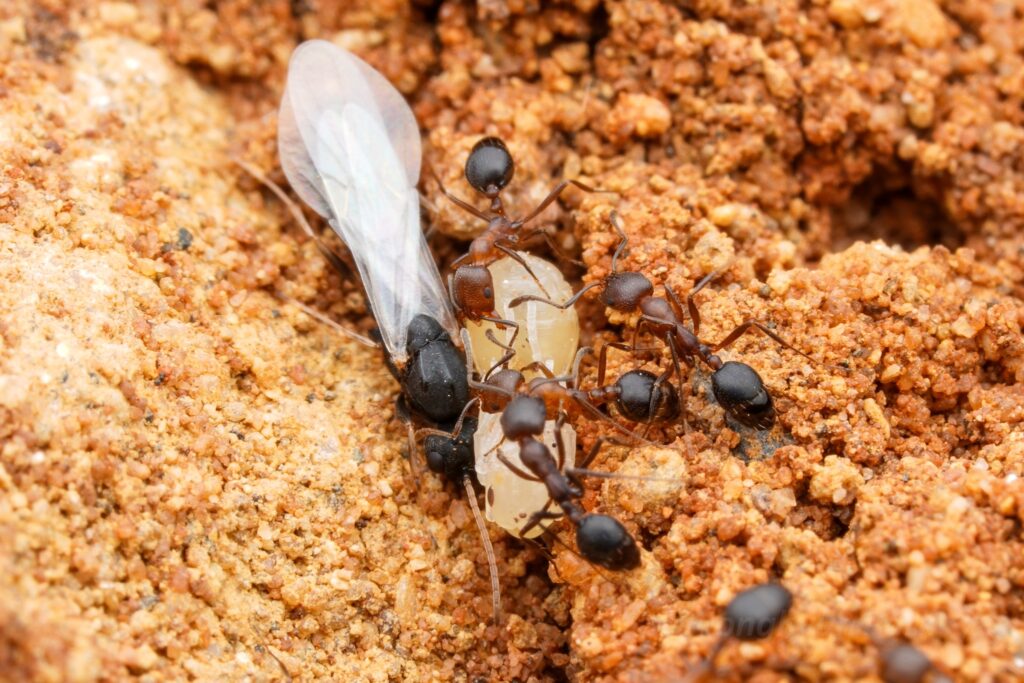
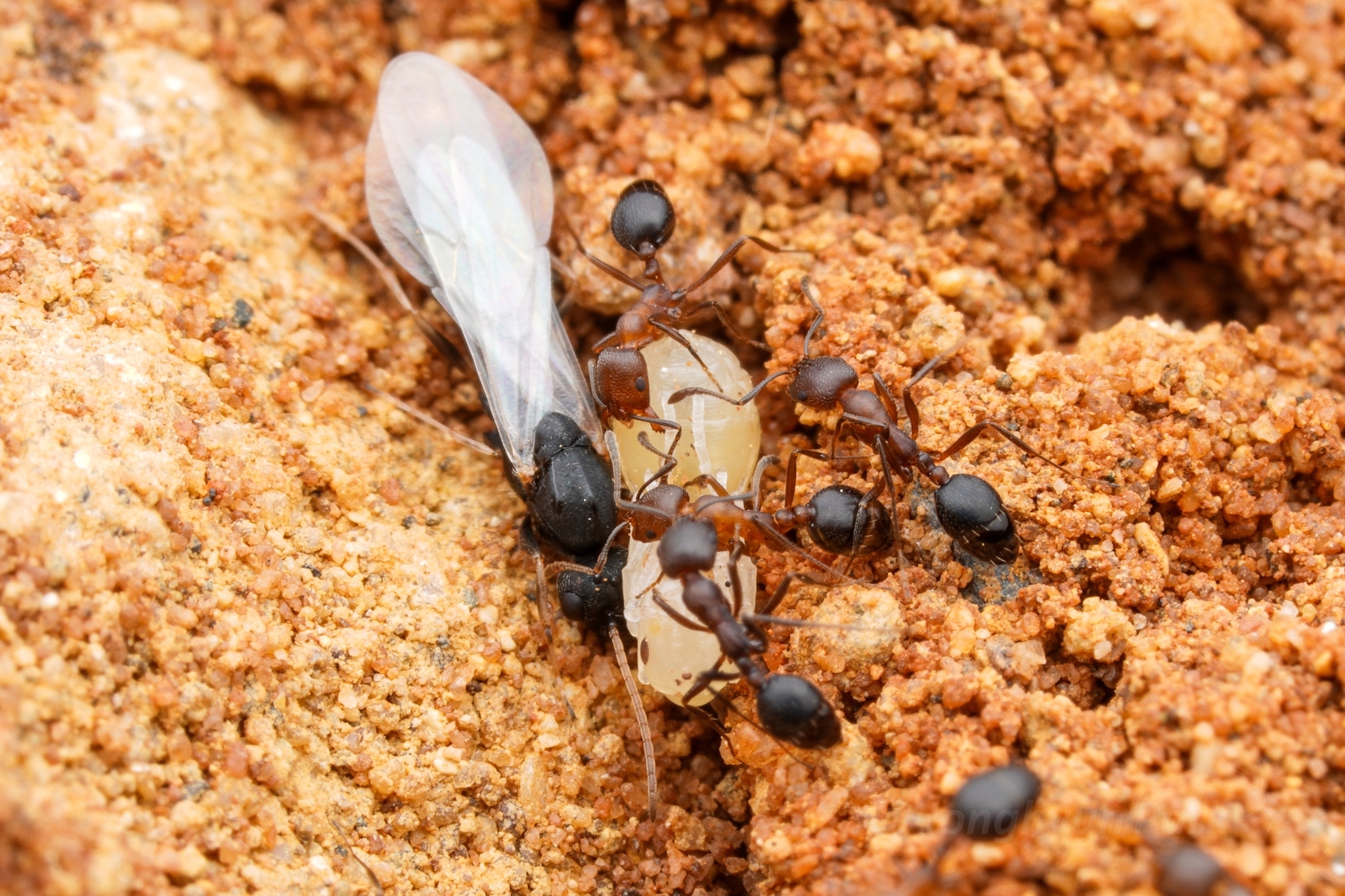
Monomorium subopacum is een relatief kleine mierensoort. De werksters hebben een compacte lichaamsbouw en zijn door hun beperkte formaat aanzienlijk kleiner dan werksters van veel populaire Camponotus- en Formica-soorten.
Juist het kleine formaat is belangrijk om rekening mee te houden bij de huisvesting. Een formicarium dat perfect afgesloten lijkt voor een grotere mierensoort is niet automatisch geschikt voor Monomorium subopacum.
Monomorium subopacum werksters
De werksters van Monomorium subopacum voeren de dagelijkse werkzaamheden binnen de kolonie uit. Ze verzorgen het broed, zoeken naar voedsel, onderhouden het nest en reageren op veranderingen in hun omgeving.
Bij een jonge kolonie zijn vanzelfsprekend minder werksters actief. Naarmate het aantal werksters toeneemt kan het foerageergedrag steeds duidelijker zichtbaar worden en kan aangeboden voedsel sneller worden ontdekt.
Hoe groot wordt Monomorium subopacum?
Monomorium subopacum behoort tot de kleinere mierensoorten. De werksters zijn slechts enkele millimeters groot. De koningin is groter en robuuster gebouwd dan de werksters, waardoor zij binnen het nest duidelijker herkenbaar is.
Bij het kiezen van ventilatiegaas, slangen en aansluitingen moet altijd worden uitgegaan van de kleinste werksters. Juist zij bepalen hoe fijn en goed afgesloten de volledige opstelling moet zijn.
Monomorium subopacum koningin
De Monomorium subopacum koningin speelt een centrale rol bij de groei van de kolonie. Zij produceert de eieren waaruit nieuwe werksters ontstaan. De aanwezige werksters verzorgen vervolgens de koningin en het broed.
In een gevestigde kolonie bevindt de koningin zich doorgaans voornamelijk in het beschermde nestgedeelte. Wanneer een nest goed observeerbaar is, kun je de ontwikkeling van eieren, larven en poppen volgen zonder de kolonie voortdurend te verstoren.
Monomorium subopacum koningin kopen
Een Monomorium subopacum koningin kopen kan interessant zijn wanneer je de ontwikkeling van een kolonie vanaf een vroeg stadium wilt volgen. Een jonge kolonie laat aanvankelijk minder activiteit zien, maar naarmate nieuwe werksters verschijnen kan het gedrag steeds duidelijker zichtbaar worden.
Wie liever direct meer activiteit observeert, kan wanneer beschikbaar kiezen voor een Monomorium subopacum kolonie waarbij al meerdere werksters aanwezig zijn.
Monomorium subopacum kolonie kopen
Een Monomorium subopacum kolonie kopen met bestaande werksters geeft het voordeel dat er direct mieren beschikbaar zijn om voedsel te verzamelen en het aanwezige broed te verzorgen. De hoeveelheid zichtbare activiteit is daarbij sterk afhankelijk van de koloniegrootte.
Een kleine startkolonie is vooral interessant wanneer je de ontwikkeling zelf wilt volgen. Een grotere kolonie kan aantrekkelijker zijn wanneer je direct meer foerageergedrag wilt observeren.
Gedrag van Monomorium subopacum
Monomorium subopacum kan een actieve mierensoort zijn. Werksters onderzoeken hun omgeving op zoek naar voedsel en geschikte bronnen van vocht en energie. Bij een groeiende kolonie kan dit foerageergedrag steeds duidelijker worden.
Het kleine formaat van de werksters maakt hun gedrag anders om te observeren dan dat van grote mierensoorten. Waar één grote werkster direct opvalt, wordt Monomorium subopacum vooral interessant wanneer meerdere werksters gezamenlijk actief zijn.
Foerageergedrag van Monomorium subopacum
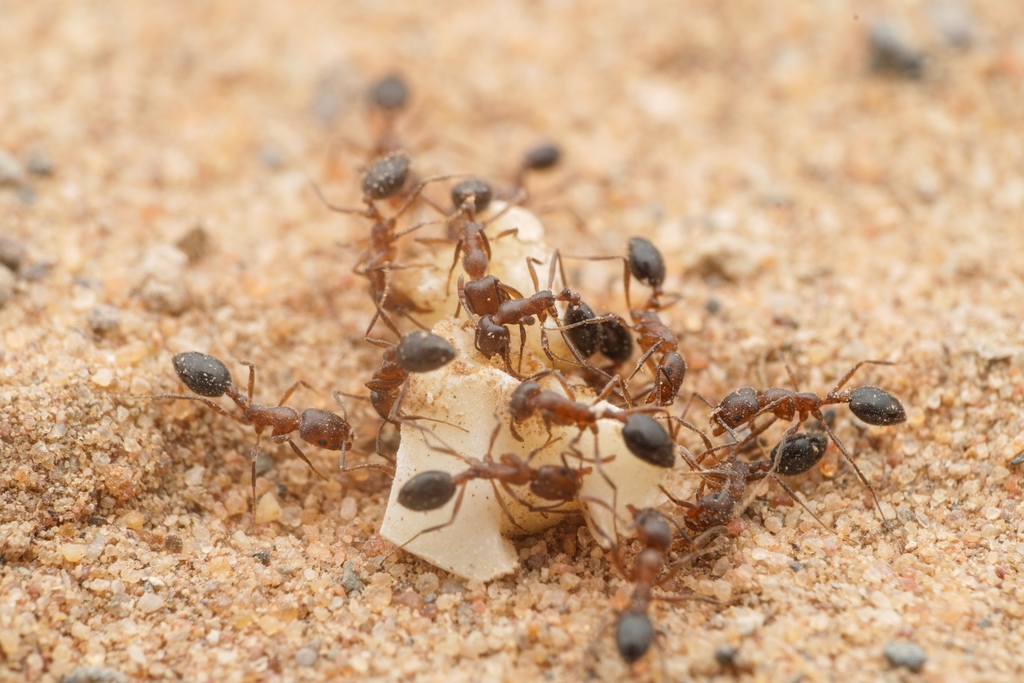
Wanneer een werkster een interessante voedselbron ontdekt, kunnen steeds meer werksters rondom dezelfde plek verschijnen. Dit maakt het aanbieden van geschikte voeding interessant om te observeren.
Bij een grotere kolonie kan voedsel relatief snel worden ontdekt en verwerkt. Het is daarom belangrijk om de hoeveelheid voeding aan te passen aan het daadwerkelijke verbruik van de kolonie.
Hoe snel groeit Monomorium subopacum?
De groeisnelheid van een Monomorium subopacum kolonie wordt beïnvloed door verschillende factoren. Temperatuur, voeding, hoeveelheid broed, vochtvoorziening en de grootte van de bestaande kolonie spelen allemaal een rol.
Een kleine startkolonie beschikt over minder werksters om voedsel te verzamelen en broed te verzorgen. Wanneer het aantal werksters toeneemt kan ook de capaciteit van de kolonie om nieuw broed groot te brengen toenemen.
Een jonge Monomorium subopacum kolonie
Een jonge kolonie heeft nog maar weinig ruimte nodig. Een compacte en goed controleerbare huisvesting is daarom vaak praktischer dan direct een zeer groot formicarium.
Een geschikte reageerbuisopstelling kan tijdens de eerste fase voldoende zijn. Wanneer werksters aanwezig zijn kan de reageerbuis worden gecombineerd met een kleine buitenwereld waarin voeding en drinkwater aangeboden kunnen worden.
Een grote Monomorium subopacum kolonie
Naarmate de kolonie groeit neemt niet alleen het aantal werksters toe, maar verandert ook de verzorging. Een grotere kolonie kan meer voeding verwerken en heeft uiteindelijk meer nest- en foerageerruimte nodig.
Een uitbreidbare huisvesting kan daarom praktisch zijn. Zo kan klein worden begonnen en hoeft pas extra ruimte te worden toegevoegd wanneer de kolonie deze daadwerkelijk nodig heeft.
Welk mierennest voor Monomorium subopacum?
Een geschikt mierennest voor Monomorium subopacum moet in de eerste plaats ontsnappingsveilig zijn. Door het kleine formaat van de werksters moeten naden, aansluitingen en ventilatieopeningen bijzonder zorgvuldig worden gecontroleerd.
Daarnaast is een goede vochtvoorziening belangrijk. Een nest waarin een vochtgradiënt kan worden gecreëerd geeft de werksters de mogelijkheid om het broed naar geschikte nestzones te verplaatsen.
Modulair formicarium voor Monomorium subopacum
Een modulair formicarium kan interessant zijn voor een groeiende Monomorium subopacum kolonie. In plaats van direct veel ongebruikte ruimte aan te bieden, kan de huisvesting geleidelijk worden uitgebreid.
Controleer bij iedere nieuwe module zorgvuldig de aansluitingen. Bij een kleine mierensoort kunnen minimale openingen al voldoende zijn om een ontsnappingsroute te creëren.
Buitenwereld voor Monomorium subopacum
Een buitenwereld maakt het voeren en onderhouden van de kolonie gemakkelijker. Hier kunnen koolhydraatrijke voeding, drinkwater en geschikte voederinsecten worden aangeboden zonder dat het nest zelf geopend hoeft te worden.
Houd de buitenwereld overzichtelijk en zorg voor goed bereikbare voerplaatsen. Dit maakt het gemakkelijker om oude voedselresten te verwijderen en de uitbraakpreventie te controleren.
Uitbraakpreventie bij Monomorium subopacum
Goede uitbraakpreventie bij Monomorium subopacum is één van de belangrijkste onderdelen van de verzorging. Door hun kleine formaat kunnen de werksters zeer kleine openingen benutten.
Controleer daarom het volledige formicarium en niet alleen de bovenrand van de buitenwereld. Ventilatieopeningen, slangaansluitingen, koppelstukken, deksels en naden moeten allemaal geschikt zijn voor de kleinste werksters.
Fluon voor Monomorium subopacum
Fluon kan op geschikte gladde oppervlakken worden gebruikt als aanvullende uitbraakbarrière. Dit is vooral praktisch bij een open buitenwereld waarin regelmatig gevoerd en schoongemaakt wordt.
Een fluonbarrière vervangt echter geen goed afgesloten formicarium. Zie fluon als aanvullende bescherming en controleer de laag regelmatig op stof, vuil, vocht en beschadigingen.
Waarom uitbraakpreventie extra belangrijk is
Bij een zeer kleine mierensoort kan een ontsnappingsroute lastig opvallen. Een enkele kleine opening kan bovendien door steeds meer werksters worden gebruikt zodra deze eenmaal is ontdekt.
Het is daarom verstandig om de volledige opstelling te controleren voordat de kolonie wordt geplaatst. Naarmate de kolonie groeit wordt deze controle alleen maar belangrijker.
Is Monomorium subopacum geschikt voor beginners?
Monomorium subopacum kan interessant zijn voor een mierenhouder die zich goed voorbereidt, maar is door het kleine formaat van de werksters niet automatisch de eenvoudigste soort om mee te beginnen.
Vooral de uitbraakpreventie vraagt aandacht. Wie ervaring heeft met het veilig houden van kleine mierensoorten of bereid is een geschikte opstelling zorgvuldig voor te bereiden, kan veel plezier beleven aan het actieve gedrag van deze soort.
Monomorium subopacum versus grotere mierensoorten
Vergeleken met grotere soorten zoals verschillende Camponotus-soorten vraagt Monomorium subopacum om een andere benadering. De werksters zijn veel kleiner en daardoor moeten de huisvesting en uitbraakpreventie nauwkeuriger worden gecontroleerd.
Daar staat tegenover dat een groeiende kolonie veel activiteit in een relatief compacte ruimte kan laten zien. Dit maakt de soort interessant voor liefhebbers die juist graag grote aantallen kleine, actieve werksters observeren.
Monomorium subopacum kopen met de juiste voorbereiding
Wanneer je Monomorium subopacum wilt kopen, zorg dan vooraf voor een geschikte huisvesting. Een veilig afgesloten nest, een passende buitenwereld en betrouwbare uitbraakpreventie vormen de basis.
Daarnaast zijn de juiste temperatuur, voldoende vocht, schoon drinkwater, koolhydraatrijke voeding en geschikte eiwitbronnen belangrijk om de kolonie goed te kunnen verzorgen.
Monomorium subopacum kopen bij Quality Ants
Wil je Monomorium subopacum kopen bij Quality Ants? Bekijk dan de beschikbare koninginnen en kolonies en kies een koloniegrootte die past bij jouw ervaring en huisvesting. Met een jonge startkolonie kun je de ontwikkeling vanaf een vroeg stadium volgen, terwijl een grotere kolonie direct meer activiteit kan laten zien.
Door vooraf rekening te houden met het kleine formaat van de werksters en de mogelijke toekomstige groei van de kolonie kun je een veilige en uitbreidbare opstelling samenstellen waarin Monomorium subopacum goed geobserveerd en verzorgd kan worden.
Monomorium subopacum verzorging
Een goede Monomorium subopacum verzorging draait om stabiele omstandigheden, een veilige huisvesting en passende voeding. Door het kleine formaat van de werksters is vooral uitbraakpreventie belangrijk. Daarnaast moet de kolonie toegang hebben tot voldoende vocht, schoon drinkwater, koolhydraten en eiwitrijke voeding.
Wanneer je Monomorium subopacum koopt, is het verstandig om de volledige opstelling vooraf klaar te maken. Zo hoeft een pas ontvangen kolonie niet onnodig te worden verstoord en kunnen de mieren rustig wennen aan hun nieuwe omgeving.
Temperatuur voor Monomorium subopacum
Monomorium subopacum komt voor in warme gebieden en kan tijdens de actieve periode bij warme omstandigheden worden gehouden. Een temperatuur rond 24 tot 28 °C kan als praktische richtlijn voor een verwarmde nestzone worden gebruikt.
Het is niet nodig om het volledige formicarium op exact dezelfde temperatuur te houden. Een temperatuurgradiënt is juist praktisch, omdat de werksters dan zelf kunnen kiezen waar ze de koningin en verschillende stadia van het broed plaatsen.
Kan Monomorium subopacum op kamertemperatuur?
Of aanvullende verwarming nodig is hangt af van de daadwerkelijke kamertemperatuur. In een warme ruimte kan de kolonie zonder sterke extra verwarming actief zijn. Bij lagere temperaturen kan de ontwikkeling van het broed langzamer verlopen.
Meet daarom de temperatuur bij het nest in plaats van uitsluitend af te gaan op de temperatuurinstelling van de kamer.
Monomorium subopacum verwarmen
Wanneer extra warmte nodig is, kan een geschikte warmtemat of warmtekabel worden gebruikt. Verwarm bij voorkeur slechts een gedeelte van het mierennest. Zo blijft naast de warme zone ook een koelere zone beschikbaar.
Controleer de temperatuur met een thermometer en voorkom dat het nest direct sterk wordt verhit. Kleine formicaria kunnen sneller opwarmen dan verwacht.
Warmtemat voor Monomorium subopacum
Een warmtemat voor Monomorium subopacum kan handig zijn wanneer de omgevingstemperatuur onvoldoende hoog is. Plaats de warmtebron zo dat slechts een gedeelte van de huisvesting wordt verwarmd.
Houd daarnaast rekening met uitdroging. Hoe warmer een klein nest wordt gehouden, hoe sneller water uit het bevochtigingssysteem kan verdampen.
Temperatuurgradiënt in het mierennest
Een temperatuurgradiënt geeft de kolonie verschillende omstandigheden binnen dezelfde huisvesting. Werksters kunnen het broed verplaatsen en zo gebruikmaken van warmere of koelere gedeelten.
Dit is een belangrijke reden om een warmtebron niet onder of tegen het volledige nestoppervlak te plaatsen. De mieren moeten altijd een minder warme zone kunnen bereiken.
Vochtigheid voor Monomorium subopacum
Naast temperatuur speelt vocht een belangrijke rol bij het houden van Monomorium subopacum. Een gedeelte van het nest kan vochtiger worden gehouden, terwijl andere kamers relatief droger blijven.
Een dergelijke vochtgradiënt geeft de kolonie keuzemogelijkheden. De werksters kunnen het broed binnen het nest verplaatsen wanneer bepaalde omstandigheden gunstiger zijn.
Hoe vochtig moet Monomorium subopacum worden gehouden?
Het is niet verstandig om één exact luchtvochtigheidspercentage voor ieder type mierennest te gebruiken. Verschillende nestmaterialen reageren namelijk anders op bevochtiging.
Een gipsnest houdt en verspreidt vocht anders dan bijvoorbeeld Ytong of een kunststof modulair nest. Zorg daarom vooral voor een controleerbare vochtige zone en voorkom dat het volledige nest voortdurend doorweekt raakt.
Uitdroging van het nest voorkomen
Controleer het bevochtigingssysteem regelmatig, vooral wanneer verwarming wordt gebruikt. Een kleine hoeveelheid water kan bij warme omstandigheden relatief snel verdampen.
Laat het nest niet volledig uitdrogen wanneer de kolonie afhankelijk is van de bevochtigde zone. Tegelijkertijd moet overmatige bevochtiging en sterke condensvorming worden voorkomen.
Drinkwater voor Monomorium subopacum
Naast nestbevochtiging moet Monomorium subopacum toegang hebben tot schoon drinkwater. Een geschikte kleine waterfeeder kan hiervoor in de buitenwereld worden geplaatst.
Controleer regelmatig of er nog voldoende water aanwezig is. Bij een grotere kolonie of hogere temperaturen kan het water sneller worden verbruikt of verdampen.
Monomorium subopacum in een reageerbuis
Een jonge Monomorium subopacum kolonie kan aanvankelijk in een geschikte reageerbuisopstelling worden gehouden. De waterreserve achter het watje zorgt daarbij voor een stabiele vochtbron.
Een reageerbuis biedt bovendien een compacte omgeving die goed aansluit bij een kleine startkolonie. Zolang voldoende water aanwezig is en de buis niet ernstig vervuild raakt, is een snelle verhuizing meestal niet noodzakelijk.
Reageerbuis aansluiten op een buitenwereld
Wanneer werksters aanwezig zijn kan de reageerbuis worden gecombineerd met een kleine buitenwereld. Hierdoor kunnen de werksters foerageren zonder dat de koningin direct naar een groter mierennest hoeft te worden verhuisd.
In de buitenwereld kunnen drinkwater, koolhydraatrijke voeding en geschikte kleine voederinsecten worden aangeboden.
Wanneer Monomorium subopacum verhuizen?
Een verhuizing kan nodig worden wanneer de reageerbuis sterk vervuild raakt, de waterreserve bijna op is of de kolonie duidelijk te groot wordt voor de beschikbare ruimte.
Wanneer mogelijk kan een nieuwe geschikte nestplaats met de bestaande huisvesting worden verbonden. De werksters kunnen deze nieuwe ruimte vervolgens onderzoeken en uiteindelijk zelf besluiten deze in gebruik te nemen.
Monomorium subopacum niet te groot huisvesten
Een kleine startkolonie heeft geen enorm mierennest nodig. Een te grote hoeveelheid ongebruikte nestruimte kan het onderhoud juist lastiger maken.
Werksters kunnen lege kamers bijvoorbeeld gebruiken om voedselresten of afval op te slaan. Een compacte huisvesting die later uitgebreid kan worden is daarom vaak praktischer.
Gipsnest voor Monomorium subopacum
Een geschikt gipsnest kan worden gebruikt voor Monomorium subopacum. Gips kan vocht opnemen en verspreiden, waardoor een vochtige nestzone kan worden gecreëerd.
Vanwege de kleine werksters moeten de afdekplaat, naden en aansluitingen zeer nauwkeurig aansluiten. Controleer het nest zorgvuldig voordat de kolonie wordt geplaatst.
Ytong nest voor Monomorium subopacum
Ook een geschikt Ytong nest kan mogelijkheden bieden voor het houden van Monomorium subopacum. Het poreuze materiaal kan worden gebruikt om een gedeelte van het nest gecontroleerd te bevochtigen.
Bij zelfgemaakte nesten is extra aandacht voor de afwerking belangrijk. Kleine openingen die nauwelijks zichtbaar zijn kunnen voor Monomorium-werksters groot genoeg zijn om doorheen te komen.
Modulair mierennest voor Monomorium subopacum
Een modulair mierennest kan praktisch zijn voor een soort waarvan de kolonie geleidelijk groeit. Je kunt beginnen met weinig nestruimte en later nieuwe modules aansluiten.
Controleer iedere verbinding zorgvuldig. Een uitbreidbaar systeem is alleen geschikt wanneer koppelingen en ventilatie volledig veilig zijn voor de kleinste werksters.
Nestcover gebruiken
Een nestcover kan worden gebruikt om het nestgedeelte te verduisteren. Hierdoor kan de kolonie in een donkere nestomgeving verblijven terwijl de buitenwereld zichtbaar en gemakkelijk bereikbaar blijft.
Voor observatie kan de nestcover tijdelijk worden verwijderd. Plaats deze daarna weer terug zodat de kolonie niet voortdurend aan fel licht wordt blootgesteld.
Voeding van Monomorium subopacum
Een goede Monomorium subopacum voeding bestaat uit een combinatie van koolhydraten en dierlijke eiwitten. Volwassen werksters gebruiken koolhydraten als energiebron, terwijl eiwitten belangrijk zijn voor de ontwikkeling van de larven.
De hoeveelheid voeding moet worden aangepast aan de koloniegrootte. Een kleine startkolonie heeft slechts zeer kleine hoeveelheden nodig, terwijl een grote kolonie aanzienlijk meer kan verwerken.
Koolhydraten voor Monomorium subopacum
Koolhydraatrijke voeding kan worden aangeboden in de vorm van een geschikte mierennectar of suikeroplossing. Door het kleine formaat van de werksters is het belangrijk om vloeibare voeding veilig aan te bieden.
Gebruik bij voorkeur een geschikte feeder of bied slechts een kleine hoeveelheid aan. Zo wordt het risico dat werksters in een grote open druppel terechtkomen beperkt.
Mierennectar voor Monomorium subopacum
Mierennectar kan een praktische koolhydraatbron zijn voor Monomorium subopacum. Actieve werksters kunnen de vloeibare voeding opnemen en binnen de kolonie verdelen.
Controleer regelmatig of de nectar nog schoon en beschikbaar is. Verwijder of vervang voeding wanneer deze sterk vervuild raakt.
Eiwitten voor Monomorium subopacum
Een kolonie met larven heeft regelmatig toegang nodig tot geschikte eiwitrijke voeding. Hiervoor kunnen kleine voederinsecten of geschikte delen van grotere voederinsecten worden aangeboden.
De behoefte aan eiwitten kan toenemen wanneer veel larven aanwezig zijn. Kijk daarom niet alleen naar het aantal volwassen werksters, maar ook naar de hoeveelheid broed.
Welke voederinsecten voor Monomorium subopacum?
Door het kleine formaat van de werksters zijn fruitvliegen een praktische voedselbron. Ook kleine stukken van geschikte krekels en voederkakkerlakken kunnen worden aangeboden.
Grotere voederinsecten kunnen vooraf worden geopend of verdeeld. Hierdoor krijgen de kleine werksters gemakkelijker toegang tot de zachte delen van de prooi.
Fruitvliegen voor Monomorium subopacum
Fruitvliegen zijn vooral handig voor een jonge Monomorium subopacum kolonie. Het formaat sluit goed aan bij kleine werksters en de prooien kunnen gemakkelijk naar het nest worden verwerkt.
Bij een grotere kolonie kunnen fruitvliegen nog steeds worden aangeboden, eventueel gecombineerd met andere geschikte voederinsecten voor meer variatie.
Krekels voeren aan Monomorium subopacum
Krekels kunnen als dierlijke eiwitbron worden gebruikt. Voor kleine kolonies is het praktisch om slechts een klein gedeelte aan te bieden in plaats van een groot volledig voederinsect.
Verwijder niet opgegeten resten tijdig. Vooral in een warme buitenwereld kunnen organische voedselresten relatief snel uitdrogen of bederven.
Voederkakkerlakken voor Monomorium subopacum
Geschikte voederkakkerlakken kunnen eveneens worden gebruikt als eiwitbron. Een kleine kolonie heeft slechts een beperkte hoeveelheid nodig.
Door een voederkakkerlak in kleinere stukken te verdelen kan de portiegrootte beter worden afgestemd op het aantal werksters en de hoeveelheid larven.
Hoe vaak Monomorium subopacum voeren?
Tijdens actieve groei kunnen meerdere keren per week kleine hoeveelheden geschikte voederinsecten worden aangeboden. De exacte hoeveelheid is afhankelijk van de grootte en ontwikkeling van de kolonie.
Observeer hoeveel voedsel daadwerkelijk wordt verwerkt. Wanneer vrijwel alles snel wordt aangenomen kan de volgende portie voorzichtig worden verhoogd. Blijft veel liggen, bied dan minder aan.
Voedselresten verwijderen
Door de kleine afmetingen van de aangeboden porties kunnen voedselresten soms gemakkelijk tussen substraat of decoratie verdwijnen. Houd de voerzone daarom overzichtelijk.
Een fijne pincet is handig om resten uit de buitenwereld te verwijderen zonder de volledige opstelling te verstoren.
Schimmel voorkomen
Vocht, warmte en achtergebleven organisch materiaal kunnen samen schimmelvorming bevorderen. Verwijder daarom oude voederinsecten en andere voedselresten regelmatig.
Een goed geventileerde buitenwereld en gecontroleerde nestbevochtiging helpen eveneens om de huisvesting gemakkelijker schoon te houden.
Uitbraakpreventie tijdens het voeren
Een actieve Monomorium subopacum kolonie kan snel reageren wanneer de buitenwereld wordt geopend of voedsel wordt aangeboden. Controleer daarom vooraf of de uitbraakbarrière goed functioneert.
Door de zeer kleine werksters is het verstandig om tijdens onderhoud rustig en gecontroleerd te werken. Laat het deksel niet langer open dan noodzakelijk wanneer de opstelling daarvan afhankelijk is.
Fluon als aanvullende uitbraakbarrière
Fluon kan op geschikte gladde oppervlakken een praktische aanvullende barrière vormen. Bij een open buitenwereld kan dit het voeren en schoonmaken gemakkelijker maken.
Controleer de fluonlaag regelmatig en zorg dat stof, vocht of decoratiemateriaal de werking niet vermindert. Een fluonlaag moet altijd worden gecombineerd met een opstelling die zelf geschikt is voor zeer kleine mierensoorten.
Monomorium subopacum goed laten groeien
Een gezonde koloniegroei is afhankelijk van meerdere factoren tegelijk. Geschikte warmte, een goede vochtgradiënt, permanent beschikbaar drinkwater, koolhydraatrijke voeding en voldoende dierlijke eiwitten vormen samen een belangrijke basis.
Geef een jonge kolonie daarnaast voldoende rust en pas de huisvesting geleidelijk aan. Meer ruimte is pas nodig wanneer de kolonie daadwerkelijk groeit.
Monomorium subopacum kopen en direct goed starten
Wanneer je Monomorium subopacum wilt kopen, kun je de belangrijkste benodigdheden het beste vooraf klaarzetten. Denk aan een veilige reageerbuis- of nestopstelling, een goed afgesloten buitenwereld, drinkwater, mierenvoeding, geschikte voederinsecten en betrouwbare uitbraakpreventie.
Met een goed voorbereide huisvesting kan een kleine Monomorium subopacum kolonie rustig beginnen en later stap voor stap meer ruimte krijgen. Zo kan de opstelling meegroeien met het aantal werksters zonder dat je een jonge kolonie direct in een onnodig groot formicarium hoeft te plaatsen.
Groei en ontwikkeling van Monomorium subopacum
De ontwikkeling van een Monomorium subopacum kolonie is interessant om te volgen. Een jonge kolonie begint met een beperkt aantal werksters, maar kan onder geschikte omstandigheden steeds verder groeien. Naarmate er meer werksters bijkomen, neemt ook de capaciteit toe om voedsel te verzamelen, broed te verzorgen en het nest te onderhouden.
Wanneer je Monomorium subopacum wilt kopen, is het daarom verstandig om niet alleen naar de huidige koloniegrootte te kijken. Een kleine startkolonie heeft weinig ruimte en voeding nodig, terwijl een grotere kolonie uiteindelijk een ruimere buitenwereld, meer nestruimte en grotere hoeveelheden voedsel kan gebruiken.
Broedontwikkeling bij Monomorium subopacum
Zoals andere mieren doorloopt Monomorium subopacum verschillende ontwikkelingsstadia. De koningin legt eieren, waaruit larven ontstaan. De larven worden door de werksters verzorgd en gevoed voordat ze zich verder ontwikkelen tot poppen en uiteindelijk volwassen mieren.
In een groeiende kolonie kunnen verschillende broedstadia tegelijkertijd aanwezig zijn. Hierdoor kun je eieren, larven en poppen naast elkaar aantreffen wanneer het nest goed observeerbaar is.
Eieren van Monomorium subopacum
De Monomorium subopacum koningin legt de eieren waaruit nieuwe werksters ontstaan. De aanwezige werksters verzorgen het broed en kunnen de eieren binnen het nest verplaatsen.
Door verschillende temperatuur- en vochtzones aan te bieden, krijgt de kolonie de mogelijkheid om het broed op een geschikte plaats in het nest onder te brengen.
Larven van Monomorium subopacum
Na het uitkomen van de eieren verschijnen larven. Tijdens deze groeifase hebben de larven voedingsstoffen nodig. Dierlijke eiwitten vormen daarom een belangrijk onderdeel van de voeding van een kolonie met actief groeiend broed.
Wanneer veel larven aanwezig zijn kan de kolonie duidelijk meer interesse tonen in aangeboden voederinsecten. Pas de hoeveelheid eiwitrijke voeding daarom aan op het daadwerkelijke verbruik.
Poppen van Monomorium subopacum
Na de larvale ontwikkeling volgt de popfase. Tijdens deze fase vindt de verdere ontwikkeling naar een volwassen mier plaats. Werksters kunnen de poppen binnen het nest verplaatsen wanneer andere omstandigheden gunstiger zijn.
Bij een goed observeerbaar mierennest kan de overgang van jong broed naar nieuwe werksters interessant zijn om gedurende langere tijd te volgen.
Nieuwe Monomorium subopacum werksters
Wanneer de ontwikkeling voltooid is verschijnt een nieuwe volwassen werkster. Jonge werksters kunnen aanvankelijk lichter van kleur zijn voordat het exoskelet volledig is uitgehard.
Naarmate steeds meer werksters verschijnen wordt de kolonie sterker. Er zijn dan meer mieren beschikbaar voor broedverzorging, nestonderhoud en het zoeken naar voedsel.
Hoe snel groeit Monomorium subopacum?
De groeisnelheid van Monomorium subopacum hangt af van verschillende factoren. Temperatuur, voeding, koloniegrootte, hoeveelheid broed en algemene omstandigheden kunnen allemaal invloed hebben op de snelheid waarmee nieuwe werksters verschijnen.
Een jonge startkolonie groeit niet noodzakelijk in hetzelfde tempo als een gevestigde kolonie. Een grotere kolonie beschikt over meer werksters die voedsel kunnen verzamelen en larven kunnen verzorgen.
Waarom groeit mijn Monomorium subopacum langzaam?
Wanneer een kolonie weinig nieuw broed produceert of langzaam groeit, is het verstandig om eerst de basisomstandigheden te controleren. Kijk onder andere naar de temperatuur, vochtvoorziening, beschikbaarheid van drinkwater en hoeveelheid geschikte voeding.
Controleer daarnaast of voldoende dierlijke eiwitten worden aangeboden wanneer larven aanwezig zijn. Geef een kleine kolonie voldoende rust en voorkom voortdurend openen, verplaatsen of sterk belichten van het nest.
Monomorium subopacum sneller laten groeien
Een gezonde ontwikkeling is belangrijker dan proberen de kolonie kunstmatig zo snel mogelijk te laten groeien. Zorg voor stabiele omstandigheden en pas voeding en huisvesting aan op de werkelijke behoeften van de kolonie.
Geschikte warmte kan de activiteit en broedontwikkeling ondersteunen, terwijl voldoende eiwitrijke voeding belangrijk is voor groeiende larven. Meer warmte of meer voedsel is echter niet automatisch beter.
Van kleine naar grotere Monomorium subopacum kolonie
Bij een kleine startkolonie kan slechts een beperkt aantal werksters buiten het nest zichtbaar zijn. Dit is normaal. Een deel van de werksters blijft bij de koningin en het broed terwijl andere werksters voedsel verzamelen.
Naarmate de kolonie groter wordt, kunnen steeds meer foerageerders tegelijkertijd actief zijn. Hierdoor wordt het gedrag in de buitenwereld duidelijker zichtbaar.
Hoe groot kan een Monomorium subopacum kolonie worden?
Een gevestigde Monomorium subopacum kolonie kan aanzienlijk meer werksters bevatten dan een jonge startkolonie. De exacte uiteindelijke koloniegrootte kan verschillen en is mede afhankelijk van de omstandigheden waaronder de kolonie wordt gehouden.
Het is daarom verstandig om vanaf het begin rekening te houden met uitbreiding, zonder een kleine kolonie direct een enorm nest te geven.
Meerdere koninginnen bij Monomorium subopacum
Bij Monomorium-soorten kan de sociale structuur per soort verschillen. Wanneer een aangeboden Monomorium subopacum kolonie meerdere koninginnen bevat, is het verstandig om de bestaande samenstelling van de kolonie intact te laten.
Voeg niet zomaar afzonderlijk verkregen koninginnen aan een bestaande kolonie toe. Mieren kunnen onbekende koninginnen als indringers behandelen en agressief reageren.
Monomorium subopacum kolonie met meerdere koninginnen kopen
Wanneer een aangeboden kolonie daadwerkelijk uit meerdere koninginnen bestaat, kan dit bij de productinformatie worden vermeld. Kijk daarom altijd naar de aangegeven samenstelling van de specifieke kolonie die beschikbaar is.
Het aantal koninginnen kan per aangeboden kolonie verschillen. Ga daarom niet automatisch ervan uit dat iedere Monomorium subopacum kolonie meerdere koninginnen bevat.
Monomorium subopacum koningin herkennen
De koningin is groter en anders gebouwd dan de kleine werksters. Vooral het borststuk en achterlijf zijn duidelijker ontwikkeld, waardoor ze binnen een goed zichtbaar nest gemakkelijker te onderscheiden is.
Door het nest te verduisteren en alleen tijdens observatiemomenten te openen, kan de kolonie worden bekeken zonder deze voortdurend aan licht bloot te stellen.
Monomorium subopacum gedrag tijdens het voeren
Het voeren kan één van de interessantste momenten zijn om een grotere Monomorium subopacum kolonie te observeren. Een individuele werkster kan een voedselbron ontdekken waarna meer werksters op dezelfde plaats actief worden.
Hoe sterk de reactie is hangt onder andere af van de koloniegrootte, het soort voedsel en de actuele voedingsbehoefte.
Voedselrekrutering bij Monomorium subopacum
Mieren kunnen chemische signalen gebruiken om nestgenoten naar een interessante voedselbron te leiden. Hierdoor kan een voedselbron die aanvankelijk door slechts enkele werksters wordt bezocht later door veel meer mieren worden gebruikt.
Bij een grotere kolonie is dit gedrag vaak gemakkelijker te observeren omdat meer foeragerende werksters beschikbaar zijn.
Voedselroutes in de buitenwereld
Wanneer dezelfde voerplaats regelmatig wordt gebruikt kunnen werksters duidelijke routes tussen het nest en de voedselbron vormen. Dit levert interessant foerageergedrag op om te observeren.
Houd de buitenwereld overzichtelijk zodat voedsel gemakkelijk bereikbaar blijft en oude resten zonder veel verstoring kunnen worden verwijderd.
Hoeveel voeding heeft een grote kolonie nodig?
Een grote Monomorium subopacum kolonie kan vanzelfsprekend meer voedsel verwerken dan een kleine startkolonie. Toch is het niet nodig om onbeperkte hoeveelheden voederinsecten aan te bieden.
Kijk hoeveel voedsel wordt aangenomen en pas nieuwe porties daarop aan. Vooral wanneer veel larven aanwezig zijn kan de vraag naar dierlijke eiwitten toenemen.
Eiwitten voor broedontwikkeling
Geschikte voederinsecten leveren belangrijke voedingsstoffen voor groeiende larven. Kleine fruitvliegen zijn praktisch voor jonge kolonies, terwijl grotere kolonies ook delen van grotere voederinsecten kunnen verwerken.
Variatie tussen geschikte voederinsecten kan helpen om een gevarieerd voedingsaanbod te creëren.
Koolhydraten voor actieve werksters
Volwassen werksters hebben energie nodig om te foerageren en andere werkzaamheden uit te voeren. Een geschikte mierennectar of suikeroplossing kan hiervoor als koolhydraatbron worden aangeboden.
Bij een grotere kolonie kan vloeibare voeding sneller worden opgenomen. Controleer feeders daarom regelmatig.
Permanent schoon drinkwater aanbieden
Naast koolhydraatrijke voeding moet altijd schoon drinkwater beschikbaar zijn. Dit geldt zowel voor kleine startkolonies als voor grote gevestigde kolonies.
Gebruik een veilige waterfeeder waar de kleine werksters gemakkelijk bij kunnen zonder een groot open wateroppervlak te creëren.
Wanneer heeft Monomorium subopacum meer ruimte nodig?
Extra nestruimte kan worden aangeboden wanneer een groot gedeelte van het bestaande nest daadwerkelijk door werksters en broed wordt gebruikt. Wacht niet tot het nest extreem overvol is, maar breid ook niet onnodig vroeg uit.
Een modulair systeem maakt deze geleidelijke uitbreiding gemakkelijker.
Een modulair formicarium laten meegroeien
Een modulair formicarium voor Monomorium subopacum kan worden uitgebreid wanneer de kolonie groter wordt. Hierdoor hoeft een jonge kolonie niet direct toegang te krijgen tot veel ongebruikte nestkamers.
Bij iedere uitbreiding moeten koppelingen en verbindingen zorgvuldig worden gecontroleerd. De zeer kleine werksters maken een nauwkeurige aansluiting essentieel.
Grotere buitenwereld voor een groeiende kolonie
Naast extra nestruimte kan uiteindelijk een grotere buitenwereld handig worden. Hierdoor ontstaat meer ruimte voor verschillende voerplaatsen, drinkwater en het foerageergedrag van de werksters.
Een grotere buitenwereld betekent echter ook dat er meer randen en mogelijke ontsnappingsroutes gecontroleerd moeten worden.
Uitbraakpreventie wordt belangrijker tijdens de groei
Bij een kleine kolonie zijn slechts weinig werksters beschikbaar om de omgeving te onderzoeken. Bij een grote kolonie kunnen veel meer mieren voortdurend op zoek zijn naar voedsel en mogelijke doorgangen.
Controleer daarom regelmatig alle ventilatieopeningen, aansluitingen, deksels en verbindingen. Goede uitbraakpreventie voor Monomorium subopacum blijft gedurende de volledige ontwikkeling belangrijk.
Fluon controleren bij een grote kolonie
Wanneer fluon als aanvullende uitbraakbarrière wordt gebruikt, moet de laag regelmatig worden gecontroleerd. Stof, vocht, vuil en slijtage kunnen de werking na verloop van tijd verminderen.
Let ook op decoratiemateriaal. Een takje of ander voorwerp dat over de barrière ligt kan door werksters als brug worden gebruikt.
Ventilatie veilig houden voor kleine werksters
Goede ventilatie is belangrijk, maar ventilatieopeningen moeten klein genoeg zijn om de werksters binnen de huisvesting te houden. Controleer vooral zelfgemaakte of aangepaste formicaria zorgvuldig.
Ga bij het bepalen van de maximale opening altijd uit van de kleinste werksters en niet van de grootte van de koningin.
Nestcover voor een groeiende kolonie
Een nestcover maakt het mogelijk om het nestgedeelte donker te houden terwijl de buitenwereld toegankelijk blijft. Dit is vooral handig bij een transparant formicarium waarin je de ontwikkeling van het broed wilt kunnen volgen.
De cover kan tijdelijk worden verwijderd voor observatie en daarna weer worden teruggeplaatst.
Monomorium subopacum observeren
Een goed ontworpen formicarium maakt het mogelijk om verschillende gedragingen te bekijken zonder de kolonie voortdurend te verstoren. Denk aan broedverzorging, voedselrekrutering, foerageren en het verplaatsen van broed.
Naarmate de kolonie groter wordt kunnen deze gedragingen steeds duidelijker zichtbaar worden.
Heeft Monomorium subopacum winterrust nodig?
Bij de verzorging van Monomorium subopacum is het belangrijk om rekening te houden met de natuurlijke herkomst van de kolonie. De soort wordt aangetroffen in relatief warme gebieden en wordt niet op dezelfde manier overwinterd als typische koudeminnende Noord-Europese mierensoorten.
Een langdurige sterke afkoeling moet daarom niet automatisch worden toegepast. Houd de kolonie onder stabiele omstandigheden die aansluiten bij haar natuurlijke klimaat.
Monomorium subopacum in de winter
Ook tijdens de wintermaanden blijven schoon drinkwater en geschikte huisvesting belangrijk. De activiteit kan afhankelijk van temperatuur en andere omstandigheden veranderen.
Wanneer de kolonie actief blijft en broed verzorgt, moet passende voeding beschikbaar blijven.
Monomorium subopacum niet zomaar in de koelkast plaatsen
Een koude koelkastperiode zoals vaak wordt toegepast bij bepaalde Europese soorten moet niet zonder reden op Monomorium subopacum worden toegepast. Sterke afkoeling kan ongeschikt zijn voor een kolonie die afkomstig is uit een warmer klimaat.
Wanneer je de seizoenscyclus wilt nabootsen, is het belangrijker om rekening te houden met de natuurlijke omstandigheden van de soort dan om dezelfde overwinteringsmethode voor iedere mierensoort te gebruiken.
Monomorium subopacum na ontvangst
Wanneer je een Monomorium subopacum kolonie koopt, kan transport tijdelijk invloed hebben op het gedrag van de mieren. Trillingen en beweging kunnen ervoor zorgen dat de kolonie na aankomst onrustig is.
Plaats de kolonie daarom op een rustige locatie, controleer de waterreserve en zorg voor geschikte temperaturen. Geef de mieren vervolgens de gelegenheid om tot rust te komen.
Moet Monomorium subopacum direct verhuizen?
Wanneer een ontvangen kolonie nog in een geschikte reageerbuis zit met voldoende water, hoeft deze niet direct naar een nieuw nest te worden gedwongen.
De reageerbuis kan indien nodig aan een veilige kleine buitenwereld worden gekoppeld. Hierdoor kunnen de werksters foerageren terwijl de kolonie haar bestaande nest behoudt.
Monomorium subopacum kolonie kopen met werksters
Een Monomorium subopacum kolonie kopen met werksters is aantrekkelijk wanneer je sneller zichtbaar gedrag wilt observeren. De aanwezige werksters kunnen direct voedsel verzamelen en het broed verzorgen.
Hoe groter de beschikbare kolonie, hoe meer rekening moet worden gehouden met voedselverbruik, ruimte en uitbraakpreventie.
Monomorium subopacum kopen voor koloniegroei
Monomorium subopacum kopen is interessant voor liefhebbers die graag zien hoe een kleine kolonie zich steeds verder ontwikkelt. De overgang van enkele werksters naar een actieve kolonie met veel foerageerders maakt de ontwikkeling interessant om langdurig te volgen.
Met geschikte warmte, een goede vochtvoorziening, voldoende drinkwater, koolhydraten, dierlijke eiwitten en een veilige uitbreidbare huisvesting krijgt de kolonie de omstandigheden die nodig zijn om zich verder te ontwikkelen.
Monomorium subopacum huisvesting en dagelijks onderhoud
Een goede huisvesting voor Monomorium subopacum moet passen bij het kleine formaat en het actieve gedrag van de werksters. Vooral bij een groeiende kolonie is het belangrijk dat het formicarium veilig afgesloten blijft en tegelijkertijd gemakkelijk te onderhouden is. Voeren, drinkwater bijvullen en afval verwijderen moeten mogelijk zijn zonder het nest iedere keer te openen.
Wanneer je Monomorium subopacum wilt kopen, is het daarom verstandig om vooraf na te denken over zowel de huidige als toekomstige koloniegrootte. Een kleine startkolonie heeft weinig ruimte nodig, maar wanneer het aantal werksters toeneemt kan uitbreiding van zowel het nest als de buitenwereld nodig worden.
Een formicarium voor Monomorium subopacum kiezen
Een formicarium voor Monomorium subopacum moet vooral geschikt zijn voor zeer kleine werksters. Controleer daarom niet alleen de nestkamers, maar ook ventilatieopeningen, aansluitingen, deksels en eventuele verbindingen met andere modules.
Daarnaast is het praktisch wanneer de vochtigheid goed regelbaar is en het nest gemakkelijk kan worden verduisterd. Een transparante afdekking maakt observatie mogelijk, terwijl een passende nestcover voor verduistering kan zorgen wanneer je niet naar de kolonie kijkt.
Waarom een klein nest voor een startkolonie?
Een kleine Monomorium subopacum kolonie heeft geen groot aantal lege nestkamers nodig. Een compacte huisvesting is overzichtelijker en sluit beter aan bij de beperkte omvang van een jonge kolonie.
Wanneer veel ongebruikte ruimte beschikbaar is kunnen werksters lege kamers gebruiken voor afval of voedselresten. Door klein te beginnen en later uit te breiden blijft het nest gemakkelijker te controleren en onderhouden.
Monomorium subopacum in een modulair formicarium
Een modulair formicarium kan bijzonder praktisch zijn voor Monomorium subopacum. Je kunt beginnen met een compacte nestmodule en vervolgens extra nestruimte toevoegen wanneer de kolonie groter wordt.
Hierdoor hoeft de volledige kolonie niet telkens naar een ander formicarium te worden verhuisd. Nieuwe modules kunnen worden aangesloten zodra de bestaande ruimte grotendeels in gebruik is.
Premium modulair formicarium voor Monomorium subopacum
Een goed ontworpen premium modulair formicarium kan interessant zijn wanneer je een nette, overzichtelijke en uitbreidbare opstelling wilt samenstellen. Vooral voor een groeiende kolonie is de mogelijkheid om later extra nest- of buitenwereldmodules toe te voegen praktisch.
Controleer bij een kleine mierensoort zoals Monomorium subopacum altijd of alle onderdelen en verbindingen geschikt zijn voor de kleinste werksters. Een modulair systeem moet niet alleen uitbreidbaar zijn, maar vooral ontsnappingsveilig blijven.
Wanneer een extra nestmodule toevoegen?
Voeg niet automatisch een nieuwe nestmodule toe zodra de eerste werksters verschijnen. Kijk eerst hoeveel van het huidige nest daadwerkelijk wordt gebruikt door de kolonie.
Wanneer steeds meer kamers gevuld raken met werksters en broed kan uitbreiding zinvol worden. Zo blijft de beschikbare nestruimte in verhouding tot de grootte van de kolonie.
Een nieuwe nestmodule aansluiten
Controleer voordat een nieuwe module wordt aangesloten alle koppelingen en verbindingen. Bij Monomorium subopacum kan een zeer kleine kier al voldoende zijn voor een werkster om te ontsnappen.
Controleer de volledige verbinding opnieuw nadat de module is geplaatst. Dit is vooral belangrijk bij slangen, adapters en afneembare onderdelen.
Buitenwereld voor Monomorium subopacum
Een buitenwereld voor Monomorium subopacum is de plaats waar de werksters kunnen foerageren. Hier kunnen drinkwater, mierennectar en geschikte voederinsecten worden aangeboden.
Een overzichtelijke buitenwereld maakt het dagelijkse onderhoud eenvoudiger. Houd voldoende vrije ruimte rondom voerplaatsen zodat oude voedselresten gemakkelijk met een pincet verwijderd kunnen worden.
Een grotere buitenwereld gebruiken
Naarmate de kolonie groeit kunnen steeds meer werksters tegelijkertijd foerageren. Een grotere buitenwereld kan dan praktisch zijn omdat er meer ruimte beschikbaar komt voor voerplaatsen en waterfeeders.
Een grotere buitenwereld hoeft echter niet direct bij een kleine startkolonie te worden gebruikt. Ook hier geldt dat de huisvesting geleidelijk met de kolonie kan meegroeien.
Nestcover voor Monomorium subopacum
Een nestcover is een handige toevoeging wanneer het mierennest transparant is. Hiermee kan het nestgedeelte eenvoudig worden verduisterd terwijl de buitenwereld gewoon zichtbaar blijft.
Wil je de koningin, werksters of het broed observeren, dan kan de nestcover tijdelijk worden verwijderd. Daarna kan deze weer worden teruggeplaatst om het nest opnieuw te verduisteren.
Waarom een nestcover gebruiken?
Mieren leven van nature grotendeels in donkere nestgangen en kamers. Een nestcover maakt het mogelijk om deze donkere omgeving na te bootsen zonder de mogelijkheid tot observatie te verliezen.
Voor de mierenhouder is dit praktisch omdat je niet iedere keer het volledige formicarium hoeft te verplaatsen of af te dekken wanneer je de kolonie wilt bekijken.
Reageerbuis als tijdelijke huisvesting
Een jonge Monomorium subopacum kolonie kan aanvankelijk uitstekend in een geschikte reageerbuis worden gehouden. De beperkte ruimte sluit goed aan bij een kleine kolonie en de ingebouwde waterreserve zorgt voor een vochtige zone.
Wanneer de eerste werksters aanwezig zijn kan de reageerbuis in of aan een kleine buitenwereld worden geplaatst. Hierdoor hoeft de kolonie niet onnodig vroeg naar een groter mierennest te verhuizen.
Extra reageerbuis met water aanbieden
Wanneer de oorspronkelijke reageerbuis begint uit te drogen kan een nieuwe reageerbuis met een verse waterreserve worden aangeboden. Door beide huisvestingen veilig met elkaar te verbinden kunnen de werksters de nieuwe buis onderzoeken.
Wanneer de nieuwe omstandigheden aantrekkelijker zijn kan de kolonie uiteindelijk zelf verhuizen. Vermijd waar mogelijk het handmatig uit de reageerbuis schudden van een kleine kolonie.
Uitbraakpreventie voor Monomorium subopacum
Een betrouwbare uitbraakpreventie voor Monomorium subopacum is essentieel. De werksters zijn klein en kunnen daardoor openingen benutten die bij grotere mierensoorten nauwelijks relevant zijn.
Controleer daarom de volledige huisvesting voordat de kolonie wordt geplaatst. Besteed extra aandacht aan ventilatie, hoeken, deksels, slangverbindingen en aansluitpunten tussen verschillende modules.
Fluon gebruiken bij Monomorium subopacum
Fluon kan op geschikte gladde oppervlakken worden toegepast als aanvullende uitbraakbarrière. Vooral bij een open buitenwereld kan dit het voeren en schoonmaken gemakkelijker maken.
De werksters hebben op een goed aangebrachte barrière minder grip. Toch moet de rest van de opstelling eveneens veilig zijn, omdat een uitbraakbarrière nooit een vervanging is voor een degelijk formicarium.
Fluon onderhouden
Een fluonlaag blijft niet onbeperkt in dezelfde conditie. Stof, vocht, vuil en aanraking kunnen de werking na verloop van tijd verminderen.
Controleer de barrière daarom regelmatig. Wanneer werksters steeds verder over de behandelde zone kunnen lopen, kan onderhoud of vernieuwing nodig zijn volgens de gebruiksinstructies van het product.
Voorkom bruggen over de uitbraakbarrière
Decoratiemateriaal kan onbedoeld een ontsnappingsroute creëren. Een takje, plantje of ander voorwerp dat tegen de bovenrand staat kan de werksters helpen om een uitbraakbarrière te omzeilen.
Houd daarom voldoende vrije ruimte rondom de behandelde rand en controleer na iedere verandering in de inrichting opnieuw of de barrière volledig vrij is.
Ventilatie voor Monomorium subopacum
Een buitenwereld heeft ventilatie nodig, maar de ventilatie moet tegelijkertijd veilig zijn voor kleine werksters. Gebruik daarom fijn genoeg ventilatiemateriaal en controleer de bevestiging zorgvuldig.
Een opening hoeft voor het menselijk oog niet groot te lijken om voor een kleine mier toch toegankelijk te zijn. Controleer de opstelling daarom vanuit het formaat van de kleinste werkster.
Monomorium subopacum voeren zonder ontsnappingen
Bij het voeren kan een actieve kolonie snel reageren. Vooral wanneer veel werksters aanwezig zijn kunnen verschillende mieren rondom de voerplaats actief worden zodra nieuwe voeding wordt aangeboden.
Een goed functionerende uitbraakbarrière en overzichtelijke buitenwereld maken het voeren gemakkelijker. Bereid het voedsel indien mogelijk vooraf voor zodat de buitenwereld niet onnodig lang geopend hoeft te blijven.
Pincet voor het voeren en schoonmaken
Een fijne pincet is handig bij het verzorgen van Monomorium subopacum. Hiermee kunnen kleine voederinsecten gericht worden aangeboden en oude voedselresten uit de buitenwereld worden verwijderd.
Vooral bij een compacte buitenwereld voorkomt een langere pincet dat je tijdens onderhoud onnodig dicht bij actieve werksters hoeft te komen.
Voedselresten verwijderen
Verwijder resten van voederinsecten regelmatig. In een warme opstelling kunnen organische resten relatief snel uitdrogen, bederven of schimmel ontwikkelen.
Controleer vooral vaste afvalplaatsen wanneer de kolonie deze gebruikt. Door afval regelmatig te verwijderen blijft de buitenwereld overzichtelijk en gemakkelijker te onderhouden.
Schimmel bij Monomorium subopacum voorkomen
Schimmel kan gemakkelijker ontstaan wanneer vocht en organische voedselresten samen aanwezig zijn. Goede ventilatie en regelmatig verwijderen van voedselresten helpen dit risico te beperken.
Voorkom daarnaast dat de volledige buitenwereld voortdurend zeer vochtig wordt gehouden. De benodigde nestvochtigheid hoeft niet automatisch te betekenen dat de foerageerruimte eveneens nat moet zijn.
Mijten bij een mierenkolonie voorkomen
Een schone buitenwereld en verantwoord voeren helpen om ongewenste organismen minder kans te geven. Laat grote hoeveelheden voedsel daarom niet langdurig liggen wanneer de kolonie deze niet opeet.
Gebruik geschikte voederinsecten uit een betrouwbare bron en houd voerbakjes en andere onderdelen van de buitenwereld schoon.
Monomorium subopacum voeren
Bij een actieve kolonie kunnen regelmatig koolhydraten en dierlijke eiwitten worden aangeboden. Mierennectar kan als koolhydraatbron dienen en geschikte voederinsecten leveren voedingsstoffen die belangrijk zijn voor groeiend broed.
Stem de hoeveelheid altijd af op de grootte van de kolonie. Kleine porties zijn bij een jonge kolonie gemakkelijker te controleren en verminderen de hoeveelheid achtergebleven voedsel.
Voeren bij veel larven
Wanneer veel larven aanwezig zijn kan de belangstelling voor eiwitrijke voeding toenemen. Dit is een geschikt moment om goed te observeren hoeveel voederinsecten daadwerkelijk worden verwerkt.
Wordt vrijwel alles snel aangenomen, dan kan voorzichtig iets meer worden aangeboden. Blijven veel resten liggen, dan is een kleinere portie praktischer.
Drinkwater controleren
Schoon drinkwater moet altijd beschikbaar blijven. Controleer waterfeeders regelmatig en wacht niet tot deze volledig leeg zijn voordat nieuw water wordt aangeboden.
Dit is vooral belangrijk wanneer verwarming wordt gebruikt. Bij hogere temperaturen kan water sneller verdampen.
Dagelijks Monomorium subopacum observeren
Je hoeft het nest niet voortdurend te openen om de conditie van de kolonie te volgen. Veel informatie is al zichtbaar in de buitenwereld. Kijk bijvoorbeeld naar foerageeractiviteit, voedselopname en het gebruik van drinkwater.
Wanneer het nest met een afneembare cover wordt verduisterd, kun je periodiek het broed en de koningin controleren zonder de nestkamers voortdurend aan licht bloot te stellen.
Monomorium subopacum na verzending verzorgen
Wanneer je Monomorium subopacum koopt en de kolonie wordt verzonden, kan deze na aankomst tijdelijk onrustig zijn. Geef de mieren daarom tijd om na het transport tot rust te komen.
Controleer bij ontvangst vooral of voldoende water aanwezig is en plaats de kolonie op een stabiele locatie met geschikte omstandigheden. Een directe geforceerde verhuizing is meestal niet nodig wanneer de bestaande reageerbuis nog geschikt is.
Monomorium subopacum niet onnodig verstoren
Vooral bij een kleine startkolonie is voortdurend verplaatsen van de reageerbuis of het nest niet nodig. Zet de huisvesting op een stabiele plaats en voer onderhoud rustig uit.
Een nestcover helpt hierbij omdat je de kolonie gemakkelijk kunt verduisteren en alleen kunt bekijken wanneer dat gewenst is.
Wanneer een grotere opstelling gebruiken?
Een grotere opstelling wordt interessant wanneer de bestaande huisvesting daadwerkelijk vol begint te raken. Kijk naar de hoeveelheid werksters en broed en naar hoeveel nestkamers in gebruik zijn.
Door pas op het juiste moment uit te breiden blijft de huisvesting overzichtelijk. Een modulair systeem maakt het mogelijk om dit stap voor stap te doen.
Benodigdheden voor Monomorium subopacum
Wanneer je Monomorium subopacum wilt houden, zijn een aantal producten bijzonder praktisch. Denk aan een geschikte reageerbuis of mierennest, een buitenwereld, betrouwbare uitbraakpreventie, een nestcover, een waterfeeder, mierenvoeding, voederinsecten en een fijne pincet voor onderhoud.
Welke producten je precies nodig hebt hangt af van de grootte van de kolonie en de gebruikte huisvesting. Een kleine startkolonie heeft een eenvoudigere opstelling nodig dan een grote gevestigde kolonie.
Monomorium subopacum starterset
Voor een jonge kolonie kan een goed samengestelde mieren starterset een eenvoudige manier zijn om verschillende basisbenodigdheden in één keer te verzamelen. Controleer wel altijd of het meegeleverde formicarium geschikt is voor zeer kleine werksters.
Uitbraakveiligheid blijft bij Monomorium subopacum belangrijker dan alleen de afmetingen van het nest. Vooral ventilatie en aansluitingen moeten fijn genoeg zijn.
Monomorium subopacum kolonie kopen
Een Monomorium subopacum kolonie kopen is interessant wanneer je een kleine mierensoort zoekt waarvan het gedrag steeds duidelijker zichtbaar wordt naarmate de kolonie groeit. Een kolonie met bestaande werksters kan direct foerageergedrag laten zien.
Wie juist de volledige ontwikkeling wil meemaken kan kiezen voor een jonge startkolonie. Zo kun je volgen hoe het aantal werksters en de activiteit geleidelijk toenemen.
Monomorium subopacum kopen met geschikte benodigdheden
Voordat je Monomorium subopacum gaat kopen, is het verstandig om te controleren of je alle benodigde verzorgingsproducten in huis hebt. Vooral een veilige buitenwereld en betrouwbare uitbraakpreventie verdienen bij deze kleine soort extra aandacht.
Met een geschikte huisvesting, nestcover, drinkwater, koolhydraatrijke voeding, voederinsecten en het juiste onderhoud kan de opstelling vervolgens met de kolonie meegroeien. Zo hoef je niet direct groot te beginnen, maar kun je nieuwe nest- en buitenwereldmodules toevoegen wanneer deze daadwerkelijk nodig zijn.
Monomorium subopacum kopen
Wil je Monomorium subopacum kopen en zoek je een kleine, actieve mierensoort die interessant is om langdurig te observeren? Monomorium subopacum onderscheidt zich vooral door de kleine werksters en het actieve gedrag dat bij een groeiende kolonie steeds duidelijker zichtbaar wordt. Door het geringe formaat kan een kolonie veel activiteit laten zien binnen een relatief compacte opstelling.
Bij het houden van deze soort is een goede voorbereiding belangrijk. Vooral de combinatie van een veilig formicarium, betrouwbare uitbraakpreventie, geschikte temperatuur, voldoende vocht, schoon drinkwater en gevarieerde voeding vormt de basis voor een goede verzorging.
Waarom Monomorium subopacum kopen?
Monomorium subopacum kopen kan interessant zijn wanneer je juist op zoek bent naar een kleinere mierensoort. De aantrekkingskracht zit niet in enorme individuele werksters, maar vooral in het gezamenlijke gedrag van de kolonie.
Naarmate het aantal werksters toeneemt, kan steeds meer activiteit in de buitenwereld ontstaan. Voedsel wordt onderzocht, werksters bewegen tussen nest en voedselbronnen en het aanwezige broed wordt voortdurend verzorgd.
Monomorium subopacum kolonie kopen
Wanneer je een Monomorium subopacum kolonie wilt kopen, kan de beschikbare koloniegrootte een belangrijke rol spelen bij je keuze. Een kleine startkolonie geeft je de mogelijkheid om de ontwikkeling vanaf een vroeg stadium te volgen.
Een grotere kolonie met bestaande werksters laat doorgaans sneller zichtbaar foerageergedrag zien. Bekijk daarom bij het bestellen altijd de actuele informatie over de aangeboden kolonie.
Monomorium subopacum koningin kopen
Een Monomorium subopacum koningin kopen kan aantrekkelijk zijn wanneer je graag ziet hoe een kolonie zich vanaf een zeer vroeg stadium ontwikkelt. Naarmate de eerste werksters verschijnen, nemen zij steeds meer taken binnen de kolonie over.
Wie direct meer activiteit wil observeren, kan beter kiezen voor een beschikbare startkolonie met meerdere werksters. Een zeer jonge kolonie heeft vanzelfsprekend tijd nodig om zich verder te ontwikkelen.
Monomorium subopacum met meerdere koninginnen
De samenstelling van een aangeboden kolonie kan verschillen. Wanneer een specifieke Monomorium subopacum kolonie meerdere koninginnen bevat, kan dit bij de productinformatie worden aangegeven.
Voeg niet zelfstandig onbekende koninginnen samen met een bestaande kolonie. Dat koninginnen tot dezelfde soort behoren betekent niet automatisch dat ze zonder problemen door elkaar worden geaccepteerd.
Monomorium subopacum verzorging in het kort
Voor een goede Monomorium subopacum verzorging zijn verschillende factoren belangrijk. Zorg voor een veilige huisvesting, geschikte warmte, een controleerbare vochtvoorziening en permanent beschikbaar schoon drinkwater.
Daarnaast heeft de kolonie koolhydraatrijke voeding nodig als energiebron en geschikte dierlijke eiwitten voor de ontwikkeling van het broed. De hoeveelheid voeding kan worden aangepast aan de koloniegrootte en het daadwerkelijke voedselverbruik.
Temperatuur voor Monomorium subopacum
Monomorium subopacum kan tijdens actieve groei warm worden gehouden. Een verwarmde nestzone van ongeveer 24 tot 28 °C kan als praktische richtlijn worden gebruikt, waarbij het belangrijk is dat de volledige opstelling niet overal even warm wordt.
Een temperatuurgradiënt geeft de mieren de mogelijkheid om zelf warmere en koelere zones te gebruiken. Controleer de temperatuur bij voorkeur met een thermometer en voorkom oververhitting.
Warmtemat voor Monomorium subopacum
Wanneer de omgevingstemperatuur te laag is, kan een geschikte warmtemat of warmtekabel worden gebruikt. Verwarm slechts een gedeelte van de huisvesting zodat de kolonie altijd naar een koelere zone kan uitwijken.
Houd bij aanvullende verwarming ook de vochtvoorziening extra goed in de gaten. Een verwarmd mierennest kan sneller uitdrogen.
Vochtigheid voor Monomorium subopacum
Een gedeelte van het mierennest moet toegang bieden tot voldoende vocht. Het is niet noodzakelijk om alle kamers even vochtig te maken. Een combinatie van vochtige en drogere zones geeft de kolonie meer keuzemogelijkheden.
Hoe vaak het nest moet worden bevochtigd hangt sterk af van het gebruikte materiaal, de temperatuur en het ontwerp van het bevochtigingssysteem. Controleer daarom de daadwerkelijke toestand van het nest.
Drinkwater voor Monomorium subopacum
Schoon drinkwater moet altijd beschikbaar zijn. Nestbevochtiging vervangt een aparte drinkwaterbron niet. Een geschikte kleine waterfeeder in de buitenwereld maakt het eenvoudig om de beschikbaarheid van water te controleren.
Let bij kleine werksters extra op een veilige manier van aanbieden. Grote open wateroppervlakken zijn niet nodig.
Wat eet Monomorium subopacum?
De voeding van Monomorium subopacum kan bestaan uit een combinatie van koolhydraten en geschikte dierlijke eiwitten. Volwassen werksters gebruiken koolhydraatrijke voeding als energiebron, terwijl eiwitten belangrijk zijn voor groeiende larven.
Een geschikte mierennectar kan worden gecombineerd met verschillende voederinsecten. Door de aangeboden hoeveelheid aan te passen aan de grootte van de kolonie wordt onnodig veel voedselafval voorkomen.
Mierennectar voor Monomorium subopacum
Mierennectar is een praktische manier om koolhydraten aan te bieden. Gebruik bij kleine werksters een veilige feeder of een andere geschikte methode waarbij de mieren gemakkelijk bij de vloeistof kunnen.
Controleer regelmatig of de voeding nog schoon is en vervang deze wanneer dat nodig is.
Welke voederinsecten voor Monomorium subopacum?
Onder andere fruitvliegen, geschikte krekels en voederkakkerlakken kunnen als eiwitrijke voedselbron worden aangeboden. Voor kleine kolonies kunnen kleine voederinsecten of kleine delen van grotere prooien praktisch zijn.
Grotere voederinsecten kunnen vooraf worden geopend zodat de kleine werksters gemakkelijker toegang krijgen tot de zachte delen.
Hoe vaak Monomorium subopacum voeren?
Er bestaat geen vaste hoeveelheid voedsel die voor iedere kolonie geschikt is. Tijdens actieve broedontwikkeling kunnen meerdere keren per week kleine hoeveelheden geschikte voederinsecten worden aangeboden.
Kijk vervolgens hoeveel wordt verwerkt. Wanneer voedsel snel verdwijnt kan voorzichtig meer worden aangeboden. Blijven regelmatig resten liggen, dan kan de hoeveelheid worden verminderd.
Welk mierennest voor Monomorium subopacum?
Een mierennest voor Monomorium subopacum moet vooral geschikt zijn voor het kleine formaat van de werksters. Controleer ventilatieopeningen, naden en aansluitingen zorgvuldig voordat de kolonie wordt geplaatst.
Daarnaast moet het nest een geschikte vochtvoorziening hebben. Begin bij een kleine kolonie met beperkte nestruimte en breid deze pas uit wanneer dat daadwerkelijk nodig is.
Monomorium subopacum in een reageerbuis
Een jonge kolonie kan aanvankelijk in een geschikte reageerbuis worden gehouden. Dit biedt een compacte nestomgeving met een waterreserve en maakt het gemakkelijk om een kleine kolonie te observeren.
Wanneer werksters aanwezig zijn kan de reageerbuis worden aangesloten op een kleine buitenwereld. Hierdoor krijgen de werksters toegang tot voedsel en drinkwater zonder dat de kolonie direct hoeft te verhuizen.
Modulair formicarium voor Monomorium subopacum
Een modulair formicarium voor Monomorium subopacum is vooral interessant wanneer je de huisvesting geleidelijk wilt laten meegroeien. Een kleine kolonie kan met één compacte nestmodule beginnen en later toegang krijgen tot extra ruimte.
Controleer bij uitbreiding iedere koppeling zorgvuldig. Door het kleine formaat van de werksters moet het volledige systeem zeer nauwkeurig aansluiten.
Nestcover voor Monomorium subopacum
Met een nestcover kan het nestgedeelte worden verduisterd terwijl de buitenwereld toegankelijk blijft. Dit is handig wanneer je een transparant mierennest gebruikt waarin de koningin en het broed zichtbaar zijn.
Voor observatie kan de cover tijdelijk worden verwijderd. Daarna kan het nest eenvoudig opnieuw worden verduisterd.
Uitbraakpreventie voor Monomorium subopacum
Goede uitbraakpreventie behoort tot de belangrijkste aandachtspunten bij deze soort. Door hun geringe formaat kunnen de werksters kleine openingen vinden die bij grotere mieren geen probleem vormen.
Controleer daarom niet alleen het deksel, maar ook ventilatie, slangen, koppelingen, hoeken en aansluitingen tussen verschillende onderdelen van het formicarium.
Fluon voor Monomorium subopacum
Fluon kan op daarvoor geschikte gladde oppervlakken worden gebruikt als aanvullende uitbraakbarrière. Dit kan vooral handig zijn wanneer een open buitenwereld wordt gebruikt.
Controleer de barrière regelmatig op vuil, vocht en slijtage. Zorg daarnaast dat decoratiemateriaal geen brug over de behandelde rand vormt.
Is Monomorium subopacum geschikt voor beginners?
Monomorium subopacum kan door een goed voorbereide mierenhouder worden gehouden, maar het zeer kleine formaat van de werksters maakt uitbraakpreventie belangrijker dan bij veel grotere soorten.
Voor beginners die graag een kleine en actieve mierensoort willen houden is een zorgvuldig gekozen formicarium daarom belangrijk. Wie een gemakkelijker zichtbare soort zoekt, kan grotere mierensoorten eenvoudiger vinden om mee te beginnen.
Veelgestelde vragen over Monomorium subopacum
Hoe groot is Monomorium subopacum?
Monomorium subopacum is een kleine mierensoort. De werksters zijn slechts enkele millimeters groot en de koningin is duidelijk groter en robuuster gebouwd.
Is Monomorium subopacum moeilijk te houden?
De verzorging hoeft niet ingewikkeld te zijn wanneer de basisomstandigheden goed zijn, maar door de zeer kleine werksters vraagt de soort extra aandacht voor uitbraakpreventie.
Kan Monomorium subopacum in een reageerbuis?
Ja. Een jonge kolonie kan in een geschikte reageerbuisopstelling worden gehouden en later worden gekoppeld aan een buitenwereld.
Wanneer moet Monomorium subopacum naar een groter nest?
Breid de huisvesting uit wanneer een groot gedeelte van de bestaande nestruimte daadwerkelijk door werksters en broed wordt gebruikt of wanneer de huidige huisvesting niet langer geschikt is.
Kan Monomorium subopacum in een modulair formicarium?
Ja, mits het systeem volledig veilig is voor de kleine werksters. Het voordeel van een modulair systeem is dat nieuwe nestruimte geleidelijk kan worden toegevoegd.
Wat eet Monomorium subopacum?
De kolonie kan koolhydraatrijke voeding en geschikte dierlijke eiwitten krijgen. Daarnaast moet altijd schoon drinkwater beschikbaar zijn.
Kan Monomorium subopacum fruitvliegen eten?
Ja. Fruitvliegen zijn door hun kleine formaat een praktische eiwitbron, vooral voor kleinere kolonies.
Kan ik krekels voeren?
Geschikte voederkrekels kunnen worden aangeboden. Voor een kleine kolonie kunnen ze vooraf worden geopend of in kleinere stukken worden verdeeld.
Heeft Monomorium subopacum drinkwater nodig?
Ja. Zorg altijd voor een betrouwbare bron van schoon drinkwater, ook wanneer het mierennest zelf wordt bevochtigd.
Hoe warm moet Monomorium subopacum worden gehouden?
Een warme nestzone van ongeveer 24 tot 28 °C kan tijdens actieve groei als praktische richtlijn worden gebruikt. Zorg daarbij voor een temperatuurgradiënt en voorkom oververhitting.
Heeft Monomorium subopacum verwarming nodig?
Dit hangt af van de omgevingstemperatuur. Wanneer de kamer voldoende warm is kan aanvullende verwarming beperkt of niet nodig zijn. Bij lagere temperaturen kan plaatselijke verwarming worden gebruikt.
Heeft Monomorium subopacum winterrust nodig?
Monomorium subopacum wordt niet op dezelfde manier koud overwinterd als typische Noord-Europese mierensoorten. Plaats de kolonie daarom niet automatisch gedurende maanden bij koelkasttemperaturen.
Is fluon geschikt voor Monomorium subopacum?
Fluon kan als aanvullende uitbraakbarrière worden gebruikt op daarvoor geschikte oppervlakken. Een veilig afgesloten formicarium blijft daarnaast belangrijk.
Waarom is uitbraakpreventie zo belangrijk?
De werksters zijn zeer klein. Hierdoor kunnen ze gebruikmaken van minimale openingen bij ventilatie, aansluitingen of deksels die voor grotere mierensoorten geen ontsnappingsroute zouden vormen.
Kan Monomorium subopacum meerdere koninginnen hebben?
De samenstelling kan per kolonie verschillen. Controleer daarom de informatie bij de aangeboden kolonie. Voeg nooit zonder goede reden een onbekende koningin aan een bestaande kolonie toe.
Hoe snel groeit Monomorium subopacum?
De groeisnelheid verschilt per kolonie en wordt beïnvloed door onder andere temperatuur, voeding, hoeveelheid broed en koloniegrootte. Onder geschikte omstandigheden kan de activiteit en hoeveelheid broed duidelijk toenemen.
Waarom groeit mijn Monomorium subopacum niet?
Controleer bij een langzaam ontwikkelende kolonie de temperatuur, vochtvoorziening, beschikbaarheid van drinkwater en voeding. Vooral een kolonie met larven heeft voldoende geschikte eiwitbronnen nodig.
Hoe voorkom ik schimmel?
Verwijder niet opgegeten voederinsecten regelmatig, zorg voor voldoende ventilatie en voorkom dat de volledige huisvesting voortdurend te nat is.
Kan ik Monomorium subopacum in een groot nest plaatsen?
Een zeer groot nest is voor een kleine startkolonie meestal niet nodig. Begin liever compact en voeg meer ruimte toe wanneer de kolonie groeit.
Welke producten heb ik nodig voor Monomorium subopacum?
Afhankelijk van de koloniegrootte zijn onder andere een geschikte reageerbuis of mierennest, buitenwereld, waterfeeder, mierenvoeding, voederinsecten, uitbraakpreventie en eventueel een nestcover praktisch.
Monomorium subopacum bestellen
Wil je Monomorium subopacum bestellen? Kijk dan niet alleen naar de soort, maar ook naar de beschikbare koloniegrootte. Een jonge kolonie is geschikt wanneer je graag de volledige ontwikkeling volgt, terwijl een grotere beschikbare kolonie sneller meer zichtbaar gedrag kan bieden.
Zorg vóór aanschaf dat de huisvesting gereed is. Vooral bij deze kleine mierensoort is het verstandig om alle naden, ventilatieopeningen en aansluitingen vooraf te controleren.
Monomorium subopacum kopen bij Quality Ants
Wil je Monomorium subopacum kopen bij Quality Ants? Bekijk het actuele aanbod en kies een beschikbare kolonie die past bij jouw huisvesting en ervaring. Door vooraf de juiste benodigdheden klaar te zetten kan de kolonie na ontvangst in een geschikte omgeving worden geplaatst.
Combineer een Monomorium subopacum kolonie met een veilig mierennest of formicarium, geschikte uitbraakpreventie, drinkwater, mierenvoeding en passende voederinsecten. Wanneer de kolonie groter wordt kan de huisvesting stap voor stap worden uitgebreid.
Bekijk de beschikbare Monomorium subopacum kolonies bij Quality Ants en kies een kolonie waarmee je deze kleine en actieve mierensoort zelf kunt gaan houden.