Informatie soort
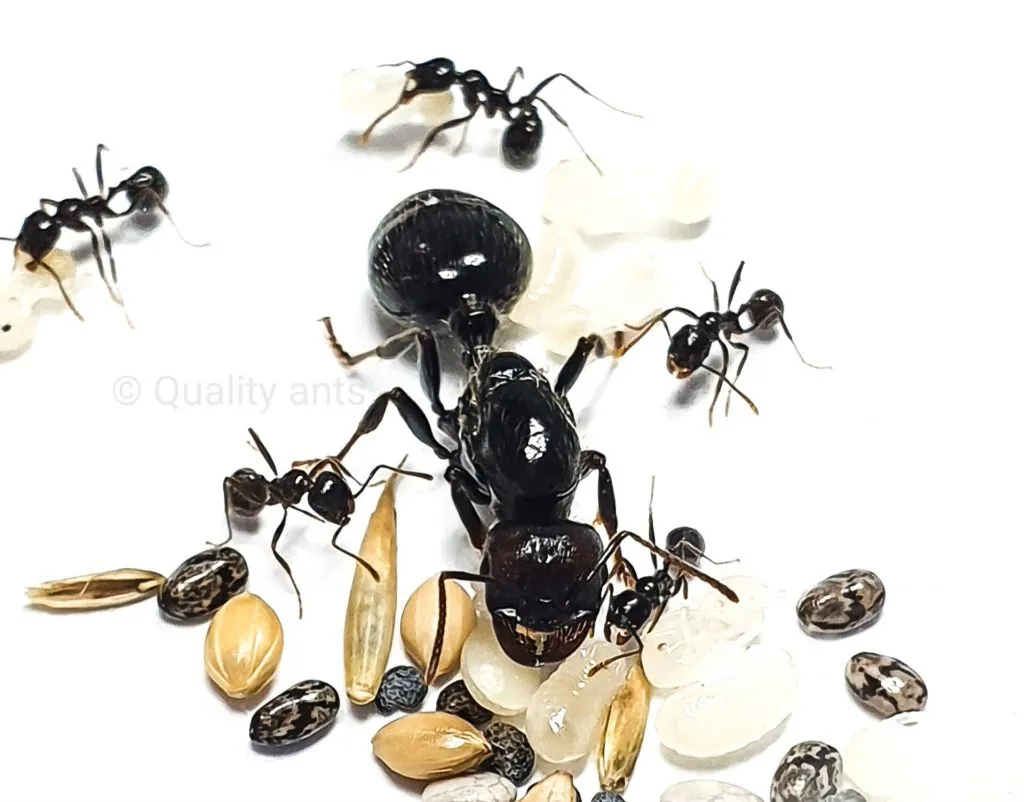
Messor Barbarus is een van de bekendste mierensoort in de mieren wereld. Ze worden ook wel de oogstmier genoemd, omdat ze bekend staan om diverse soorten zaden aan te nemen en deze te malen tot een papje wat ze dan aan de larven en de koningin voeren. Ze zijn redelijk makkelijk en stellen weinig eisen aan hun omstandigheden wat hun een ideale soort voor geduldige beginners maakt.
Specificaties:
Wetenschappelijke naam: Messor Barbarus
Nederlandse naam: Oogstmier
Verspreidingsgebied: Meditaraans zeegebied, voornamelijk Zuid-Europa
Moeilijkheidsgraad: 1.5/5
Afmeting koningin: 14-16mm
Afmeting werkster: 3-8 mm
Afmeting soldaten: 8-15 mm
Maximale Leeftijd van koningin: 20 jaar
Winterrust: November tot maart op 15 graden
Groeisnelheid: 2/5
Uitgroeien tot aantal werksters: 10.000
Onderfamilie: Myrmicinae
Stichting: Claustraal
Kolonie vorming: Monogyne
Verzorging:
Voeding: zadenmix, kleine insecten zoals, fruitvliegen, redrunners, krekels, meelwormen, buffalowormen.
Vanaf hoeveel werksters naar een nest: vanaf 30 werksters kan de kolonie naar een klein nestje verhuisd worden.
Aanbevolen nest type: reageerbuis, AntLab Fusion Nest, 3d, acryl.
Messor barbarus is redelijk makkelijk te verzorgen, het belangrijkste is dat de kolonie altijd voldoende zaden en water heeft. Daarnaast kunt u een paar keer per week de kolonie een insect aanbieden, kijk dan goed naar het gedrag, als de kolonie het voedsel bijvoorbeeld niet aanneemt dan heeft de kolonie voldoende voeding tot beschikking en kunt u het een paar dagen later nog eens proberen. Ook is het belangrijk dat deze soort op een plek staat waar weinig tot geen trillingen zijn, deze soort is daar erg gevoelig voor en krijgen hierdoor stress.
Moeilijkheidsgraad
1.5 / 5
Groeisnelheid
2 / 5
Onze mieren

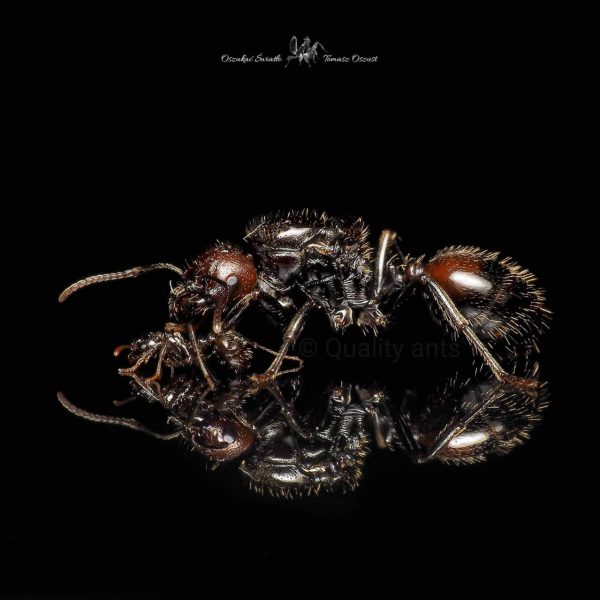
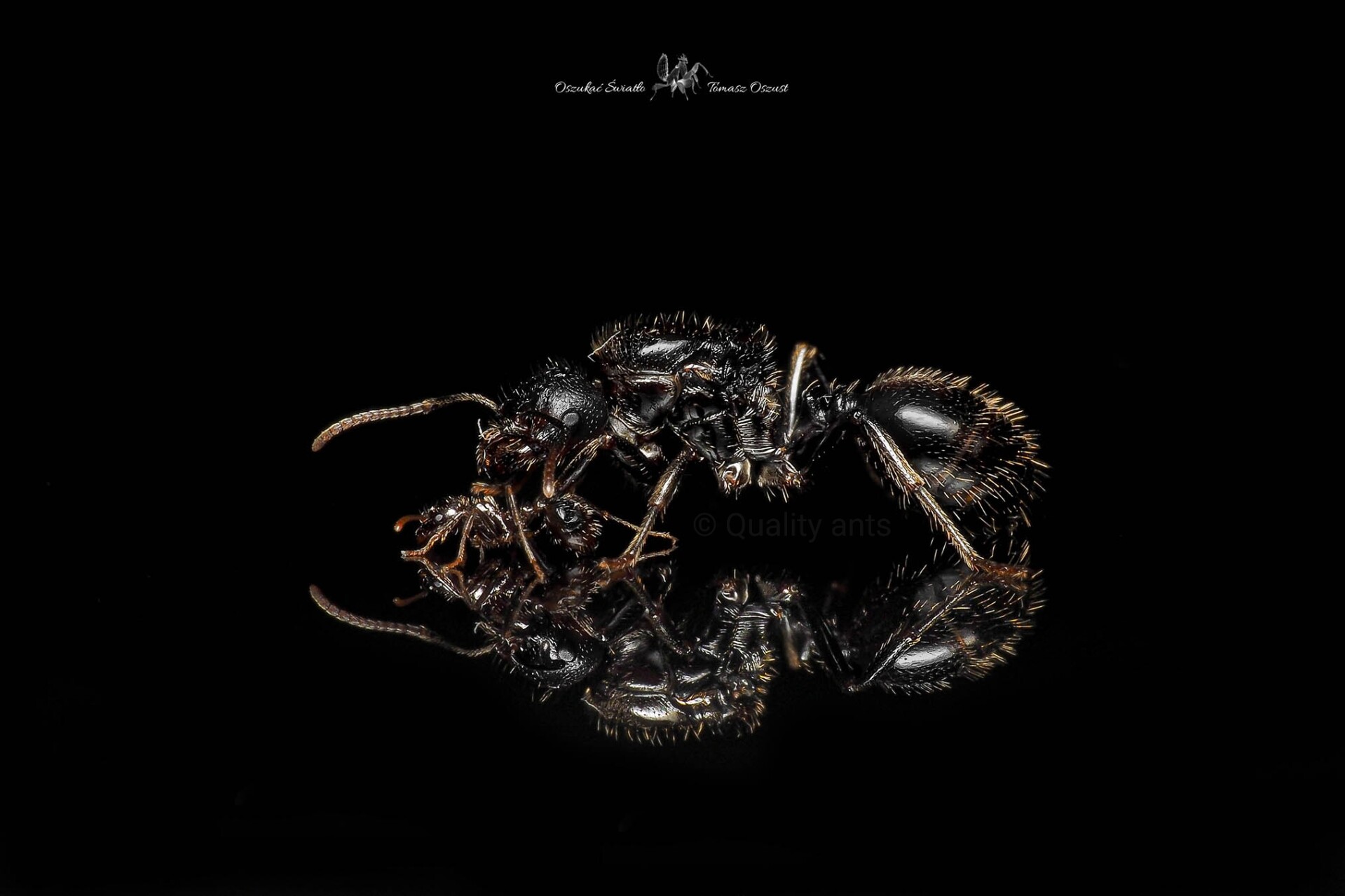
Messor barbarus koningin
€7,25Messor barbarus 50 tot 60 werksters
Messor barbarus readhead 50 tot 60 werksters


Starterset met Messor barbarus mierenkolonie
Wil je op de hoogte blijven van niet voorradige producten en/of mierenkolonies?
Welke mierensoorten zou je graag in ons assortiment willen?
Messor barbarus kopen – Oogstmieren met indrukwekkende soldaten
Wil je Messor barbarus kopen en zelf ontdekken hoe een mierenkolonie groeit, zaden verzamelt en indrukwekkende soldaten ontwikkelt? Bij Quality Ants vind je Messor barbarus kolonies in verschillende groottes, van jonge startkolonies tot grotere kolonies met tientallen of honderden werksters.
Messor barbarus, ook bekend als de oogstmier, is een van de populairste mierensoorten voor zowel beginnende als ervaren mierenhouders. Deze Zuid-Europese mierensoort staat bekend om haar bijzondere zaadverzamelgedrag, opvallende verschillen tussen werksters en relatief eenvoudige verzorging.
Of je nu voor het eerst mieren wilt houden of je collectie wilt uitbreiden: met een geschikte kolonie, een goed mierennest en de juiste voeding kun je jarenlang genieten van het fascinerende gedrag van Messor barbarus.
Bekijk Messor barbarus kolonies van 10 tot 20 werksters of ontdek hieronder welke kolonie het beste bij jou past.
Messor barbarus kopen bij Quality Ants
Bij het kopen van een Messor barbarus kolonie is het belangrijk om rekening te houden met de grootte van de kolonie, je ervaring met mieren en het beschikbare verblijf.
Messor barbarus koningin kopen
Een losse Messor barbarus koningin is geschikt voor liefhebbers die het volledige stichtingsproces willen meemaken. De koningin begint haar kolonie zelfstandig en brengt onder geschikte omstandigheden haar eerste werksters groot.
Deze manier van mieren houden vraagt geduld. Tijdens de stichting is rust bijzonder belangrijk en moet de koningin zo weinig mogelijk worden gestoord.
Messor barbarus met 1 tot 20 werksters
Een jonge kolonie met enkele werksters is een uitstekende keuze voor beginners die de eerste ontwikkeling willen volgen.
De werksters helpen de koningin met de verzorging van het broed, verzamelen voedsel en onderhouden de nestomgeving. Naarmate de kolonie groeit, worden steeds meer activiteiten zichtbaar.
Een kleine kolonie kan meestal nog uitstekend in een reageerbuis met waterreservoir worden gehouden, eventueel aangesloten op een compacte buitenwereld.
Messor barbarus met 25 tot 100 werksters
Wil je direct meer activiteit zien? Dan is een grotere Messor barbarus kolonie interessant.
Bij deze koloniegroottes zie je doorgaans meer werksters die zaden verzamelen, voedsel verwerken en het broed verzorgen. Ook kunnen de eerste grotere werksters verschijnen.
Een compacte buitenwereld en voldoende voedselruimte zijn in deze fase bijzonder handig.
Grote Messor barbarus kolonies kopen
Grotere kolonies met honderden werksters zijn vooral interessant voor mierenhouders die direct een actieve samenleving willen observeren.
Je kunt vaak duidelijke verschillen zien tussen kleine werksters, middelgrote werksters en grote majors, die ook wel soldaten worden genoemd.
Grotere kolonies hebben meer ruimte nodig voor voedselopslag, broedverzorging en activiteit. Een uitbreidbaar mierennest is daarom een verstandige keuze.
Waarom is Messor barbarus zo populair?
Messor barbarus onderscheidt zich van veel andere mierensoorten door haar bijzondere voedingsgedrag.
De werksters verzamelen verschillende soorten zaden en brengen deze naar het nest. Daar worden de zaden opgeslagen en verwerkt tot voedsel. Dit gedrag maakt het mogelijk om dagelijks te observeren hoe de kolonie samenwerkt.
Een ander opvallend kenmerk is het grote verschil in werkstergrootte. Terwijl kleine werksters het broed verzorgen en voedsel verzamelen, beschikken grote majors over krachtige kaken waarmee zij onder andere harde zaden kunnen verwerken.
De combinatie van een interessant voedingspatroon, herkenbare soldaten en relatief eenvoudige verzorging maakt deze soort aantrekkelijk voor een breed publiek.
Messor barbarus redhead kopen
Naast de gewone Messor barbarus worden ook kolonies aangeboden met de benaming Messor barbarus redhead.
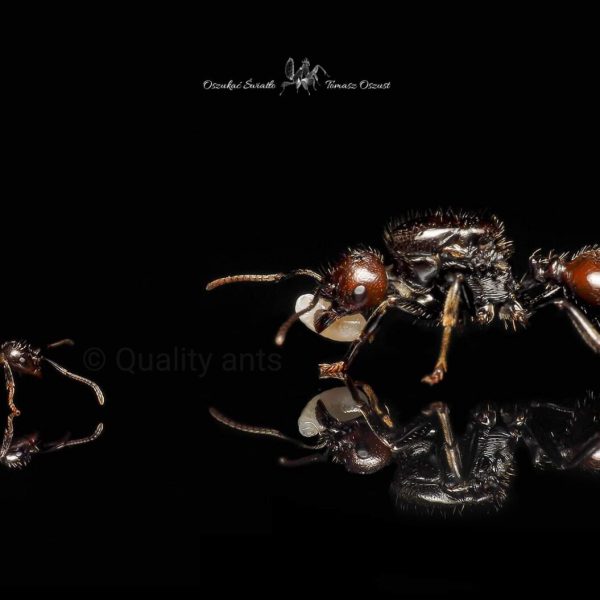
Bij deze kleurvariant vallen vooral de roodbruine tinten van de kop van sommige grotere werksters op. Dit kan een opvallend contrast vormen met de donkere lichaamskleur.
De redhead-benaming wordt binnen de mierenhobby gebruikt voor deze kleurverschillen. Het gaat niet om een afzonderlijke mierensoort.
De basisverzorging is vergelijkbaar met die van gewone Messor barbarus kolonies. Ook deze mieren hebben geschikte zaden, water, aanvullende eiwitten en een passend nest nodig.
Is Messor barbarus geschikt voor beginners?
Ja, Messor barbarus is een geschikte soort voor geduldige beginners.
De verzorging is relatief overzichtelijk, vooral wanneer je begint met een kleine kolonie in een reageerbuis. Het is wel belangrijk om rekening te houden met enkele specifieke eigenschappen.
Messor barbarus is gevoelig voor trillingen en onnodige verstoring. Vooral jonge kolonies kunnen hierdoor stress ervaren. Daarnaast hebben de mieren behoefte aan zowel droge als licht vochtige nestgedeelten.
Wie voldoende rust, geschikt voedsel en een stabiele omgeving aanbiedt, kan de ontwikkeling van deze soort goed volgen.
Wil je meteen een geschikte combinatie van mieren en benodigdheden aanschaffen? Bekijk dan de starterset met Messor barbarus mierenkolonie.
Messor barbarus verzorgen – Complete verzorgingshandleiding
Een gezonde Messor barbarus kolonie heeft een geschikte temperatuur, voldoende drinkwater, een gevarieerd dieet en een nest dat past bij de koloniegrootte nodig.
Temperatuur voor Messor barbarus
Tijdens de actieve periode is een temperatuur van ongeveer 24 tot 28 °C in het verwarmde nestgedeelte geschikt.
Een warmtemat of warmtekabel kan worden gebruikt om een gedeelte van het nest te verwarmen. Zorg daarbij voor een temperatuurgradiënt, zodat de mieren zelf een geschikte plek kunnen kiezen.
Verwarm nooit zonder temperatuurcontrole het volledige nest. Oververhitting en uitdroging kunnen gevaarlijk zijn voor de koningin, werksters en het broed.
Luchtvochtigheid en bevochtiging
Messor barbarus komt van nature voor in relatief droge gebieden, maar het broed heeft voldoende vocht nodig om zich goed te ontwikkelen.
Een mierennest met zowel droge als licht vochtige kamers is daarom bijzonder geschikt.
De droge gedeelten worden vaak gebruikt voor de opslag van zaden. In vochtigere gedeelten kunnen de mieren het broed onderbrengen.
Wanneer alle kamers voortdurend nat zijn, kunnen opgeslagen zaden ontkiemen of beschimmelen. Een goede vochtverdeling is daarom belangrijker dan een volledig vochtig nest.
Winterrust van Messor barbarus
Messor barbarus kent een seizoensgebonden periode van verminderde activiteit.
In gevangenschap wordt vaak een mildere winterrust aangehouden dan bij veel Noord-Europese mierensoorten. Een temperatuur van ongeveer 15 tot 18 °C gedurende een deel van de winter wordt regelmatig toegepast.
De precieze duur en temperatuur kunnen afhangen van de herkomst en het gedrag van de kolonie. Verlaag de temperatuur geleidelijk en blijf zorgen voor voldoende drinkwater.
Tijdens de winterrust neemt de voedselbehoefte meestal af en verloopt de broedontwikkeling langzamer.
Wat eet Messor barbarus?
De belangrijkste voedselbron van Messor barbarus bestaat uit zaden.
In tegenstelling tot veel andere mierensoorten verzamelen deze oogstmieren zaden die in het nest worden opgeslagen. De werksters openen en verwerken de zaden, waarna het voedsel onder andere wordt gebruikt voor de verzorging van het broed.
Welke zaden zijn geschikt?
Een gevarieerde zadenmix is een goede basis voor de voeding.
Voor jonge kolonies zijn vooral kleine, gemakkelijk te verwerken zaden geschikt. Grotere kolonies kunnen ook grotere en hardere zaden verwerken.
Bied voldoende zaden aan, maar controleer regelmatig of opgeslagen voedsel niet beschimmelt of ontkiemt.
Eiwitrijke voeding
Naast zaden kan Messor barbarus profiteren van aanvullende dierlijke eiwitten.
Geschikte voedseldieren zijn bijvoorbeeld fruitvliegen, kleine krekels, kakkerlakken en stukjes meelworm.
Tijdens perioden met veel larven kan twee tot drie keer per week een kleine hoeveelheid eiwitrijke voeding worden aangeboden. Stem de hoeveelheid af op de koloniegrootte en verwijder niet opgegeten resten tijdig.
Heeft Messor barbarus suikerwater of nectar nodig?
Messor barbarus haalt een belangrijk deel van haar energie uit zaden. Daarom is suikerwater of mierennectar doorgaans geen noodzakelijk onderdeel van het dieet.
Sommige kolonies nemen kleine hoeveelheden zoete vloeistoffen aan, maar dit verschilt per kolonie. Nectar is geen vervanging voor zaden, eiwitrijke voeding of vers drinkwater.
Vers drinkwater
Vers drinkwater moet altijd beschikbaar zijn.
Een reageerbuis met waterreservoir of een geschikte waterfeeder is hiervoor ideaal. Controleer regelmatig of de watervoorziening nog goed functioneert.
Het beste mierennest voor Messor barbarus
Het juiste mierennest hangt af van de grootte en ontwikkeling van de kolonie.
Een jonge kolonie heeft meestal nog geen groot formicarium nodig. Een reageerbuis biedt een veilige en overzichtelijke omgeving waarin de koningin en werksters dicht bij elkaar kunnen blijven.
Wanneer de kolonie groter wordt, kun je overstappen naar een geschikt nest met afzonderlijke kamers en een gecontroleerde vochtvoorziening.
Reageerbuisnest voor jonge kolonies
Een reageerbuis met waterreservoir is ideaal voor kleine Messor barbarus kolonies.
Het waterreservoir zorgt voor vocht, terwijl de kolonie in een relatief compacte ruimte verblijft. Door de reageerbuis af te schermen tegen fel licht, krijgen de mieren meer rust.
Een kleine buitenwereld kan worden aangesloten om zaden en andere voeding aan te bieden.
Gipsnest voor Messor barbarus
Een gipsnest is geschikt wanneer de kolonie voldoende werksters heeft en meer ruimte nodig krijgt.
Het voordeel van een goed ontworpen gipsnest is dat een gedeelte gecontroleerd kan worden bevochtigd, terwijl andere kamers droger blijven.
Hierdoor kunnen de mieren zelf bepalen waar ze het broed en hun zaadvoorraad onderbrengen.
3D-geprint mierennest
Een 3D-geprint mierennest kan een praktische keuze zijn voor Messor barbarus.
Vooral modulaire modellen bieden voordelen, omdat ze kunnen worden uitgebreid wanneer de kolonie groeit.
Let bij de keuze op de grootte van de kamers, ventilatie, aansluitmogelijkheden en het bevochtigingssysteem.
Zandnest of formicarium
Een zandnest biedt de mogelijkheid om natuurlijk graafgedrag te observeren.
Messor barbarus kan onder geschikte omstandigheden gangen en kamers aanleggen waarin zaden worden opgeslagen en het broed wordt verzorgd.
Een zandnest vraagt wel extra aandacht voor stabiliteit en vochtverdeling. Te nat zand kan leiden tot ontkiemende zaden en schimmelvorming.
Wanneer moet Messor barbarus verhuizen?
Een verhuizing is pas nodig wanneer het huidige verblijf onvoldoende ruimte of geschikte omstandigheden biedt.
Kleine kolonies kunnen vaak langere tijd in een reageerbuis blijven. Zodra het nest duidelijk te vol raakt, kun je een grotere nestmodule aansluiten.
Laat de mieren bij voorkeur zelfstandig verhuizen en vermijd onnodige verstoring.
Hoe snel groeit een Messor barbarus kolonie?
De groeisnelheid van Messor barbarus hangt af van verschillende factoren, waaronder temperatuur, voeding, rust en de leeftijd van de koningin.
Een jonge kolonie ontwikkelt zich doorgaans geleidelijk. In het begin zijn er relatief weinig werksters en gaat veel energie naar de verzorging van het eerste broed.
Wanneer het aantal werksters toeneemt, kunnen steeds meer taken worden verdeeld. Daardoor wordt de kolonie efficiënter in het verzamelen van voedsel en het verzorgen van larven.
Onder gunstige omstandigheden kan een kolonie uiteindelijk uitgroeien tot duizenden werksters. Dit duurt doorgaans meerdere jaren.
Wanneer krijgt Messor barbarus soldaten?
Een van de meest indrukwekkende kenmerken van Messor barbarus is de aanwezigheid van grote werksters, ook wel majors of soldaten genoemd.
Deze werksters beschikken over een grotere kop en krachtige kaken.
De eerste generaties bestaan meestal vooral uit kleine werksters. Naarmate de kolonie groeit en voldoende voedsel beschikbaar heeft, kunnen grotere werksters verschijnen.
Er bestaat geen vast aantal werksters waarbij iedere kolonie haar eerste soldaten krijgt. De ontwikkeling verschilt per kolonie.
Wie graag direct grotere werksters wil observeren, kan het beste kiezen voor een meer ontwikkelde Messor barbarus kolonie.
Veelgemaakte fouten bij het houden van Messor barbarus
Een te groot nest gebruiken
Een kleine kolonie direct in een groot nest plaatsen is meestal niet verstandig. Een compacte nestomgeving is gemakkelijker te controleren en voorkomt dat voedselresten en afval zich ophopen in ongebruikte kamers.
Te veel vocht aanbieden
Een voortdurend nat nest is ongeschikt voor de opslag van zaden. Zorg daarom voor droge voorraadkamers en een afzonderlijk bevochtigingsgedeelte.
De kolonie te vaak verstoren
Messor barbarus kan gevoelig reageren op trillingen, fel licht en het regelmatig openen van het nest. Geef vooral jonge kolonies voldoende rust.
Onvoldoende eiwitrijke voeding
Hoewel zaden de basis vormen van het dieet, kan aanvullende eiwitrijke voeding belangrijk zijn voor de ontwikkeling van het broed.
Geen drinkwater aanbieden
Ook al komt Messor barbarus uit relatief droge leefgebieden, de kolonie moet altijd toegang hebben tot drinkwater.
Veelgestelde vragen over Messor barbarus kopen
Wat kost een Messor barbarus kolonie?
De prijs hangt af van de koloniegrootte, het aantal werksters en de aangeboden variant. Een jonge koningin is doorgaans goedkoper dan een grotere kolonie met tientallen of honderden werksters. Bekijk het actuele aanbod bij Quality Ants voor de beschikbare kolonies en prijzen.
Kan ik Messor barbarus zonder ervaring houden?
Ja. Messor barbarus is geschikt voor beginners die zich verdiepen in de basisverzorging en voldoende rekening houden met rust, voeding, temperatuur en winterrust.
Hoeveel koninginnen heeft Messor barbarus?
Messor barbarus wordt doorgaans monogyn gehouden. Dat betekent dat een kolonie normaal gesproken één voortplantende koningin heeft.
Hoe groot wordt een Messor barbarus koningin?
Een volwassen koningin wordt doorgaans ongeveer 14 tot 16 millimeter lang. De werksters verschillen sterk in grootte.
Heeft Messor barbarus soldaten?
Ja. Grotere kolonies kunnen indrukwekkende majors ontwikkelen met een grote kop en krachtige kaken. Deze werksters worden binnen de hobby vaak soldaten genoemd.
Hoe lang leeft een Messor barbarus koningin?
Een goed verzorgde koningin kan vele jaren leven. De exacte levensduur verschilt per individu en is afhankelijk van verschillende omstandigheden.
Kan Messor barbarus in een reageerbuis blijven?
Ja. Vooral kleine kolonies kunnen uitstekend in een reageerbuis met waterreservoir worden gehouden. Een verhuizing is pas nodig wanneer het verblijf onvoldoende geschikt wordt.
Hoe vaak moet ik Messor barbarus voeren?
Zorg dat er geschikte zaden en drinkwater beschikbaar zijn. Bied aanvullende eiwitrijke voeding aan afhankelijk van de hoeveelheid broed en de behoefte van de kolonie.
Is Messor barbarus actief?
Messor barbarus kan veel activiteit vertonen, vooral in grotere kolonies. De werksters verzamelen zaden, verzorgen het broed en onderhouden hun leefomgeving. De activiteit hangt onder andere af van temperatuur, koloniegrootte en seizoen.
Welke Messor barbarus kolonie moet ik kopen?
Voor beginners is een jonge kolonie met ongeveer 10 tot 20 werksters vaak een goede keuze. Wie direct meer activiteit en grotere werksters wil zien, kan beter een verder ontwikkelde kolonie overwegen.
Messor barbarus bestellen bij Quality Ants
Wil je een Messor barbarus kolonie kopen en beginnen met het houden van deze bijzondere oogstmieren?
Bij Quality Ants vind je verschillende koloniegroottes, van jonge startkolonies tot grotere kolonies met indrukwekkende werksters en soldaten.
Combineer jouw kolonie met een geschikt mierennest, een buitenwereld, een gevarieerde zadenmix en de benodigde verzorgingsproducten.
Zo creëer je een goede basis voor een gezonde en groeiende mierenkolonie.
- Messor barbarus 10 tot 20 werksters bekijken
- Complete Messor barbarus starterset bekijken
- Bekijk alle beschikbare mierenkolonies
Ontdek het assortiment van Quality Ants en kies de Messor barbarus kolonie die past bij jouw ervaring en wensen.