Harpegnathos venator kopen
Ben je op zoek naar een unieke mierensoort met een bijzonder jachtgedrag en een indrukwekkend uiterlijk? Dan is Harpegnathos venator een uitstekende keuze. Deze exotische roofmier behoort tot de meest fascinerende mierensoorten binnen de hobby en staat bekend om haar uitstekende zicht, krachtige kaken en actieve jachtgedrag. In tegenstelling tot veel andere mierensoorten vertrouwen Harpegnathos venator werksters niet alleen op geursporen, maar ook op hun goed ontwikkelde gezichtsvermogen om prooien op te sporen.
Bij Quality Ants vind je gezonde Harpegnathos venator kolonies die zorgvuldig zijn gecontroleerd voordat zij worden verzonden. Of je nu een jonge kolonie zoekt of een verder ontwikkelde kolonie met meerdere werksters, je ontvangt een sterke kolonie die onder de juiste omstandigheden jarenlang kan uitgroeien tot een indrukwekkende samenleving.
Waarom kiezen voor Harpegnathos venator?
Harpegnathos venator is één van de meest bijzondere mierensoorten die verkrijgbaar is. Waar veel mieren vooral aas verzamelen of voedsel via geursporen vinden, gaan de werksters van Harpegnathos venator actief op jacht naar levende prooien. Dankzij hun grote ogen kunnen zij beweging uitstekend waarnemen en reageren zij razendsnel wanneer een geschikt prooidier wordt ontdekt.
Juist dit natuurlijke jachtgedrag maakt deze soort bijzonder populair onder ervaren mierenhouders. Iedere jacht is anders en laat zien hoe intelligent en efficiënt deze mieren samenwerken.
Grote ogen en uitstekend zicht
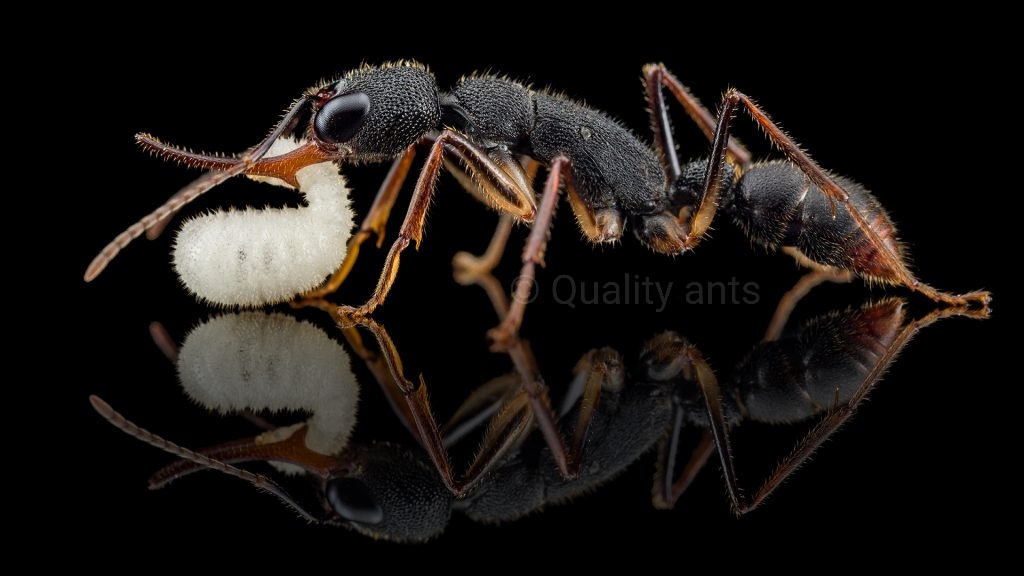
Eén van de opvallendste kenmerken van Harpegnathos venator zijn de grote samengestelde ogen. In vergelijking met veel andere mierensoorten vertrouwen deze mieren veel sterker op hun gezichtsvermogen. Hierdoor kunnen zij bewegende prooien nauwkeurig volgen en actief achtervolgen.
Indrukwekkende kaken
Naast hun uitstekende zicht beschikken Harpegnathos venator werksters over lange, krachtige kaken waarmee zij prooien kunnen vastgrijpen. Tijdens de jacht werken meerdere werksters regelmatig samen om grotere prooidieren veilig naar het nest te transporteren.
Natuurlijke leefomgeving
Harpegnathos venator komt van nature voor in tropische delen van Azië. De kolonies leven voornamelijk op of net onder de bosbodem, waar zij tussen bladeren, houtresten en stenen op zoek gaan naar kleine insecten en andere ongewervelden. Het warme en vochtige klimaat waarin deze soort voorkomt speelt een belangrijke rol bij de verzorging in gevangenschap.
Door thuis vergelijkbare omstandigheden te creëren met een geschikt mierennest, een warme temperatuur en voldoende luchtvochtigheid voelt Harpegnathos venator zich uitstekend thuis in een professioneel formicarium.
Een mierensoort voor de echte liefhebber
Harpegnathos venator wordt vaak gekozen door mierenhouders die op zoek zijn naar een bijzondere uitdaging. De combinatie van actief jachtgedrag, een indrukwekkend uiterlijk en een relatief grote lichaamsgrootte maakt deze soort uniek binnen de mierenwereld. Iedere kolonie ontwikkelt zich op haar eigen tempo en biedt dagelijks nieuwe gedragingen om te observeren.
Waarom Harpegnathos venator kopen bij Quality Ants?
Bij Quality Ants staat kwaliteit centraal. Iedere Harpegnathos venator kolonie wordt zorgvuldig gecontroleerd voordat deze wordt verzonden. Dankzij onze ervaring met exotische mierensoorten ontvang je een gezonde kolonie die klaar is voor een succesvolle start. Daarnaast helpen wij je graag met deskundig advies over voeding, temperatuur, luchtvochtigheid, nestkeuze en de verdere verzorging van jouw kolonie.
Naast gezonde kolonies vind je bij Quality Ants ook professionele mierennesten, startersets, hoogwaardige mierenvoeding, buitenwerelden en accessoires. Zo kun je jouw complete opstelling eenvoudig samenstellen en jouw Harpegnathos venator de beste leefomgeving bieden.
De ideale temperatuur voor Harpegnathos venator
Harpegnathos venator is een tropische mierensoort die het beste presteert bij een warme en stabiele temperatuur. Overdag ligt de ideale temperatuur tussen de 24°C en 28°C. Bij deze temperaturen zijn de werksters actief, ontwikkelen de larven zich optimaal en blijft de koningin regelmatig eieren leggen. Tijdens de nacht mag de temperatuur licht dalen naar ongeveer 22°C tot 24°C, waardoor een natuurlijk dag- en nachtritme ontstaat.
Voor een optimale ontwikkeling adviseren veel ervaren mierenhouders om een warmtekabel of warmtemat onder een gedeelte van het nest te plaatsen. Verwarm nooit het volledige nest, zodat de mieren zelf kunnen kiezen welke temperatuur het meest geschikt is voor de koningin, het broed en de werksters.
Luchtvochtigheid
Naast temperatuur is een hoge luchtvochtigheid essentieel voor Harpegnathos venator. In de natuur leeft deze soort in vochtige tropische bossen waar de luchtvochtigheid het grootste deel van het jaar hoog blijft. Ook in een formicarium is het daarom belangrijk om een groot gedeelte van het nest licht vochtig te houden.
Een goede vochtvoorziening bevordert de ontwikkeling van het broed en voorkomt uitdroging van de larven. Tegelijkertijd moet voldoende ventilatie aanwezig zijn om schimmelvorming te voorkomen. Een goed ontworpen formicarium met een bevochtigingssysteem maakt het eenvoudig om een stabiel klimaat te behouden.
Het ideale mierennest
Harpegnathos venator voelt zich het prettigst in een ruim mierennest met voldoende loopruimte. Omdat deze soort relatief grote werksters heeft en actief jaagt, is een ruime buitenwereld minstens zo belangrijk als het nest zelf. Hierdoor kunnen de werksters hun natuurlijke gedrag vertonen en actief op zoek gaan naar voedsel.
Een nest met een goede vochtregulatie en voldoende ventilatie vormt de ideale leefomgeving. Naarmate de kolonie groeit kan het formicarium eenvoudig worden uitgebreid met extra nestmodules of een grotere buitenwereld.
Voeding van Harpegnathos venator
Harpegnathos venator is een uitgesproken roofmier. In tegenstelling tot oogstmieren of soorten die voornamelijk leven van suikers, bestaat het grootste deel van het dieet uit levende of vers gedode voedseldieren. Kleine kakkerlakken, fruitvliegen, meelwormen, buffalo wormen en krekels zijn uitstekende voedselbronnen. De werksters jagen actief op hun prooi en brengen deze vervolgens naar het nest, waar de larven worden gevoerd.
Naast eiwitten hebben ook de volwassen werksters behoefte aan suikers als energiebron. Hoogwaardige mierennectar of een speciale suikeroplossing kan daarom regelmatig worden aangeboden. Door zowel eiwitrijke als suikerrijke voeding beschikbaar te stellen blijft de kolonie gezond en actief.
Hoe vaak voeren?
Jonge kolonies hebben relatief weinig voedsel nodig. Naarmate de kolonie groeit neemt ook de behoefte aan eiwitrijke voeding toe. Kleine hoeveelheden voedseldieren kunnen meerdere keren per week worden aangeboden, terwijl nectar vrijwel altijd beschikbaar mag zijn. Verwijder voedselresten tijdig om schimmel en ongewenste insecten te voorkomen.
Een ruime buitenwereld
Voor Harpegnathos venator is een ruime buitenwereld bijzonder belangrijk. Hier kunnen de werksters actief jagen, voedsel verzamelen en hun natuurlijke gedrag laten zien. Door gebruik te maken van verschillende ondergronden, schuilplaatsen en natuurlijke decoratie ontstaat een leefomgeving waarin deze bijzondere mierensoort optimaal tot haar recht komt.
Wanneer moet het nest worden uitgebreid?
Zodra het grootste deel van de nestkamers bezet raakt door werksters en broed is het verstandig om extra ruimte aan te bieden. Dankzij modulaire formicaria kan het verblijf eenvoudig worden uitgebreid zonder de kolonie onnodig te verstoren. Een tijdige uitbreiding zorgt ervoor dat de kolonie zich gezond kan blijven ontwikkelen en voldoende ruimte behoudt om verder te groeien.
Gedrag van Harpegnathos venator
Harpegnathos venator behoort tot de meest bijzondere mierensoorten die in gevangenschap worden gehouden. Waar veel mierensoorten vooral vertrouwen op geursporen en massale samenwerking, zijn de werksters van Harpegnathos venator veel zelfstandiger. Dankzij hun uitstekende gezichtsvermogen en snelle reacties zijn zij in staat om actief bewegende prooien waar te nemen en te achtervolgen. Hierdoor lijkt het gedrag van deze soort meer op dat van een roofdier dan op dat van een typische mier.
Werksters verlaten regelmatig het nest om de omgeving te verkennen. Tijdens het foerageren bewegen zij rustig en alert door de buitenwereld, waarbij zij voortdurend hun omgeving observeren. Zodra een geschikt prooidier wordt ontdekt, reageren zij razendsnel en grijpen zij de prooi met hun krachtige kaken.
Actieve jagers
Het jachtgedrag van Harpegnathos venator is één van de belangrijkste redenen waarom deze soort zo populair is onder ervaren mierenhouders. In plaats van uitsluitend dood voedsel te verzamelen, jagen de werksters actief op kleine insecten en andere ongewervelden. Hierdoor ontstaat een natuurlijk gedrag dat iedere dag opnieuw interessant is om te observeren.
Na een succesvolle jacht wordt de prooi naar het nest gebracht, waar deze wordt verdeeld en gebruikt als voedsel voor de larven. Vooral wanneer er veel broed aanwezig is, neemt de behoefte aan eiwitrijke voeding toe en zie je de werksters vaker actief jagen.
Koloniegroei
Harpegnathos venator groeit over het algemeen langzamer dan veel populaire mierensoorten zoals Messor barbarus of Camponotus nicobarensis. Juist daardoor is iedere nieuwe werkster een bijzondere mijlpaal. Naarmate de kolonie groter wordt, ontstaat een steeds duidelijkere taakverdeling tussen de verschillende werksters en wordt het gedrag binnen het nest steeds complexer.
Met een stabiele temperatuur, voldoende luchtvochtigheid en een gevarieerd voedingspatroon kan een kolonie zich jarenlang blijven ontwikkelen. Geduld is daarbij belangrijk, want deze soort investeert vooral in sterke en gezonde werksters in plaats van een zeer snelle groei.
Broedontwikkeling
De ontwikkeling van het broed verloopt via vier fasen: ei, larve, pop en uiteindelijk een volwassen werkster. Tijdens iedere fase wordt het broed zorgvuldig verzorgd door de werksters. De larven krijgen eiwitrijke voeding aangeboden, terwijl de poppen regelmatig worden verplaatst naar plaatsen met de juiste temperatuur en luchtvochtigheid.
Wanneer de omstandigheden optimaal zijn, blijft de koningin nieuwe eieren produceren en groeit de kolonie gestaag verder. Rust, een geschikt klimaat en hoogwaardige voeding spelen hierbij een belangrijke rol.
Levensverwachting
Een gezonde Harpegnathos venator koningin kan jarenlang leven wanneer zij onder goede omstandigheden wordt gehouden. Gedurende haar leven blijft zij eieren produceren waardoor de kolonie zich blijft ontwikkelen. Werksters leven minder lang, maar doordat er voortdurend nieuwe werksters worden geboren blijft de kolonie gezond en actief.
Is Harpegnathos venator geschikt voor beginners?
Harpegnathos venator wordt over het algemeen aanbevolen voor mierenhouders met enige ervaring. De soort stelt hogere eisen aan temperatuur, luchtvochtigheid en voeding dan veel populaire beginnerssoorten. Daarnaast vraagt het actieve jachtgedrag om een goed ingerichte buitenwereld en regelmatige verzorging. Voor liefhebbers die op zoek zijn naar een unieke en uitdagende mierensoort is Harpegnathos venator echter een uitstekende keuze.
Waarom is Harpegnathos venator zo bijzonder?
Harpegnathos venator onderscheidt zich door een combinatie van eigenschappen die bij weinig andere mierensoorten samen voorkomen. De grote ogen, het uitstekende gezichtsvermogen, de krachtige kaken en het actieve jachtgedrag maken iedere kolonie uniek. Hierdoor behoort deze soort tot de meest fascinerende mieren om dagelijks te observeren en is zij een waardevolle aanvulling voor iedere serieuze mierenliefhebber.
Veelgemaakte fouten bij Harpegnathos venator
Harpegnathos venator is een bijzondere mierensoort die iets meer aandacht vraagt dan veel populaire beginnerssoorten. Eén van de meest voorkomende fouten is het houden van deze soort bij een te lage temperatuur. Wanneer de temperatuur langdurig te laag is, neemt de activiteit af en ontwikkelt het broed zich langzamer. Een stabiele en warme leefomgeving is daarom belangrijk voor een gezonde kolonie.
Ook een te droge leefomgeving kan problemen veroorzaken. Omdat Harpegnathos venator afkomstig is uit tropische gebieden, heeft deze soort behoefte aan een hogere luchtvochtigheid dan veel Europese mierensoorten. Zorg daarom voor een goed bevochtigingssysteem en voorkom dat het nest volledig uitdroogt.
Daarnaast is het belangrijk om voldoende eiwitrijke voeding aan te bieden. Een gevarieerd aanbod van geschikte voedseldieren draagt bij aan een gezonde ontwikkeling van het broed en een actieve kolonie.
Tips voor een gezonde Harpegnathos venator kolonie
Zorg voor een ruim formicarium
Harpegnathos venator is een actieve jager die veel gebruikmaakt van de buitenwereld. Een ruime arena biedt voldoende bewegingsvrijheid en maakt het mogelijk om het natuurlijke jachtgedrag optimaal te observeren.
Houd temperatuur en luchtvochtigheid stabiel
Voorkom grote schommelingen in temperatuur en luchtvochtigheid. Een stabiel klimaat zorgt ervoor dat de koningin actief blijft, het broed zich goed ontwikkelt en de werksters gezond blijven.
Bied gevarieerde voeding aan
Wissel verschillende voedseldieren af en bied daarnaast regelmatig hoogwaardige mierennectar aan als energiebron voor de werksters. Een gevarieerd voedingspatroon ondersteunt een gezonde en sterke kolonie.
Geef de kolonie voldoende rust
Hoewel Harpegnathos venator nieuwsgierig is, blijft rust belangrijk. Open het nest alleen wanneer dit noodzakelijk is en voorkom onnodige trillingen of langdurige blootstelling aan fel licht.
Waarom Harpegnathos venator kopen bij Quality Ants?
Bij Quality Ants ontvang je uitsluitend gezonde Harpegnathos venator kolonies die zorgvuldig zijn gecontroleerd voordat zij worden verzonden. Dankzij onze ervaring met exotische mierensoorten kunnen wij je voorzien van deskundig advies over verzorging, voeding, temperatuur en de inrichting van het ideale formicarium.
Naast gezonde kolonies vind je bij Quality Ants ook professionele mierennesten, complete startersets, hoogwaardige mierenvoeding, buitenwerelden, reageerbuizen en diverse accessoires. Hierdoor kun je jouw volledige opstelling eenvoudig op één plek samenstellen.
Veelgestelde vragen over Harpegnathos venator
Is Harpegnathos venator geschikt voor beginners?
Harpegnathos venator wordt voornamelijk aanbevolen voor mierenhouders met enige ervaring. De soort stelt hogere eisen aan temperatuur, luchtvochtigheid en voeding dan veel beginnerssoorten.
Welke temperatuur is ideaal?
Een temperatuur tussen 24°C en 28°C overdag zorgt ervoor dat de kolonie actief blijft en het broed zich optimaal ontwikkelt.
Wat eet Harpegnathos venator?
Harpegnathos venator leeft voornamelijk van eiwitrijke voedseldieren zoals fruitvliegen, kakkerlakken, meelwormen en kleine krekels. Daarnaast drinken de werksters graag hoogwaardige mierennectar als aanvullende energiebron.
Heeft Harpegnathos venator winterrust nodig?
Nee. Harpegnathos venator is een tropische mierensoort en heeft geen winterrust nodig. Bij een stabiele temperatuur blijft de kolonie het hele jaar actief.
Hoe snel groeit de kolonie?
Harpegnathos venator groeit geleidelijk. Met de juiste verzorging, een warm klimaat en voldoende eiwitrijke voeding ontwikkelt de kolonie zich stap voor stap tot een sterke en gezonde samenleving.
Bestel jouw Harpegnathos venator eenvoudig online
Ben je op zoek naar een bijzondere mierensoort met indrukwekkend jachtgedrag, grote ogen en een uniek karakter? Dan is Harpegnathos venator een uitstekende keuze. Bekijk het actuele aanbod bij Quality Ants en bestel eenvoudig jouw Harpegnathos venator kolonie online. Dankzij gezonde kolonies, deskundig advies en hoogwaardige producten geef je jouw mieren de beste omstandigheden om jarenlang gezond te groeien en kun je dagelijks genieten van één van de meest fascinerende mierensoorten binnen de hobby.