Formica sanguinea kopen – de bloedrode roofmier
Formica sanguinea, in het Nederlands bekend als de bloedrode roofmier, is een opvallende en bijzonder interessante Europese mierensoort. De soort behoort tot het geslacht Formica en valt direct op door haar roodachtige lichaamsdelen in combinatie met een donker achterlijf. Naast haar uiterlijk staat Formica sanguinea vooral bekend om haar actieve karakter en bijzondere natuurlijke gedrag. In de natuur kunnen kolonies rooftochten uitvoeren waarbij poppen van andere Formica-soorten worden meegenomen naar het eigen nest.
Door deze combinatie van uiterlijk, snelheid, activiteit en bijzondere biologie is Formica sanguinea een fascinerende soort voor mierenhouders die al enige ervaring hebben. Een groeiende kolonie kan zeer actief worden en biedt veel interessant gedrag om te observeren. Wie Formica sanguinea wil kopen, moet daarom niet alleen rekening houden met de huidige grootte van de kolonie, maar ook met voldoende ruimte, goede uitbraakpreventie en de natuurlijke winterrust van deze Europese soort.
Herkomst en verspreiding van Formica sanguinea
Formica sanguinea heeft een groot verspreidingsgebied en komt voor in grote delen van Europa en Azië. Binnen Europa kan de soort in verschillende gebieden worden aangetroffen, waaronder ook delen van West- en Midden-Europa. De soort leeft voornamelijk in gebieden waar voldoende warmte, geschikte nestplaatsen en voedsel beschikbaar zijn.
Typische leefgebieden zijn onder andere open bossen, bosranden, heideachtige gebieden, graslanden en andere relatief open en zonnige habitats. De exacte omstandigheden kunnen per gebied verschillen. Formica sanguinea profiteert vaak van plaatsen waar zonnewarmte de bodem en het nest gedurende de actieve maanden kan opwarmen.
Hoe ziet Formica sanguinea eruit?
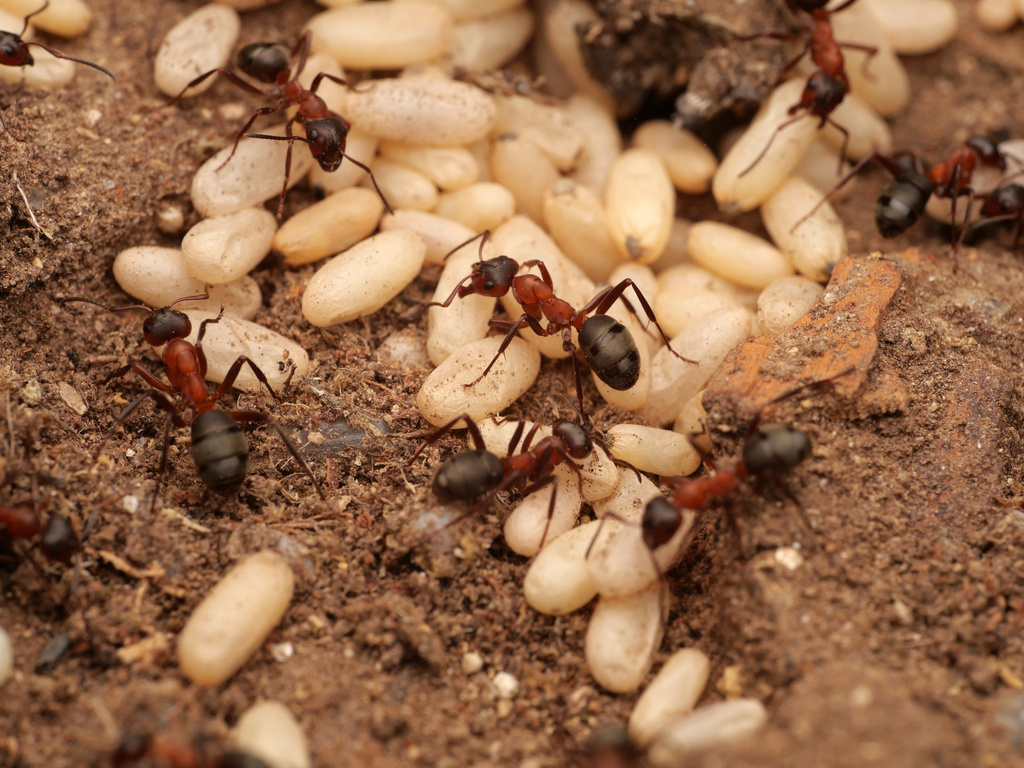
Het uiterlijk van Formica sanguinea is één van de redenen waarom deze soort populair is onder liefhebbers van Europese mieren. De werksters hebben een duidelijke roodachtige kleur op delen van het lichaam, terwijl het achterlijf donkerbruin tot vrijwel zwart is. Ook delen van de kop kunnen donker gekleurd zijn.
De exacte kleurintensiteit verschilt enigszins tussen individuele dieren en populaties. Sommige werksters vertonen een sterk contrast tussen rood en zwart, terwijl andere exemplaren wat donkerder ogen. Door hun relatief lange poten en beweeglijke bouw kunnen de werksters zich snel door het nest en de buitenwereld verplaatsen.
Grootte van Formica sanguinea
De werksters van Formica sanguinea worden doorgaans ongeveer 6 tot 9 millimeter lang. Binnen dezelfde kolonie kunnen duidelijke verschillen in lichaamsgrootte zichtbaar zijn. De grootste werksters zijn daardoor aanzienlijk forser dan de kleinste exemplaren.
De koningin is groter en robuuster gebouwd dan de werksters en wordt ongeveer 9 tot 10 millimeter lang. Vooral het grotere borststuk van de koningin is opvallend. Dit deel van het lichaam bevat tijdens de gevleugelde fase de vliegspieren die nodig zijn voor de bruidsvlucht.
Formica sanguinea koningin
De Formica sanguinea koningin vormt het reproductieve centrum van de kolonie. Na een succesvolle paring en koloniestichting is haar belangrijkste taak het produceren van eieren. De werksters nemen vervolgens steeds meer taken over, waaronder het verzorgen van het broed, zoeken naar voedsel en verdedigen van het nest.
Een koningin is meestal gemakkelijk van de werksters te onderscheiden door haar robuustere lichaamsbouw en grotere mesosoma. Na de bruidsvlucht werpt een bevruchte koningin normaal gesproken haar vleugels af. De kleine littekens waar de vleugels hebben gezeten kunnen daarna nog zichtbaar blijven.
Werksters van Formica sanguinea
De werksters zijn zeer actieve leden van de kolonie. Ze verzorgen de eieren, larven en poppen, onderhouden het nest, verzamelen voedsel en verdedigen de kolonie tegen mogelijke bedreigingen. Bij een grotere kolonie kunnen voortdurend werksters in de buitenwereld actief zijn.
Formica sanguinea behoort hierdoor niet tot de soorten die het grootste deel van de tijd nauwelijks zichtbaar zijn. Vooral bij warmere omstandigheden tijdens het actieve seizoen kan een gezonde kolonie veel activiteit laten zien.
Heeft Formica sanguinea soldaten of majors?
Formica sanguinea heeft geen afzonderlijke soldatenkaste zoals bijvoorbeeld bij veel soorten uit het geslacht Pheidole. Er bestaan wel verschillen in grootte tussen de werksters. Met een lengte van ongeveer 6 tot 9 millimeter kunnen de grootste werksters duidelijk forser zijn dan de kleinste.
Deze grotere exemplaren worden echter niet beschouwd als een aparte major- of soldatenkaste. Ze behoren tot dezelfde werksterkaste en kunnen verschillende werkzaamheden binnen en buiten het nest uitvoeren.
Het bijzondere roofgedrag van Formica sanguinea
Een van de bekendste eigenschappen van Formica sanguinea is haar bijzondere roofgedrag. De soort staat bekend als een facultatief dulotische mier. In de natuur kunnen werksters kolonies van andere Formica-soorten aanvallen en daarbij poppen meenemen.
De geroofde poppen worden naar het eigen nest gebracht. Wanneer hieruit volwassen werksters verschijnen, kunnen deze binnen de Formica sanguinea-kolonie normale werkzaamheden uitvoeren. Hierdoor kunnen in de natuur gemengde kolonies ontstaan waarin naast Formica sanguinea ook werksters van andere Formica-soorten aanwezig zijn.
Welke soorten worden door Formica sanguinea beroofd?
Bij de natuurlijke rooftochten worden voornamelijk verwante Formica-soorten gebruikt, waaronder soorten uit de Formica fusca-groep. Welke gastsoorten precies voorkomen verschilt per gebied en is afhankelijk van welke geschikte Formica-soorten lokaal aanwezig zijn.
Het roven van poppen is een natuurlijk onderdeel van de bijzondere sociale biologie van Formica sanguinea. Voor het houden van een gevestigde kolonie betekent dit echter niet dat de mierenhouder voortdurend poppen van andere soorten moet aanbieden.
Is Formica sanguinea afhankelijk van andere mierensoorten?
Formica sanguinea is facultatief dulotisch. Dat is een belangrijk verschil met mierensoorten die volledig afhankelijk zijn van gastwerksters. Een gevestigde Formica sanguinea-kolonie kan zelf normale kolonietaken uitvoeren en hoeft niet voortdurend te worden voorzien van werksters of poppen van andere soorten.
In natuurlijke populaties kunnen daardoor zowel kolonies met gastwerksters als kolonies zonder of met relatief weinig gastwerksters worden aangetroffen. Het bijzondere roofgedrag blijft echter één van de eigenschappen waarmee deze soort zich onderscheidt van veel andere Europese Formica-soorten.
Gedrag van Formica sanguinea
Formica sanguinea is een actieve en alerte mierensoort. Werksters reageren snel op voedsel en veranderingen in hun omgeving. Wanneer een voedselbron wordt ontdekt kunnen meerdere werksters worden gerekruteerd en neemt de activiteit in de buitenwereld toe.
Ook bij verstoring kunnen de mieren snel reageren. Vooral grotere kolonies kunnen hun nest en buitenwereld actief verdedigen. Dit maakt Formica sanguinea bijzonder interessant om te observeren, maar vraagt tegelijkertijd om een veilige en goed afgesloten mierenopstelling.
Is Formica sanguinea agressief?
Formica sanguinea kan tegenover andere mieren en mogelijke bedreigingen behoorlijk assertief zijn. Dit past bij het natuurlijke gedrag van een soort die in staat is andere mierennesten aan te vallen en te verdedigen tegen concurrenten.
Bij het verzorgen van de kolonie is het daarom verstandig rustig te werken. Een goede buitenwereld en betrouwbare uitbraakpreventie zijn belangrijk, vooral wanneer het aantal werksters begint toe te nemen.
Mierenzuur als verdediging
Formica sanguinea behoort tot de onderfamilie Formicinae. Zoals andere Formicinae kan de soort mierenzuur gebruiken als onderdeel van haar verdediging. In combinatie met de snelheid en actieve reactie van de werksters vormt dit een effectief verdedigingsmechanisme.
Bij een grote kolonie is het daarom verstandig om onnodige verstoring te vermijden. Voeren en onderhoud kunnen het beste rustig en gecontroleerd worden uitgevoerd.
Hoe groot kan een Formica sanguinea kolonie worden?
Een gezonde Formica sanguinea kolonie kan uiteindelijk uit een groot aantal werksters bestaan. De exacte koloniegrootte verschilt sterk tussen kolonies en wordt beïnvloed door onder andere leeftijd, beschikbare ruimte, voedsel, temperatuur en andere omstandigheden.
Voor de mierenhouder is vooral belangrijk dat een kleine startkolonie uiteindelijk aanzienlijk meer ruimte kan gebruiken. Houd bij het kiezen van een mierennest en buitenwereld daarom rekening met toekomstige uitbreiding.
Formica sanguinea en meerdere koninginnen
De sociale structuur van Formica sanguinea kan variëren. In natuurlijke populaties kunnen situaties met meerdere koninginnen voorkomen, maar dit betekent niet dat willekeurige koninginnen zonder risico bij elkaar geplaatst kunnen worden.
Voeg daarom nooit zelfstandig verschillende koninginnen samen wanneer niet bekend is dat deze combinatie wordt geaccepteerd. Agressie tussen koninginnen kan leiden tot ernstige verwondingen of sterfte.
Waarom Formica sanguinea houden?
Formica sanguinea is vooral interessant voor liefhebbers die een actieve Europese mierensoort zoeken. De rood-zwarte kleur, snelle werksters, actieve voedselzoektocht en bijzondere natuurlijke roofstrategie maken de soort anders dan veel traditionele beginnerssoorten.
Daarnaast volgt deze Europese soort een duidelijke seizoenscyclus. Tijdens het voorjaar en de zomer kan de activiteit sterk toenemen, terwijl de kolonie tijdens de koude periode een winterrust doormaakt. Hierdoor kun je gedurende het jaar verschillende natuurlijke fases van de kolonie observeren.
Is Formica sanguinea geschikt voor beginners?
Formica sanguinea is niet de eenvoudigste keuze als allereerste mierenkolonie. De actieve werksters, sterke verdedigingsreactie en behoefte aan een correcte seizoenscyclus maken enige ervaring met mierenhouden wenselijk.
Voor mierenhouders die al ervaring hebben met Europese soorten en bekend zijn met voeding, nestvochtigheid, temperatuur, uitbraakpreventie en winterrust kan Formica sanguinea juist een zeer interessante volgende soort zijn.
Formica sanguinea kopen
Wil je Formica sanguinea kopen? Kijk dan niet alleen naar het aantal werksters van de aangeboden kolonie, maar ook naar de huisvesting die je beschikbaar hebt. Een kleine kolonie kan compact worden gehouden, maar naarmate de kolonie groeit zal meer nest- en foerageerruimte nodig zijn.
Bij Quality Ants vind je verschillende benodigdheden waarmee een geschikte mierenopstelling kan worden samengesteld. In de volgende delen behandelen we uitgebreid de verzorging van Formica sanguinea, waaronder het juiste mierennest, de buitenwereld, temperatuur, vochtigheid, voeding, ontwikkeling en winterrust.
Formica sanguinea verzorging
Wanneer je Formica sanguinea wilt kopen, is het belangrijk om vooraf te weten welke verzorging deze actieve Europese mierensoort nodig heeft. Een geschikte temperatuur, voldoende vocht, een passend mierennest, een ruime buitenwereld en gevarieerde voeding zijn belangrijke onderdelen van een succesvolle huisvesting. Omdat Formica sanguinea een Europese soort is, moet daarnaast rekening worden gehouden met haar natuurlijke seizoensritme.
Een kleine Formica sanguinea kolonie kan relatief compact worden gehouden, maar naarmate het aantal werksters toeneemt verandert ook de behoefte aan ruimte en voeding. Vooral grotere kolonies kunnen zeer actief foerageren. Het is daarom verstandig om een opstelling te gebruiken die later kan worden uitgebreid.
Temperatuur voor Formica sanguinea
Tijdens het actieve seizoen kan Formica sanguinea goed worden gehouden bij normale tot warme zomerse omstandigheden. Een temperatuur van ongeveer 20 tot 25 °C is voor het actieve gedeelte van het jaar doorgaans geschikt. Een lichte natuurlijke variatie tussen dag en nacht is geen probleem.
Het is niet noodzakelijk om het volledige nest constant sterk te verwarmen. Wanneer aanvullende warmte wordt gebruikt, is het beter om slechts een gedeelte van de opstelling te verwarmen. Hierdoor ontstaat een temperatuurgradiënt en kunnen de mieren zelf kiezen waar zij zich bevinden.
Kan Formica sanguinea op kamertemperatuur worden gehouden?
Gedurende een groot deel van het actieve seizoen kan Formica sanguinea bij een geschikte kamertemperatuur worden gehouden. Wanneer de ruimte ongeveer 20 tot 24 °C is, kan aanvullende verwarming afhankelijk van de omstandigheden vaak beperkt blijven.
Een iets warmere zone kan de kolonie tijdens de actieve periode extra keuzemogelijkheid geven, maar voorkom dat het volledige nest voortdurend te warm wordt. De mieren moeten altijd toegang houden tot een koeler gedeelte.
Warmtemat gebruiken bij Formica sanguinea
Wanneer de omgevingstemperatuur laag is, kan een warmtemat of warmtekabel worden gebruikt om een gedeelte van de opstelling voorzichtig te verwarmen. Plaats een warmtebron bij voorkeur nooit zo dat het volledige nest dezelfde hoge temperatuur krijgt.
Controleer de temperatuur met een betrouwbare thermometer. Vooral kleine mierennesten kunnen snel warmer worden dan verwacht wanneer een warmtebron direct tegen het nest wordt geplaatst.
Temperatuurgradiënt in het mierennest
Een temperatuurgradiënt geeft de kolonie de mogelijkheid om verschillende temperaturen op te zoeken. Broed kan bijvoorbeeld naar een warmere plaats worden verplaatst wanneer dat gunstig is, terwijl de koningin en werksters ook koelere zones beschikbaar houden.
Dit sluit beter aan bij natuurlijke omstandigheden dan één volledig gelijkmatig verwarmd nest. Ook in de natuur verandert de temperatuur gedurende de dag en tussen verschillende delen van het nest.
Vochtigheid voor Formica sanguinea
Naast temperatuur speelt vochtigheid een belangrijke rol bij de verzorging van Formica sanguinea. Het nest moet niet volledig uitdrogen, maar ook niet constant doorweekt zijn. Een vochtgradiënt waarbij een gedeelte vochtiger en een ander gedeelte droger blijft, geeft de kolonie meer keuze.
Vooral het broed kan in vochtiger delen van het nest worden geplaatst. De mieren verplaatsen eieren, larven en poppen zelf wanneer andere omstandigheden gunstiger zijn.
Hoe vochtig moet het mierennest zijn?
Er bestaat geen zinvol vast vochtigheidspercentage dat voor ieder mierennest en iedere situatie exact hetzelfde moet zijn. Het type nestmateriaal, ventilatie, temperatuur en de grootte van de kolonie hebben allemaal invloed op hoe snel vocht verdampt.
Bevochtig daarom gecontroleerd en voorkom dat er water in de nestkamers blijft staan. Het is beter om een duidelijk vochtverschil te creëren dan het gehele mierennest voortdurend zeer nat te houden.
Water voor Formica sanguinea
Een Formica sanguinea kolonie moet altijd toegang hebben tot veilig drinkwater. In een buitenwereld kan bijvoorbeeld een geschikte waterfeeder worden gebruikt. Bij kleine kolonies in een reageerbuis kan de waterreserve van de reageerbuis eveneens een belangrijke bron van vocht zijn.
Controleer regelmatig of voldoende water aanwezig is. Tijdens warme perioden kan water sneller verdampen en bij een grotere kolonie kan het verbruik toenemen.
Welk mierennest voor Formica sanguinea?
Wanneer je een Formica sanguinea kolonie koopt, moet het formaat van het mierennest aansluiten bij de grootte van de kolonie. Een jonge kolonie heeft geen enorm formicarium nodig. Een compacte opstelling maakt het gemakkelijker om de kolonie te observeren en de omstandigheden te controleren.
Wanneer steeds meer werksters verschijnen en een groot gedeelte van het nest wordt gebruikt, kan extra nestruimte worden aangeboden. Een uitbreidbaar of modulair mierennest kan hiervoor praktisch zijn.
Reageerbuis voor een kleine Formica sanguinea kolonie
Een kleine kolonie kan afhankelijk van haar ontwikkelingsfase nog in een reageerbuis worden gehouden. Zolang voldoende water aanwezig is en de buis niet sterk vervuild of te klein wordt, hoeft een jonge kolonie niet onnodig snel naar een groot nest te verhuizen.
De reageerbuis kan worden aangesloten op een kleine buitenwereld. Hierdoor kunnen de werksters foerageren terwijl de kolonie haar compacte nest behoudt.
Gipsnest voor Formica sanguinea
Een gipsnest kan geschikt zijn voor Formica sanguinea wanneer de vochtvoorziening goed wordt geregeld. Gips kan vocht opnemen en verspreiden, waardoor binnen een geschikt ontworpen nest een vochtgradiënt kan worden gecreëerd.
Bevochtig het nest gecontroleerd en voorkom langdurige oververzadiging. De exacte frequentie hangt af van het ontwerp van het nest, de omgevingstemperatuur en de ventilatie.
Ytong nest voor Formica sanguinea
Ook een goed ontworpen Ytong mierennest kan worden gebruikt. Ytong is poreus en kan vocht opnemen, terwijl verschillende gedeelten van het nest relatief eenvoudig verschillend vochtig gehouden kunnen worden.
Let bij het kiezen van een Ytong nest op de afmetingen van de kamers, betrouwbare afsluiting en goede observatiemogelijkheden. Het nest moet bovendien passen bij de huidige grootte van de kolonie.
3D-geprint mierennest voor Formica sanguinea
Een geschikt ontworpen 3D-geprint mierennest kan eveneens een mogelijkheid zijn. Hierbij is vooral belangrijk dat de kamers en gangen passen bij de lichaamsgrootte van Formica sanguinea en dat er een betrouwbare methode aanwezig is om de gewenste nestvochtigheid te creëren.
Controleer daarnaast zorgvuldig alle naden en aansluitingen. Formica sanguinea is actief en een veilige constructie is belangrijk om ontsnappingen te voorkomen.
Modulair mierennest voor Formica sanguinea
Een modulair mierennest kan interessant zijn wanneer je een jonge Formica sanguinea kolonie koopt die nog aanzienlijk kan groeien. Je begint met een passende hoeveelheid nestruimte en voegt later extra modules toe wanneer de bestaande ruimte grotendeels wordt gebruikt.
Hierdoor hoeft een kleine kolonie niet direct in een te groot nest te worden geplaatst. Tegelijkertijd hoef je bij verdere groei niet noodzakelijk de volledige bestaande opstelling te vervangen.
Buitenwereld voor Formica sanguinea
Een goede buitenwereld is belangrijk voor deze actieve soort. Hier kunnen de werksters voedsel verzamelen, drinken en afval buiten het nest achterlaten. Naarmate de kolonie groter wordt, kan ook de activiteit in de buitenwereld sterk toenemen.
De buitenwereld moet daarom voldoende ruimte bieden om gemakkelijk te kunnen voeren en schoonmaken. Zorg tegelijkertijd voor een betrouwbare afsluiting en uitbraakpreventie.
Uitbraakpreventie bij Formica sanguinea
Door het snelle en actieve karakter van de werksters is goede uitbraakpreventie belangrijk. Een geschikte barrière zoals fluon kan afhankelijk van het ontwerp van de buitenwereld worden gebruikt om te voorkomen dat werksters gemakkelijk langs de wanden naar buiten lopen.
Controleer de barrière regelmatig. Vuil, condens en slijtage kunnen de werking verminderen. Zorg daarnaast dat slangen, deksels en andere aansluitingen goed vastzitten.
Voeding van Formica sanguinea
Een gezonde Formica sanguinea kolonie heeft zowel koolhydraatrijke voeding als eiwitbronnen nodig. Koolhydraten leveren vooral energie aan de werksters, terwijl eiwitrijk voedsel belangrijk is tijdens de productie en ontwikkeling van broed.
De voedselbehoefte neemt toe wanneer de kolonie groeit. Een kleine startkolonie heeft slechts kleine hoeveelheden nodig, terwijl een grote kolonie aanzienlijk meer voedsel kan verwerken.
Suikerwater en nectar voor Formica sanguinea
Koolhydraten kunnen worden aangeboden in de vorm van een geschikte suikeroplossing of mierennectar. Werksters gebruiken deze energie onder andere tijdens het foerageren en uitvoeren van andere activiteiten.
Bied vloeibare voeding bij voorkeur zo aan dat de mieren er veilig van kunnen drinken zonder verdrinkingsgevaar. Een geschikte liquid feeder of kleine voerplek kan hiervoor worden gebruikt.
Eiwitten voor Formica sanguinea
Vooral wanneer veel larven aanwezig zijn, zijn eiwitten belangrijk. Geschikte voederinsecten vormen hiervoor een goede voedselbron. Denk bijvoorbeeld aan fruitvliegen, kleine krekels, kakkerlakken of andere voor mieren geschikte voederinsecten.
De hoeveelheid moet worden afgestemd op de koloniegrootte. Bied liever een passende hoeveelheid aan en controleer hoeveel wordt opgenomen dan grote hoeveelheden voedsel langdurig in de buitenwereld te laten liggen.
Hoe vaak Formica sanguinea voeren?
Tijdens het actieve seizoen kan meerdere keren per week eiwitrijk voedsel worden aangeboden, waarbij de exacte frequentie afhankelijk is van de grootte van de kolonie en de hoeveelheid broed. Een kolonie met veel larven kan duidelijk meer eiwitten opnemen dan een kleine kolonie met weinig broed.
Een geschikte koolhydraatbron kan regelmatig beschikbaar worden gesteld. Controleer vloeibare voeding en vervang deze wanneer deze vervuild raakt of niet meer vers is.
Voederinsecten voor Formica sanguinea
Variatie in geschikte voederinsecten is een goede manier om de kolonie van dierlijke eiwitten te voorzien. Kleine kolonies kunnen kleine insecten of delen daarvan krijgen, terwijl grotere kolonies grotere prooien kunnen verwerken.
Verwijder niet opgegeten resten tijdig. Dit helpt om de buitenwereld schoon te houden en verkleint de kans op schimmel en ongewenste vervuiling.
Hoeveel voedsel heeft een Formica sanguinea kolonie nodig?
Er is geen vaste hoeveelheid die voor iedere kolonie geldt. Kijk vooral naar het aantal werksters, de hoeveelheid broed en hoe snel aangeboden voedsel wordt verwerkt. Wanneer voederinsecten snel worden meegenomen en veel larven aanwezig zijn, kan de eiwitbehoefte relatief hoog zijn.
Blijven grote hoeveelheden voedsel liggen, dan kan minder worden aangeboden. Door de kolonie goed te observeren kun je de hoeveelheid voeding geleidelijk aanpassen.
Formica sanguinea kolonie kopen en huisvesten
Wil je een Formica sanguinea kolonie kopen, zorg dan bij voorkeur dat de huisvesting vooraf klaarstaat. Kies een passend nest, zorg voor een veilige buitenwereld, voldoende drinkwater en geschikte voeding. Houd ook rekening met ruimte om de opstelling later uit te breiden.
Met de juiste huisvesting en verzorging is Formica sanguinea een bijzonder interessante Europese soort waarbij veel activiteit en natuurlijk gedrag te observeren is. In het volgende deel gaan we verder in op de groei van de kolonie, broedontwikkeling, koningin, seizoenscyclus, bruidsvluchten en de voorbereiding op de winterrust.
Groei en ontwikkeling van een Formica sanguinea kolonie
Een Formica sanguinea kolonie verandert sterk naarmate deze ouder en groter wordt. Een kleine kolonie met slechts enkele werksters is relatief rustig en heeft weinig voedsel en ruimte nodig. Wanneer het aantal werksters en de hoeveelheid broed toenemen, wordt de kolonie steeds actiever en stijgt ook de behoefte aan eiwitten, koolhydraten en nestruimte.
Wie Formica sanguinea wil kopen, doet er daarom goed aan niet alleen naar de huidige koloniegrootte te kijken. Een gezonde kolonie kan zich gedurende het actieve seizoen verder ontwikkelen. Een uitbreidbare huisvesting maakt het gemakkelijker om later extra nest- of foerageerruimte beschikbaar te stellen.
Broed van Formica sanguinea
De ontwikkeling van nieuwe werksters verloopt zoals bij andere mieren via verschillende stadia. De koningin legt eieren waaruit larven komen. Deze larven worden door de werksters gevoerd en verzorgd. Na voldoende groei verpoppen ze en uiteindelijk verschijnt uit de pop een volwassen mier.
De snelheid waarmee dit proces verloopt wordt beïnvloed door verschillende factoren. Temperatuur, voeding, seizoen en de algemene conditie van de kolonie spelen allemaal een rol. Tijdens gunstige omstandigheden in het actieve seizoen kan duidelijk meer broed aanwezig zijn dan vlak voor of tijdens de winterrust.
Eieren van Formica sanguinea
De eieren zijn klein en worden door de werksters meestal in groepjes bij elkaar gehouden. De werksters verplaatsen het broed binnen het nest om geschikte omstandigheden op te zoeken.
Wanneer de temperatuur en vochtigheid tussen verschillende nestgedeelten verschillen, kan de kolonie hiervan gebruikmaken. Daarom is het vaak beter om een temperatuur- en vochtgradiënt aan te bieden dan het volledige nest exact dezelfde omstandigheden te geven.
Larven van Formica sanguinea
Nadat de eieren uitkomen verschijnen de larven. Tijdens deze fase is voldoende eiwitrijk voedsel belangrijk. Werksters verzamelen voedsel en verwerken dit zodat voedingsstoffen beschikbaar komen voor de ontwikkeling van het broed.
Een kolonie met veel larven kan daardoor aanzienlijk meer voederinsecten aannemen dan een kolonie zonder veel groeiend broed. Observeer daarom altijd hoeveel voedsel daadwerkelijk wordt verwerkt.
Poppen van Formica sanguinea
Na de larvale fase volgt de popfase. Bij Formica sanguinea kunnen de poppen zich in een cocon bevinden. Werksters verzamelen en verplaatsen de poppen regelmatig binnen het nest om gunstige omstandigheden op te zoeken.
Wanneer een groot aantal poppen aanwezig is, kan in relatief korte tijd een duidelijke toename van het aantal werksters plaatsvinden. Houd hier rekening mee wanneer de huidige buitenwereld of het mierennest al bijna volledig wordt gebruikt.
Hoe snel groeit Formica sanguinea?
Er bestaat geen vaste groeisnelheid voor iedere Formica sanguinea kolonie. Een jonge kolonie kan zich onder goede omstandigheden verder ontwikkelen, maar temperatuur, voedselbeschikbaarheid, koloniegrootte, seizoen en de conditie van de koningin hebben allemaal invloed op de snelheid.
Vergelijk jouw kolonie daarom niet uitsluitend op basis van het aantal werksters met een andere kolonie. Kijk vooral naar tekenen van gezonde ontwikkeling, zoals aanwezigheid van broed, actieve werksters, voedselopname en een koningin die goed door de kolonie wordt verzorgd.
De rol van eiwitten tijdens de groei
Eiwitten zijn vooral belangrijk wanneer larven aanwezig zijn. Geschikte voederinsecten leveren voedingsstoffen die door de kolonie kunnen worden gebruikt voor de ontwikkeling van nieuw broed.
Tijdens periodes van sterke broedproductie kan de vraag naar insecten duidelijk toenemen. Bied meerdere keren per week passende hoeveelheden aan en pas de hoeveelheid aan op wat de kolonie daadwerkelijk verwerkt.
Koolhydraten voor actieve werksters
Werksters hebben energie nodig voor foerageren, nestonderhoud, broedverzorging en verdediging. Een geschikte koolhydraatbron zoals mierennectar of suikerwater vormt daarom een belangrijk onderdeel van de voeding tijdens het actieve seizoen.
Vooral bij een grote Formica sanguinea kolonie kunnen veel werksters tegelijkertijd in de buitenwereld actief zijn. Controleer daarom regelmatig of er nog voldoende koolhydraatrijke voeding beschikbaar is.
Ontwikkeling van een kleine startkolonie
Een kleine startkolonie vraagt om een andere aanpak dan een grote gevestigde kolonie. Voer kleine porties, houd de huisvesting compact en voorkom dat een zeer grote buitenwereld of veel te groot nest wordt aangeboden.
Een compacte opstelling maakt het gemakkelijker om voedsel terug te vinden en geeft de mieren een overzichtelijke nestomgeving. Zodra de kolonie groeit kan de beschikbare ruimte stap voor stap worden uitgebreid.
Wanneer heeft Formica sanguinea een groter nest nodig?
Het aantal werksters alleen is niet altijd de beste maatstaf voor het moment van uitbreiden. Kijk vooral naar hoeveel van het huidige nest daadwerkelijk wordt gebruikt. Wanneer vrijwel alle beschikbare kamers bezet raken en veel broed aanwezig is, kan extra nestruimte worden aangeboden.
Een modulair mierennest kan hiervoor handig zijn. Een extra module kan worden aangesloten zonder dat de volledige kolonie direct naar een compleet nieuwe opstelling hoeft te verhuizen.
Wanneer is een grotere buitenwereld nodig?
Naarmate de kolonie groeit zullen meer werksters buiten het nest foerageren. Een grotere buitenwereld kan interessant worden wanneer de bestaande arena erg druk wordt of wanneer er onvoldoende ruimte is voor voerplaatsen, water en een afvalzone.
Een ruimere buitenwereld maakt het dagelijkse onderhoud bovendien gemakkelijker. Je kunt voedsel en drinkwater aanbieden zonder voortdurend vlak bij grote aantallen werksters te hoeven werken.
Afvalgedrag van Formica sanguinea
Een groeiende kolonie produceert steeds meer afval. Resten van voederinsecten, lege cocons en ander materiaal kunnen door de werksters buiten het nest worden gebracht.
Verwijder dit regelmatig met bijvoorbeeld een pincet. Een schone buitenwereld helpt schimmelvorming en ophoping van voedselresten te beperken zonder dat het eigenlijke nest steeds geopend hoeft te worden.
Activiteit gedurende het jaar
Formica sanguinea is een Europese mierensoort met een duidelijke jaarlijkse cyclus. De kolonie is niet twaalf maanden per jaar even actief. In het voorjaar neemt de activiteit toe, waarna de kolonie gedurende de warmere maanden intensief kan foerageren en broed produceren.
Later in het jaar verandert dit gedrag. De broedproductie neemt af en de kolonie bereidt zich voor op de koude periode. Deze seizoenscyclus is een belangrijk onderdeel van de natuurlijke biologie van de soort.
Formica sanguinea in het voorjaar
Na de winterrust wordt de kolonie geleidelijk actiever wanneer de temperaturen stijgen. Begin niet plotseling met zeer hoge temperaturen, maar laat de overgang naar warmere omstandigheden geleidelijk verlopen.
Naarmate de activiteit toeneemt kan ook weer vaker voeding worden aangeboden. Vooral wanneer nieuwe larven verschijnen zal de behoefte aan eiwitten toenemen.
Formica sanguinea in de zomer
De zomer vormt een belangrijk actief seizoen voor Formica sanguinea. Werksters kunnen intensief foerageren en de kolonie kan veel broed verzorgen. Tijdens warme perioden is het belangrijk dat altijd drinkwater beschikbaar blijft.
Controleer daarnaast regelmatig de nestvochtigheid. Hogere temperaturen kunnen ervoor zorgen dat vocht sneller verdampt, vooral in kleine of sterk geventileerde mierennesten.
Formica sanguinea in het najaar
Wanneer de dagen korter worden en de temperaturen dalen, begint de kolonie zich geleidelijk op de winterperiode voor te bereiden. De activiteit en broedproductie kunnen afnemen en de voedselopname kan veranderen.
Dit is normaal seizoensgedrag. Probeer een kolonie die duidelijk in wintermodus begint te komen niet kunstmatig het hele jaar door op zomerse temperaturen en maximale activiteit te houden.
Heeft Formica sanguinea winterrust nodig?
Ja. Formica sanguinea heeft als gematigde Europese soort een duidelijke winterrust. Deze koude rustperiode hoort bij het natuurlijke jaarritme van de kolonie en moet bij langdurige verzorging worden meegenomen.
Tijdens deze periode neemt de activiteit sterk af en wordt veel minder voedsel gebruikt. De kolonie blijft echter toegang tot vocht nodig hebben en mag niet uitdrogen.
Welke maanden winterrust voor Formica sanguinea?
Voor Formica sanguinea kun je als praktische richtlijn een winterrust aanhouden van ongeveer november tot en met februari. Afhankelijk van de kolonie en omstandigheden kan de voorbereiding al in oktober zichtbaar worden en kan de activiteit pas in maart weer duidelijk toenemen.
Het exacte moment hoeft niet ieder jaar op één vaste kalenderdag te vallen. Let ook op het gedrag van de kolonie. Een duidelijke afname van activiteit en broedontwikkeling in het najaar is een belangrijk signaal dat de rustperiode nadert.
Temperatuur tijdens de winterrust
Tijdens de winterrust moet Formica sanguinea aanzienlijk koeler worden gehouden dan tijdens het actieve seizoen. Een temperatuur van ongeveer 5 tot 10 °C is een bruikbare richtlijn voor een gecontroleerde winterrust.
Voorkom bevriezing en grote plotselinge temperatuurschommelingen. Een stabiele koele omgeving is geschikter dan een plaats waar de temperatuur voortdurend sterk wisselt.
Formica sanguinea voorbereiden op de winterrust
Verlaag de temperatuur bij voorkeur geleidelijk in plaats van de kolonie rechtstreeks vanuit warme zomerse omstandigheden naar een zeer koude omgeving te verplaatsen. Dit geeft de mieren de mogelijkheid om hun activiteit op natuurlijke wijze af te bouwen.
Ook in het voorjaar is een geleidelijke overgang verstandig. Laat de temperatuur langzaam oplopen voordat de kolonie weer volledig op de normale actieve temperatuur wordt gehouden.
Voeren tijdens de winterrust
De voedselbehoefte is tijdens een koude winterrust veel lager. Een kolonie die nauwelijks actief is zal weinig tot geen eiwitrijk voedsel verwerken. Grote hoeveelheden voederinsecten aanbieden is daarom niet nodig en kan juist tot vervuiling leiden.
Controleer de kolonie periodiek en zorg vooral dat de water- en vochtvoorziening in orde blijft. Wanneer de mieren duidelijk actief zijn, kan indien nodig een kleine hoeveelheid koolhydraatrijke voeding worden aangeboden.
Water tijdens de winterrust
Hoewel de activiteit laag is, mag het nest niet volledig uitdrogen. Controleer daarom tijdens de winterrust regelmatig de waterreserve en nestvochtigheid.
Doe dit rustig en beperk verstoring zoveel mogelijk. De bedoeling van de winterrust is dat de kolonie gedurende langere tijd in een koele en rustige toestand kan blijven.
Waarom winterrust belangrijk is
De winterrust is geen periode waarin er “niets gebeurt”, maar onderdeel van de natuurlijke jaarcyclus van Formica sanguinea. In haar oorspronkelijke leefgebied krijgt de soort jaarlijks te maken met koude winters en een sterk verminderde activiteit.
Wanneer je Formica sanguinea koopt, moet je daarom vooraf beschikken over een geschikte plaats waar de kolonie tijdens de wintermaanden veilig en gecontroleerd koel kan worden gehouden.
Bruidsvlucht van Formica sanguinea
Volwassen natuurlijke kolonies kunnen gevleugelde koninginnen en mannetjes produceren. De periode waarin bruidsvluchten plaatsvinden varieert met regio, weersomstandigheden en seizoen en ligt doorgaans in de warmere helft van het jaar.
Na de paring zoeken jonge koninginnen naar mogelijkheden om een nieuwe kolonie te beginnen. De koloniestichting van Formica sanguinea is biologisch bijzonder doordat sociaal parasitisme een rol kan spelen.
Koloniestichting bij Formica sanguinea
De stichting van een nieuwe Formica sanguinea kolonie is complexer dan bij eenvoudige volledig claustrale soorten zoals Lasius niger. Jonge koninginnen kunnen bij de koloniestichting gebruikmaken van werksters van andere Formica-soorten.
Dit is één van de redenen waarom een losse pas gevangen Formica sanguinea koningin niet automatisch dezelfde eenvoudige verzorging heeft als een volledig claustrale beginnerssoort. Voor beginnende mierenhouders is een reeds gevestigde kolonie daarom doorgaans een veel logischere keuze.
Formica sanguinea koningin kopen of een kolonie kopen?
Wanneer je nog weinig ervaring hebt met sociaal-parasitische Formica-soorten, is een Formica sanguinea kolonie kopen met bestaande werksters doorgaans eenvoudiger dan beginnen met uitsluitend een pas gepaarde koningin. Bij een gevestigde kolonie is de moeilijke eerste stichtingsfase al voorbij.
Controleer bij aankoop welke samenstelling wordt aangeboden. Het aantal werksters en de aanwezigheid van broed kunnen per beschikbare kolonie verschillen.
Formica sanguinea kopen als ervaren mierenhouder
Voor de mierenhouder die al ervaring heeft met Europese soorten biedt Formica sanguinea kopen de mogelijkheid om een heel ander type gedrag te observeren. De combinatie van snelle werksters, sterke nestverdediging, seizoensgebonden ontwikkeling en bijzondere dulotische biologie maakt de soort zeer interessant.
Houd wel rekening met de uiteindelijke groei van de kolonie. Een goede huisvesting, betrouwbare uitbraakpreventie, voldoende voederinsecten en een correcte winterrust vormen belangrijke onderdelen van de verzorging.
Een gezonde Formica sanguinea kolonie herkennen
Een actieve kolonie hoeft niet ieder moment van de dag massaal door de buitenwereld te lopen. Kijk naar het totaalbeeld: actieve en goed bewegende werksters, verzorging van de koningin en het broed, normale voedselopname en een nestomgeving zonder extreme vervuiling zijn positieve signalen.
Houd ook rekening met het seizoen. Een Formica sanguinea kolonie die in het najaar veel rustiger wordt, hoeft niet ongezond te zijn. Dit kan juist passen bij de natuurlijke voorbereiding op de winterrust.
Formica sanguinea als bijzondere Europese mierensoort
Formica sanguinea combineert eigenschappen die je niet bij iedere mierensoort tegenkomt. De soort is visueel aantrekkelijk, zeer actief en heeft een bijzondere natuurlijke relatie met andere Formica-soorten. Tegelijkertijd vraagt de duidelijke seizoenscyclus om een mierenhouder die bereid is de kolonie tijdens de wintermaanden koel te houden.
Voor wie een bijzondere Europese soort zoekt en de juiste omstandigheden kan bieden, kan een Formica sanguinea kolonie jarenlang interessant gedrag laten zien. In het volgende deel gaan we verder met het gedrag van grotere kolonies, roofgedrag, geschikte combinaties van nest en buitenwereld, uitbraakpreventie en praktische verzorging van een volwassen kolonie.
Formica sanguinea in een grotere kolonie
Naarmate een Formica sanguinea kolonie groeit, verandert het gedrag duidelijk. Een kleine kolonie kan relatief rustig zijn, terwijl een gevestigde kolonie met veel werksters een hoge activiteit in de buitenwereld kan vertonen. Er zijn meer werksters beschikbaar om voedsel te zoeken, het nest te verdedigen, broed te verzorgen en afval te verwijderen.
Wanneer je Formica sanguinea wilt kopen, is het daarom verstandig om rekening te houden met deze toekomstige groei. De huisvesting die geschikt is voor een kleine kolonie kan later te beperkt worden. Een uitbreidbaar mierennest en een buitenwereld die vervangen of uitgebreid kan worden, maken het gemakkelijker om de opstelling aan de ontwikkeling van de kolonie aan te passen.
Actief foerageergedrag
Formica sanguinea is een actieve foerageerder. Werksters verlaten het nest om koolhydraatrijke voedselbronnen en dierlijke eiwitten te zoeken. Wanneer voedsel wordt ontdekt, kunnen andere werksters worden gerekruteerd en kan de activiteit rondom de voedselbron snel toenemen.
Dit maakt het voeren van een grotere kolonie interessant om te observeren. Vooral bij het aanbieden van geschikte voederinsecten kan duidelijk zichtbaar worden hoe werksters samenwerken bij het onderzoeken, verwerken en vervoeren van voedsel.
Natuurlijk dieet van Formica sanguinea
In de natuur is het dieet van Formica sanguinea gevarieerd. De werksters gebruiken koolhydraatrijke vloeistoffen zoals honingdauw en verzamelen daarnaast dierlijke voedselbronnen. Kleine ongewervelden en andere beschikbare eiwitbronnen kunnen bijdragen aan de voeding van het broed.
In gevangenschap kan dit voedingspatroon worden nagebootst door een geschikte suiker- of nectarbron te combineren met gevarieerde voederinsecten. Zorg daarnaast altijd voor toegang tot schoon drinkwater.
Voederinsecten aanbieden
Geschikte voederinsecten kunnen meerdere keren per week worden aangeboden tijdens het actieve seizoen. Welke hoeveelheid nodig is, hangt sterk af van het aantal werksters en vooral van de hoeveelheid larven in de kolonie.
Fruitvliegen kunnen bijvoorbeeld praktisch zijn voor kleinere kolonies. Naarmate de kolonie groter wordt kunnen ook grotere geschikte voederinsecten worden aangeboden. Variatie voorkomt dat de voeding volledig afhankelijk wordt van één type voederdier.
Levende of gedode voederinsecten?
Voederinsecten kunnen afhankelijk van het type en de grootte gedood of in geschikte delen worden aangeboden. Vooral bij kleine kolonies kan dit het gemakkelijker maken om bij de voedingsstoffen te komen en voorkomt het dat een groot levend voederinsect onnodige onrust veroorzaakt.
Een grote Formica sanguinea kolonie kan aanzienlijk grotere hoeveelheden voedsel verwerken, maar ook hier geldt dat niet opgegeten resten tijdig uit de buitenwereld verwijderd moeten worden.
Koolhydraten als energiebron
Naast eiwitten hebben de volwassen werksters behoefte aan koolhydraten. Deze vormen een belangrijke energiebron voor hun dagelijkse activiteit. Een geschikte mierennectar of suikeroplossing kan tijdens het actieve seizoen regelmatig worden aangeboden.
Gebruik hiervoor bij voorkeur een veilige feeder of een andere manier waarbij de kans dat werksters in de vloeistof terechtkomen zo klein mogelijk is. Controleer de voeding regelmatig en vervang deze wanneer ze vervuild raakt.
Water moet altijd beschikbaar zijn
Ook wanneer vloeibare koolhydraatvoeding wordt aangeboden, blijft schoon drinkwater belangrijk. Zorg dat de kolonie tijdens het actieve seizoen continu toegang heeft tot een veilige waterbron.
Bij een grotere kolonie kan een waterreservoir sneller leeg raken. Controleer feeders daarom regelmatig, zeker tijdens warme zomerdagen wanneer verdamping eveneens sneller kan verlopen.
Een buitenwereld voor Formica sanguinea inrichten
Een goede buitenwereld hoeft niet ingewikkeld te zijn. Het belangrijkste is dat er voldoende bruikbare ruimte aanwezig is voor voedsel, drinkwater en het verwijderen van afval. Een overzichtelijke inrichting maakt het dagelijkse onderhoud gemakkelijker.
Decoratie zoals zand, stenen of andere geschikte materialen kan worden toegevoegd voor een natuurlijkere uitstraling. Houd echter voldoende open ruimte over zodat voedselresten gemakkelijk bereikbaar blijven.
Hoe groot moet de buitenwereld zijn?
Er bestaat geen vaste afmeting die voor iedere Formica sanguinea kolonie geschikt is. Een kleine kolonie kan met een compacte buitenwereld beginnen. Naarmate steeds meer werksters tegelijkertijd buiten het nest actief worden, kan een grotere arena prettiger zijn.
Let vooral op de praktische bruikbaarheid. Er moet voldoende ruimte zijn om veilig te voeren, water te vervangen en afval te verwijderen zonder iedere keer grote delen van de inrichting te moeten verplaatsen.
Uitbraakpreventie bij een actieve Formica sanguinea kolonie
Een betrouwbare uitbraakpreventie is bij Formica sanguinea belangrijk. Werksters zijn snel en kunnen bij verstoring actief door de buitenwereld bewegen. Bij een grote kolonie kunnen bovendien veel werksters tegelijkertijd aanwezig zijn wanneer de arena wordt geopend.
Een geschikte barrière zoals fluon kan worden toegepast op daarvoor geschikte gladde oppervlakken. Breng de barrière volgens de gebruiksinstructies aan en controleer regelmatig of deze nog goed functioneert.
Waarom fluon regelmatig controleren?
Een uitbraakbarrière blijft niet onbeperkt onder alle omstandigheden optimaal functioneren. Stof, vuil, voedselresten, condens of beschadiging kunnen de werking beïnvloeden.
Controleer daarom vóór onderhoud of de barrière nog intact is. Bij een grote Formica sanguinea kolonie is het prettiger om een versleten barrière tijdig te herstellen dan tijdens het voeren tientallen werksters bij de rand van de buitenwereld tegen te komen.
Ventilatie in de buitenwereld
Goede ventilatie helpt om overtollig vocht uit de buitenwereld af te voeren. Dit is vooral belangrijk wanneer water of vloeibare voeding wordt aangeboden en wanneer de opstelling in een warme ruimte staat.
Ventilatieopeningen moeten tegelijkertijd klein en veilig genoeg zijn om ontsnapping te voorkomen. Houd daarbij rekening met de kleinste werksters in de kolonie en niet alleen met de koningin of grootste exemplaren.
Het nest verduisteren
Veel mieren voelen zich het veiligst in een donkere nestomgeving. Een nestcover of andere geschikte verduistering kan daarom worden gebruikt om het nestgedeelte donker te houden.
Voor observatie kan de verduistering tijdelijk worden verwijderd. Door dit niet voortdurend te doen voorkom je onnodige verstoring van de koningin en het broed.
Formica sanguinea observeren
Een van de aantrekkelijke eigenschappen van deze soort is dat er veel gedrag te zien kan zijn. In een transparant of goed observeerbaar mierennest kunnen broedverzorging, voedseluitwisseling en het verplaatsen van larven en poppen worden gevolgd.
In de buitenwereld zijn juist foerageergedrag, samenwerking en nestverdediging goed zichtbaar. Dit maakt Formica sanguinea interessant voor mierenhouders die graag een actieve kolonie observeren.
Het natuurlijke roofgedrag
Formica sanguinea staat vooral bekend om haar facultatief dulotische gedrag. In natuurlijke populaties kunnen georganiseerde rooftochten plaatsvinden naar kolonies van bepaalde andere Formica-soorten. Daarbij worden vooral poppen meegenomen naar het eigen nest.
Na het uitkomen kunnen de geroofde werksters onderdeel worden van de gemengde kolonie. Dit gedrag is biologisch bijzonder en vormt een belangrijk verschil met veel andere Europese mierensoorten.
Moet je Formica sanguinea poppen van andere soorten voeren?
Nee. Een gevestigde Formica sanguinea kolonie hoeft in gevangenschap niet voortdurend poppen van andere Formica-soorten aangeboden te krijgen. Formica sanguinea is facultatief dulotisch en de eigen werksters kunnen de normale werkzaamheden binnen een gevestigde kolonie uitvoeren.
Het is daarom niet nodig om andere wilde mierennesten te verstoren om poppen te verzamelen. Een goede normale verzorging met geschikte voeding, huisvesting en winterrust is veel belangrijker.
Gastwerksters in een Formica sanguinea kolonie
Wanneer een kolonie afkomstig is uit een situatie waarin gastwerksters aanwezig zijn, kunnen werksters met een ander uiterlijk tussen de Formica sanguinea werksters zichtbaar zijn. Dit hoeft niet automatisch te betekenen dat er iets mis is met de kolonie.
Het voorkomen van verschillende Formica-werksters binnen één kolonie sluit juist aan bij de bijzondere natuurlijke biologie van deze soort.
Formica sanguinea samen met andere mierensoorten houden?
Het natuurlijke voorkomen van gastwerksters betekent niet dat willekeurige levende kolonies veilig met Formica sanguinea gecombineerd kunnen worden. Verschillende gevestigde mierenkolonies kunnen elkaar als concurrent of vijand behandelen.
Verbind daarom nooit zomaar een Formica sanguinea kolonie met een andere mierenkolonie. Iedere kolonie moet in principe in haar eigen veilige opstelling worden gehouden.
Formica sanguinea en Formica fusca
Soorten uit de Formica fusca-groep spelen een belangrijke rol in de natuurlijke dulotische biologie van Formica sanguinea. Formica fusca is één van de soorten die in dit verband bekend is.
Dit maakt de relatie tussen deze soorten biologisch interessant, maar het is geen reden om twee bestaande kolonies in gevangenschap met elkaar te verbinden. Dat kan leiden tot ernstige agressie en verlies van werksters.
Formica sanguinea verhuizen naar een nieuw mierennest
Wanneer een kolonie meer ruimte nodig heeft, kan een nieuw nest met het bestaande nest worden verbonden. Wanneer mogelijk is het prettig om de mieren zelf de nieuwe nestomgeving te laten onderzoeken en een geschikt moment voor verhuizing te laten kiezen.
Een nieuwe nestmodule kan aantrekkelijker worden gemaakt door geschikte omstandigheden aan te bieden. Voorkom waar mogelijk dat de volledige kolonie met harde methoden uit het oude nest wordt gedwongen.
Wanneer is een verhuizing nodig?
Een verhuizing kan noodzakelijk worden wanneer het bestaande nest te klein raakt, ernstig vervuild is, beschadigd raakt of niet langer de juiste vochtvoorziening kan bieden. Alleen omdat een nieuw groter nest beschikbaar is, hoeft een kleine kolonie echter niet direct verhuisd te worden.
Kijk naar het gebruik van de bestaande kamers. Wanneer de kolonie nog ruim voldoende plaats heeft, kan vroegtijdig uitbreiden juist onnodig zijn.
Formica sanguinea in een modulair formicarium
Een modulair formicarium kan handig zijn voor een soort die tijdens haar ontwikkeling steeds meer ruimte kan gaan gebruiken. Extra nestruimte kan worden aangesloten wanneer de bestaande module grotendeels bezet is.
Ook de buitenwereld kan later worden vergroot. Hierdoor kan de opstelling meegroeien zonder dat bij iedere uitbreiding een volledig nieuwe huisvesting nodig is.
Dagelijks onderhoud van Formica sanguinea
Het dagelijkse onderhoud bestaat vooral uit controleren of voldoende water en voeding beschikbaar zijn en of de buitenwereld veilig afgesloten blijft. Het eigenlijke nest hoeft niet voortdurend geopend of verstoord te worden.
Controleer daarnaast visueel de activiteit van de kolonie. Grote plotselinge veranderingen in gedrag, sterfte of voedselopname kunnen aanleiding zijn om temperatuur, vochtigheid en andere omstandigheden opnieuw te controleren.
Wekelijks onderhoud van de buitenwereld
Verwijder regelmatig oude voederinsecten en ander afval. Hoe vaak dit nodig is hangt af van de grootte van de kolonie en hoeveel voedsel wordt aangeboden.
Een pincet kan handig zijn om afval gericht te verwijderen. Zo hoeft de volledige inrichting niet steeds te worden veranderd en blijft de verstoring van de mieren beperkt.
Schimmel voorkomen
Schimmel ontstaat gemakkelijker wanneer organisch materiaal langdurig in een vochtige omgeving blijft liggen. Verwijder daarom oude insectenresten en voer niet structureel veel meer dan de kolonie kan verwerken.
Een goede ventilatie van de buitenwereld en gecontroleerde bevochtiging van het nest helpen eveneens om de opstelling in goede conditie te houden.
Formica sanguinea niet te nat houden
Hoewel vocht belangrijk is voor het broed, betekent dit niet dat het volledige nest doorweekt moet worden. Een combinatie van vochtiger en droger nestgedeelte geeft de kolonie meer mogelijkheden om zelf geschikte omstandigheden te kiezen.
Let op condens en langdurig zichtbaar overtollig water. Wanneer het nest constant extreem nat is, moet de bevochtiging worden aangepast.
Formica sanguinea niet te warm houden
Meer warmte betekent niet automatisch betere of snellere groei. Extreem hoge temperaturen kunnen gevaarlijk zijn en zorgen bovendien voor snellere uitdroging van het nest.
Wanneer een warmtebron wordt gebruikt, verwarm dan bij voorkeur slechts een gedeelte van de opstelling. Zo kunnen de mieren zich naar een koelere zone verplaatsen wanneer dat nodig is.
Een Formica sanguinea kolonie ontvangen
Wanneer je een Formica sanguinea kolonie koopt en deze na transport ontvangt, is rust belangrijk. Controleer eerst voorzichtig of de koningin en werksters in goede conditie zijn en plaats de kolonie vervolgens op een geschikte rustige locatie.
Vermijd direct na aankomst onnodig schudden, voortdurend openen of meerdere verhuizingen. Geef de mieren tijd om tot rust te komen voordat grote veranderingen aan de huisvesting worden uitgevoerd.
Formica sanguinea na verzending
Na transport kunnen werksters tijdelijk onrustiger of juist minder actief zijn dan normaal. Dat hoeft niet direct op een probleem te wijzen. Transport veroorzaakt trillingen en veranderingen in temperatuur en licht.
Zorg voor passende omstandigheden en observeer de kolonie rustig. Wanneer de mieren eenmaal gewend zijn aan hun nieuwe omgeving zal het normale gedrag doorgaans beter zichtbaar worden.
Formica sanguinea kopen met werksters
Voor veel mierenhouders is een Formica sanguinea kolonie kopen met werksters praktischer dan beginnen met uitsluitend een jonge koningin. De complexe stichtingsbiologie van de soort maakt een reeds gevestigde kolonie gemakkelijker te verzorgen.
Bij een kolonie met werksters kun je bovendien direct meer van het kenmerkende Formica-gedrag observeren. Naarmate de kolonie groeit worden foerageergedrag en nestactiviteit steeds duidelijker.
Bloedrode roofmier kopen
Wie een bloedrode roofmier wil kopen, kiest voor een Europese soort met een bijzonder natuurlijk gedrag. De rood-zwarte kleur, snelheid van de werksters en facultatief dulotische levenswijze onderscheiden Formica sanguinea van veel andere soorten die binnen de hobby worden gehouden.
Daar staat tegenover dat een goede voorbereiding belangrijk is. Zorg voor een veilig formicarium, betrouwbare uitbraakpreventie, gevarieerde voeding en de mogelijkheid om de kolonie tijdens de winterrust enkele maanden koel te houden.
Formica sanguinea kopen bij Quality Ants
Wil je Formica sanguinea kopen? Bij Quality Ants kun je, wanneer beschikbaar, kiezen uit aangeboden Formica sanguinea kolonies en direct geschikte benodigdheden voor de huisvesting en verzorging selecteren.
Let bij het kiezen van een kolonie op de aangegeven koloniegrootte en zorg dat het mierennest aansluit bij het aantal werksters. Met een geschikte opstelling kan een kleine kolonie vervolgens verder groeien en steeds meer van het bijzondere gedrag laten zien waar Formica sanguinea om bekendstaat.
Een complete opstelling voor Formica sanguinea
Een complete huisvesting bestaat uit meer dan alleen een mierennest. Denk ook aan een geschikte buitenwereld, watervoorziening, koolhydraatrijke voeding, voederinsecten, een goede uitbraakbarrière en eventueel een nestcover voor verduistering.
Door deze benodigdheden vooraf klaar te hebben wanneer je een Formica sanguinea kolonie koopt, kan de kolonie na aankomst direct in een veilige en geschikte omgeving worden geplaatst.
Formica sanguinea voor de ervaren mierenliefhebber
Formica sanguinea is een uitstekende soort voor de mierenhouder die een stap verder wil gaan dan de bekendste beginnerssoorten. De combinatie van een actieve levenswijze, duidelijke seizoenscyclus, interessante sociale biologie en opvallende kleur maakt iedere ontwikkelingsfase interessant om te volgen.
Wie de juiste verzorging kan bieden en rekening houdt met de winterrust krijgt met Formica sanguinea een bijzondere Europese mierensoort waarvan zowel het gedrag in het nest als de activiteit in de buitenwereld fascinerend is om te observeren.
Formica sanguinea kopen – voor wie is deze soort geschikt?
Formica sanguinea kopen is vooral interessant voor mierenhouders die al enige ervaring hebben met Europese mierensoorten en op zoek zijn naar een actieve, opvallende en biologisch bijzondere soort. De bloedrode roofmier combineert een karakteristieke rood-zwarte kleur met snelle werksters, sterk foerageergedrag en een bijzondere natuurlijke levenswijze.
Als eerste mierenkolonie is Formica sanguinea niet altijd de eenvoudigste keuze. De soort heeft een duidelijke winterrust nodig, kan zeer actief worden en vraagt om een betrouwbare uitbraakpreventie. Voor een mierenhouder die deze basis goed onder controle heeft, is het echter een fascinerende soort om gedurende meerdere jaren te volgen.
Formica sanguinea kolonie kopen
Een Formica sanguinea kolonie kopen met bestaande werksters is voor de meeste mierenhouders de meest praktische keuze. De eerste en complexere fase van de koloniestichting is dan al voorbij en de werksters kunnen direct belangrijke taken uitvoeren zoals broedverzorging, voedsel verzamelen en nestonderhoud.
Let bij het kiezen van een kolonie op het aangegeven aantal werksters. Een kleine kolonie heeft weinig ruimte en voedsel nodig, terwijl een grotere gevestigde kolonie aanzienlijk actiever kan zijn en meer nest- en foerageerruimte nodig heeft.
Formica sanguinea koningin kopen
Een losse Formica sanguinea koningin kopen vraagt meer kennis dan het starten met veel eenvoudige volledig claustrale mierensoorten. De natuurlijke koloniestichting van Formica sanguinea kan sociaal-parasitische elementen bevatten, waardoor een pas gepaarde koningin niet simpelweg hetzelfde behandeld moet worden als bijvoorbeeld een Lasius niger koningin.
Voor mierenhouders zonder ervaring met deze vorm van koloniestichting is een reeds gevestigde Formica sanguinea kolonie met werksters daarom doorgaans een logischere keuze.
Waar moet je op letten wanneer je Formica sanguinea koopt?
Wanneer je Formica sanguinea wilt kopen, is het belangrijk om naar meer te kijken dan alleen het aantal werksters. De algemene conditie van de kolonie, aanwezigheid van broed, conditie van de koningin en het seizoen spelen eveneens een rol.
Houd er rekening mee dat de hoeveelheid broed en activiteit gedurende het jaar verandert. Een kolonie die richting de winterrust gaat kan aanzienlijk minder actief zijn dan dezelfde kolonie tijdens het voorjaar of de zomer. Dat is bij deze gematigde Europese soort onderdeel van de natuurlijke jaarcyclus.
Een geschikte huisvesting voorbereiden
Zorg bij voorkeur dat de huisvesting klaarstaat voordat de kolonie arriveert. Een geschikte opstelling bestaat uit een passend mierennest of reageerbuisopstelling, een veilige buitenwereld, drinkwater, voeding en betrouwbare uitbraakpreventie.
De grootte van de opstelling moet worden afgestemd op de koloniegrootte. Een kleine kolonie hoeft niet onmiddellijk in een groot mierennest geplaatst te worden. Compact beginnen en later uitbreiden is vaak praktischer.
Welke nestgrootte heeft Formica sanguinea nodig?
Er bestaat geen vaste nestmaat die geschikt is voor iedere Formica sanguinea kolonie. Kijk vooral naar hoeveel ruimte de mieren daadwerkelijk gebruiken. Een kleine kolonie kan compact worden gehouden, terwijl een grotere kolonie geleidelijk extra kamers nodig krijgt.
Wanneer een groot gedeelte van het bestaande nest in gebruik is, kan een groter nest of aanvullende nestmodule worden aangeboden. Een modulair formicarium kan praktisch zijn wanneer je de beschikbare ruimte stap voor stap wilt laten meegroeien.
Welke buitenwereld heeft Formica sanguinea nodig?
De buitenwereld moet voldoende ruimte bieden voor foeragerende werksters, drinkwater, koolhydraatrijke voeding en voederinsecten. Bij een kleine kolonie kan deze relatief compact blijven. Naarmate de kolonie groeit, kan een grotere arena prettiger worden.
Vooral bij een grote kolonie is voldoende werkruimte voor de mierenhouder belangrijk. Je moet voedsel en water kunnen vervangen en afval kunnen verwijderen zonder dat iedere onderhoudsbeurt onnodig veel verstoring veroorzaakt.
Uitbraakpreventie bij Formica sanguinea
Goede uitbraakpreventie is belangrijk wanneer je deze soort houdt. Formica sanguinea is snel en actieve werksters kunnen bij verstoring snel door de buitenwereld bewegen. Een geschikte uitbraakbarrière, zoals fluon op daarvoor geschikte gladde oppervlakken, kan helpen om de kolonie veilig binnen de arena te houden.
Controleer de barrière regelmatig en let ook op deksels, ventilatieopeningen, slangen en aansluitingen. Een mierenopstelling is uiteindelijk zo veilig als de zwakste opening.
Formica sanguinea voeding
De voeding van Formica sanguinea bestaat in gevangenschap uit een combinatie van koolhydraten en dierlijke eiwitbronnen. Koolhydraten leveren energie aan de werksters, terwijl eiwitten vooral belangrijk zijn voor de ontwikkeling van larven en daarmee voor de groei van de kolonie.
Een geschikte mierennectar of suikeroplossing kan als koolhydraatbron worden aangeboden. Daarnaast kunnen verschillende geschikte voederinsecten worden gebruikt om de kolonie van dierlijke eiwitten te voorzien.
Hoe vaak Formica sanguinea voeren?
Tijdens het actieve seizoen kunnen meerdere keren per week geschikte voederinsecten worden aangeboden. De exacte hoeveelheid en frequentie moeten worden aangepast aan de grootte van de kolonie en hoeveelheid larven.
Koolhydraatrijke voeding kan regelmatig beschikbaar worden gesteld. Schoon drinkwater moet tijdens de actieve periode altijd toegankelijk zijn. Verwijder voedselresten voordat deze gaan schimmelen of de buitenwereld sterk vervuilen.
Formica sanguinea winterrust
Een belangrijk onderdeel van de verzorging is de winterrust van Formica sanguinea. Als gematigde Europese soort volgt Formica sanguinea een duidelijke seizoenscyclus. Het is daarom niet de bedoeling om de kolonie twaalf maanden per jaar onder constante zomerse omstandigheden te houden.
Als praktische richtlijn kan de winterrust ongeveer van november tot en met februari worden aangehouden. De exacte timing kan enigszins variëren en de kolonie kan in oktober al duidelijk minder actief beginnen te worden.
Temperatuur tijdens de winterrust
Tijdens de winterrust kan Formica sanguinea ongeveer bij 5 tot 10 °C worden gehouden. De temperatuur moet koel en redelijk stabiel zijn, zonder dat de kolonie bevriest.
Bouw de temperatuur in het najaar bij voorkeur geleidelijk af en laat deze in het voorjaar weer rustig oplopen. Zo ontstaat een natuurlijkere overgang tussen de actieve periode en de winterrust.
Voeding tijdens de winterrust
Bij lage temperaturen is de activiteit van de kolonie sterk verminderd en wordt nauwelijks voedsel verwerkt. Grote hoeveelheden voederinsecten aanbieden is dan niet nodig. Controleer vooral regelmatig of de kolonie niet uitdroogt.
Wanneer werksters tijdens een mildere periode toch actief zijn, kan indien nodig een kleine hoeveelheid koolhydraatrijke voeding worden aangeboden. Verstoor het nest tijdens de winterrust zo weinig mogelijk.
Formica sanguinea in het voorjaar
Na de winterrust kan de temperatuur geleidelijk worden verhoogd. Naarmate de omstandigheden warmer worden, neemt de activiteit van de werksters weer toe en kan de koningin opnieuw meer eieren gaan produceren.
Zodra larven aanwezig zijn en de kolonie duidelijk actiever wordt, kan de hoeveelheid eiwitrijk voedsel weer worden verhoogd. Het voorjaar vormt daarmee het begin van een nieuwe actieve groeiperiode.
Formica sanguinea in de zomer
Tijdens de warmere maanden kan de kolonie bijzonder actief zijn. Werksters foerageren intensief en bij voldoende broed kan de vraag naar voederinsecten toenemen.
Controleer in warme perioden extra goed de watervoorziening en nestvochtigheid. Een klein mierennest kan bij hogere temperaturen relatief snel uitdrogen.
Formica sanguinea in het najaar
Richting het najaar neemt de activiteit geleidelijk af. Ook de hoeveelheid broed kan verminderen wanneer de kolonie zich voorbereidt op de winterrust.
Dit natuurlijke gedrag hoeft niet bestreden te worden door de temperatuur steeds verder te verhogen. Geef de kolonie juist de mogelijkheid om haar natuurlijke jaarcyclus te volgen.
Hoe moeilijk is Formica sanguinea?
Formica sanguinea kan het beste worden gezien als een soort voor een mierenhouder met enige ervaring. De dagelijkse voeding en verzorging zijn op zichzelf niet extreem ingewikkeld, maar de combinatie van snelle werksters, winterrust, uitbraakpreventie en de bijzondere biologie maakt enige basiskennis wenselijk.
Wanneer je al ervaring hebt met het verzorgen van Europese mieren en weet hoe je temperatuur, vochtigheid en winterrust regelt, kan Formica sanguinea een interessante volgende soort zijn.
Voordelen van Formica sanguinea als hobbysoort
Een belangrijk voordeel is de hoge activiteit. Naarmate de kolonie groeit is er vaak veel te observeren in de buitenwereld. Werksters zoeken actief naar voedsel en kunnen snel reageren wanneer voederinsecten worden aangeboden.
Daarnaast is het uiterlijk aantrekkelijk. Het contrast tussen roodachtige lichaamsdelen en het donkere achterlijf geeft de werksters een duidelijk herkenbare uitstraling.
Bijzonder natuurlijk gedrag
Wat Formica sanguinea werkelijk onderscheidt, is haar facultatief dulotische levenswijze. In de natuur kunnen kolonies rooftochten uitvoeren waarbij poppen van bepaalde andere Formica-soorten worden meegenomen.
De werksters die uit deze poppen verschijnen kunnen vervolgens binnen de gemengde kolonie functioneren. Dit maakt Formica sanguinea vanuit biologisch oogpunt een bijzonder interessante Europese mierensoort.
Moet je andere Formica-poppen aanbieden?
Een gevestigde kolonie hoeft niet voortdurend poppen van andere mierensoorten aangeboden te krijgen. Formica sanguinea is facultatief dulotisch en de eigen werksters kunnen de normale taken binnen de kolonie uitvoeren.
Het is daarom niet nodig om wilde mierennesten te verstoren om poppen te verzamelen. Richt je bij het houden van de soort vooral op een goede huisvesting, voldoende voeding, water en een correcte winterrust.
Veelgestelde vragen over Formica sanguinea
Wat is de Nederlandse naam van Formica sanguinea?
Formica sanguinea staat in het Nederlands bekend als de bloedrode roofmier. De naam verwijst naar de roodachtige kleur en het bijzondere natuurlijke roofgedrag van de soort.
Hoe groot wordt Formica sanguinea?
Werksters worden ongeveer 6 tot 9 mm lang. De koningin is robuuster gebouwd en wordt ongeveer 9 tot 10 mm lang. Binnen de werksterkaste kan duidelijk verschil in lichaamsgrootte zichtbaar zijn.
Heeft Formica sanguinea soldaten?
Nee. Formica sanguinea heeft geen afzonderlijke soldatenkaste zoals bijvoorbeeld verschillende Pheidole-soorten. Er zijn wel grotere en kleinere werksters, maar deze behoren tot dezelfde werksterkaste.
Is Formica sanguinea agressief?
Formica sanguinea is een actieve en goed verdedigende mierensoort. Werksters kunnen snel reageren op verstoring en de kolonie krachtig verdedigen. Goede uitbraakpreventie is daarom belangrijk.
Wat eet Formica sanguinea?
In gevangenschap kan een combinatie van koolhydraatrijke voeding en geschikte voederinsecten worden aangeboden. Daarnaast moet altijd schoon drinkwater beschikbaar zijn.
Welke temperatuur heeft Formica sanguinea nodig?
Tijdens het actieve seizoen is ongeveer 20 tot 25 °C een praktische richtlijn. Het is gunstig wanneer de mieren toegang hebben tot verschillende temperatuurzones in plaats van dat het volledige nest sterk wordt verwarmd.
Heeft Formica sanguinea winterrust nodig?
Ja. Formica sanguinea is een gematigde Europese soort en heeft een duidelijke winterrust. Als praktische richtlijn kan ongeveer november tot en met februari bij 5 tot 10 °C worden aangehouden.
Kan Formica sanguinea in een gipsnest?
Een geschikt gipsnest kan worden gebruikt wanneer de vochtigheid goed geregeld wordt en het formaat aansluit bij de grootte van de kolonie. Zorg bij voorkeur voor zowel vochtiger als drogere zones.
Kan Formica sanguinea in een Ytong nest?
Ook een geschikt Ytong nest kan worden gebruikt. Let op goede bevochtiging, veilige afsluiting en passende afmetingen van de nestkamers.
Kan Formica sanguinea in een modulair mierennest?
Een modulair mierennest kan juist interessant zijn omdat de beschikbare nestruimte kan worden uitgebreid wanneer de kolonie groeit. Zo hoeft een kleine kolonie niet direct in een zeer groot formicarium geplaatst te worden.
Is Formica sanguinea geschikt voor beginners?
Voor een absolute beginner zijn er eenvoudigere soorten. Formica sanguinea is vooral interessant voor iemand die al enige ervaring heeft met mierenhouden en bekend is met winterrust, nestvochtigheid, voeding en uitbraakpreventie.
Hoe groot kan een Formica sanguinea kolonie worden?
Een gevestigde kolonie kan uiteindelijk uit veel werksters bestaan. De uiteindelijke omvang verschilt per kolonie en wordt beïnvloed door leeftijd en omstandigheden. Houd daarom rekening met toekomstige uitbreiding van nest en buitenwereld.
Heeft Formica sanguinea gastwerksters nodig?
Een gevestigde kolonie is niet volledig afhankelijk van gastwerksters. Formica sanguinea is facultatief dulotisch en kan met haar eigen werksters de normale kolonietaken uitvoeren.
Kan ik Formica sanguinea samen met Formica fusca houden?
Het natuurlijke dulotische gedrag betekent niet dat twee bestaande kolonies veilig samengevoegd kunnen worden. Verbind daarom nooit zomaar een Formica sanguinea kolonie met een afzonderlijke Formica fusca kolonie.
Hoe vaak moet Formica sanguinea gevoerd worden?
Tijdens het actieve seizoen kunnen meerdere keren per week voederinsecten worden aangeboden, afhankelijk van de koloniegrootte en hoeveelheid broed. Koolhydraatrijke voeding kan regelmatig beschikbaar worden gesteld en schoon drinkwater moet altijd aanwezig zijn.
Wanneer moet ik het nest uitbreiden?
Breid vooral uit wanneer een groot gedeelte van de huidige nestruimte daadwerkelijk wordt gebruikt. Het is meestal niet nodig om een kleine kolonie al zeer veel lege kamers aan te bieden.
Bloedrode roofmier kopen bij Quality Ants
Wil je een bloedrode roofmier kopen en zoek je een actieve Europese mierensoort met bijzonder natuurlijk gedrag? Formica sanguinea is door haar rood-zwarte uiterlijk, snelle werksters en interessante sociale biologie een indrukwekkende soort voor de ervaren mierenhouder.
Bereid de huisvesting vooraf goed voor en houd rekening met de natuurlijke winterrust. Met een geschikt mierennest, buitenwereld, uitbraakpreventie, drinkwater en gevarieerde voeding kan de kolonie zich gedurende het actieve seizoen verder ontwikkelen.
Formica sanguinea kolonie kopen bij Quality Ants
Wanneer je een Formica sanguinea kolonie wilt kopen, is een reeds gevestigde kolonie met werksters voor veel mierenhouders een praktische keuze. Je kunt direct het actieve gedrag van de werksters observeren en hoeft niet zelf de complexe eerste stichtingsfase van een jonge koningin te begeleiden.
Bekijk bij het bestellen altijd de beschikbare koloniegrootte en kies een huisvesting die daarbij past. Houd daarnaast voldoende mogelijkheden open om het nest en de buitenwereld later uit te breiden wanneer het aantal werksters toeneemt.
Formica sanguinea kopen bij Quality Ants
Wil je Formica sanguinea kopen? Bij Quality Ants vind je, wanneer beschikbaar, Formica sanguinea kolonies voor mierenhouders die op zoek zijn naar een bijzondere Europese soort. De bloedrode roofmier is vooral geschikt voor liefhebbers die een actieve kolonie willen observeren en de juiste verzorging en winterrust kunnen bieden.
Combineer jouw Formica sanguinea kolonie met een passend mierennest, een veilige buitenwereld, geschikte mierenvoeding en betrouwbare uitbraakpreventie. Zo beschik je vanaf het begin over de belangrijkste benodigdheden voor een goede huisvesting.
Bekijk de beschikbare Formica sanguinea kolonies en ontdek zelf het bijzondere gedrag van deze indrukwekkende Europese roofmier.