Camponotus aethiops kopen – indrukwekkende zwarte reuzenmier
Wil je Camponotus aethiops kopen en zoek je een grote, donkere Europese mierensoort met indrukwekkende majors? Camponotus aethiops is een bijzondere soort uit het geslacht Camponotus en valt direct op door haar vrijwel volledig zwarte tot zeer donkerbruine lichaamskleur. In combinatie met de duidelijke verschillen tussen minors, media en majors ontstaat een kolonie waarin veel interessant gedrag en variatie te observeren is.
Camponotus aethiops is vooral interessant voor mierenhouders die graag een grotere mierensoort verzorgen. De werksters zijn aanzienlijk groter dan die van veel bekende Europese soorten zoals Lasius niger. Naarmate een kolonie groeit verschijnen bovendien steeds grotere werksters en majors, waardoor het verschil tussen de verschillende werkstergroottes steeds duidelijker wordt.
Wie een Camponotus aethiops kolonie wil kopen, moet rekening houden met een relatief rustige ontwikkeling tijdens de eerste fase. Zoals bij veel Camponotus-soorten kan een jonge kolonie aanvankelijk langzaam groeien. Met de juiste verzorging kan de kolonie zich gedurende meerdere seizoenen ontwikkelen tot een indrukwekkende groep met verschillende formaten werksters.
Herkomst van Camponotus aethiops
Camponotus aethiops is een soort met een brede verspreiding in delen van Europa en aangrenzende gebieden. De soort komt vooral voor in relatief warme gebieden en wordt aangetroffen in open, zonnige leefomgevingen, waaronder droge graslanden, open bosgebieden, bosranden en andere warme habitats.
De nesten worden veelal in de bodem aangelegd, bijvoorbeeld onder stenen of in droge grond. Dit is een belangrijk verschil met Camponotus-soorten die sterk aan hout gebonden zijn. Hoewel Camponotus in het Nederlands vaak met houtmieren wordt geassocieerd, hoeft Camponotus aethiops dus niet in hout te worden gehouden.
Hoe ziet Camponotus aethiops eruit?
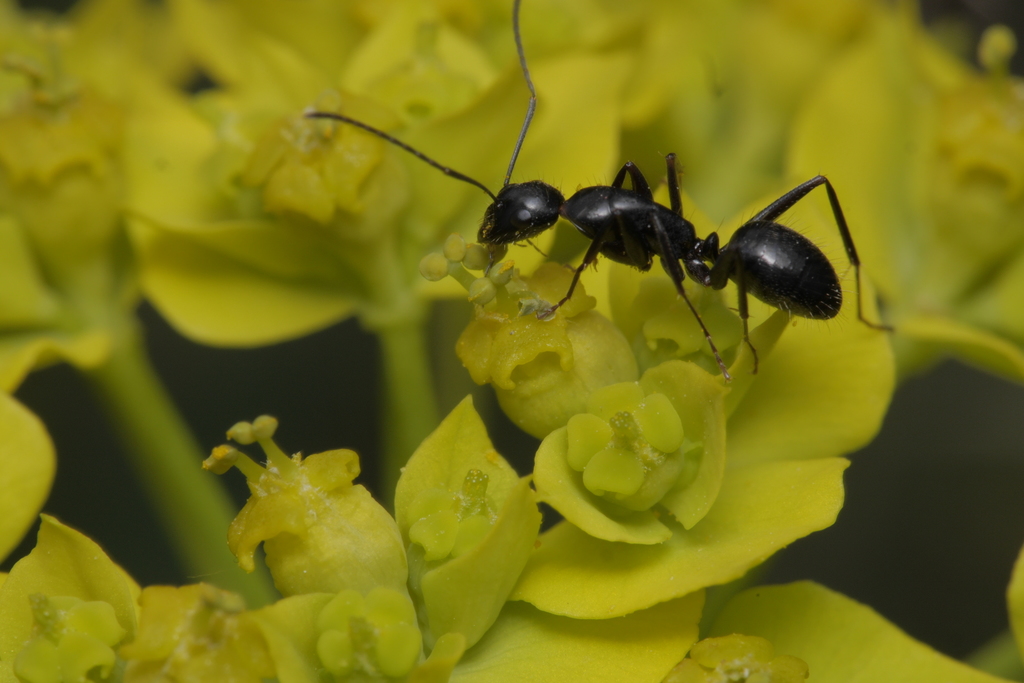
Het donkere uiterlijk is één van de meest opvallende kenmerken van Camponotus aethiops. Koningin en werksters zijn overwegend zwart tot zeer donkerbruin. Onder goede verlichting kunnen subtiele verschillen in glans en beharing zichtbaar worden.
De combinatie van het donkere lichaam en de relatief grote lichaamsbouw geeft de soort een robuuste uitstraling. Vooral de grootste majors zijn indrukwekkend om te zien. Hun grote kop onderscheidt hen duidelijk van de kleinere minors.
Hoe groot wordt Camponotus aethiops?
Camponotus aethiops behoort tot de grotere Europese mierensoorten. De werksters verschillen sterk in grootte en worden grofweg ongeveer 5 tot 12 mm lang. Dit verschil ontstaat door het polymorfisme binnen de werksterkaste.
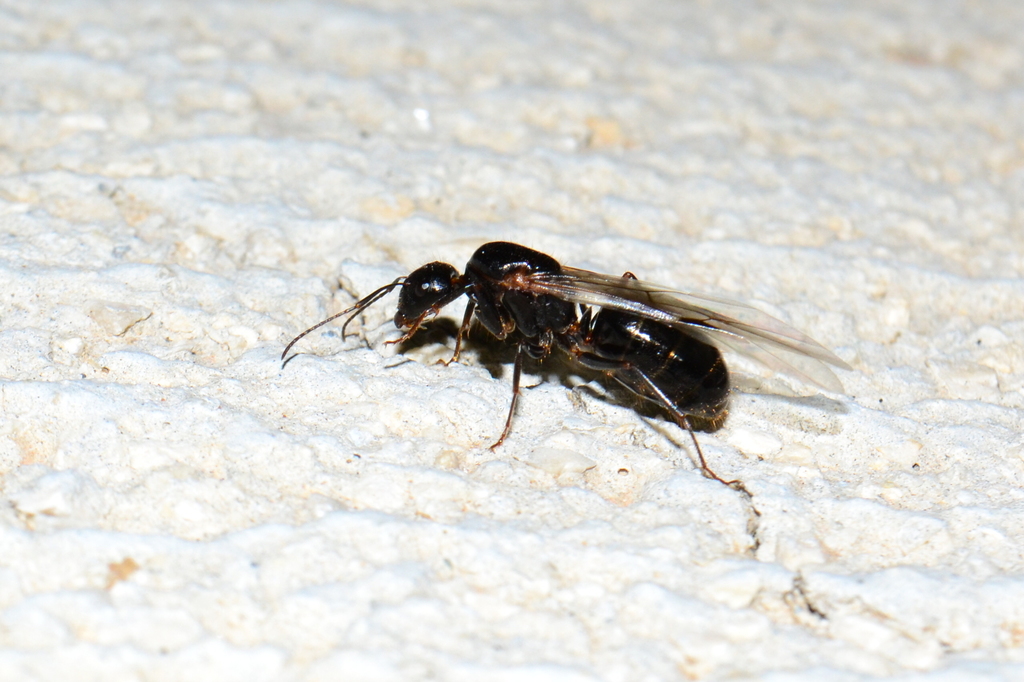
De Camponotus aethiops koningin is aanzienlijk groter en kan ongeveer 12 tot 14 mm lang worden. Door haar forse mesosoma en grotere achterlijf is zij gemakkelijk van de normale werksters te onderscheiden.
Minors van Camponotus aethiops
De kleinste werksters worden vaak minors genoemd. Deze zijn vooral bij jonge kolonies prominent aanwezig en voeren uiteenlopende werkzaamheden uit, waaronder broedverzorging, voedsel verzamelen en nestonderhoud.
Bij een jonge kolonie zijn de eerste werksters doorgaans relatief klein. Naarmate de kolonie groter en sterker wordt kunnen grotere werksters worden geproduceerd.
Media werksters van Camponotus aethiops
Tussen de kleinste minors en grootste majors bevinden zich werksters van verschillende tussenliggende formaten, vaak media genoemd. Hierdoor bestaat er geen harde scheiding waarbij iedere werkster exact tot één van slechts enkele vaste maten behoort.
Dit geleidelijke verschil in lichaamsgrootte is kenmerkend voor het polymorfisme van Camponotus en maakt een volwassen kolonie visueel interessant.
Camponotus aethiops majors
De majors van Camponotus aethiops behoren tot de indrukwekkendste werksters binnen een volwassen kolonie. Ze zijn groter en robuuster gebouwd dan de minors en vallen vooral op door hun relatief grote kop en krachtige kaken.
Majors kunnen verschillende werkzaamheden uitvoeren en spelen onder andere een rol bij verdediging en het verwerken van voedsel. Bij een kleine jonge kolonie hoeven nog geen majors aanwezig te zijn. Deze verschijnen doorgaans wanneer de kolonie verder ontwikkeld is en voldoende voedsel beschikbaar heeft.
Heeft Camponotus aethiops soldaten?
Bij Camponotus aethiops wordt meestal gesproken over majors in plaats van een volledig afzonderlijke soldatenkaste. De werksters zijn polymorf en lopen geleidelijk uiteen van kleine minors tot grote majors.
De grootste majors kunnen door hun forse kop het uiterlijk van een soldaat hebben, maar ze maken onderdeel uit van dezelfde polymorfe werksterkaste.
Camponotus aethiops koningin
De Camponotus aethiops koningin vormt het reproductieve centrum van de kolonie. Na een succesvolle koloniestichting legt zij de eieren waaruit nieuwe werksters ontstaan. Naarmate meer werksters aanwezig zijn nemen zij vrijwel alle dagelijkse werkzaamheden over.
De koningin blijft vervolgens voornamelijk in het veilige nestgedeelte en richt zich op de productie van broed. Bij een gezonde gevestigde kolonie wordt zij door de werksters gevoerd en verzorgd.
Gedrag van Camponotus aethiops
Camponotus aethiops kan in vergelijking met zeer snelle Formica-soorten relatief rustig bewegen. Dit betekent echter niet dat er weinig te observeren valt. Werksters onderzoeken de buitenwereld, zoeken voedsel en communiceren met andere leden van de kolonie.
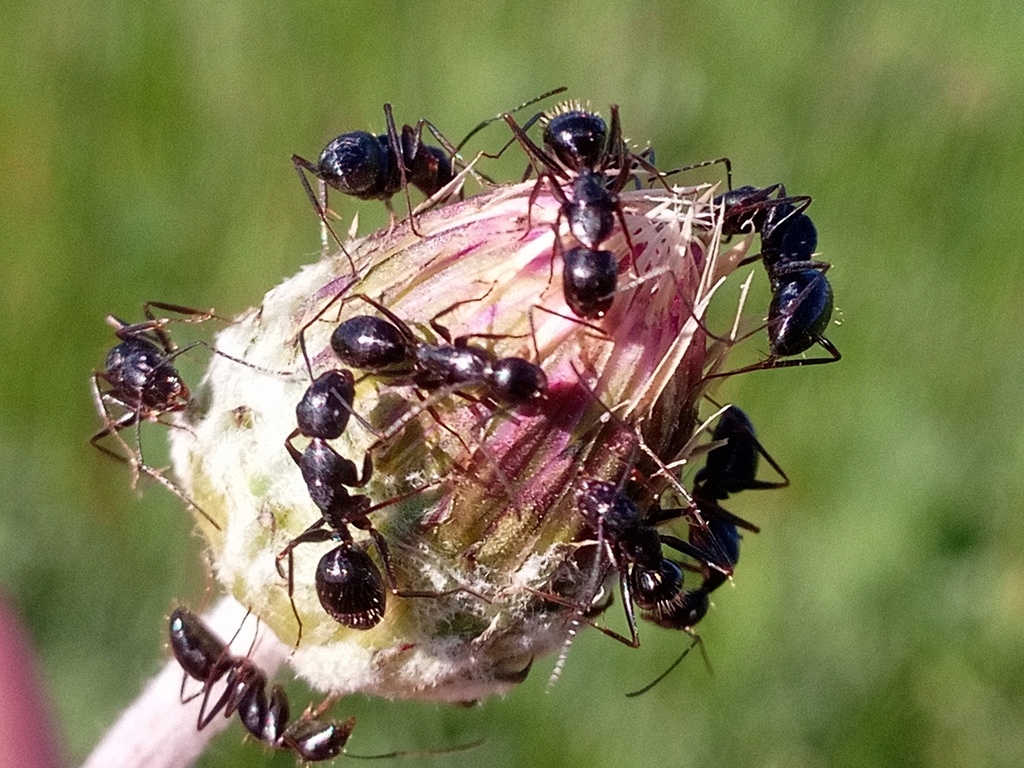
Vooral bij een grotere kolonie wordt het verschil tussen kleine en grote werksters interessant. Verschillende formaten kunnen tegelijkertijd bij een voedselbron aanwezig zijn en grotere majors zijn goed zichtbaar wanneer zij buiten het nest actief worden.
Is Camponotus aethiops agressief?
Camponotus aethiops kan haar nest verdedigen wanneer de kolonie wordt verstoord. De grote majors beschikken over krachtige kaken en kunnen een indrukwekkende verdedigende houding aannemen.
Voor de normale verzorging is vooral een veilige buitenwereld belangrijk. Werk rustig tijdens het voeren en schoonmaken en voorkom onnodige verstoring van het nest.
Camponotus aethiops en mierenzuur
Camponotus aethiops behoort tot de onderfamilie Formicinae. Net als andere Camponotus-soorten kan de soort mierenzuur gebruiken als onderdeel van haar verdediging.
In combinatie met de krachtige kaken van de grotere werksters geeft dit de kolonie verschillende mogelijkheden om zich tegen bedreigingen te verdedigen.
Hoe groot wordt een Camponotus aethiops kolonie?
Een Camponotus aethiops kolonie kan na verloop van tijd uit een aanzienlijk aantal werksters bestaan. De groei verloopt echter niet van de ene op de andere dag. Vooral jonge Camponotus-kolonies kunnen relatief langzaam beginnen.
Dit maakt de soort interessant voor mierenhouders die graag de volledige ontwikkeling volgen. Je kunt beginnen met een koningin of kleine kolonie en gedurende meerdere seizoenen zien hoe het aantal werksters toeneemt en steeds grotere media en majors verschijnen.
Groei van een jonge Camponotus aethiops kolonie
Een jonge kolonie heeft nog weinig ruimte en voedsel nodig. Het is meestal niet verstandig om enkele werksters onmiddellijk in een enorm formicarium te plaatsen. Een compacte huisvesting maakt het gemakkelijker om de juiste omstandigheden te behouden.
Naarmate de kolonie groeit kan meer ruimte worden aangeboden. Een modulair mierennest kan hierdoor interessant zijn voor Camponotus aethiops, omdat de huisvesting stap voor stap met de kolonie kan meegroeien.
Is Camponotus aethiops monogyn?
Camponotus aethiops wordt in de mierenhouderij in de regel als monogyn gehouden, met één functionele koningin per kolonie. Voeg daarom niet zomaar verschillende losse koninginnen samen.
Zelfs wanneer koninginnen elkaar tijdelijk tolereren tijdens een vroege fase betekent dit niet automatisch dat zij langdurig samen een stabiele kolonie zullen vormen. Voor een normale opstelling is één gezonde koningin met haar eigen werksters de veilige uitgangspositie.
Is Camponotus aethiops een houtmier?
Camponotus-soorten worden vaak houtmieren genoemd, maar die naam kan bij Camponotus aethiops een verkeerd beeld geven van de huisvesting. De soort is niet afhankelijk van een houten mierennest en nestelt van nature veelal in de bodem en onder stenen.
Je hoeft deze soort in gevangenschap dus geen houten nest aan te bieden. Een passend gips-, Ytong-, 3D- of ander geschikt mierennest kan afhankelijk van de koloniegrootte uitstekend functioneren.
Waarom Camponotus aethiops houden?
De belangrijkste aantrekkingskracht van Camponotus aethiops zit in de combinatie van formaat, donkere kleur en polymorfisme. Het verschil tussen een kleine minor en een grote major kan binnen een ontwikkelde kolonie zeer duidelijk zijn.
Daarnaast is de ontwikkeling van een jonge Camponotus-kolonie interessant om over langere tijd te volgen. Het verschijnen van de eerste grotere werksters en uiteindelijk majors is voor veel mierenhouders een bijzonder moment.
Is Camponotus aethiops geschikt voor beginners?
Camponotus aethiops kan geschikt zijn voor een gemotiveerde beginner die zich vooraf goed verdiept in de verzorging. De soort vraagt geen extreem ingewikkelde huisvesting, maar een jonge kolonie kan geduld vereisen vanwege de relatief rustige ontwikkeling.
Daarnaast moet rekening worden gehouden met de natuurlijke seizoenscyclus en winterrust. Wie liever binnen enkele maanden een zeer grote kolonie wil, kan beter naar een sneller groeiende soort kijken. Wie juist graag de ontwikkeling van een grote Europese Camponotus volgt, vindt in Camponotus aethiops een interessante keuze.
Camponotus aethiops koningin kopen
Een Camponotus aethiops koningin kopen is interessant wanneer je de volledige ontwikkeling vanaf de koloniestichting wilt volgen. Je ziet dan hoe de eerste kleine werksters verschijnen en hoe de kolonie gedurende de volgende generaties langzaam sterker wordt.
Houd er rekening mee dat een koningin zonder werksters minder activiteit laat zien dan een gevestigde kolonie. Voor mierenhouders die direct foerageergedrag willen observeren kan een kolonie met bestaande werksters aantrekkelijker zijn.
Camponotus aethiops kolonie kopen
Een Camponotus aethiops kolonie kopen met werksters geeft je een voorsprong ten opzichte van het starten met uitsluitend een koningin. De eerste werksters zijn al aanwezig en kunnen voedsel verzamelen en het nieuwe broed verzorgen.
Bij grotere kolonies neemt de kans toe dat verschillende werkstergroottes zichtbaar zijn. Controleer daarom bij aankoop hoeveel werksters worden aangeboden en stem het formaat van de huisvesting daarop af.
Camponotus aethiops kopen bij Quality Ants
Wil je Camponotus aethiops kopen? Bij Quality Ants vind je, wanneer beschikbaar, Camponotus aethiops koninginnen en kolonies in verschillende groottes. Deze grote donkere Camponotus is vooral interessant voor liefhebbers die graag polymorfisme en de ontwikkeling van minors naar indrukwekkende majors observeren.
Zorg vooraf voor een passende huisvesting, buitenwereld, drinkwater en geschikte voeding. In de volgende delen behandelen we uitgebreid de Camponotus aethiops verzorging, waaronder temperatuur, luchtvochtigheid, mierennest, voeding, groei, broedontwikkeling en de juiste winterrust.
Camponotus aethiops verzorging
Wanneer je Camponotus aethiops wilt kopen, is een goede voorbereiding belangrijk. Deze grote Europese Camponotus heeft tijdens het actieve seizoen behoefte aan geschikte temperaturen, een goede vochtgradiënt, voldoende drinkwater en een combinatie van koolhydraatrijke voeding en dierlijke eiwitten. Daarnaast moet rekening worden gehouden met de natuurlijke winterrust.
De verzorging van een kleine Camponotus aethiops kolonie verschilt enigszins van die van een grote gevestigde kolonie. Een jonge kolonie heeft weinig ruimte en relatief kleine hoeveelheden voedsel nodig. Naarmate meer werksters en uiteindelijk grotere majors verschijnen, nemen de behoefte aan voedsel en beschikbare ruimte toe.
Temperatuur voor Camponotus aethiops
Tijdens het actieve seizoen kan Camponotus aethiops goed worden gehouden bij ongeveer 22 tot 26 °C. Binnen een opstelling is het gunstig wanneer niet ieder gedeelte exact dezelfde temperatuur heeft. Een temperatuurgradiënt geeft de mieren de mogelijkheid om zelf warmere of koelere zones op te zoeken.
Een normale warme kamertemperatuur kan gedurende een groot deel van het actieve seizoen al voldoende zijn. Wanneer de ruimte relatief koel is, kan aanvullende verwarming worden gebruikt.
Kan Camponotus aethiops op kamertemperatuur?
Ja, tijdens het actieve seizoen kan Camponotus aethiops bij een geschikte kamertemperatuur worden gehouden. Bij ongeveer 21 tot 24 °C kan de kolonie normaal actief zijn. Een iets warmere zone kan worden aangeboden om de mieren extra keuze te geven.
Houd er rekening mee dat lagere temperaturen de ontwikkeling van het broed kunnen vertragen. Dit betekent niet dat het volledige nest voortdurend zo warm mogelijk gehouden moet worden. Een stabiele temperatuur met een lokale warmere zone is meestal praktischer.
Warmtemat voor Camponotus aethiops
Een warmtemat of warmtekabel kan worden gebruikt wanneer de omgevingstemperatuur onvoldoende is. Verwarm bij voorkeur slechts een gedeelte van het nest of de opstelling, zodat de mieren altijd naar een koelere zone kunnen verplaatsen.
Plaats een warmtebron niet ongecontroleerd tegen het volledige nest. Vooral kleine formicaria kunnen plaatselijk snel te warm worden. Gebruik daarom een thermometer om de werkelijke temperatuur te controleren.
Temperatuurgradiënt in het mierennest
Een temperatuurgradiënt geeft de werksters de mogelijkheid om het broed naar verschillende delen van het nest te verplaatsen. Larven en poppen kunnen bijvoorbeeld tijdelijk in een warmere zone worden geplaatst wanneer dit gunstig is voor hun ontwikkeling.
De koningin hoeft daarbij niet voortdurend in het warmste gedeelte te zitten. Door meerdere microklimaten beschikbaar te maken kan de kolonie zelf een geschikte plaats kiezen.
Vochtigheid voor Camponotus aethiops
Naast temperatuur is een goede vochtvoorziening belangrijk. Het volledige mierennest hoeft echter niet voortdurend nat te zijn. Voor Camponotus aethiops is een vochtgradiënt met zowel vochtiger als drogere gedeelten een goede uitgangspositie.
Werksters kunnen het broed binnen het nest verplaatsen en daarmee zelf gebruikmaken van verschillende omstandigheden. Vooral bij larven kan toegang tot een geschikt vochtiger gedeelte belangrijk zijn.
Hoe vochtig moet Camponotus aethiops worden gehouden?
Er is geen universeel vochtigheidspercentage dat in ieder type mierennest exact moet worden aangehouden. Gips, Ytong, kunststof en andere nestmaterialen houden en verspreiden vocht allemaal op een andere manier.
Het belangrijkste is dat het nest niet volledig uitdroogt, maar tegelijkertijd ook niet constant doorweekt is. Bevochtig daarom gecontroleerd en laat een gedeelte van het nest relatief droog.
Camponotus aethiops niet te nat houden
Meer vocht is niet automatisch beter. Wanneer alle nestkamers voortdurend zeer nat zijn, hebben de mieren geen mogelijkheid om een drogere zone te kiezen. Bovendien kan overmatige vochtigheid condens en vervuiling bevorderen.
Een duidelijke vochtgradiënt is daarom praktischer dan het hele nest even nat maken. Controleer de omstandigheden regelmatig en pas de hoeveelheid water aan op het type nest en de verdamping.
Drinkwater voor Camponotus aethiops
Een Camponotus aethiops kolonie moet altijd toegang hebben tot schoon drinkwater. Een waterfeeder in de buitenwereld kan hiervoor worden gebruikt. Een kleine kolonie in een reageerbuis heeft daarnaast vaak toegang tot de waterreserve achter het watje.
Controleer regelmatig of voldoende water aanwezig is. Tijdens warme perioden kan een kleine feeder sneller leeg raken door zowel consumptie als verdamping.
Welk mierennest voor Camponotus aethiops?
Wanneer je een Camponotus aethiops kolonie koopt, moet het nest vooral aansluiten bij de huidige grootte van de kolonie. Een koningin met enkele werksters hoeft niet direct naar een groot formicarium te verhuizen.
Begin liever compact en breid de huisvesting uit wanneer steeds meer beschikbare ruimte daadwerkelijk wordt gebruikt. Dit maakt het gemakkelijker om de omstandigheden te controleren en voorkomt grote hoeveelheden ongebruikte nestruimte.
Reageerbuis voor een jonge Camponotus aethiops kolonie
Een jonge kolonie kan aanvankelijk uitstekend in een geschikte reageerbuisopstelling worden gehouden. Zolang er voldoende water aanwezig is en de reageerbuis niet ernstig vervuild of te klein wordt, hoeft de kolonie niet geforceerd te worden verhuisd.
Wanneer de eerste werksters aanwezig zijn kan de reageerbuis in of aan een kleine buitenwereld worden aangesloten. Zo kunnen de werksters voedsel zoeken terwijl de kolonie haar vertrouwde nest behoudt.
Gipsnest voor Camponotus aethiops
Een gipsnest kan geschikt zijn voor Camponotus aethiops wanneer het formaat van de kamers aansluit bij de grootte van de kolonie en de vochtigheid goed geregeld kan worden.
Gips kan water opnemen en verspreiden, waardoor een vochtiger nestgedeelte kan worden gecreëerd. Zorg tegelijkertijd dat er ook drogere kamers beschikbaar blijven.
Ytong nest voor Camponotus aethiops
Een goed ontworpen Ytong nest kan eveneens geschikt zijn. Het poreuze materiaal kan vocht opnemen en biedt mogelijkheden om slechts een gedeelte van het nest te bevochtigen.
Omdat de majors van Camponotus aethiops relatief groot kunnen worden, moeten gangen en kamers voldoende ruim zijn. Kies daarom een nest dat daadwerkelijk geschikt is voor grotere Camponotus-soorten.
3D-geprint mierennest voor Camponotus aethiops
Ook een geschikt ontworpen 3D-geprint mierennest kan worden gebruikt. Let daarbij vooral op de grootte van de kamers, gangen, aansluitingen en het bevochtigingssysteem.
Een groot mierennest is niet automatisch beter. Zelfs wanneer de kamers geschikt zijn voor grote majors moet de totale hoeveelheid nestruimte nog steeds passen bij de huidige koloniegrootte.
Modulair mierennest voor Camponotus aethiops
Een modulair mierennest kan bijzonder praktisch zijn voor Camponotus aethiops. Omdat een jonge kolonie relatief klein begint maar later aanzienlijk groter kan worden, kun je met een modulair systeem geleidelijk extra ruimte toevoegen.
Hierdoor kan dezelfde basisopstelling gedurende verschillende ontwikkelingsfasen worden gebruikt. Voeg pas een nieuwe module toe wanneer een groot gedeelte van het bestaande nest in gebruik is.
Heeft Camponotus aethiops een houten nest nodig?
Nee. Ondanks de Nederlandse associatie van Camponotus met houtmieren is een houten nest voor Camponotus aethiops niet noodzakelijk. De soort nestelt in de natuur veelal in de bodem en onder stenen en is niet afhankelijk van dood hout als nestmateriaal.
Een geschikt gips-, Ytong-, 3D- of ander goed ontworpen formicarium kan daarom prima worden gebruikt zolang temperatuur, vochtigheid en afmetingen aansluiten bij de behoeften van de kolonie.
Buitenwereld voor Camponotus aethiops
Zodra werksters aanwezig zijn, is een buitenwereld handig om voedsel en water aan te bieden. Een kleine kolonie heeft nog maar weinig ruimte nodig. Naarmate de kolonie groeit kan een grotere arena worden aangesloten.
De relatief grote lichaamsgrootte van Camponotus aethiops maakt de werksters goed zichtbaar tijdens het foerageren. Vooral wanneer de eerste media en majors verschijnen kan de buitenwereld een interessant gedeelte van de opstelling worden.
Uitbraakpreventie bij Camponotus aethiops
Ook bij een relatief grote mierensoort blijft goede uitbraakpreventie belangrijk. Controleer alle slangaansluitingen, ventilatieopeningen en deksels en houd rekening met de kleinste minors van de kolonie.
Een geschikte uitbraakbarrière zoals fluon kan op daarvoor geschikte gladde oppervlakken worden gebruikt. Controleer de barrière regelmatig op vuil, condens en slijtage.
Voeding van Camponotus aethiops
De Camponotus aethiops voeding bestaat tijdens het actieve seizoen uit een combinatie van koolhydraten en dierlijke eiwitbronnen. Koolhydraten leveren energie aan de volwassen werksters, terwijl eiwitten vooral belangrijk zijn voor de groei en ontwikkeling van larven.
Een kolonie met veel broed heeft doorgaans een grotere behoefte aan voederinsecten dan een kolonie met weinig larven. Pas de hoeveelheid voedsel daarom aan op de actuele situatie.
Mierennectar en suikerwater voor Camponotus aethiops
Een geschikte mierennectar of suikeroplossing kan als koolhydraatbron worden aangeboden. Camponotus-werksters kunnen duidelijk geïnteresseerd zijn in zoete vloeibare voeding en deze energie gebruiken tijdens het foerageren en andere dagelijkse activiteiten.
Bied vloeibare voeding bij voorkeur aan via een veilige voerplek of liquid feeder. Hierdoor blijft de buitenwereld schoner en wordt het risico dat mieren in de vloeistof terechtkomen beperkt.
Eiwitten voor Camponotus aethiops
Voor een groeiende kolonie zijn geschikte voederinsecten belangrijk. Vooral larven hebben dierlijke eiwitten nodig voor hun ontwikkeling. Tijdens periodes met veel larven kan de vraag naar insecten duidelijk toenemen.
Geschikte opties zijn onder andere fruitvliegen, krekels, kakkerlakken en andere voor mieren geschikte voederinsecten. De grootte van de aangeboden prooi kan worden aangepast aan de grootte van de kolonie.
Voederinsecten voor een kleine kolonie
Een kleine Camponotus aethiops kolonie hoeft geen grote hoeveelheden voedsel aangeboden te krijgen. Kleine voederinsecten of delen van een groter insect zijn vaak voldoende.
Door een prooi vooraf in geschikte delen aan te bieden kunnen kleine kolonies gemakkelijker bij het zachte binnenste komen. Verwijder resten wanneer deze niet meer worden gebruikt.
Voederinsecten voor een grotere kolonie
Naarmate meer werksters en grotere majors aanwezig zijn, kan de kolonie grotere hoeveelheden voedsel verwerken. De grotere werksters kunnen goed helpen bij het verwerken en transporteren van prooien.
Blijf echter kijken naar het daadwerkelijke verbruik. Grote hoeveelheden voedsel die langdurig blijven liggen verhogen alleen de kans op vervuiling en schimmel.
Hoe vaak Camponotus aethiops voeren?
Tijdens het actieve seizoen kunnen voederinsecten meerdere keren per week worden aangeboden, afhankelijk van de hoeveelheid broed en de koloniegrootte. Een kleine kolonie heeft veel kleinere porties nodig dan een gevestigde kolonie.
Koolhydraatrijke voeding kan regelmatig beschikbaar worden gesteld en schoon drinkwater moet altijd aanwezig zijn. Controleer vloeibare voeding regelmatig en vervang deze wanneer deze vervuild raakt.
Voeding en de ontwikkeling van majors
Goede voeding ondersteunt de algemene ontwikkeling van de kolonie. Naarmate een Camponotus aethiops kolonie groter en sterker wordt, kunnen steeds grotere werksters en uiteindelijk opvallende majors worden geproduceerd.
Het is echter niet nodig om de kolonie extreem veel te voeren met als doel zo snel mogelijk majors te krijgen. Een stabiele combinatie van geschikte temperatuur, voldoende koolhydraten en regelmatige eiwitrijke voeding is belangrijker.
Waarom groeit Camponotus aethiops soms langzaam?
Camponotus-soorten kunnen vooral tijdens de eerste fase relatief langzaam ontwikkelen. Een koningin met slechts enkele werksters beschikt simpelweg over minder werksters om voedsel te verzamelen en broed te verzorgen dan een grote gevestigde kolonie.
Geduld is daarom belangrijk. Wanneer de koningin gezond is, broed aanwezig is en de werksters normaal functioneren, hoeft een relatief rustige groei niet direct op verkeerde verzorging te wijzen.
Camponotus aethiops kopen met de juiste voorbereiding
Wanneer je Camponotus aethiops koopt, zorg dan dat de belangrijkste benodigdheden vooraf aanwezig zijn. Denk aan een geschikte reageerbuis of mierennest, een buitenwereld, drinkwater, mierennectar of andere geschikte koolhydraatbron, voederinsecten en uitbraakpreventie.
Kies vooral geen huisvesting die veel te groot is voor de huidige kolonie. Begin compact en laat het formicarium meegroeien met het aantal werksters.
Camponotus aethiops kolonie kopen en verzorgen
Een Camponotus aethiops kolonie kopen is vooral interessant voor liefhebbers die de ontwikkeling van een grote polymorfe mierensoort willen volgen. Van de eerste kleine minors tot de latere grote majors verandert het uiterlijk van de kolonie steeds verder naarmate deze groeit.
Met een geschikte temperatuur, gecontroleerde nestvochtigheid, voldoende water en gevarieerde voeding leg je een goede basis voor de ontwikkeling van de kolonie. In deel 3 gaan we verder met de broedontwikkeling, groeisnelheid, ontwikkeling van minors en majors, seizoenscyclus en de juiste winterrust van Camponotus aethiops.
Groei en ontwikkeling van Camponotus aethiops
De ontwikkeling van een Camponotus aethiops kolonie is bijzonder interessant om te volgen. Een jonge kolonie begint meestal klein, maar naarmate er meer generaties werksters verschijnen kan het verschil in lichaamsgrootte steeds duidelijker worden. Eerst zijn vooral kleine minors aanwezig, terwijl een sterkere en grotere kolonie later ook media en indrukwekkende majors kan produceren.
Wanneer je Camponotus aethiops wilt kopen, is het belangrijk om rekening te houden met deze relatief geleidelijke ontwikkeling. Camponotus-soorten behoren doorgaans niet tot de snelste groeiers binnen de mierenhobby. Juist het jarenlang volgen van de ontwikkeling van een kleine startkolonie naar een grotere kolonie maakt deze soort voor veel liefhebbers interessant.
Broedontwikkeling bij Camponotus aethiops
De ontwikkeling begint bij de eieren die door de koningin worden gelegd. Uit deze eieren ontstaan larven, waarna de larven groeien en uiteindelijk verpoppen. Na de popfase verschijnt een nieuwe volwassen werkster.
De snelheid waarmee deze ontwikkeling verloopt is afhankelijk van verschillende factoren. Temperatuur, voeding, koloniegrootte, conditie van de koningin en het seizoen kunnen allemaal invloed hebben op de ontwikkeling van het broed.
Eieren van Camponotus aethiops
De Camponotus aethiops koningin legt kleine eieren die door de werksters worden verzameld en verzorgd. Bij een zeer jonge kolonie verzorgt de koningin tijdens de eerste stichting een groot deel van het broed zelf.
Zodra de eerste werksters aanwezig zijn nemen zij steeds meer taken over. De werksters houden het broed bij elkaar en kunnen de eieren naar verschillende delen van het nest verplaatsen wanneer daar gunstigere omstandigheden aanwezig zijn.
Larven van Camponotus aethiops
Na het uitkomen van de eieren verschijnen larven. Tijdens deze ontwikkelingsfase speelt eiwitrijke voeding een belangrijke rol. De werksters verzamelen voedsel en zorgen ervoor dat voedingsstoffen beschikbaar komen voor de groeiende larven.
Wanneer veel larven aanwezig zijn, kan de behoefte aan voederinsecten duidelijk toenemen. Dit is een goed moment om de voedselopname van de kolonie nauwkeurig te observeren en de aangeboden hoeveelheid daarop aan te passen.
Poppen van Camponotus aethiops
Na voldoende groei bereiken de larven uiteindelijk de popfase. Bij Camponotus aethiops kunnen de poppen zich in cocons ontwikkelen. De cocons zijn aanzienlijk groter dan die van veel kleinere Europese mierensoorten en zijn daardoor gemakkelijk in het nest te herkennen.
Werksters kunnen de poppen binnen het nest verplaatsen en verzamelen op plaatsen waar temperatuur en vochtigheid geschikt zijn. Een groep grote cocons kan een indicatie zijn dat er binnenkort meerdere nieuwe werksters zullen verschijnen.
Van pop naar volwassen werkster
Wanneer de ontwikkeling in de cocon voltooid is, komt de nieuwe werkster tevoorschijn. Een pas uitgekomen werkster is aanvankelijk lichter van kleur en het exoskelet is nog niet volledig uitgehard.
Na verloop van tijd wordt het lichaam donkerder totdat de typische donkere tot zwarte kleur van Camponotus aethiops zichtbaar is. Pas daarna krijgt de nieuwe werkster steeds meer normale taken binnen de kolonie.
Hoe snel groeit Camponotus aethiops?
Camponotus aethiops kan vooral tijdens de eerste fase relatief langzaam groeien. Een koningin met slechts enkele werksters beschikt over een beperkte capaciteit om voedsel te verzamelen en grote hoeveelheden broed te verzorgen.
Naarmate het aantal werksters stijgt kan de groei geleidelijk versnellen. Meer werksters betekent dat meer voedsel verzameld kan worden en dat tegelijkertijd meer larven verzorgd kunnen worden. Toch blijft geduld belangrijk bij deze soort.
Waarom groeit mijn Camponotus aethiops langzaam?
Een langzame groei betekent niet automatisch dat er iets verkeerd gaat. Vooral bij een kleine Camponotus aethiops kolonie kan de ontwikkeling rustig verlopen. Ook lagere temperaturen en het naderende einde van het actieve seizoen kunnen de groei vertragen.
Controleer bij twijfel vooral de basisomstandigheden: temperatuur, drinkwater, nestvochtigheid, beschikbaarheid van koolhydraten en voldoende geschikte voederinsecten. Wanneer de koningin gezond oogt en er nieuw broed aanwezig is, kan geduld simpelweg noodzakelijk zijn.
Ontwikkeling van minors
De eerste werksters van een jonge Camponotus aethiops kolonie zijn meestal relatief klein. Deze eerste minors verzorgen vrijwel alle noodzakelijke werkzaamheden binnen en buiten het nest.
Ze verzamelen voedsel, verzorgen het broed, onderhouden het nest en voeren de koningin. Ondanks hun kleinere formaat zijn deze eerste werksters daardoor essentieel voor de verdere ontwikkeling van de kolonie.
Wanneer verschijnen grotere werksters?
Naarmate de kolonie sterker wordt en meer voedsel kan verwerken, kunnen grotere werksters worden geproduceerd. Tussen de kleinste minors en de grootste majors bevinden zich verschillende tussenliggende formaten.
Het verschil ontstaat geleidelijk. Er is dus niet één moment waarop een kolonie plotseling alleen maar grotere werksters gaat produceren. Een ontwikkelde kolonie kan verschillende formaten tegelijkertijd bevatten.
Wanneer krijgt Camponotus aethiops majors?
Er bestaat geen vast aantal werksters waarbij iedere Camponotus aethiops kolonie haar eerste major produceert. De ontwikkeling van grotere werksters hangt onder andere samen met de conditie, grootte, voeding en ontwikkelingsfase van de kolonie.
Bij jonge kolonies zijn meestal vooral kleinere werksters aanwezig. Naarmate de kolonie verder groeit neemt de kans toe dat steeds grotere werksters en uiteindelijk duidelijke majors verschijnen.
Majors van Camponotus aethiops
De Camponotus aethiops majors zijn één van de redenen waarom deze soort zo aantrekkelijk is voor mierenhouders. Ze zijn aanzienlijk groter en robuuster dan de kleinste werksters en hebben een opvallend brede kop met krachtige kaken.
Wanneer een major naast een kleine minor loopt, wordt het polymorfisme van de soort direct duidelijk. Dit verschil in formaat geeft een volwassen kolonie een indrukwekkend uiterlijk.
Hoe groot worden de majors?
De grootste werksters kunnen ongeveer 10 tot 12 mm bereiken, waarbij individuele verschillen mogelijk zijn. De forse kop van een major zorgt ervoor dat deze vaak nog groter oogt dan de lichaamslengte alleen doet vermoeden.
De majors vormen geen volledig afzonderlijke soldatenkaste. Er bestaat een geleidelijke overgang tussen minors, middelgrote werksters en de grootste exemplaren.
De rol van majors in de kolonie
Majors kunnen verschillende werkzaamheden uitvoeren. Hun krachtige kaken zijn nuttig bij het verwerken van grotere voedselbronnen en bij de verdediging van de kolonie.
Dit betekent niet dat majors uitsluitend als soldaten functioneren. Afhankelijk van de behoeften van de kolonie kunnen ook grote werksters verschillende normale werkzaamheden uitvoeren.
Voeding tijdens sterke broedontwikkeling
Wanneer veel larven aanwezig zijn heeft de kolonie een grotere behoefte aan dierlijke eiwitten. Geschikte voederinsecten kunnen tijdens het actieve seizoen meerdere keren per week worden aangeboden.
Observeer hoeveel daadwerkelijk wordt aangenomen. Wanneer insecten snel worden verwerkt kan de hoeveelheid voorzichtig worden verhoogd. Wanneer veel resten blijven liggen, is het beter kleinere porties aan te bieden.
Koolhydraten tijdens de groeiperiode
Naast eiwitten hebben de volwassen werksters koolhydraten nodig als energiebron. Een geschikte mierennectar of suikeroplossing kan daarom regelmatig beschikbaar worden gesteld.
Vooral wanneer veel werksters actief foerageren kan de consumptie toenemen. Controleer feeders regelmatig en vervang vloeibare voeding wanneer deze vervuild raakt.
De natuurlijke jaarcyclus van Camponotus aethiops
Camponotus aethiops is een soort uit gebieden met een duidelijke seizoenscyclus. De kolonie is daarom niet gedurende het hele jaar even actief. Tijdens het voorjaar en de zomer vindt de belangrijkste periode van broedontwikkeling en groei plaats, terwijl de activiteit richting de koudere maanden afneemt.
Deze seizoenscyclus moet bij de Camponotus aethiops verzorging worden gerespecteerd. Het is niet de bedoeling om de kolonie het hele jaar door onder constante zomerse omstandigheden te houden.
Camponotus aethiops in het voorjaar
Na de winterrust wordt de kolonie geleidelijk actiever wanneer de temperatuur stijgt. De werksters beginnen weer vaker te foerageren en de productie en ontwikkeling van nieuw broed komt op gang.
Verhoog de temperatuur en hoeveelheid voedsel geleidelijk. Zodra duidelijk meer larven aanwezig zijn, kan ook vaker eiwitrijke voeding worden aangeboden.
Camponotus aethiops in de zomer
De warmere maanden vormen de belangrijkste groeiperiode. Bij geschikte omstandigheden kan de koningin actief eieren produceren en kunnen meerdere generaties broed tegelijkertijd aanwezig zijn.
Tijdens deze periode is het belangrijk dat voldoende drinkwater, koolhydraatrijke voeding en voederinsecten beschikbaar zijn. Controleer bij warm weer daarnaast extra goed of het nest niet volledig uitdroogt.
Camponotus aethiops in het najaar
Richting het najaar kan de activiteit geleidelijk verminderen. De kolonie kan minder voedsel gaan aannemen en de hoeveelheid nieuw broed kan afnemen wanneer de mieren zich voorbereiden op de winterrust.
Dit is normaal seizoensgedrag. Probeer een natuurlijke afname van activiteit niet te compenseren door de kolonie steeds warmer te houden en steeds meer voedsel aan te bieden.
Heeft Camponotus aethiops winterrust nodig?
Ja. Camponotus aethiops heeft winterrust nodig. Omdat de soort uit gebieden met duidelijke seizoensverschillen afkomstig is, hoort een koelere rustperiode bij de natuurlijke jaarcyclus.
Tijdens deze periode neemt de activiteit sterk af en wordt weinig voedsel verwerkt. Een goede winterrust vormt daarom een belangrijk onderdeel van het langdurig houden van deze soort.
Welke maanden winterrust voor Camponotus aethiops?
Als praktische richtlijn kan voor Camponotus aethiops een winterrust van ongeveer november tot en met februari worden aangehouden. De exacte timing kan enigszins verschillen afhankelijk van herkomst en omstandigheden.
In oktober kan de kolonie al tekenen van verminderde activiteit laten zien. Richting maart kan de temperatuur vervolgens weer geleidelijk worden verhoogd zodat een nieuwe actieve periode begint.
Temperatuur tijdens de winterrust
Voor de winterrust kan ongeveer 8 tot 12 °C als praktische richtlijn worden gebruikt. Camponotus aethiops hoeft daarbij niet aan temperaturen rond het vriespunt te worden blootgesteld.
Een stabiele koele omgeving is belangrijker dan extreme kou. Zorg ervoor dat de kolonie niet bevriest en vermijd grote dagelijkse temperatuurschommelingen.
De winterrust geleidelijk opbouwen
Verplaats een kolonie bij voorkeur niet rechtstreeks vanuit een warme zomerse opstelling naar een zeer koude locatie. Laat de temperatuur gedurende het najaar geleidelijk dalen.
Na de winterrust kan hetzelfde proces in omgekeerde volgorde worden uitgevoerd. Laat de temperatuur rustig oplopen voordat de kolonie weer volledig op de normale temperatuur voor het actieve seizoen wordt gehouden.
Voeding tijdens de winterrust
Tijdens een koele winterrust is de voedselbehoefte sterk verminderd. De werksters zijn weinig actief en de kolonie heeft niet dezelfde hoeveelheden voederinsecten nodig als tijdens de zomer.
Controleer vooral of de kolonie niet uitdroogt. Wanneer werksters tijdens een mildere periode toch actief worden, kan indien nodig een kleine hoeveelheid koolhydraatrijke voeding worden aangeboden.
Water tijdens de winterrust
Ook tijdens de winterrust moet uitdroging worden voorkomen. Controleer daarom periodiek de waterreserve en de vochtigheid van het nest.
Doe dit zonder de kolonie onnodig te verstoren. Een korte controle is voldoende wanneer de omstandigheden stabiel zijn.
Camponotus aethiops na de winterrust
Na de winterperiode kan de kolonie langzaam weer op temperatuur worden gebracht. Naarmate de temperatuur stijgt zullen werksters vaker buiten het nest verschijnen en opnieuw belangstelling tonen voor voedsel.
Bied eerst kleine hoeveelheden aan en verhoog de voeding naarmate de activiteit en hoeveelheid broed toenemen. Vooral wanneer nieuwe larven verschijnen wordt de beschikbaarheid van geschikte eiwitbronnen weer belangrijk.
Bruidsvlucht van Camponotus aethiops
Volwassen kolonies kunnen gevleugelde koninginnen en mannetjes produceren. De periode waarin bruidsvluchten plaatsvinden verschilt per regio en wordt beïnvloed door lokale temperatuur en weersomstandigheden.
De voortplantingsvluchten vinden in het warmere deel van het jaar plaats. Na een succesvolle paring kan een jonge koningin haar vleugels afwerpen en beginnen aan de stichting van een nieuwe kolonie.
Koloniestichting van Camponotus aethiops
Camponotus aethiops kent een claustrale koloniestichting. Een bevruchte koningin kan de eerste generatie werksters grootbrengen op haar eigen lichaamsreserves en hoeft tijdens deze eerste afgesloten fase normaal gesproken niet gevoerd te worden.
Een rustige reageerbuisopstelling met een goede waterreserve is hiervoor geschikt. Beperk verstoring en controleer de koningin niet voortdurend. Zodra de eerste werksters aanwezig zijn kan begonnen worden met het aanbieden van koolhydraten en kleine hoeveelheden eiwitrijk voedsel.
Camponotus aethiops koningin kopen of kolonie kopen?
Een Camponotus aethiops koningin kopen is interessant wanneer je de volledige stichting en ontwikkeling van de kolonie zelf wilt volgen. Dit vraagt wel geduld, omdat het enige tijd duurt voordat de eerste werksters verschijnen en de kolonie zichtbaar groter wordt.
Wil je eerder foerageergedrag zien, dan is een Camponotus aethiops kolonie kopen met bestaande werksters een aantrekkelijke keuze. Hoe groter de kolonie, hoe groter de kans dat verschillende werkstergroottes zichtbaar zijn.
Een gezonde Camponotus aethiops kolonie herkennen
Een gezonde kolonie heeft tijdens het actieve seizoen normaal bewegende werksters en verzorgt het aanwezige broed. De aanwezigheid van eieren, larven en poppen laat zien dat verschillende ontwikkelingsstadia aanwezig kunnen zijn.
Beoordeel activiteit altijd in combinatie met het seizoen. Een zeer rustige kolonie tijdens de winterrust is normaal, terwijl dezelfde inactiviteit midden in het actieve seizoen aanleiding kan zijn om temperatuur, water en andere omstandigheden te controleren.
Wanneer moet de huisvesting worden uitgebreid?
Breid het nest uit wanneer een groot gedeelte van de bestaande kamers daadwerkelijk wordt gebruikt. Een jonge Camponotus aethiops kolonie heeft geen groot aantal lege nestkamers nodig.
Door geleidelijk uit te breiden blijft het formicarium beter afgestemd op de grootte van de kolonie. Dit is één van de redenen waarom een modulair mierennest goed kan aansluiten bij een langzaam groeiende Camponotus-kolonie.
Camponotus aethiops kopen en jarenlang zien ontwikkelen
Wie Camponotus aethiops koopt, kiest voor een soort waarvan de ontwikkeling over meerdere seizoenen bijzonder interessant kan zijn. Een kleine kolonie met voornamelijk minors kan zich geleidelijk ontwikkelen tot een indrukwekkende kolonie waarin grote majors tussen de kleinere werksters rondlopen.
Met voldoende geduld, passende temperaturen, een goede winterrust en geschikte voeding kun je deze ontwikkeling stap voor stap volgen. Juist het contrast tussen de verschillende werkstergroottes maakt een volwassen Camponotus aethiops kolonie bijzonder om te observeren.
Camponotus aethiops kolonie kopen bij Quality Ants
Wil je een Camponotus aethiops kolonie kopen? Bij Quality Ants vind je, wanneer beschikbaar, verschillende koloniegroottes van deze grote donkere Camponotus-soort. Kies een kolonie die past bij jouw ervaring en beschikbare huisvesting en houd rekening met toekomstige uitbreiding.
In deel 4 gaan we verder met het houden van grotere kolonies, geschikte buitenwerelden, nestuitbreiding, natuurlijk gedrag, voeren van majors, uitbraakpreventie en praktische verzorging van een volwassen Camponotus aethiops kolonie.
Een grotere Camponotus aethiops kolonie houden
Naarmate een Camponotus aethiops kolonie groeit, verandert ook de manier waarop de mieren worden gehouden. Een jonge kolonie met slechts enkele minors heeft weinig ruimte en voedsel nodig, terwijl een gevestigde kolonie met veel werksters, media en majors een grotere buitenwereld en meer nestruimte kan gebruiken. Juist deze ontwikkeling maakt Camponotus aethiops interessant om gedurende meerdere jaren te volgen.
Wanneer je Camponotus aethiops wilt kopen, is het daarom verstandig om niet alleen naar de huidige koloniegrootte te kijken. Een kleine kolonie kan compact beginnen, maar de huisvesting moet later eenvoudig kunnen worden uitgebreid wanneer het aantal werksters toeneemt.
Gedrag van een grotere Camponotus aethiops kolonie
Bij een grotere kolonie wordt steeds meer activiteit buiten het nest zichtbaar. Werksters zoeken naar voedsel, verzamelen vloeibare koolhydraten en onderzoeken de buitenwereld. Vooral tijdens de warmere maanden kan de activiteit duidelijk toenemen.
Het verschil tussen minors, middelgrote werksters en majors maakt het foerageergedrag extra interessant. Kleine werksters kunnen naast veel grotere exemplaren bij dezelfde voedselbron worden waargenomen.
Foerageergedrag van Camponotus aethiops
Camponotus aethiops gebruikt werksters om de omgeving rondom het nest te onderzoeken en voedselbronnen te vinden. Wanneer een geschikte voedselbron wordt ontdekt, kunnen andere werksters worden gerekruteerd.
Bij een kleine kolonie kunnen slechts enkele werksters tegelijkertijd buiten het nest aanwezig zijn. Naarmate de kolonie groter wordt, kan het aantal foeragerende werksters aanzienlijk toenemen.
Activiteit overdag en ’s nachts
De activiteit van Camponotus aethiops kan gedurende de dag variëren en wordt beïnvloed door onder andere temperatuur, licht, koloniegrootte en beschikbaar voedsel. In een rustige binnenopstelling kunnen werksters zowel overdag als in de avond actief worden waargenomen.
Een kolonie hoeft daarom niet voortdurend zichtbaar actief te zijn om gezond te zijn. Vooral kleinere kolonies kunnen veel tijd in het nest doorbrengen en pas naar buiten komen wanneer voedsel nodig is.
Buitenwereld voor Camponotus aethiops
Een goede buitenwereld vormt een belangrijk onderdeel van de huisvesting. Hier kunnen de werksters foerageren en kunnen drinkwater, koolhydraatrijke voeding en voederinsecten veilig worden aangeboden.
Een kleine kolonie heeft geen enorme arena nodig. Wanneer steeds meer werksters tegelijkertijd buiten het nest actief worden, kan een grotere buitenwereld worden aangesloten.
Hoe groot moet de buitenwereld zijn?
Er bestaat geen vaste afmeting die voor iedere Camponotus aethiops kolonie ideaal is. Stem de buitenwereld af op het aantal werksters en de hoeveelheid activiteit.
Bij een grotere kolonie is extra ruimte vooral praktisch tijdens het voeren en schoonmaken. Er blijft dan voldoende afstand tussen de voerplaatsen, drinkwater en afvalzone.
Een natuurlijke buitenwereld maken
De buitenwereld kan eenvoudig worden gehouden of natuurlijk worden ingericht. Een dunne laag zand of zandleem, enkele stenen en andere geschikte decoratiematerialen kunnen een droge, natuurlijke uitstraling geven.
Gebruik decoratie op een manier die het onderhoud niet onnodig moeilijk maakt. Open gedeelten rondom voerplaatsen maken het gemakkelijker om resten van voederinsecten te verwijderen.
Substraat in de buitenwereld
Een dunne laag substraat kan worden gebruikt voor een natuurlijke uitstraling. Wanneer je niet wilt dat de kolonie in de buitenwereld gaat graven, moet de laag niet zo diep zijn dat er gemakkelijk complete nestkamers in gemaakt kunnen worden.
Voor daadwerkelijk graafgedrag kan beter een apart, daarvoor geschikt nestgedeelte worden gebruikt waarin de vochtigheid en stabiliteit van het substraat gecontroleerd kunnen worden.
Camponotus aethiops in een zandnest
Omdat Camponotus aethiops van nature veelal in de bodem nestelt, kan een goed ontworpen zand- of zandleemnest interessant zijn. De werksters kunnen hierin zelf gangen en kamers aanleggen.
Gebruik een stabiel substraat waarin de gangen voldoende stevig blijven. Een gedeelte van het substraat kan licht vochtig worden gehouden, terwijl andere zones droger blijven.
Camponotus aethiops in een gipsnest
Een gipsnest biedt goede mogelijkheden om de kolonie te observeren. De voorgevormde kamers maken de koningin, het broed en de verschillende werkstergroottes goed zichtbaar.
Een gecontroleerd bevochtigingssysteem is belangrijk. Bevochtig bij voorkeur slechts een gedeelte van het nest zodat een vochtgradiënt ontstaat.
Camponotus aethiops in een Ytong nest
Ook een Ytong nest kan geschikt zijn voor Camponotus aethiops. Het materiaal is poreus en kan worden gebruikt om een gedeelte van het nest gecontroleerd van vocht te voorzien.
Kies kamers en gangen die voldoende groot zijn voor volwassen majors. Tegelijkertijd moet het totale nest niet veel groter zijn dan de kolonie daadwerkelijk nodig heeft.
Camponotus aethiops in een modulair formicarium
Een modulair formicarium is een praktische keuze voor een soort die klein kan beginnen maar later aanzienlijk meer ruimte nodig heeft. De eerste module kan worden gebruikt voor een jonge kolonie en aanvullende modules kunnen later worden aangesloten.
Zo groeit het mierennest samen met de kolonie. Dit voorkomt dat een kleine startkolonie direct toegang krijgt tot een groot aantal lege kamers.
Wanneer het mierennest uitbreiden?
Kijk bij uitbreiding vooral naar het gebruik van het bestaande nest. Wanneer een groot gedeelte van de kamers gevuld is met werksters en broed, kan aanvullende ruimte worden aangeboden.
Wacht niet totdat het nest volledig overvol is, maar breid ook niet onnodig vroeg uit. Een geleidelijke uitbreiding zorgt ervoor dat de huisvesting goed blijft aansluiten bij de koloniegrootte.
Camponotus aethiops naar een nieuw nest verhuizen
Wanneer een nieuw nest nodig is, kan dit met het bestaande nest of de buitenwereld worden verbonden. Zorg ervoor dat het nieuwe nest geschikte omstandigheden biedt wat betreft ruimte, temperatuur en vochtigheid.
Wanneer het oude nest nog veilig is, is het meestal niet nodig om de mieren fysiek naar het nieuwe nest te dwingen. Geef de kolonie waar mogelijk de mogelijkheid om zelf de nieuwe ruimte te onderzoeken en te verhuizen.
Het mierennest verduisteren
Een nestcover kan worden gebruikt om het mierennest donker te houden. Dit bootst de natuurlijke donkere omstandigheden in ondergrondse nestkamers beter na en beperkt onnodige verstoring.
Wanneer je de koningin en het broed wilt bekijken kan de verduistering tijdelijk worden verwijderd. Plaats deze daarna weer terug zodat de kolonie niet voortdurend aan fel licht wordt blootgesteld.
Uitbraakpreventie voor Camponotus aethiops
Goede uitbraakpreventie blijft ook bij een grotere Camponotus aethiops kolonie belangrijk. Hoewel de majors groot zijn, kunnen de kleinste minors aanzienlijk kleiner zijn en door openingen komen waar een major nooit doorheen zou passen.
Controleer daarom ventilatieopeningen, slangaansluitingen, deksels en verbindingen tussen nestmodules op basis van de kleinste werksters van de kolonie.
Fluon gebruiken bij Camponotus aethiops
Fluon kan op geschikte gladde oppervlakken worden gebruikt als aanvullende uitbraakbarrière. Een gelijkmatige laag maakt het voor de werksters moeilijker om over het behandelde oppervlak te lopen.
Controleer de barrière regelmatig. Stof, vuil, condens of contact met decoratie kan de werking verminderen. Vernieuw de barrière wanneer dit nodig is.
Voorkom bruggen over de uitbraakbarrière
Let erop dat takjes, decoratie, kabels of ander materiaal niet tegen de bovenrand van de buitenwereld komen. Hierdoor kan onbedoeld een route langs de uitbraakbarrière ontstaan.
Houd rondom de bovenste rand voldoende vrije ruimte zodat de barrière goed kan functioneren.
Een grote Camponotus aethiops kolonie voeren
Een grotere kolonie kan aanzienlijk meer voedsel verwerken dan een jonge startkolonie. Vooral tijdens periodes waarin veel larven aanwezig zijn kan de vraag naar dierlijke eiwitten duidelijk toenemen.
De hoeveelheid voeding moet daarom meegroeien met de kolonie. Kijk naar het daadwerkelijke verbruik en voorkom dat grote hoeveelheden voedsel langdurig blijven liggen.
Welke voederinsecten zijn geschikt?
Verschillende geschikte voederinsecten kunnen worden aangeboden, waaronder fruitvliegen, krekels en kakkerlakken. Grotere kolonies met majors kunnen grotere prooien gemakkelijker verwerken dan een jonge kolonie met uitsluitend kleine minors.
Variatie in voederinsecten is een goede manier om verschillende voedingsbronnen aan te bieden. Gebruik geschikte voederdieren en verwijder resten wanneer deze niet meer worden gebruikt.
De rol van majors tijdens het voeren
Bij een grotere voedselbron kunnen de majors van Camponotus aethiops goed zichtbaar worden. Hun grote kop en krachtige kaken maken ze geschikt voor het verwerken van stevigere voedselbronnen.
Dat betekent niet dat alleen majors met voedsel bezig zijn. Minors en middelgrote werksters kunnen tegelijkertijd rond dezelfde voedselbron actief zijn en verschillende taken uitvoeren.
Eiwitten en broedontwikkeling
De behoefte aan voederinsecten hangt sterk samen met de hoeveelheid larven. Een kolonie met veel larven kan aanzienlijk meer eiwitrijk voedsel verwerken dan een kolonie die tijdelijk weinig broed heeft.
Controleer daarom niet alleen het aantal werksters, maar kijk ook naar de hoeveelheid broed wanneer je bepaalt hoeveel voederinsecten je aanbiedt.
Koolhydraten voor de werksters
Volwassen Camponotus aethiops werksters hebben koolhydraten nodig als belangrijke energiebron. Een geschikte mierennectar of suikeroplossing kan daarom regelmatig worden aangeboden tijdens het actieve seizoen.
Een liquid feeder kan handig zijn om vloeibare voeding gecontroleerd aan te bieden. Controleer regelmatig of de inhoud nog schoon en beschikbaar is.
Drinkwater altijd beschikbaar houden
Naast koolhydraatrijke voeding moet altijd schoon drinkwater aanwezig zijn. Een grotere kolonie kan meer water gebruiken en een kleine feeder kan tijdens warme omstandigheden relatief snel leeg raken.
Controleer daarom regelmatig het waterniveau en gebruik indien nodig een grotere of aanvullende waterfeeder.
Hoe vaak een grote kolonie voeren?
Tijdens het actieve seizoen kunnen meerdere keren per week geschikte voederinsecten worden aangeboden. De exacte hoeveelheid en frequentie zijn afhankelijk van de koloniegrootte, temperatuur en hoeveelheid larven.
Gebruik het gedrag van de kolonie als belangrijkste indicatie. Wanneer voedsel snel wordt aangenomen en verwerkt kan de hoeveelheid worden verhoogd. Blijft veel liggen, voer dan kleinere porties.
Afvalgedrag van Camponotus aethiops
Een grotere kolonie produceert vanzelfsprekend meer afval. Resten van voederinsecten, lege cocons en ander materiaal kunnen door werksters naar de buitenwereld worden gebracht.
Werksters kunnen hiervoor vaste afvalplaatsen gebruiken. Dit maakt het vaak gemakkelijker om de buitenwereld schoon te houden.
De buitenwereld schoonmaken
Verwijder oude voedselresten en ander afval regelmatig met een geschikte pincet. Een overzichtelijke buitenwereld maakt dit gemakkelijker en voorkomt dat voedselresten langdurig tussen decoratie blijven liggen.
Het is niet nodig om de volledige arena voortdurend volledig schoon te maken. Gericht afval verwijderen veroorzaakt doorgaans minder verstoring.
Schimmel voorkomen
Schimmel ontstaat gemakkelijker wanneer organische voedselresten langdurig in een warme en vochtige omgeving blijven liggen. Bied daarom geen structureel veel grotere hoeveelheden voedsel aan dan de kolonie kan verwerken.
Verwijder oude insectenresten tijdig en zorg voor voldoende ventilatie in de buitenwereld.
Dagelijkse controle van Camponotus aethiops
Een korte dagelijkse controle is meestal voldoende. Kijk of drinkwater beschikbaar is, controleer de uitbraakpreventie en let op opvallende veranderingen in het gedrag.
Het nest hoeft hiervoor niet iedere dag volledig geopend of belicht te worden. Te veel verstoring kan vooral bij een kleine kolonie onnodige onrust veroorzaken.
Camponotus aethiops na verzending
Wanneer je een Camponotus aethiops kolonie koopt en deze na transport ontvangt, kan de kolonie tijdelijk onrustig of juist minder actief zijn. Trillingen en temperatuurveranderingen tijdens vervoer kunnen het gedrag tijdelijk beïnvloeden.
Plaats de kolonie na aankomst op een rustige plaats en controleer de waterreserve. Geef de mieren vervolgens tijd om tot rust te komen voordat je onnodige veranderingen aan de huisvesting uitvoert.
Moet Camponotus aethiops direct naar een mierennest?
Nee. Een kleine kolonie die veilig in een reageerbuis met voldoende water zit hoeft meestal niet onmiddellijk naar een groter mierennest te worden verplaatst.
De reageerbuis kan aan een kleine buitenwereld worden gekoppeld. Hierdoor kunnen de werksters foerageren terwijl de kolonie in haar bestaande nest blijft totdat meer ruimte nodig is.
Een te groot mierennest vermijden
Een veel groter nest dan noodzakelijk biedt weinig voordelen voor een kleine kolonie. Ongebruikte kamers kunnen door de mieren bijvoorbeeld worden gebruikt om voedselresten achter te laten, waardoor schoonmaken moeilijker wordt.
Kies daarom een nest dat past bij het aantal werksters en breid pas uit wanneer de beschikbare ruimte daadwerkelijk in gebruik raakt.
Camponotus aethiops kopen met werksters
Wanneer je direct meer gedrag wilt observeren kan een Camponotus aethiops kolonie kopen met werksters aantrekkelijker zijn dan starten met uitsluitend een koningin. De eerste stichting is dan al voorbij en de werksters kunnen direct voedsel verzamelen en broed verzorgen.
Een grotere kolonie kan bovendien al verschillende formaten werksters bevatten. Kijk bij de beschikbare opties daarom naar het aangegeven aantal werksters.
Camponotus aethiops met majors kopen
Voor veel liefhebbers zijn de majors één van de aantrekkelijkste eigenschappen van deze soort. Houd er rekening mee dat kleine kolonies nog niet noodzakelijk grote majors bevatten. Deze verschijnen doorgaans pas wanneer de kolonie verder ontwikkeld is.
Wanneer bij een aangeboden kolonie majors aanwezig zijn, is het verschil tussen de grote en kleine werksters direct zichtbaar. Bij een jonge kolonie kun je juist zelf volgen hoe dit polymorfisme zich geleidelijk ontwikkelt.
Waarom Camponotus aethiops kopen?
Camponotus aethiops kopen is vooral interessant wanneer je een grote, donkere Europese mierensoort zoekt waarvan de ontwikkeling gedurende meerdere jaren gevolgd kan worden. De zwarte kleur en het duidelijke verschil tussen minors, media en majors geven een volwassen kolonie een indrukwekkende uitstraling.
De relatief geleidelijke groei maakt de soort bovendien geschikt voor liefhebbers die niet uitsluitend op zoek zijn naar de snelst groeiende kolonie, maar juist het volledige ontwikkelingsproces willen observeren.
Camponotus aethiops kolonie kopen bij Quality Ants
Wil je een Camponotus aethiops kolonie kopen? Bij Quality Ants vind je, wanneer beschikbaar, Camponotus aethiops kolonies in verschillende groottes. Kies een kolonie die aansluit bij jouw ervaring, beschikbare ruimte en de hoeveelheid activiteit die je direct wilt kunnen observeren.
Combineer de kolonie met een passend mierennest, een veilige buitenwereld, schoon drinkwater, geschikte mierenvoeding, voederinsecten en betrouwbare uitbraakpreventie. Zo heb je de belangrijkste benodigdheden voor een goede start.
In deel 5 van 5 sluiten we de SEO-tekst af met de belangrijkste aankoopinformatie, verzorgingssamenvatting en een uitgebreide FAQ over onder andere temperatuur, winterrust, voeding, koloniegrootte, majors, nestkeuze en het houden van Camponotus aethiops.
Camponotus aethiops kopen – een indrukwekkende zwarte Camponotus
Wil je Camponotus aethiops kopen en zoek je een grote Europese mierensoort met een indrukwekkend uiterlijk? Camponotus aethiops is door haar vrijwel volledig zwarte kleur, forse lichaamsbouw en duidelijke verschillen tussen kleine en grote werksters een bijzonder interessante soort voor de mierenhouderij. Naarmate de kolonie zich ontwikkelt kunnen steeds grotere werksters verschijnen, waardoor het polymorfisme steeds beter zichtbaar wordt.
De soort is vooral aantrekkelijk voor liefhebbers die graag de ontwikkeling van een kolonie over een langere periode volgen. Een jonge Camponotus aethiops kolonie kan rustig beginnen, maar kan zich bij goede verzorging gedurende meerdere seizoenen ontwikkelen tot een mooie kolonie met minors, middelgrote werksters en opvallende majors.
Camponotus aethiops kolonie kopen
Een Camponotus aethiops kolonie kopen met bestaande werksters is een goede keuze wanneer je niet uitsluitend met een losse koningin wilt beginnen. De eerste werksters kunnen direct voedsel verzamelen, het broed verzorgen en de koningin ondersteunen.
Bij het kiezen van een kolonie is het verstandig om naar het aantal werksters te kijken. Een kleine startkolonie vraagt weinig ruimte en voeding, terwijl een grotere kolonie meer activiteit laat zien en uiteindelijk een groter mierennest en een ruimere buitenwereld nodig heeft.
Camponotus aethiops koningin kopen
Een Camponotus aethiops koningin kopen is vooral interessant wanneer je het volledige proces van koloniestichting wilt meemaken. Bij een pas bevruchte koningin begint de ontwikkeling vanaf het allereerste stadium en kun je later zelf de eerste minors zien verschijnen.
Dit vraagt meer geduld dan het kopen van een bestaande kolonie. Wie juist graag ziet hoe een Camponotus-kolonie vanaf vrijwel niets wordt opgebouwd, kan dit een bijzonder interessant onderdeel van de hobby vinden.
Camponotus aethiops met majors
De grote werksters behoren tot de meest opvallende eigenschappen van Camponotus aethiops. De grootste majors hebben een brede kop en krachtige kaken en kunnen ongeveer 10 tot 12 mm lang worden. Hierdoor is het verschil met de kleinste minors duidelijk zichtbaar.
Een jonge kolonie hoeft nog geen majors te bevatten. Naarmate de kolonie groter en sterker wordt kunnen steeds grotere werksters worden geproduceerd. Het verschijnen van de eerste duidelijke major is daarom een interessant moment in de ontwikkeling van de kolonie.
Waarop letten bij het kopen van Camponotus aethiops?
Wanneer je Camponotus aethiops wilt kopen, is het verstandig om niet uitsluitend naar de prijs of het aantal werksters te kijken. De algemene conditie van de kolonie, aanwezigheid van broed en het seizoen zijn eveneens belangrijk.
Houd er rekening mee dat een kolonie tijdens de winterrust aanzienlijk minder actief kan zijn dan tijdens het voorjaar of de zomer. Een rustige kolonie in de winter hoeft daarom niet automatisch een probleem te betekenen.
Huisvesting vooraf voorbereiden
Zorg bij voorkeur dat de belangrijkste benodigdheden klaarstaan voordat de kolonie arriveert. Een kleine kolonie kan aanvankelijk in een reageerbuis worden gehouden die eventueel met een compacte buitenwereld wordt verbonden.
Voor grotere kolonies kan een passend formicarium worden gebruikt. Zorg daarnaast voor schoon drinkwater, koolhydraatrijke voeding, geschikte voederinsecten en betrouwbare uitbraakpreventie.
Welk mierennest voor Camponotus aethiops?
Camponotus aethiops kan in verschillende geschikte mierennesten worden gehouden. Onder andere een goed ontworpen gipsnest, Ytong nest, 3D-geprint nest of modulair formicarium kan worden gebruikt.
Het belangrijkste is dat de gangen en kamers voldoende groot zijn voor de grootste werksters en dat de vochtigheid gecontroleerd kan worden. Stem de totale hoeveelheid nestruimte altijd af op de huidige grootte van de kolonie.
Heeft Camponotus aethiops een houten nest nodig?
Nee. Hoewel soorten uit het geslacht Camponotus vaak met hout worden geassocieerd, is Camponotus aethiops niet afhankelijk van een houten mierennest. De soort nestelt van nature veelal in de bodem en onder stenen.
Een geschikt kunstmatig formicarium kan daarom uitstekend functioneren zolang de omstandigheden en afmetingen aansluiten bij de behoeften van de kolonie.
Temperatuur voor Camponotus aethiops
Tijdens het actieve seizoen kan ongeveer 22 tot 26 °C als praktische richtlijn worden gebruikt. Het is gunstig wanneer binnen de opstelling verschillende temperaturen beschikbaar zijn.
Wanneer aanvullende verwarming nodig is, verwarm dan bij voorkeur slechts een gedeelte van het nest. Hierdoor kunnen de werksters zelf kiezen tussen warmere en koelere zones en het broed indien nodig verplaatsen.
Vochtigheid voor Camponotus aethiops
Het volledige mierennest hoeft niet voortdurend zeer vochtig te zijn. Een vochtgradiënt waarbij een gedeelte vochtiger is en andere kamers droger blijven, geeft de kolonie meer keuze.
Hoe vaak bevochtigd moet worden hangt af van het gebruikte nestmateriaal, de grootte van het nest, ventilatie en omgevingstemperatuur. Controleer daarom de omstandigheden in plaats van uitsluitend volgens een vast schema water toe te voegen.
Wat eet Camponotus aethiops?
Camponotus aethiops heeft tijdens het actieve seizoen zowel koolhydraatrijke voeding als dierlijke eiwitbronnen nodig. Koolhydraten leveren energie aan de volwassen werksters, terwijl eiwitten vooral belangrijk zijn voor de ontwikkeling van de larven.
Een geschikte mierennectar of suikeroplossing kan als koolhydraatbron worden aangeboden. Voor dierlijke eiwitten kunnen verschillende geschikte voederinsecten worden gebruikt.
Welke voederinsecten zijn geschikt?
Geschikte voederinsecten zijn bijvoorbeeld fruitvliegen, krekels en kakkerlakken. Een kleine kolonie kan kleine prooien of delen van grotere voederinsecten aangeboden krijgen.
Een grotere kolonie met media en majors kan grotere hoeveelheden verwerken. Pas de hoeveelheid vooral aan op het aantal larven en het daadwerkelijke voedselverbruik.
Hoe vaak Camponotus aethiops voeren?
Tijdens het actieve seizoen kunnen meerdere keren per week geschikte voederinsecten worden aangeboden. De exacte frequentie hangt af van de koloniegrootte en hoeveelheid broed.
Koolhydraatrijke voeding kan regelmatig beschikbaar worden gesteld en schoon drinkwater moet altijd aanwezig zijn. Verwijder niet opgegeten voedselresten voordat deze gaan schimmelen of de buitenwereld sterk vervuilen.
Heeft Camponotus aethiops winterrust nodig?
Ja. Camponotus aethiops heeft winterrust nodig. De soort volgt van nature een seizoenscyclus waarbij de activiteit tijdens de koudere maanden sterk afneemt.
Een winterrust vormt daarom een belangrijk onderdeel van de langdurige verzorging. Houd de kolonie niet het volledige jaar onder constante warme zomerse omstandigheden.
Wanneer heeft Camponotus aethiops winterrust?
Als praktische richtlijn kan ongeveer november tot en met februari worden aangehouden. De kolonie kan in het najaar al geleidelijk minder actief worden en minder belangstelling tonen voor voedsel.
Richting het voorjaar kan de temperatuur vervolgens weer rustig worden verhoogd. De werksters worden dan opnieuw actiever en de broedontwikkeling kan weer toenemen.
Temperatuur tijdens de winterrust
Voor de winterrust kan ongeveer 8 tot 12 °C als praktische richtlijn worden gebruikt. Zorg voor een stabiele koele omgeving en voorkom dat de kolonie bevriest.
Laat de overgang tussen het actieve seizoen en de winterrust bij voorkeur geleidelijk verlopen. Dit geldt ook voor het opwarmen van de kolonie na de winter.
Hoe groot wordt Camponotus aethiops?
De werksters van Camponotus aethiops kunnen sterk in grootte verschillen. Kleine minors beginnen rond ongeveer 5 mm, terwijl de grootste werksters en majors ongeveer 10 tot 12 mm kunnen bereiken.
De koningin is nog groter en wordt doorgaans ongeveer 12 tot 14 mm lang. Haar forse mesosoma en achterlijf maken haar duidelijk herkenbaar tussen de werksters.
Heeft Camponotus aethiops soldaten?
Camponotus aethiops heeft geen volledig afzonderlijke soldatenkaste zoals sommige andere mierengeslachten. In plaats daarvan is de werksterkaste polymorf, met een geleidelijke overgang tussen minors, middelgrote werksters en grote majors.
De grootste majors kunnen door hun grote kop en krachtige kaken sterk op soldaten lijken, maar maken onderdeel uit van dezelfde polymorfe werksterkaste.
Hoe groot wordt een Camponotus aethiops kolonie?
Een gevestigde Camponotus aethiops kolonie kan uiteindelijk uit een aanzienlijk aantal werksters bestaan. De exacte omvang verschilt per kolonie en is afhankelijk van leeftijd, conditie en omstandigheden.
Houd daarom rekening met toekomstige uitbreiding van het nest en de buitenwereld. Een kleine startkolonie hoeft echter niet direct in een zeer groot formicarium geplaatst te worden.
Hoe snel groeit Camponotus aethiops?
Vooral jonge kolonies kunnen relatief langzaam ontwikkelen. Dit is normaal bij veel Camponotus-soorten. Naarmate er meer werksters aanwezig zijn kan de kolonie meer voedsel verzamelen en meer broed verzorgen.
Temperatuur, seizoen en beschikbare voeding hebben eveneens invloed op de groeisnelheid. Een gezonde kolonie hoeft daarom niet iedere maand met hetzelfde tempo te groeien.
Is Camponotus aethiops geschikt voor beginners?
Camponotus aethiops kan geschikt zijn voor een serieuze beginner die bereid is zich goed in de verzorging te verdiepen. De basisverzorging is overzichtelijk, maar de relatief langzame ontwikkeling vraagt geduld.
Daarnaast moet een goede winterrust worden aangeboden. Voor iemand die graag een grote Europese Camponotus vanaf een kleine kolonie ziet ontwikkelen, kan deze soort juist bijzonder aantrekkelijk zijn.
Veelgestelde vragen over Camponotus aethiops
Waar komt Camponotus aethiops vandaan?
Camponotus aethiops heeft een verspreiding die delen van Europa en aangrenzende gebieden omvat. De soort wordt vooral aangetroffen in warme, relatief droge en open leefgebieden.
Welke kleur heeft Camponotus aethiops?
De soort heeft een overwegend zwarte tot zeer donkerbruine lichaamskleur. Hierdoor heeft een volwassen kolonie een karakteristieke donkere uitstraling.
Is Camponotus aethiops een Europese mier?
Ja. Camponotus aethiops komt van nature in verschillende delen van Europa voor en behoort daarmee tot de Europese Camponotus-soorten.
Is Camponotus aethiops een houtmier?
Camponotus wordt soms aangeduid als reuzenmier of houtmier, maar Camponotus aethiops is niet afhankelijk van hout om een nest te bouwen. De soort nestelt van nature veelal in de bodem en onder stenen.
Hoe groot is een Camponotus aethiops koningin?
Een koningin wordt doorgaans ongeveer 12 tot 14 mm lang en is duidelijk groter en robuuster dan de normale werksters.
Hoe groot zijn de werksters?
De werksters variëren sterk in formaat en worden ongeveer 5 tot 12 mm lang. Dit grote verschil ontstaat door het polymorfisme van de soort.
Hoe groot worden Camponotus aethiops majors?
De grootste majors kunnen ongeveer 10 tot 12 mm lang worden en vallen vooral op door hun brede kop en krachtige kaken.
Wanneer krijgt Camponotus aethiops majors?
Er is geen exact aantal werksters waarbij majors gegarandeerd verschijnen. Naarmate een kolonie groter en sterker wordt, kunnen steeds grotere werksters worden geproduceerd.
Is Camponotus aethiops monogyn?
Camponotus aethiops wordt doorgaans met één functionele koningin per kolonie gehouden. Voeg daarom niet zomaar afzonderlijke koninginnen bij elkaar.
Welke temperatuur heeft Camponotus aethiops nodig?
Tijdens het actieve seizoen is ongeveer 22 tot 26 °C een praktische richtlijn. Een temperatuurgradiënt waarbij ook koelere gedeelten beschikbaar zijn is aan te raden.
Kan Camponotus aethiops op kamertemperatuur?
Ja, bij een voldoende warme kamertemperatuur kan de soort tijdens het actieve seizoen worden gehouden. Wanneer de ruimte relatief koel is kan plaatselijke aanvullende verwarming worden gebruikt.
Hoe vochtig moet het nest zijn?
Een gedeelte van het nest kan vochtiger worden gehouden terwijl andere kamers droger blijven. Het volledige mierennest hoeft niet constant nat te zijn.
Kan Camponotus aethiops in een gipsnest?
Ja. Een geschikt gipsnest kan goed functioneren zolang de kamers groot genoeg zijn en de vochtigheid gecontroleerd kan worden.
Kan Camponotus aethiops in een Ytong nest?
Ja. Een Ytong nest kan eveneens geschikt zijn wanneer het ontwerp aansluit bij de grootte van de werksters en er een goede vochtgradiënt gecreëerd kan worden.
Kan Camponotus aethiops in een modulair formicarium?
Ja. Een modulair formicarium is juist interessant omdat de huisvesting geleidelijk kan worden uitgebreid wanneer de kolonie groter wordt.
Wat eet Camponotus aethiops?
De soort kan worden gevoerd met een combinatie van koolhydraatrijke vloeibare voeding en geschikte voederinsecten. Daarnaast moet altijd schoon drinkwater beschikbaar zijn.
Heeft Camponotus aethiops winterrust nodig?
Ja. Een koelere winterperiode is onderdeel van de natuurlijke jaarcyclus van deze soort. Als praktische richtlijn kan ongeveer november tot en met februari bij circa 8 tot 12 °C worden aangehouden.
Hoe vaak moet Camponotus aethiops gevoerd worden?
Tijdens het actieve seizoen kunnen meerdere keren per week voederinsecten worden aangeboden. De hoeveelheid moet worden aangepast aan de koloniegrootte en hoeveelheid larven.
Kan een kleine kolonie direct in een groot nest?
Dit is meestal niet nodig. Een jonge kolonie kan beter compact worden gehouden en pas meer nestruimte krijgen wanneer de bestaande huisvesting grotendeels wordt gebruikt.
Is Camponotus aethiops moeilijk te houden?
De basisverzorging is niet bijzonder ingewikkeld, maar geduld is belangrijk. Vooral jonge kolonies kunnen langzaam groeien en daarnaast moet rekening worden gehouden met de jaarlijkse winterrust.
Waarom Camponotus aethiops kopen?
Camponotus aethiops kopen is vooral interessant wanneer je op zoek bent naar een grote, donkere mierensoort waarbij duidelijke verschillen tussen werksters ontstaan. Het contrast tussen kleine minors en grote majors maakt een ontwikkelde kolonie indrukwekkend om te observeren.
Daarnaast biedt de relatief geleidelijke ontwikkeling de mogelijkheid om de groei gedurende meerdere seizoenen te volgen. Van de eerste kleine werksters tot het verschijnen van grote majors verandert de kolonie steeds verder.
Camponotus aethiops kolonie kopen bij Quality Ants
Wil je een Camponotus aethiops kolonie kopen? Bij Quality Ants vind je, wanneer beschikbaar, Camponotus aethiops kolonies in verschillende groottes. Hierdoor kun je kiezen tussen een kleine startkolonie waarvan je de ontwikkeling vanaf het begin volgt of een grotere beschikbare kolonie waarbij direct meer activiteit zichtbaar is.
Stem de huisvesting af op de gekozen koloniegrootte en houd rekening met toekomstige uitbreiding. Een geschikt mierennest, een veilige buitenwereld, voldoende drinkwater, koolhydraatrijke voeding en voederinsecten vormen samen de belangrijkste basis voor de verzorging.
Camponotus aethiops kopen bij Quality Ants
Wanneer je Camponotus aethiops wilt kopen, kies je voor een bijzondere Europese Camponotus met een vrijwel volledig zwarte uitstraling en duidelijk polymorfe werksters. Vooral de grote majors maken een volwassen kolonie bijzonder om te bekijken.
Met de juiste temperatuur, een goede vochtgradiënt, gevarieerde voeding en een passende winterrust kan de kolonie zich gedurende meerdere seizoenen verder ontwikkelen. Begin met een huisvesting die aansluit bij de huidige koloniegrootte en breid deze geleidelijk uit wanneer meer ruimte nodig wordt.
Bekijk de beschikbare Camponotus aethiops kolonies bij Quality Ants en ontdek zelf de ontwikkeling van kleine minors tot indrukwekkende majors.