
Ant Food – The Complete Guide to Feeding Your Ant Colony
Proper nutrition is one of the most important factors in keeping a healthy and thriving ant colony. Whether you keep a small colony with only a few workers or a mature colony containing thousands of ants, providing the correct food is essential for healthy brood development, active workers and a long-lived queen.
One of the most common questions among beginner ant keepers is: What do ants eat?
The answer depends on the species, but almost every ant colony requires the same basic nutritional building blocks: carbohydrates, proteins, fresh water and, for some species, seeds.
This complete guide explains everything you need to know about feeding ants correctly.
What Do Ants Eat?
In nature, ants collect food from many different sources.
Depending on the species they may consume:
- Nectar
- Honeydew
- Plant sap
- Dead insects
- Live insects
- Seeds
- Fruits
- Tree secretions
In captivity, we recreate this natural diet by providing suitable food sources that meet the colony’s nutritional needs.
A balanced diet leads to stronger workers, healthier brood and faster colony growth.
Carbohydrates – The Main Energy Source
Adult worker ants use carbohydrates as their primary source of energy.
They need energy for:
- Exploring
- Foraging
- Nest construction
- Brood care
- Colony defence
Without a reliable carbohydrate source, workers quickly become less active.
Suitable carbohydrate foods include:
- Ant nectar
- Sugar water
- Honey water
- Commercial carbohydrate solutions
Carbohydrates should be available regularly for most ant species.
Why Choose Nectra?
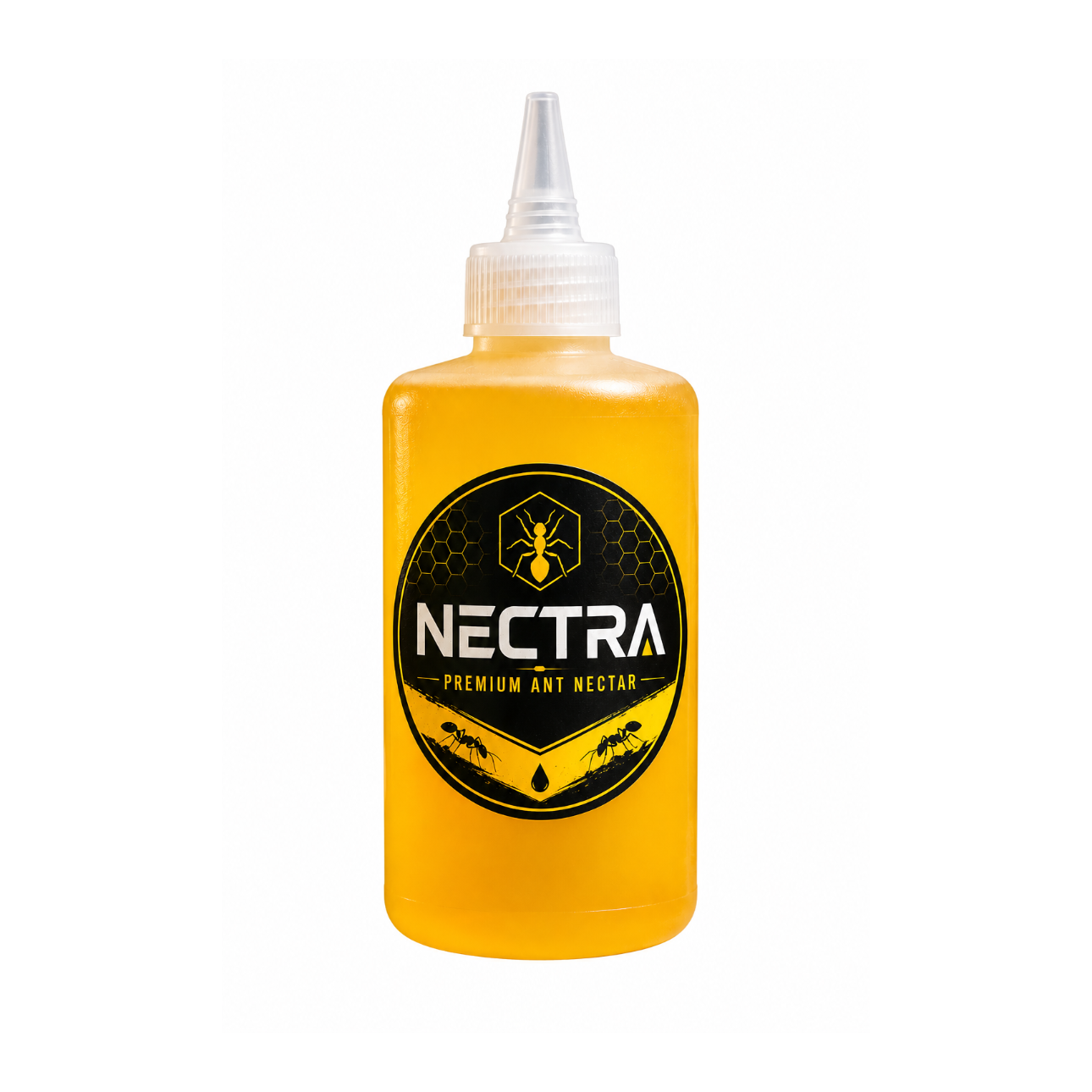
Instead of preparing homemade sugar solutions every few days, many ant keepers prefer using a ready-to-use product like Nectra.
Nectra is a professionally developed ant nectar designed to provide a clean, convenient and consistent carbohydrate source.
Benefits of Nectra
- Ready to use
- Long shelf life when stored correctly
- No preparation required
- Suitable for liquid feeders
- Easy to dose
- Clean feeding with minimal waste
- Ideal for beginners and experienced keepers
Because Nectra is always ready to use, feeding becomes faster, cleaner and more consistent while helping provide a dependable daily energy source for your colony.
Protein – Essential for Brood Development
While adult workers mainly consume carbohydrates, larvae require protein to grow.
Without sufficient protein:
- Larvae develop slowly.
- Colony growth decreases.
- Fewer new workers emerge.
Excellent protein sources include:
- Dubia roaches
- Red runner roaches
- Crickets
- Mealworms
- Fruit flies
- House flies
- Locusts
The more brood your colony has, the more protein it generally requires.
Seed-Eating Ants
Some ant species have specialised diets.
Species belonging to the genus Messor collect and store seeds inside their nests.
Suitable seed mixes may include:
- Millet
- Canary seed
- Grass seeds
- Dandelion seeds
- Various wild grass seeds
The workers process these seeds into a nutritious food reserve often referred to as “ant bread.”
Providing a varied seed mix helps support natural foraging behaviour.
Fresh Water Is Essential
Food alone is not enough.
Every colony should always have access to clean drinking water.
Suitable water sources include:
- Water towers
- Test tubes with water reservoirs
- Cotton-filled water containers
- Small gravity feeders
Never allow the water supply to run dry, especially during warm weather.
How Often Should You Feed Ants?
Feeding frequency depends on colony size, brood quantity and species.
General guidelines:
Carbohydrates
Provide continuously or refill whenever depleted.
Protein
Offer several times per week while brood is present.
Seeds
Seed-harvesting species should always have access to fresh seeds.
Avoid placing excessive amounts of food inside the setup. Fresh food is always preferable to old leftovers.
Common Feeding Mistakes
Many beginner problems are caused by incorrect feeding.
Avoid these common mistakes:
- Feeding too much at once
- Leaving insects inside the formicarium for too long
- Forgetting fresh water
- Providing only carbohydrates
- Ignoring protein requirements
- Allowing sugar solutions to spoil
Balanced feeding is far more important than simply feeding large quantities.
Foods to Avoid
Not every human food is suitable for ants.
Avoid feeding:
- Salty foods
- Oily foods
- Processed sweets
- Chocolate
- Dairy products
- Highly seasoned foods
- Foods containing preservatives
Fresh, natural food sources are always the safest option.
Feeding During Different Colony Stages
The nutritional needs of a colony change over time.
Founding Queen
A newly founded queen often requires very little food until the first workers emerge, depending on the species.
Young Colony
Small colonies benefit from small portions offered regularly.
Large Colony
Established colonies consume considerably larger quantities of carbohydrates and protein and should be monitored more frequently.
Adjust feeding according to colony growth.
Why High-Quality Nutrition Matters
Providing high-quality nutrition offers several important benefits:
- Faster brood development
- Stronger workers
- Healthier queens
- Increased colony activity
- Better long-term colony growth
- More natural behaviour
Good nutrition is one of the easiest ways to improve the health of any ant colony.
Why Many Ant Keepers Choose Nectra
Daily carbohydrate feeding should be simple, reliable and hygienic.
Nectra was developed with these goals in mind.
Whether you keep Messor, Camponotus, Lasius, Pheidole, Tetramorium or many other species, Nectra provides a practical ready-to-use energy source that fits perfectly into a regular feeding routine.
Combined with fresh protein sources, clean drinking water and appropriate seeds for granivorous species, it forms part of a balanced nutritional programme for healthy colony development.
Final Thoughts
Healthy ants begin with proper nutrition.
A balanced combination of carbohydrates, proteins, fresh water and species-specific foods allows colonies to grow naturally and remain active for many years.
By choosing high-quality food products such as Nectra, offering fresh protein regularly and maintaining clean feeding practices, you give your colony the best possible foundation for long-term success.
FAQ
What is the best food for ants?
Most ant species require carbohydrates, protein and fresh water. Some species, such as Messor ants, also need a varied seed mix.
How often should I feed my ants?
Carbohydrates should be available regularly, while protein is generally offered several times per week depending on brood size.
Can ants survive on sugar water alone?
No. Sugar water provides energy, but larvae also need protein for healthy development.
Is Nectra suitable for all ant species?
Nectra is suitable as a carbohydrate source for many commonly kept ant species. Protein, fresh water and species-specific foods should still be provided as part of a balanced diet.
Do ants need fresh water?
Yes. Every ant colony should always have access to clean drinking water.
What protein is best for ants?
Roaches, crickets, mealworms, fruit flies and other feeder insects are among the most commonly used protein sources.